Sector Research Observatory
Autos Weekly
March 16, 2026
"Covering the world's top automakers, from Detroit to Shenzhen."
Week in Review
Auto Sector Faces Tariff Shocks and Geopolitical Risks
The automotive industry grappled with significant headwinds this week as geopolitical tensions and trade policies rattled markets across the Americas, Europe, and Asia. The specter of U.S. tariffs under President Trump, targeting Canada and Mexico, threatens to inflate car prices by up to $3,000, as reported by Financial Post, directly impacting North American giants like Ford ($F) and General Motors ($GM), which saw stock declines of 3.07% and 1.44%, respectively. Meanwhile, Stellantis ($STLA) plummeted 5.25%, reflecting broader investor concerns over production disruptions in the region. In Asia, conflict in West Asia continues to unsettle the industry, with SIAM noting persistent supply chain risks despite positive sales growth in India for February, as per BusinessLine.
Market Snapshot
Auto Industry Leaders & Key Commodities
| Company / Asset | Level | Change | Ticker |
|---|---|---|---|
| US & European OEMs | |||
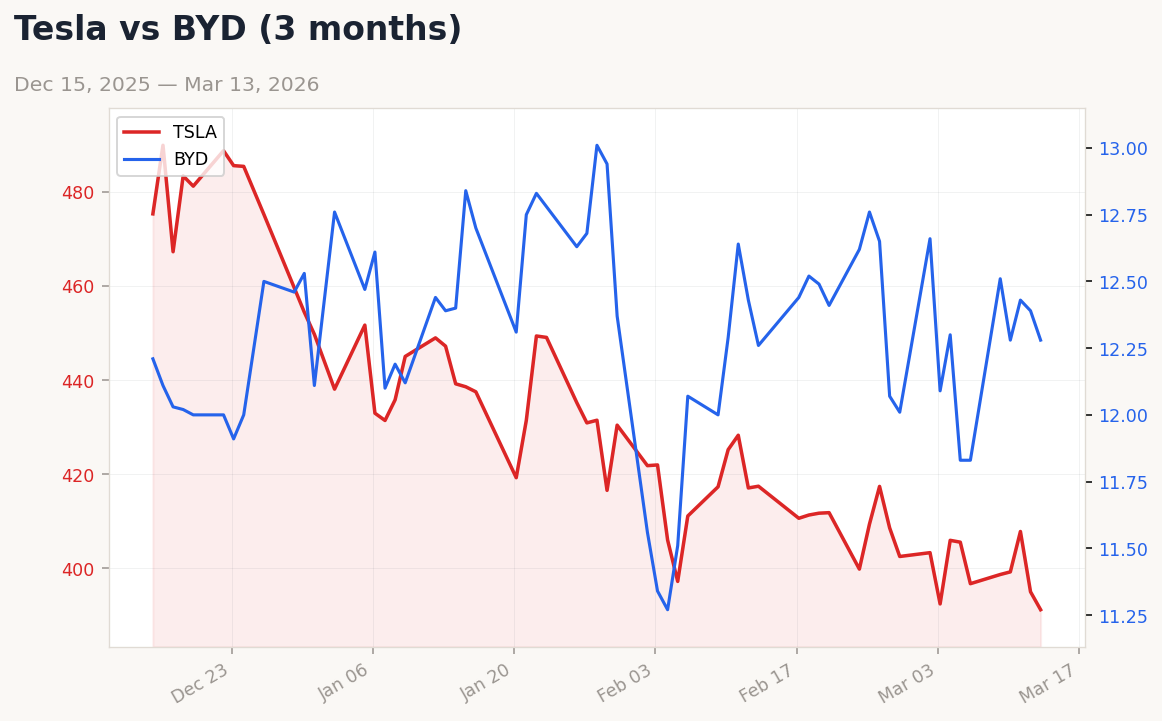
| Tesla | 391.20 | -0.96% | $TSLA |
| Ford | 11.67 | -3.07% | $F |
| General Motors | 72.39 | -1.44% | $GM |
| Stellantis | 6.50 | -5.25% | $STLA |
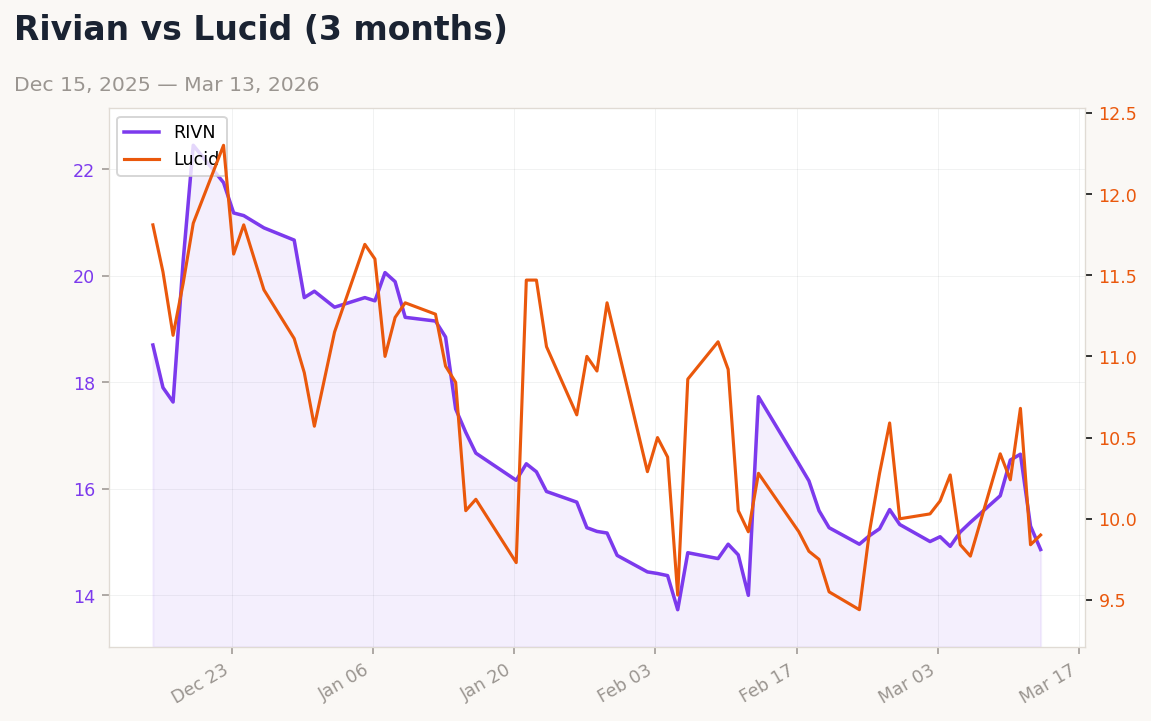
| Rivian | 14.86 | -2.88% | $RIVN |
| Lucid | 9.90 | +0.61% | $LCID |
| Asian OEMs | |||
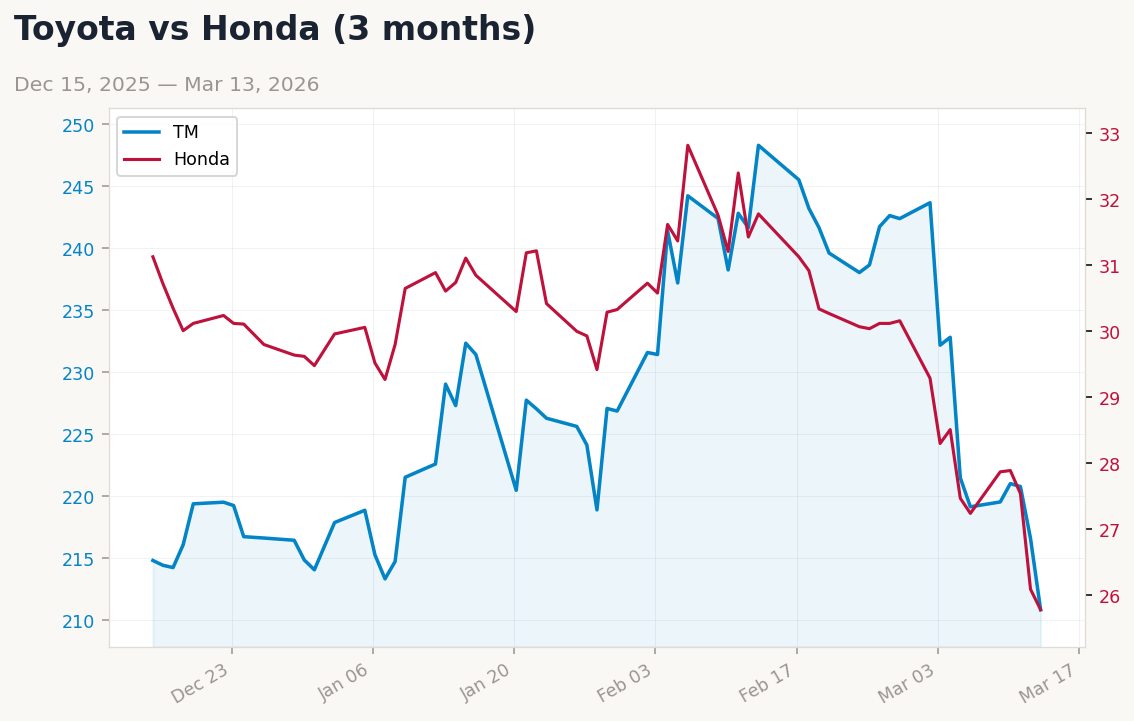
| Toyota | 210.84 | -2.65% | $TM |
| Honda | 25.78 | -1.19% | $HMC |
| BYD | 12.28 | -0.89% | $BYDDY |
| NIO | 5.86 | +5.59% | $NIO |
| XPeng | 19.97 | -0.05% | $XPEV |
| Li Auto | 17.33 | -2.80% | $LI |
| Supply Chain | |||
| Magna International | 55.06 | -2.41% | $MGA |
| Aptiv | 70.50 | +0.61% | $APTV |
| Commodities | |||
| WTI Crude | 97.15 | -1.58% | — |
| Brent Crude | 98.74 | -4.27% | — |
| Lithium ETF (LIT) | 70.40 | -1.05% | — |
Source: Market data via yfinance as of Mar 16, 2026. Tickers for reference only.
Spotlight Read
Trump Tariffs Threaten $3,000 Hike in U.S. Car Prices
The Trump administration’s tariffs on Canada and Mexico, as reported by Financial Post, could increase car prices by up to $3,000, striking a blow to North American automakers like Ford ($F) and General Motors ($GM). This policy risks disrupting integrated supply chains, raising production costs, and eroding consumer affordability. With stock declines already evident—$F down 3.07% and $GM down 1.44%—investors are bracing for margin compression. Long-term, this could accelerate nearshoring but strain profitability in the interim.
Latest Industry News
USITC Probe Targets Taiwan Auto Parts Makers
The U.S. International Trade Commission launched a Section 337 investigation into 20 auto parts manufacturers from Taiwan, China, and the U.S., following a lawsuit by General Motors ($GM), per Digitimes.
Source: Digitimes
Honda Writes Down $15.7B on EV Business
Honda ($HMC) recorded a historic $15.7 billion write-down on its EV operations, signaling a major strategic reversal with implications for its global electric ambitions, as reported by European Business Magazine.
Source: Europeanbusinessmagazine.com
Ashok Leyland Starts Battery Pack Facility in India
Ashok Leyland broke ground on a battery pack manufacturing plant in Tamil Nadu, aligning with India’s EV policy and net-zero goals, per BusinessLine.
Source: BusinessLine
West Asia Conflict Worries Indian Auto Industry
Ongoing conflict in West Asia poses supply chain risks for India’s auto sector, though February sales growth offers optimism, as noted by SIAM in BusinessLine.
Source: BusinessLine
Trump DOJ Sues California Over EV Mandate Rules
The Trump administration is suing California over fuel economy rules perceived as a backdoor EV mandate, impacting automakers like Tesla ($TSLA), per New York Post.
Source: New York Post
India Drafts EV Policy with Incentives for 2026
India’s draft EV policy for 2026 includes year-wise incentives for electric autos and two-wheelers, targeting diverse groups, as reported by The Indian Express.
Source: The Indian Express
Hybrid Super-Credits May Weaken India’s CAFE-III Goals
Former NITI Aayog official warns that hybrid super-credits in CAFE-III could dilute India’s EV push, impacting emission targets, per BusinessLine.
Source: BusinessLine
Daimler CEO Pushes Hydrogen with Bold Claims
Daimler Truck CEO Karin Rådström made striking pro-hydrogen statements on LinkedIn, touting its economic viability, which could influence future strategies, per Electrek.
Source: Electrek
EV & Battery Watch
Electric Vehicle & Battery Technology Developments
Electric vehicle adoption continues to shape the global auto landscape, with varying momentum across regions. In China, EV sales maintain dominance, supported by innovations like smart doors and electric tailgates, with the market projected to exceed RMB100 billion by 2030, per GlobeNewswire. However, Honda’s ($HMC) $15.7 billion EV write-down in Europe signals caution, reflecting challenges in scaling EV profitability amid high costs. Regulatory support, such as India’s draft EV policy for 2026 with incentives for electric autos (The Indian Express), could bolster adoption in Asia, benefiting players like BYD ($BYDDF), despite its stock dipping 0.89% to $12.28.
Supply Chain & Trade
Global Supply Chain & Trade Policy
Supply chain disruptions and trade policies are creating a turbulent environment for the auto industry across multiple continents. The USITC’s Section 337 investigation into 20 auto parts manufacturers from Taiwan, China, and the U.S., initiated after a General Motors ($GM) lawsuit (Digitimes), could reshape supply dynamics for North American OEMs. Simultaneously, Trump’s tariffs on Canada and Mexico threaten production costs for Ford ($F) and $GM, with potential $3,000 price hikes for consumers (Financial Post). Semiconductor shortages persist, impacting firms like NXP and Infineon, as automakers scramble to secure chips amid global demand.
Data Observatory
Auto Sector Charts


Week Ahead
Key Events for the Auto Sector
Investors should closely monitor several key developments in the coming week that could sway the auto sector. In the Americas, potential updates on the Trump administration’s tariff policies and the ongoing lawsuit against California’s EV mandate rules (New York Post) will be critical for companies like Ford ($F) and Tesla ($TSLA). In Asia, further details on India’s draft EV policy incentives (The Indian Express) could influence sentiment for regional players like Tata Motors. Additionally, any escalation in West Asia conflict could exacerbate supply chain concerns, impacting global OEMs.
Subscribe to Autos Weekly and get each new issue delivered to your inbox.
Already a member? Visit robomacro.com to log in and manage subscriptions, or use Forgot Password to set a password.
