Sector Research Observatory
Autos Weekly
April 06, 2026
"Covering the world's top automakers, from Detroit to Shenzhen."
Week in Review
Tariffs and Tech: Auto Industry Faces Dual Disruptions
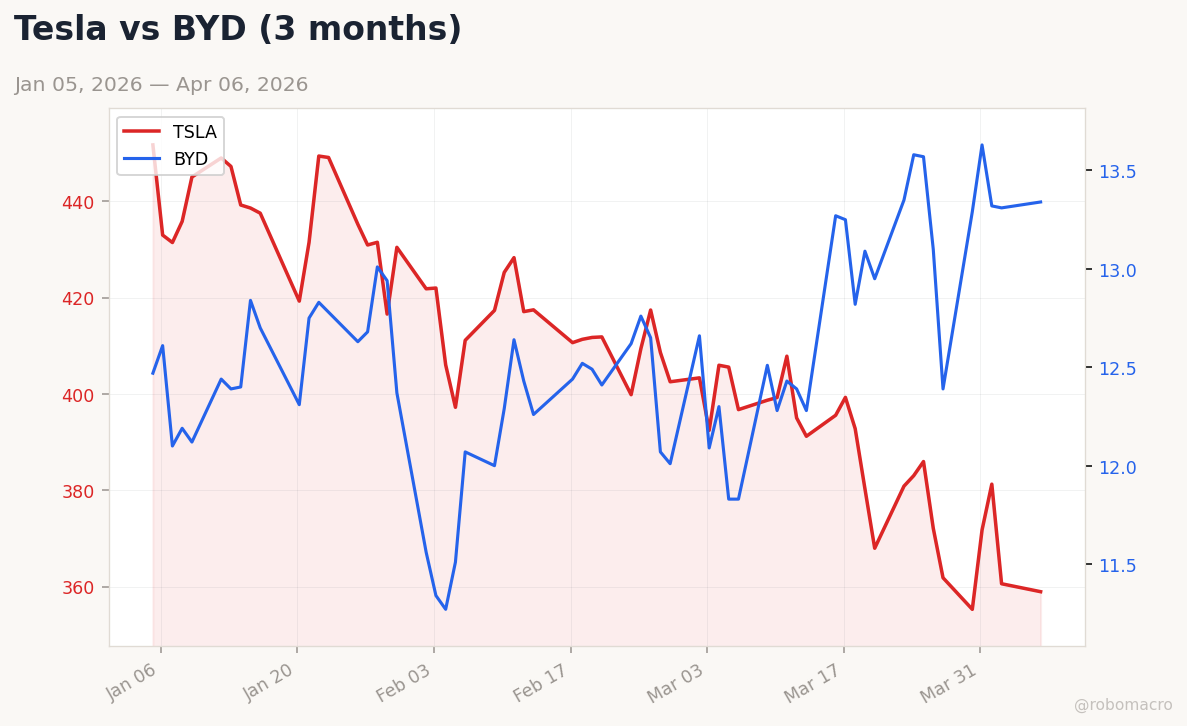
The automotive sector grappled with significant headwinds this week as geopolitical tensions and trade policies took center stage. The lingering effects of U.S. tariffs on Canada and Mexico, as highlighted by multiple reports, are poised to increase car prices by up to $3,000, directly impacting North American automakers like Ford ($F, -0.68%) and General Motors ($GM, -3.33%). Tesla ($TSLA, -5.42%) also felt the pressure, reporting a 14% drop in Q1 deliveries at 358,000 units, largely due to intensified competition from Chinese rivals. Industry leaders at the New York Auto Show emphasized the urgent need for AI-driven efficiencies to offset rising costs, signaling a broader pivot toward technology as a survival mechanism in a turbulent market.
Market Snapshot
Auto Industry Leaders & Key Commodities
| Company / Asset | Level | Change | Ticker |
|---|---|---|---|
| US & European OEMs | |||
| Tesla | 360.59 | -5.42% | $TSLA |
| Ford | 11.60 | -0.68% | $F |
| General Motors | 72.54 | -3.33% | $GM |
| Stellantis | 7.55 | +1.62% | $STLA |
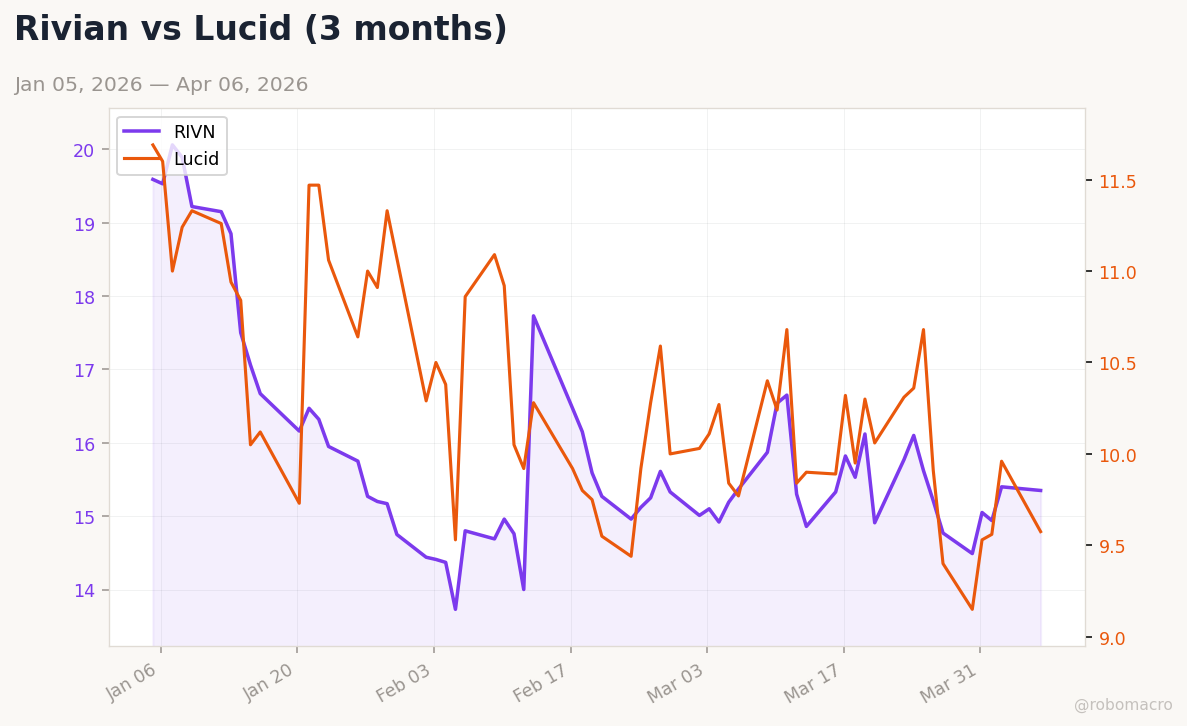
| Rivian | 15.40 | +3.08% | $RIVN |
| Lucid | 9.96 | +4.18% | $LCID |
| Asian OEMs | |||
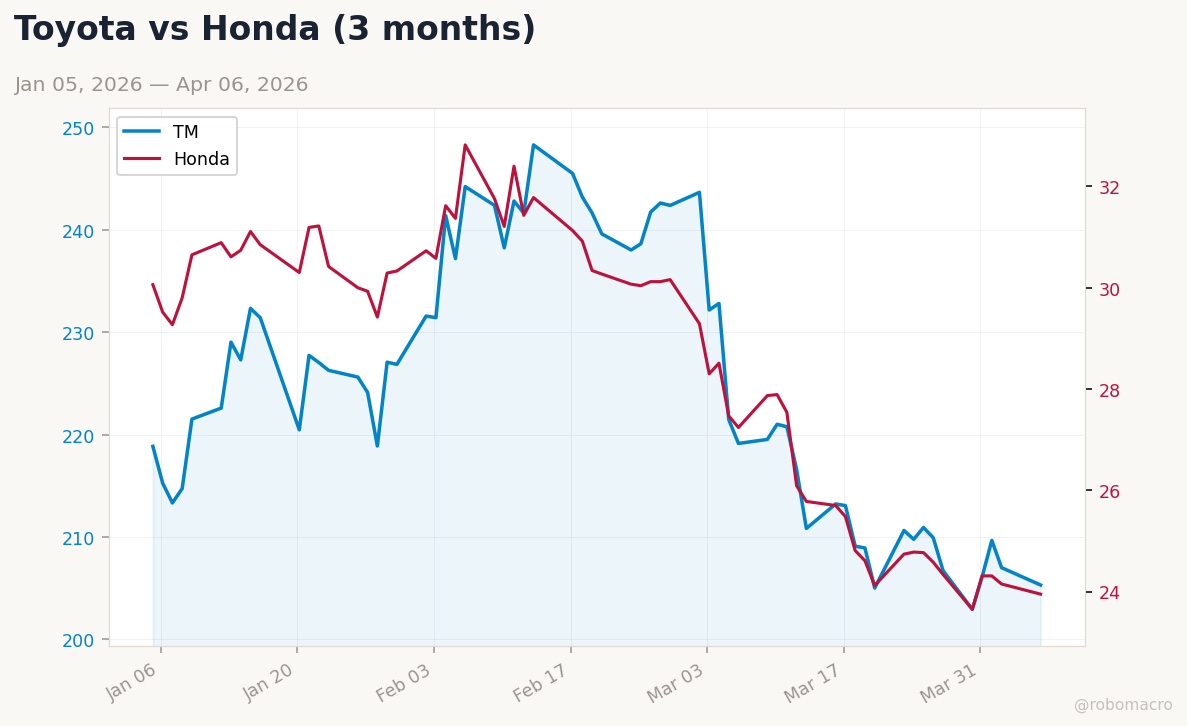
| Toyota | 207.01 | -1.27% | $TM |
| Honda | 24.15 | -0.66% | $HMC |
| BYD | 13.31 | -0.08% | $BYDDY |
| NIO | 6.30 | +1.61% | $NIO |
| XPeng | 17.70 | +1.09% | $XPEV |
| Li Auto | 18.47 | +0.49% | $LI |
| Supply Chain | |||
| Magna International | 55.16 | -2.41% | $MGA |
| Aptiv | 60.99 | -1.77% | $APTV |
| Commodities | |||
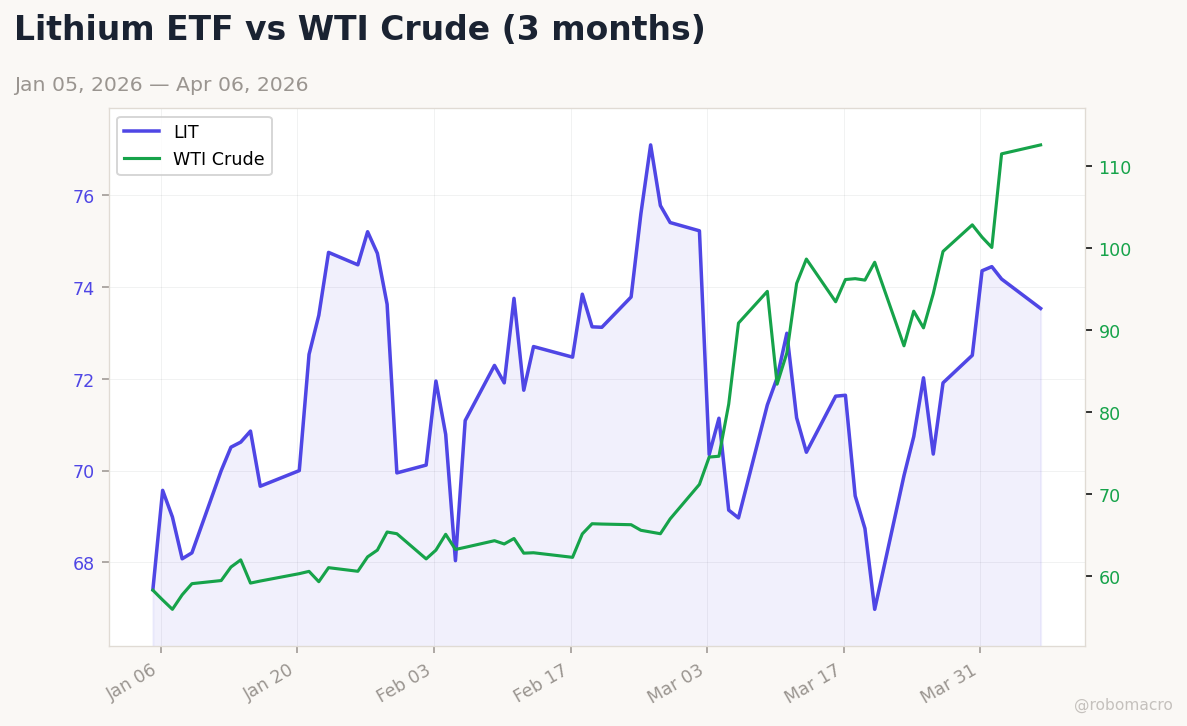
| WTI Crude | 110.19 | -1.21% | — |
| Brent Crude | 108.80 | -0.21% | — |
| Lithium ETF (LIT) | 74.17 | -0.36% | — |
Source: Market data via yfinance as of Apr 06, 2026. Tickers for reference only.
Spotlight Read
Trump Tariffs Threaten $3,000 Price Hike for North American Cars
U.S. tariffs on Canada and Mexico, imposed by President Trump, are set to inflate car prices by up to $3,000, a seismic shift for North American automakers like Ford ($F) and General Motors ($GM). This policy, now a year into its impact, disrupts integrated supply chains and threatens production economics across the region. With consumer affordability already strained, the tariffs could suppress demand and accelerate the shift to lower-cost Chinese alternatives. Long-term, this may force OEMs to rethink regional manufacturing strategies.
Latest Industry News
Stellantis Eyes Chinese EV Production in Canada
Stellantis ($STLA) is in talks to build Leapmotor EVs at its idled Brampton plant in Ontario, sparking local sourcing debates. This could reshape its North American EV strategy.
Source: Electrek
Tesla Q1 Deliveries Drop 14% Amid China Competition
Tesla ($TSLA) reported 358,000 vehicle deliveries in Q1, down 14% from the prior quarter, as Chinese rivals undercut on price. This signals intensifying global EV market challenges.
Source: CNBC
Toyota Warns Suppliers: Adapt or Perish
Toyota ($TM) CEO Koji Sato urged nearly 500 suppliers to boost productivity amid industry upheaval, highlighting threats from Chinese competitors. Survival hinges on rapid innovation.
Source: Ibtimes.com.au
Ontario Premier Opposes Stellantis-Leapmotor Deal
Ontario’s Doug Ford warned against Stellantis ($STLA) producing Chinese EVs without local parts, emphasizing regional economic priorities. This could stall the proposed partnership.
Source: Financial Post
Chery Revives Freelander Name for EV SUV
Chery licensed the Freelander name from Jaguar Land Rover ($TATA) for a new three-row EV SUV with CATL ($CATL) batteries, marking Asia’s branding push.
Source: Paul Tan's Automotive News
AI Seen as Lifeline for Auto Production Costs
At the New York Auto Show, executives stressed AI’s role in cutting production costs, a critical need for firms like Ford ($F) facing tariff-driven price pressures.
Source: Business Insider
Tesla Model Y L Priced at RM260,000 in Malaysia
Tesla ($TSLA) confirmed the Model Y L six-seater EV SUV pricing at RM260,000 in Malaysia, expanding its footprint in Southeast Asia despite global delivery declines.
Source: Paul Tan's Automotive News
Europe’s EV Market Thrives with Affordable Models
Europe’s EV market shines with affordable options like the Renault 5, potentially inspiring U.S. demand for no-frills electric cars from players like Stellantis ($STLA).
Source: InsideEVs
EV & Battery Watch
Electric Vehicle & Battery Technology Developments
The global EV market continues to show mixed signals, with Europe leading in adoption through affordable models like the Renault 5, while Tesla ($TSLA) struggles with a 14% delivery drop in Q1, reflecting fierce competition in China. Battery technology remains a focal point, with Chery’s new Freelander EV SUV leveraging CATL ($CATL) batteries for competitive range and cost. Regulatory incentives in the GCC region, projecting a 21.49% CAGR for EV tire markets through 2032, underscore Middle Eastern growth potential, indirectly benefiting battery suppliers like LG Energy. However, North American tariff pressures could slow EV affordability, challenging Rivian ($RIVN, +3.08%) and Lucid ($LCID, +4.18%) in their domestic expansion.
Supply Chain & Trade
Global Supply Chain & Trade Policy
Semiconductor shortages persist as a drag on production, with companies like NXP ($NXPI) and Infineon ($IFNNY) under pressure to meet demand from automakers like Honda ($HMC, -0.66%) in Asia and BMW ($BMWYY) in Europe. Tariff policies, particularly Trump’s levies on Canadian and Mexican auto parts, are forcing a reevaluation of North American supply chains, directly impacting Magna International ($MGA, -2.41%) and Aptiv ($APTV, -1.77%). This has spurred discussions on nearshoring, with some OEMs eyeing localized production to mitigate trade risks, though costs remain a hurdle.
Data Observatory
Auto Sector Charts

Week Ahead
Key Events for the Auto Sector
Investors should monitor upcoming earnings from key players like Toyota ($TM) and Stellantis ($STLA), which could reveal the financial toll of tariffs and competitive pressures in Asia and Europe. Regulatory decisions on trade policies in North America, particularly around Stellantis’ Leapmotor talks in Canada, will be critical for gauging regional manufacturing shifts. Auto shows in Beijing may unveil new EV models from BYD ($BYDDF) and Geely ($GELYF), offering insights into China’s market dominance.
Subscribe to Autos Weekly and get each new issue delivered to your inbox.
Already a member? Visit robomacro.com to log in and manage subscriptions, or use Forgot Password to set a password.
