August 27, 2026 · Space-onomics by RoboMacro
☀️ US Launch Cadence Holds at 15 as NASA Budget and Exoplanets Hit Records
Welcome back to the Space-onomics Brief!
US orbital attempts stayed flat last month while NASA resources reached a fresh peak. The confirmed exoplanet tally climbed to a new high. …all in a two(ish)-minute read.
US Orbital Attempts Hold Steady at 15
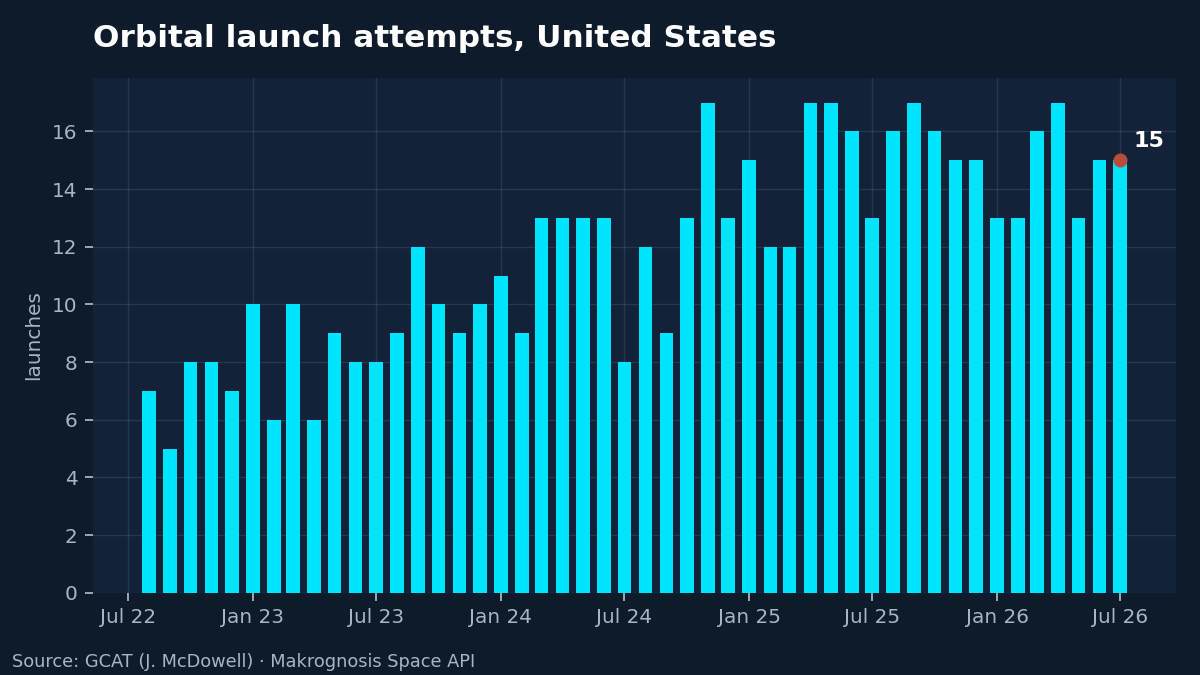
US orbital launch attempts totaled 15 in July 2026, unchanged from June. The trailing twelve-month sum reached 181. The record monthly high stands at 17. Flat momentum at this level keeps pressure on new infrastructure, including SpaceX’s planned Starship site in Louisiana and the final Florida Falcon 9 Starlink flight. Steady cadence gives operators predictable access while emerging sites move from planning to construction.
NASA Budgetary Resources Reach Record High
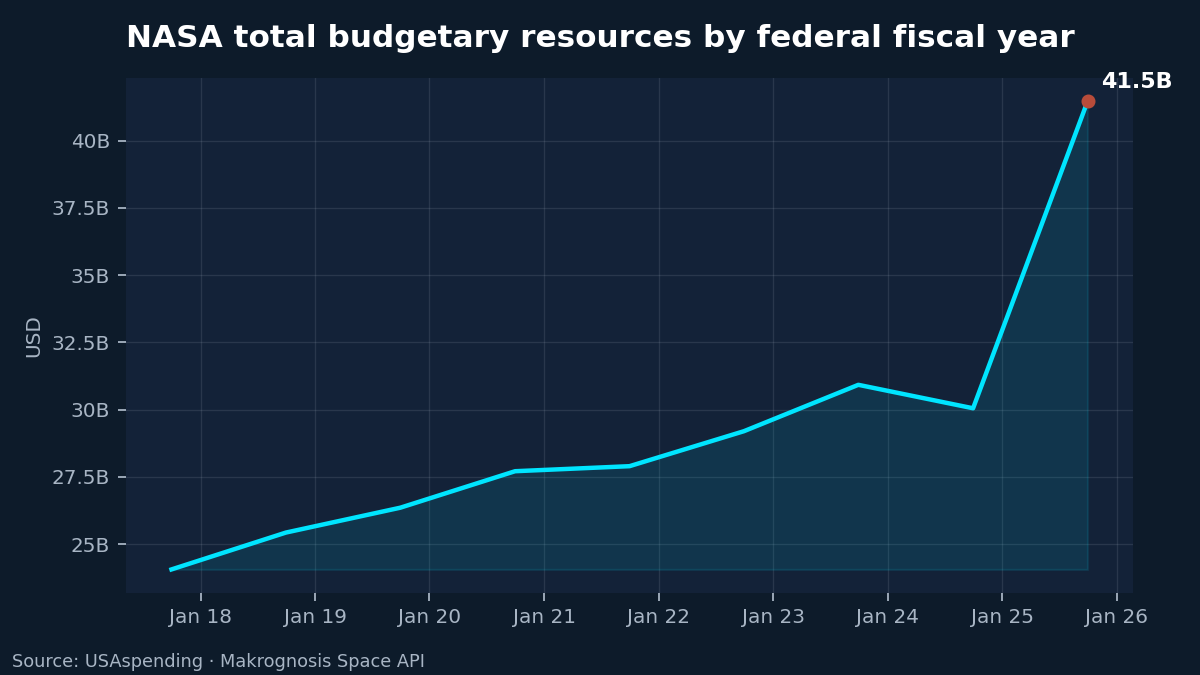
NASA total budgetary resources hit $41.46 billion for the fiscal year ending September 2025, surpassing the prior year’s $30.05 billion. The new figure marks a record high. Growth in resources aligns with the upcoming Roman Space Telescope launch, which aims to probe dark energy. Larger annual allocations give NASA more room to fund flagship missions and maintain launch schedules without immediate trade-offs.
Confirmed Exoplanets Climb to 6,354
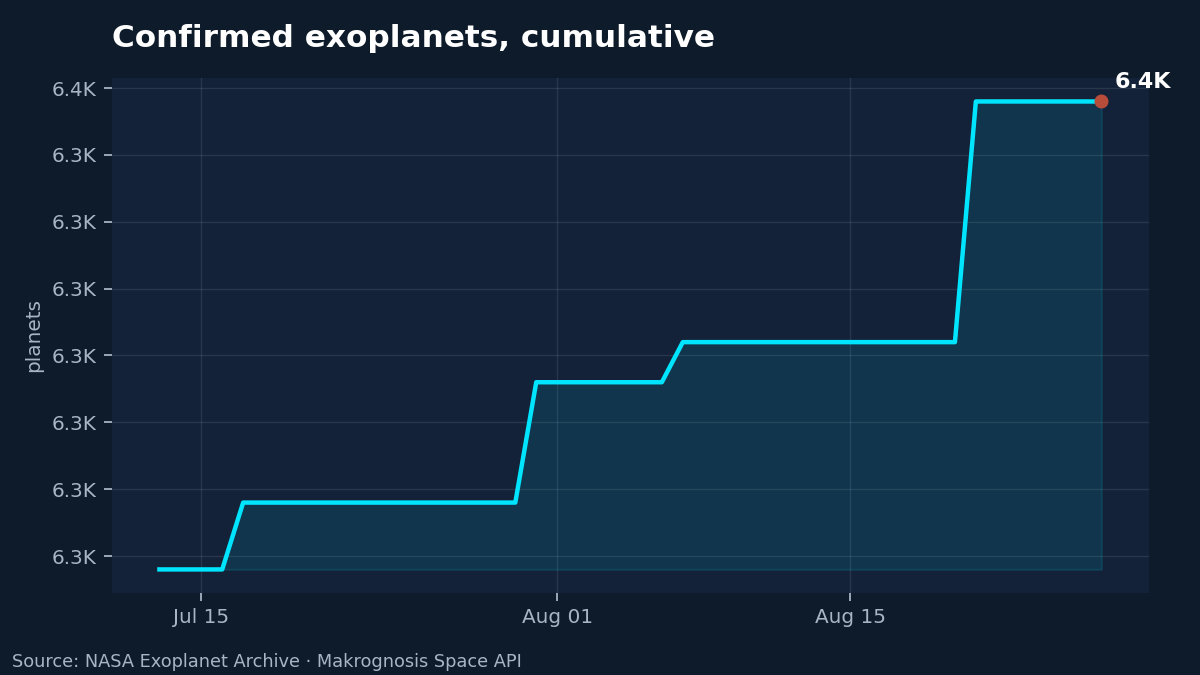
The cumulative count of confirmed exoplanets reached a fresh peak late in the month, up from 6,336 previously and marking a new record. Steady additions keep the archive expanding. Concepts such as NASA’s proposed starshade could let ground telescopes image Earth-like worlds directly, potentially accelerating future confirmations. Each new detection widens the target list for both ground and space observatories.
🛰️ Trivia of the Week
What was the US orbital launch count for July 2026 according to GCAT? A) 13 B) 15 C) 16 D) 17
Last week's answer: B) 10 — the latest monthly observation in the GCAT China series.
GET THE EDGE
Access the full Makrognosis Space API dataset for deeper queries.
Explore the Makrognosis Space API →Space-onomics is a publication of RoboMacro. Charts: Makrognosis Space API. Data attribution: agency names shown per chart.