| Asset | Level | Change |
|---|---|---|
| ASX 200 | 8,461.00 | -0.65% |
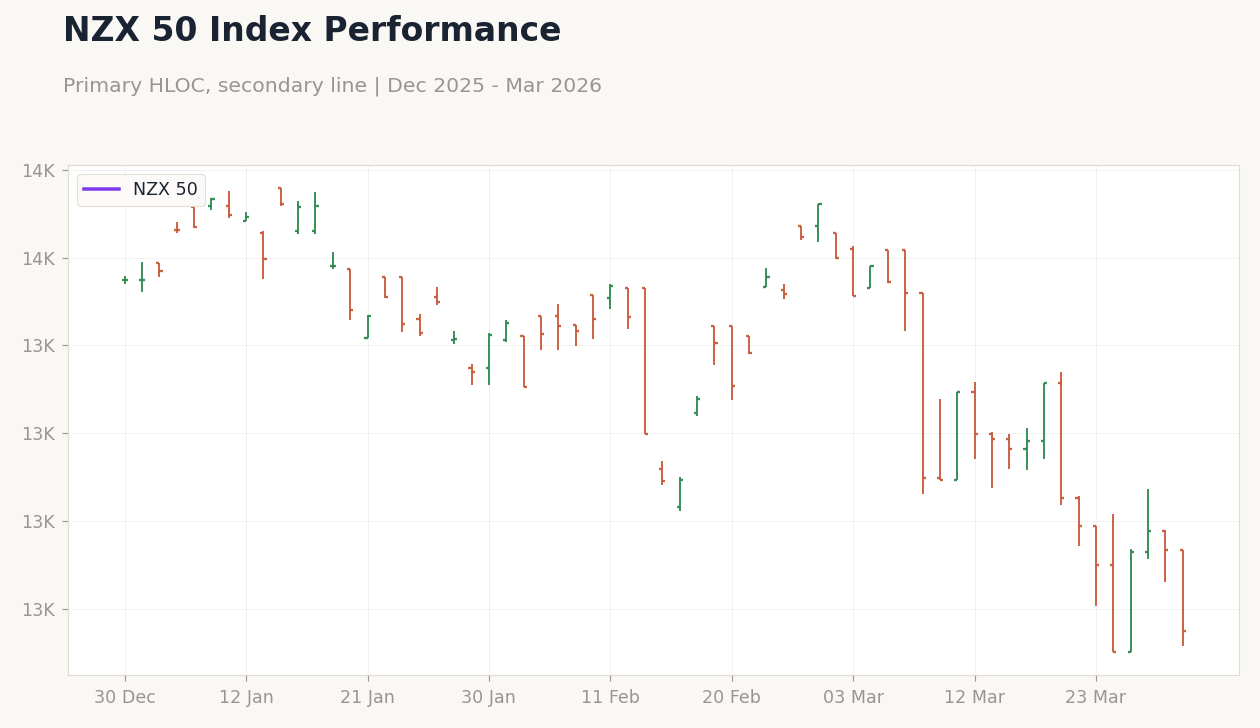
| NZX 50 | 12,748.92 | -1.44% |
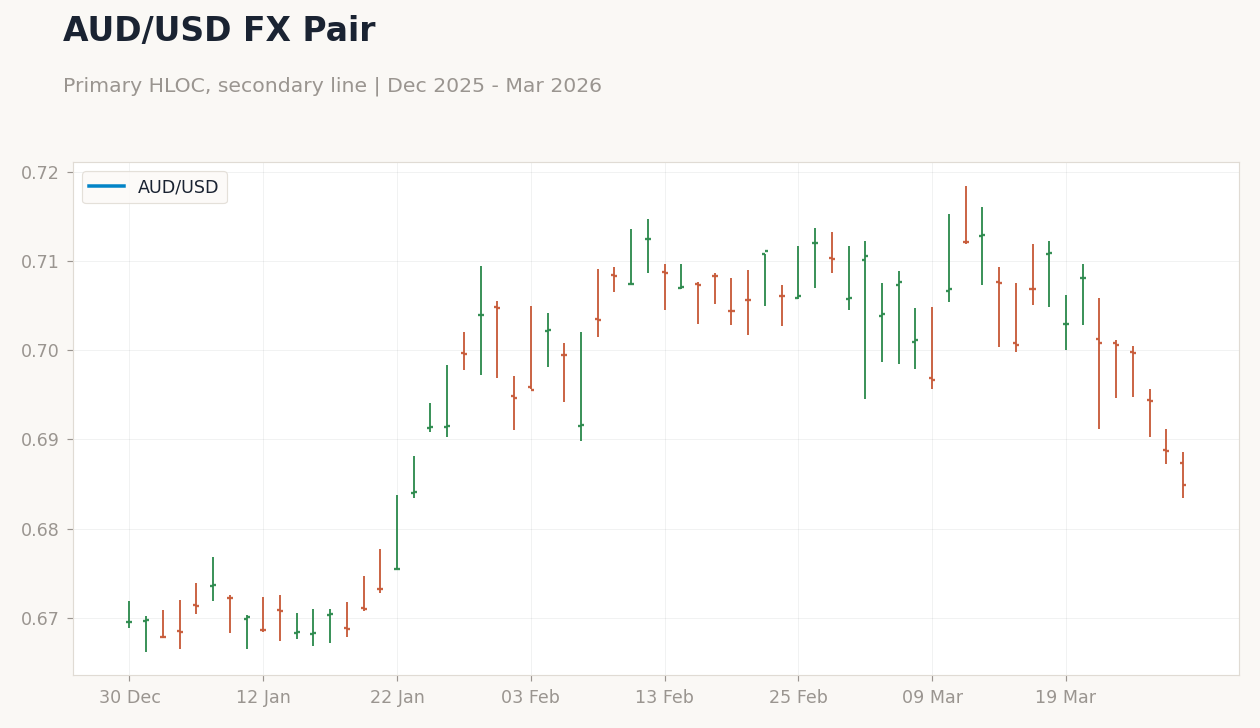
| AUD/USD | 0.68 | -0.55% |
| NZD/USD | 0.57 | -0.75% |
| AUD/NZD | 1.20 | -0.03% |
| BHP | 50.37 | +0.28% |
| Gold | 4,537.40 | +1.01% |
| Brent Crude | 108.04 | -4.02% |
| Bitcoin | 66,502.34 | +0.83% |
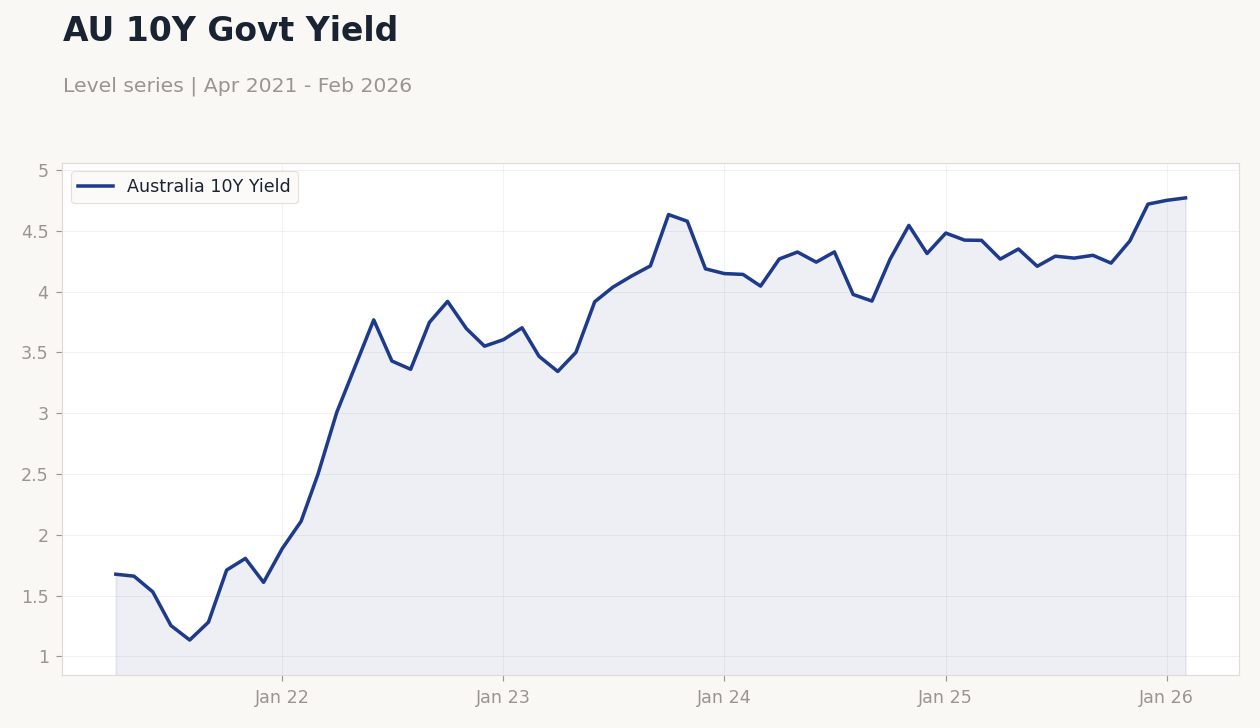
| Australia 10Y Govt Yield | 4.77% | +0.42% |
| NZ Short-term Rate | 4.33% | -9.60% |
| Data | Prior | Cons | Actual |
|---|---|---|---|
| No events available | |||
AU 10Y Govt Yield | Type: macro_line | Australia 10Y Yield: 4.77 (2026-02-01) | Range: 1.135–4.77 | Trend(6pt): 1.676,3.767,4.128,4.267,4.719,4.77
| Data | Prior | Cons | Time |
|---|---|---|---|
| ANZ Business Confidence | 59.20 | - | 20:00 |
| RBA Meeting Minutes | - | - | 20:30 |
| Ai Group Industry Index | -1.50 | - | 18:00 |
| Building Permits Month-over-Month Prel | -7.20 | 6.20 | 20:30 |
| Trade Balance | 2,631m | 2,500m | 20:30 |
Australian markets ended lower on March 29, 2026, with the ASX 200 index down 0.65% at 8,461.00, pressured by geopolitical risks from the US-Iran conflict and a steep decline in Brent crude prices. New Zealand's NZX 50 index tumbled 1.44% to 12,748.92, reflecting broader risk aversion and weakness in dairy and tourism-exposed stocks. The AUD/USD pair weakened 0.55% to 0.68, while NZD/USD fell 0.75% to 0.57, with AUD/NZD nearly unchanged at 1.20 due to shared ties to China trade.
BHP stock rose 0.28% to 50.37, offering minor support to miners amid commodity fluctuations. Australia's 10-year government yield increased 0.42% to 4.77%, indicating worries over war-driven inflation and fuel costs. New Zealand's short-term rate dropped 9.60% to 4.33%, signaling easing expectations.
No significant economic data was released in Australia or New Zealand, allowing external factors like Australian petrol prices nearing A$2.20 per liter to dominate sentiment. Gold advanced 1.01% to 4,537.40 as a haven asset, while Bitcoin gained 0.83% to 66,502.34 in risk-off trading. The day underscored ANZ economies' exposure to Middle East instability and energy disruptions.
Attention turns to New Zealand's ANZ Business Confidence at 20:00 ET on March 30, 2026, previous 59.2, which may gauge sentiment amid war uncertainties. Australia's RBA Meeting Minutes release at 20:30 ET on March 30 could detail recent policy amid inflation and geopolitical risks. On March 31, Australia's Ai Group Industry Index is scheduled at 18:00 ET, prior -1.5, assessing manufacturing amid commodity pressures.
Australia's Building Permits Month-over-Month Preliminary follows at 20:30 ET on March 31, consensus 6.2% after -7.2%, key for housing and RBA outlook. Australia's Trade Balance arrives at 20:30 ET on April 1, consensus 2,500,000,000 after 2,631,000,000, highlighting export dynamics with China. These events could spur volatility in AUD and NZD, particularly with ongoing oil market swings and global risk flows.
Subscribe to ANZ Macro Daily and get each new issue delivered to your inbox.
Already a member? Visit robomacro.com to log in and manage subscriptions, or use Forgot Password to set a password.
Brent Crude Oil Prices | Type: market_hloc | Brent Crude: 108.3 (2026-03-30) | Range: 59.96–112.6 | Trend(6pt): 61.92,64.06,67.52,92.69,112.6,108.3
NZX 50 Index Performance | Type: market_hloc | NZX 50: 1.275e+04 (2026-03-30) | Range: 1.27e+04–1.373e+04 | Trend(6pt): 1.355e+04,1.351e+04,1.32e+04,1.352e+04,1.294e+04,1.275e+04
AUD/USD FX Pair | Type: market_hloc | AUD/USD: 0.6849 (2026-03-30) | Range: 0.6678–0.7129 | Trend(5pt): 0.6696,0.6755,0.7087,0.6966,0.6849
Australia is incurring billions in economic costs from the US-Iran war, with petrol prices at record highs intensifying inflation that was high even before the oil shock. New Zealand's dairy and tourism industries face headwinds from global uncertainty, though NZD/USD has shown resilience near 0.5900 ahead of US data. Housing markets in both nations tie into central bank decisions, with ex-RBA officials indicating past rates were shaped by property trends amid current policy debates.
These factors emphasize ANZ reliance on commodity exports and China demand, vulnerable to geopolitical escalations.
The US-Iran conflict is roiling energy markets, driving Australian petrol to A$2.20 per liter and causing over $300 billion in market value erosion. The euro and yen strengthened against the USD after central banks held rates, contributing to AUD/USD weakness around 0.68 amid oil volatility and risk aversion. Indian equities advanced, with Sensex up 0.75% to 76,070.84, contrasting ANZ market declines tied to commodity sensitivity.
Bitcoin rose 0.83% to 66,502.34, bucking fiat currency pressures in a risk-off environment. Global crises like the Iran situation often follow familiar patterns, sparking anxiety but offering historical reassurance. NZD/USD declined over 0.7% near 0.57, reversing prior gains as risk-off sentiment builds.
These trends highlight China's role in ANZ exports, with iron ore and dairy at risk from any demand slowdown. Geopolitical concerns are eclipsing softer US indicators, burdening ANZ commodity-linked currencies.
The RBA narrowly voted to lift interest rates in its recent meeting, increasing mortgage burdens as fuel prices surge from the Middle East conflict, potentially signaling more hikes ahead. With the cash rate at 3.83% as of February 1, 2026, today's minutes may shed light on discussions around pre-war elevated inflation. The RBNZ has paused aggressively in the past but now exercises caution in a dairy-reliant economy amid global challenges.
Policy divergence is evident, with RBA's hawkish tilt contrasting RBNZ's possible hold, influenced by Australia's resource strength and New Zealand's tourism rebound. Upcoming employment figures will be pivotal, as both central banks balance inflation control with housing market ties, where RBA decisions have historically considered property prices. Further splits in rate paths could emerge if the war intensifies, favoring AUD over NZD due to energy sector exposure.
Emphasis is on policy statements and inflation data for easing signals.