ANZ Macro Daily(Beta Mode)
AUD Gains on Geopolitics, RBNZ Looms
Market Snapshot
| Asset | Level | Change |
|---|---|---|
| ASX 200 | 8,579.50 | -1.06% |
| NZX 50 | 12,902.15 | +0.59% |
| AUD/USD | 0.69 | +0.09% |
| NZD/USD | 0.57 | -0.08% |
| AUD/NZD | 1.21 | +0.17% |
| BHP | 52.76 | +4.70% |
| Gold | 4,676.10 | +0.53% |
| Brent Crude | 109.63 | +0.55% |
| Bitcoin | 69,673.02 | +1.00% |
| Australia 10Y Govt Yield | 4.77% | +0.42% |
| NZ Short-term Rate | 4.33% | -9.60% |
Prior Economic Events
| Data | Prior | Cons | Actual |
|---|---|---|---|
| No events available | |||
 RBA Cash Rate History | Type: macro_line | % Rate: 3.83 (2026-02-01) | Range: 0.1–4.35 | Trend(6pt): 0.1,1.28,4.1,4.35,3.6,3.83
Today's Economic Events
| Data | Prior | Cons | Time |
|---|---|---|---|
| RBNZ Interest Rate Decision | 2.25 | 2.25 | 22:00 |
| Business NZ PMI | 55 | - | 18:30 |
| RBA Hauser Speech | - | - | 18:45 |
- ASX 200 fell 1.06% amid mixed commodities, while NZX 50 rose 0.59% on export support.
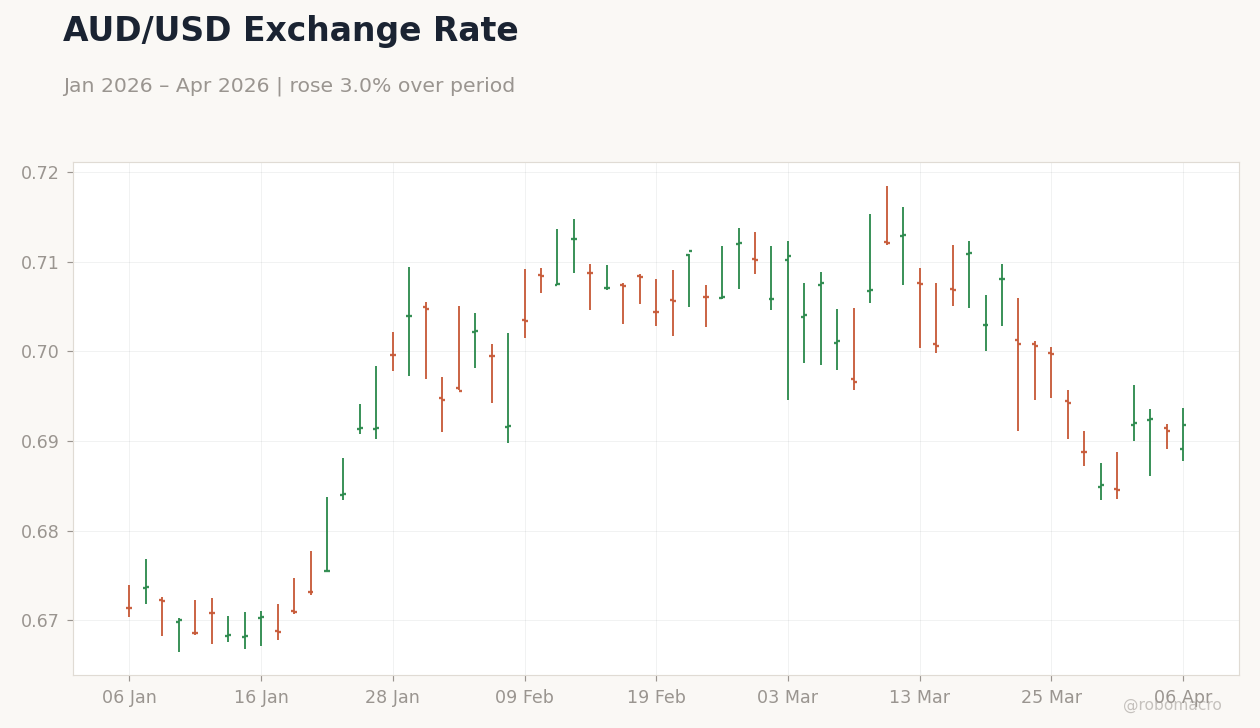
- AUD/USD up 0.09% to 0.69 on Iran ceasefire optimism; NZD/USD down 0.08% to 0.57.
- RBA sees resilient households, warns of extended hikes; oil chaos risks Australian inflation.
Yesterday's Recap
Australian equities weakened, with the ASX 200 closing at 8,579.50, down 1.06%, due to commodity volatility despite BHP's strong 4.70% gain to 52.76. New Zealand's NZX 50 advanced to 12,902.15, up 0.59%, buoyed by stable dairy and export sectors. In currencies, AUD/USD rose 0.09% to 0.69, supported by hopes for Middle East de-escalation reducing USD safe-haven demand.
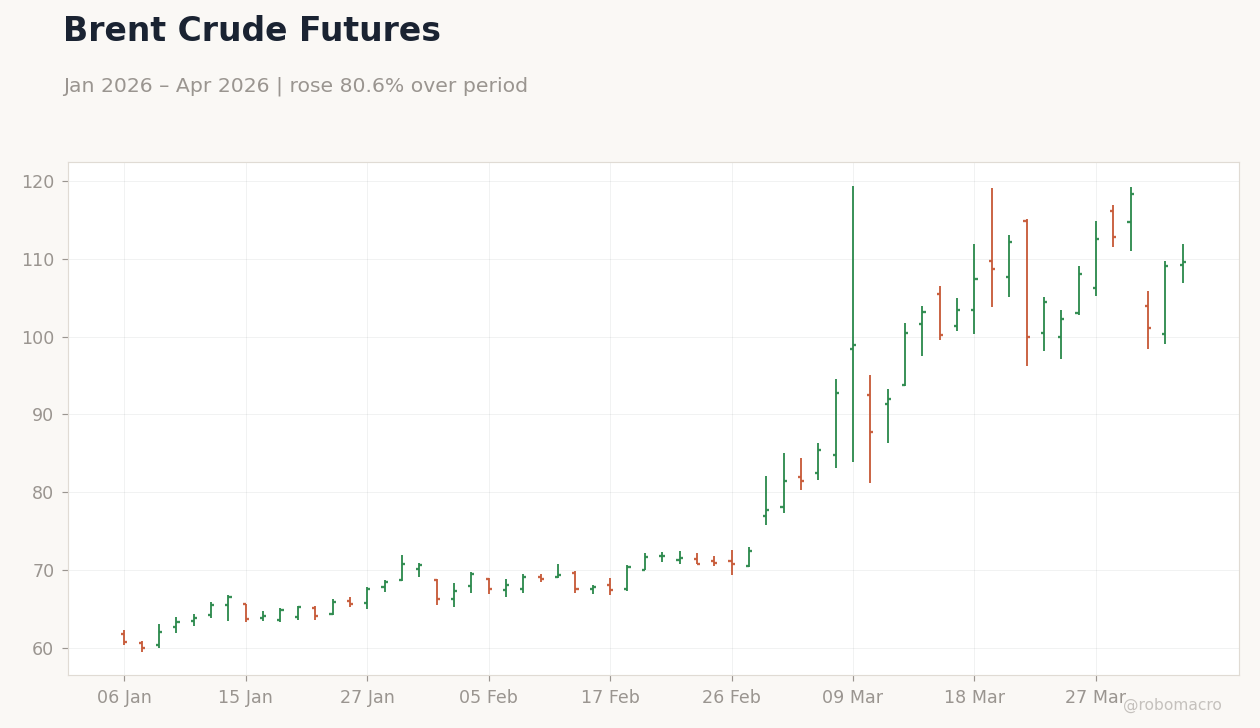
NZD/USD eased 0.08% to 0.57, while the AUD/NZD cross climbed 0.17% to 1.21, highlighting relative AUD strength. Australian 10Y government yields increased 0.42% to 4.77%, reflecting inflation worries, whereas New Zealand's short-term rate fell 9.60% to 4.33%. Commodities showed gains, with gold at 4,676.10 up 0.53% benefiting exporters, Brent crude at 109.63 up 0.55% amid supply concerns, and Bitcoin at 69,673.02 up 1.00%.
No significant economic data was released in Australia or New Zealand, allowing markets to focus on global news and central bank outlooks.
The Day Ahead
Key focus is on the RBNZ interest rate decision on April 7 at 22:00 ET, with consensus for a hold at 2.25% given ongoing inflation but improving household conditions. New Zealand's Business NZ PMI follows on April 9 at 18:30 ET, after a prior 55.0 reading, providing manufacturing insights. Australia's high-impact RBA Deputy Governor Hauser speech is set for April 13 at 18:45 ET, which may address rate trajectory amid divergence from RBNZ.
These could sway NZD, influenced by dairy and tourism, while Australian markets eye housing ties. No releases today, but oil market volatility may affect ANZ commodity flows. Broader attention remains on central bank signals and China-related export dynamics.
Other Economic Notes
ANZ economies face oil supply risks, with experts urging Australia to plan for fuel shocks as service station shortages decline but future vulnerabilities persist. Economists predict months of inflation from oil chaos, impacting Australia as a net importer. New Zealand benefits from dairy stability but contends with housing affordability slowing construction.
Both countries report improving household finances, with the RBA noting reduced stress from income growth and buffers, aiding consumption despite rate pressures.