| Asset | Level | Change |
|---|---|---|
| ASX 200 | 8,953.30 | +0.07% |
| NZX 50 | 12,915.45 | +0.08% |
| AUD/USD | 0.72 | +0.23% |
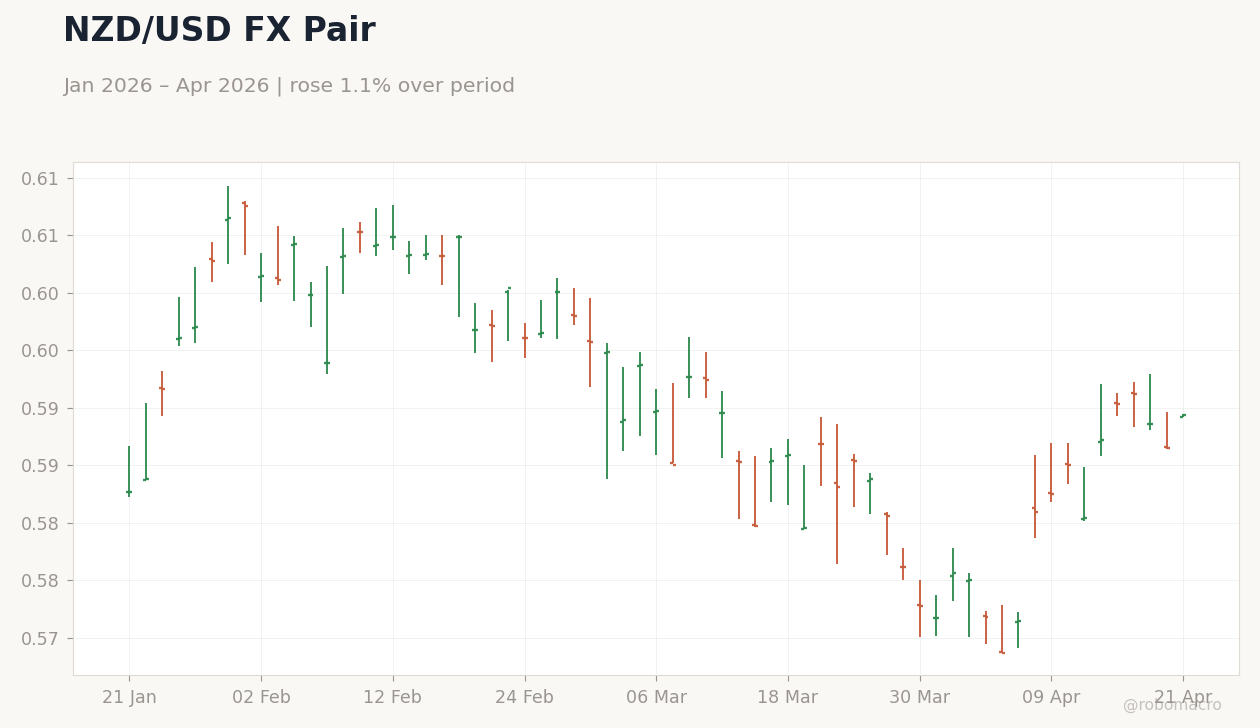
| NZD/USD | 0.59 | +0.48% |
| AUD/NZD | 1.21 | -0.13% |
| BHP | 55.32 | -0.66% |
| Gold | 4,738.50 | -1.42% |
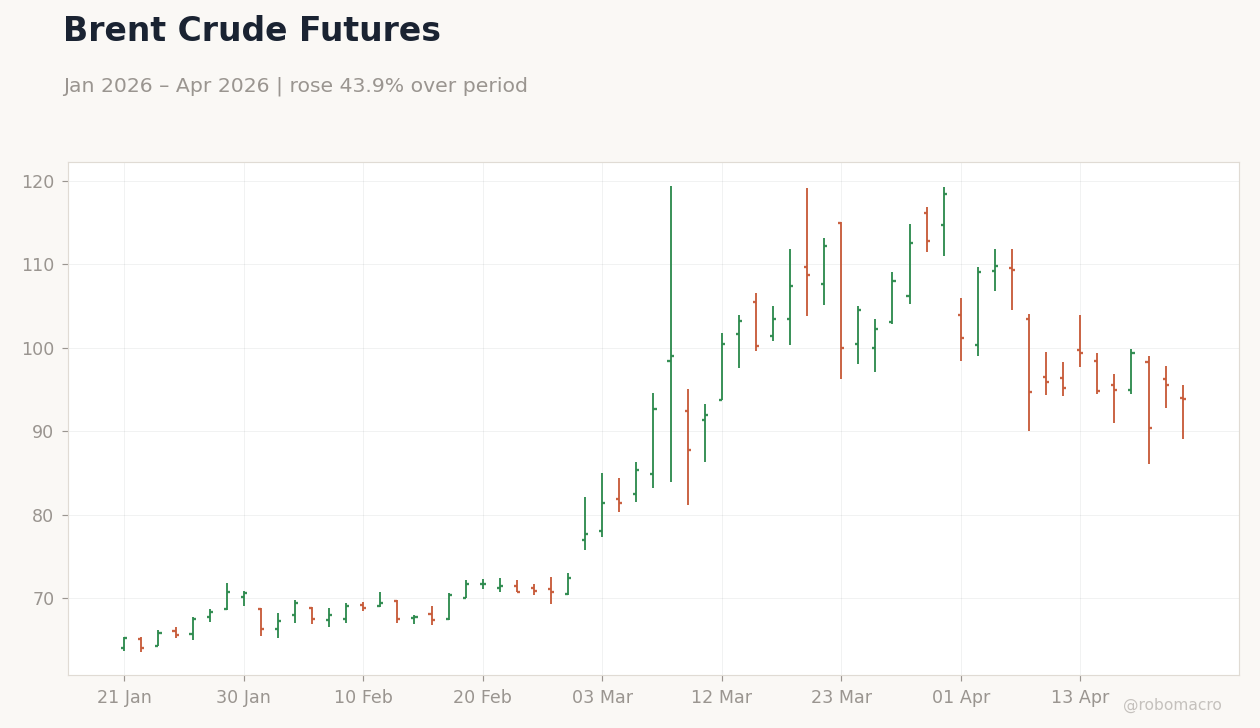
| Brent Crude | 93.86 | -1.70% |
| Bitcoin | 75,583.53 | -0.38% |
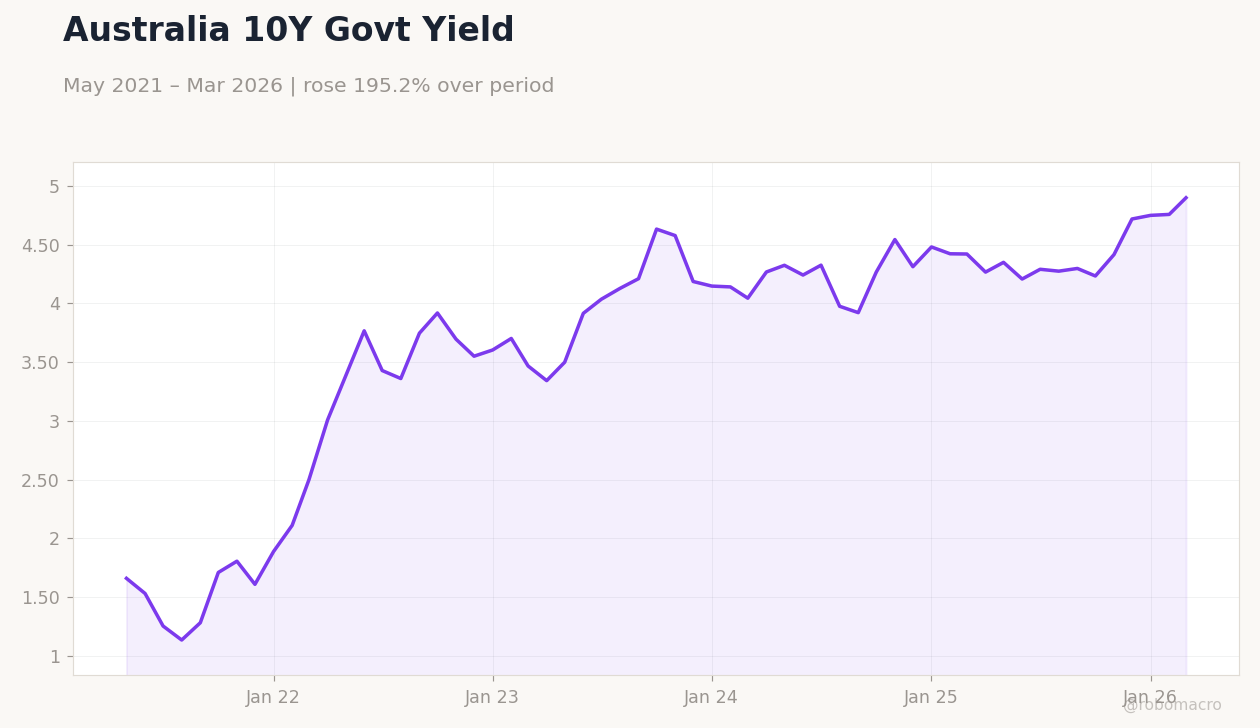
| Australia 10Y Govt Yield | 4.90% | +2.98% |
| NZ Short-term Rate | 4.33% | -9.60% |
| Data | Prior | Cons | Actual |
|---|---|---|---|
| Inflation Rate Quarter-over-Quarter | 0.60 | 0.80 | 0.90 |
Brent Crude Oil Prices | Type: macro_line | Brent USD/Barrel: 123.3 (2026-04-13) | Range: 59.93–138.2 | Trend(5pt): 65.07,115,92.52,82.39,123.3
| Data | Prior | Cons | Time |
|---|---|---|---|
| S&P Global Manufacturing PMI Flash | 49.80 | - | 15:00 |
| S&P Global Services PMI Flash | 46.30 | - | 15:00 |
| Wednesday (2026-04-22) | |||
| S&P Global Manufacturing PMI Flash | 49.80 | - | 15:00 |
| S&P Global Services PMI Flash | 46.30 | - | 15:00 |
New Zealand's inflation rate for Q1 came in at 0.9% quarter-over-quarter, surpassing the consensus estimate of 0.8% and the previous 0.6%, highlighting ongoing domestic price pressures driven by housing and food costs. This hotter-than-expected print boosted the NZD/USD by 0.48% to 0.59, reflecting market bets on a more aggressive RBNZ stance. In Australia, no major data releases occurred, but equity markets saw modest gains with the ASX 200 closing at 8,953.30, up 0.07%, supported by mining sector stability despite BHP shares dipping 0.66% to 55.32.
The AUD/USD rose 0.23% to 0.72, aided by commodity tailwinds, while AUD/NZD fell 0.13% to 1.21 as NZD outperformed. New Zealand's NZX 50 advanced 0.08% to 12,915.45, buoyed by export-oriented firms amid positive China trade news. Bond markets weakened, with Australia's 10Y government yield jumping 2.98% to 4.90%, signaling inflation concerns, while New Zealand's short-term rate dropped 9.60% to 4.33% on mixed rate expectations.
Commodities pressured sentiment, with gold falling 1.42% to 4,738.50 and Brent crude declining 1.70% to 93.86, impacting Australia's export outlook.
Australia's S&P Global Manufacturing PMI Flash for April is due at 15:00 ET on April 22, with the previous reading at 49.8 indicating contraction; a further slip could heighten recession fears amid slowing China demand for commodities. The S&P Global Services PMI Flash, previously at 46.3, will also release at the same time, offering insights into the dominant services sector's health, where weakness might pressure the RBA's growth projections. No major New Zealand data is scheduled, leaving markets to digest yesterday's inflation beat and global risk sentiment.
Investors will watch for any RBA speeches or commentary on stagflation risks, potentially influencing AUD volatility. Broader ANZ events include monitoring China-Australia trade developments, such as new beef export licences, which could support agricultural sentiment in both countries. Overall, the PMIs will be key for gauging divergence in Australia and New Zealand's economic trajectories.
Subscribe to ANZ Macro Daily and get each new issue delivered to your inbox.
Already a member? Visit robomacro.com to log in and manage subscriptions, or use Forgot Password to set a password.
Australia Unemployment Rate | Type: macro_line | AU Unemployment %: 4.278 (2026-02-01) | Range: 3.438–5.238 | Trend(6pt): 5.106,3.453,3.566,3.933,4.073,4.278
Australia 10Y Govt Yield | Type: macro_line | AU 10Y Yield %: 4.9 (2026-03-01) | Range: 1.135–4.9 | Trend(6pt): 1.66,3.429,4.211,4.544,4.75,4.9
Brent Crude Futures | Type: market_hloc | Brent Crude: 93.86 (2026-04-21) | Range: 64.06–118.3 | Trend(6pt): 65.24,69.4,85.41,108,90.38,93.86
NZD/USD FX Pair | Type: market_hloc | NZD/USD: 0.5894 (2026-04-21) | Range: 0.5687–0.6076 | Trend(5pt): 0.5827,0.6049,0.5898,0.5728,0.5894
Australia's housing market remains a focal point, with high interest rates curbing affordability, though commodity exports like iron ore provide fiscal buffers amid China linkages. New Zealand's dairy-driven economy faces headwinds from global price volatility, but tourism recovery supports construction activity. Broader themes include energy transition risks, with Australia's mining giants like BHP navigating diesel tax debates and green investments.
Stagflation concerns are rising in Australia, blending weak GDP signals with oil-driven inflation, while New Zealand's trade deficit pressures persist despite export gains.
China's sudden approval of new beef export licences to several Australian facilities signals thawing trade tensions, boosting Australia's agricultural exports and potentially lifting AUD sentiment amid Beijing's stimulus efforts. This development, just months after protective measures, underscores China's pivotal role in ANZ commodity demand, with iron ore and LNG flows critical for Australia's trade surplus. Globally, soaring oil prices are countering US dollar strength, as seen in CAD stability, which indirectly supports commodity currencies like AUD and NZD.
Geopolitical risks in the Middle East, including Hormuz Strait fears, have weakened the yen and pushed USD/JPY to 159.00, enhancing safe-haven flows to gold and pressuring ANZ energy importers. US dollar softness, driven by ceasefire hopes and delayed BOJ policy, has fueled AUD/USD surges on RBA tightening bets. Russia's economic slowdown under high rates highlights virtual economy risks, paralleling ANZ concerns over oil shocks and inflation persistence.
Bitcoin's minor dip to 75,583.53 amid ETF dynamics adds to risk asset volatility affecting ANZ equity markets. Overall, these factors amplify China's growth outlook as the dominant external driver for ANZ economies.
The Reserve Bank of Australia (RBA) maintained its cash rate at 3.96% in the latest meeting, but Deputy Governor Hauser signaled potential hikes if oil shocks exacerbate inflation, describing stagflation as the bank's "worst nightmare" amid weak growth and rising fuel costs. RBA officials warned homeowners of tougher conditions, emphasizing that Australians may need to "be poorer" to combat persistent price pressures linked to housing and energy. In contrast, the Reserve Bank of New Zealand (RBNZ) faces heightened pressure after yesterday's 0.9% QoQ inflation print exceeded expectations, prompting NZD rallies and bets on sustained high rates under its aggressive inflation-targeting framework.
The RBNZ has historically moved more decisively than the RBA, with potential divergence as New Zealand's hotter data may delay cuts, while Australia's stagflation risks could force earlier tightening. (cont...)
Both central banks monitor employment and housing closely, with New Zealand's construction sector showing resilience but prices softening, and Australia's market under rate strain. No vote splits were detailed in recent statements, but the committees voted to hold rates, focusing on data-dependent paths. This setup highlights RBNZ's hawkish edge over the RBA, influenced by dairy export dynamics and China's demand.