ANZ Macro Daily(Beta Mode)
AU PMIs Expand, NZ CPI Accelerates
Market Snapshot
| Asset | Level | Change |
|---|---|---|
| ASX 200 | 8,843.60 | -1.18% |
| NZX 50 | 12,884.93 | -0.47% |
| AUD/USD | 0.71 | -0.31% |
| NZD/USD | 0.59 | -0.64% |
| AUD/NZD | 1.21 | -0.11% |
| BHP | 55.89 | -0.50% |
| Gold | 4,713.20 | -0.41% |
| Brent Crude | 105.73 | +3.75% |
| Bitcoin | 77,698.39 | -0.65% |
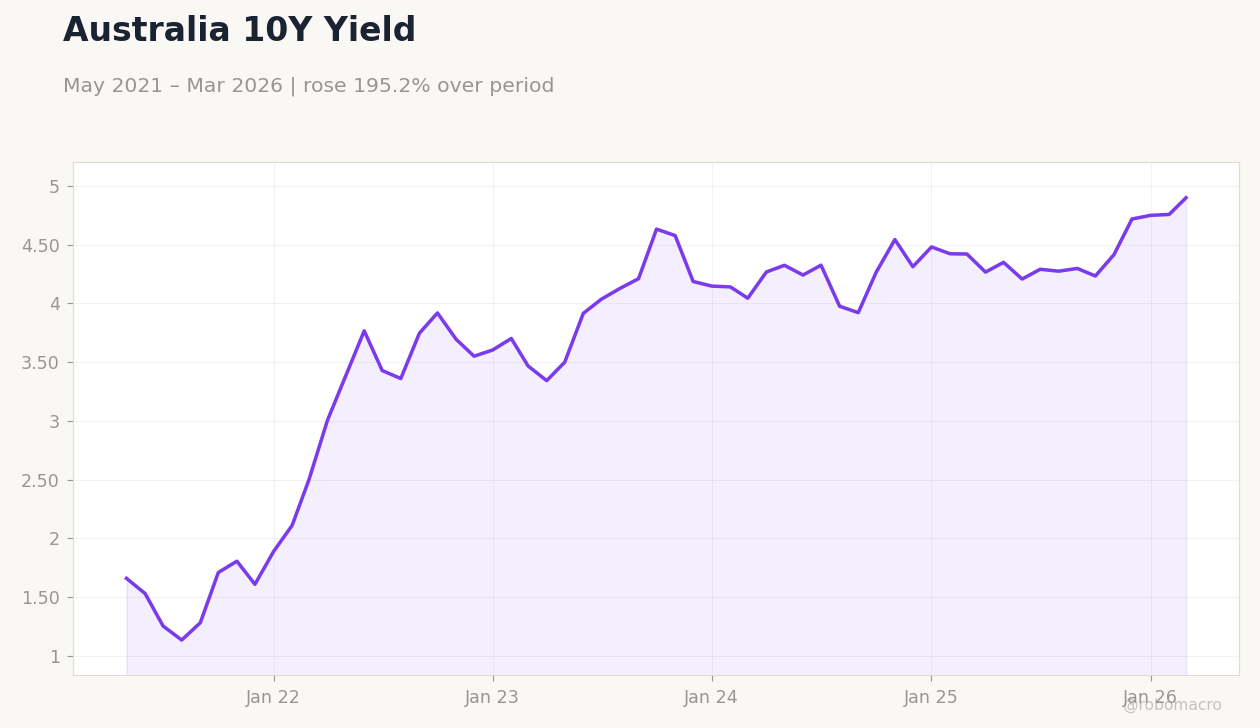
| Australia 10Y Govt Yield | 4.90% | +2.98% |
| NZ Short-term Rate | 4.33% | -9.60% |
Prior Economic Events
| Data | Prior | Cons | Actual |
|---|---|---|---|
| Inflation Rate Quarter-over-Quarter | 0.60 | 0.80 | 0.90 |
| S&P Global Manufacturing PMI Flash | 49.80 | - | 51 |
| S&P Global Services PMI Flash | 46.30 | - | 50.30 |
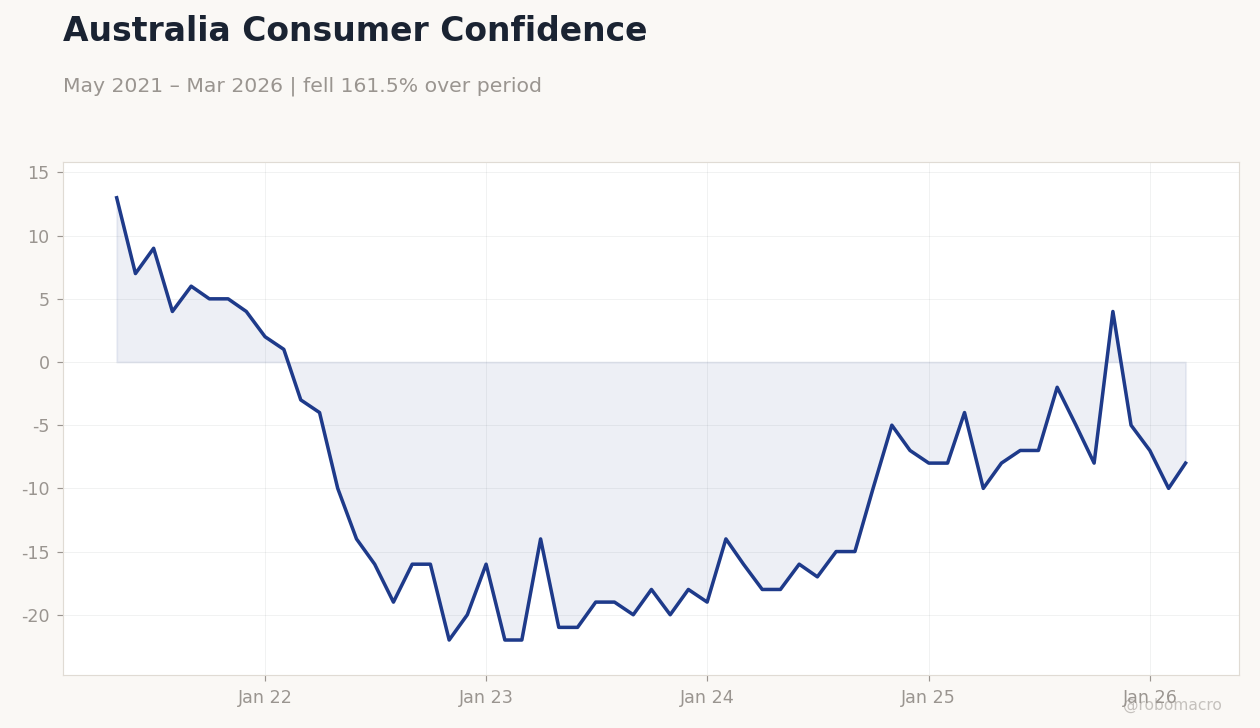 Australia Consumer Confidence | Type: macro_line | AU Confidence Index: -8 (2026-03-01) | Range: -22–13 | Trend(6pt): 13,-16,-20,-5,-7,-8
Today's Economic Events
| Data | Prior | Cons | Time |
|---|---|---|---|
| No events available | |||
- Australian flash PMIs returned to expansion, with manufacturing at 51.0 and services at 50.3, signaling resilient activity.
- New Zealand Q1 inflation rose 0.9% QoQ, beating consensus and heightening RBNZ rate hike risks.
- ANZ equities and currencies weakened amid USD strength and commodity volatility.
Yesterday's Recap
New Zealand's inflation rate quarter-over-quarter climbed to 0.9%, surpassing the consensus of 0.8% and previous 0.6%, highlighting ongoing price pressures. In Australia, the S&P Global Manufacturing PMI flash advanced to 51.0 from 49.8, entering expansion for the first time in months. The S&P Global Services PMI flash also rose to 50.3 from 46.3, indicating a service-sector recovery despite elevated rates.
The ASX 200 closed down 1.18% at 8,843.60, pressured by miners including BHP, which declined 0.50% to 55.89 amid fluctuating commodities. New Zealand's NZX 50 fell 0.47% to 12,884.93, affected by export-sensitive stocks. In FX, AUD/USD dropped 0.31% to 0.71, NZD/USD fell 0.64% to 0.59, and AUD/NZD eased 0.11% to 1.21.
Australia's 10-year government yield rose 2.98% to 4.90%, reflecting bets on tighter policy after the PMI data. New Zealand's short-term rate declined 9.60% to 4.33%. Gold dipped 0.41% to 4,713.20, Brent crude surged 3.75% to 105.73, and Bitcoin fell 0.65% to 77,698.39.
The Day Ahead
No significant economic releases are scheduled for Australia or New Zealand today, shifting focus to global developments such as U.S. indicators and commodity trends. Australia's export reliance on iron ore and energy could influence sentiment amid oil price gains from Middle East tensions.
New Zealand markets may watch dairy and trade signals, though no auctions are set. Tomorrow's calendar is also empty, suggesting ANZ assets will follow international risk flows, including any FX volatility from yen weakness or emerging market pressures. Geopolitical calm has supported AUD recently, but USD firmness could limit gains.
Other Economic Notes
Australia's PMI rebound points to economic strength in key sectors, yet sticky inflation and bank-led mortgage rate hikes may strain households and housing. New Zealand's elevated CPI underscores export vulnerabilities, particularly in dairy, amid global commodity shifts. Both economies face China-related demand risks, with potential slowdowns impacting trade balances.
(cont...)