ANZ Macro Daily(Beta Mode)
AUD Rises on RBA Hike Bets
Market Snapshot
| Asset | Level | Change |
|---|---|---|
| ASX 200 | 8,786.50 | -0.08% |
| NZX 50 | 12,874.94 | -0.08% |
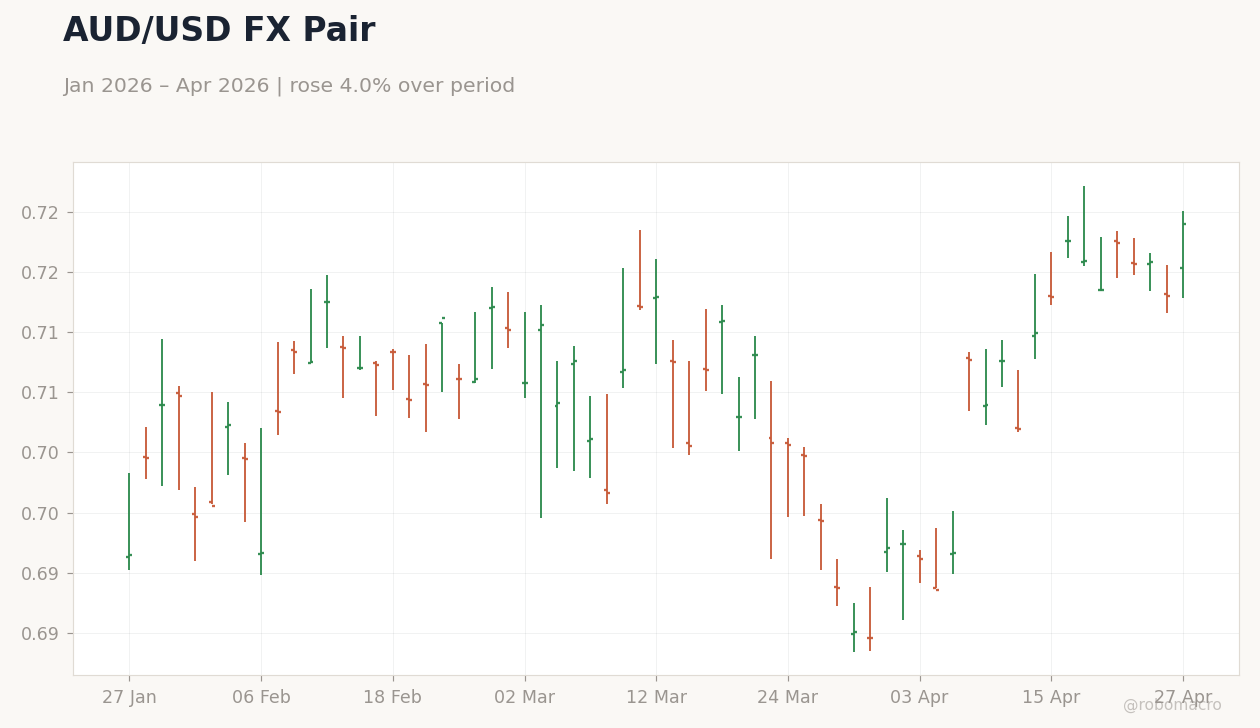
| AUD/USD | 0.72 | +0.84% |
| NZD/USD | 0.59 | +0.96% |
| AUD/NZD | 1.22 | -0.14% |
| BHP | 56.10 | +0.12% |
| Gold | 4,696.00 | -0.56% |
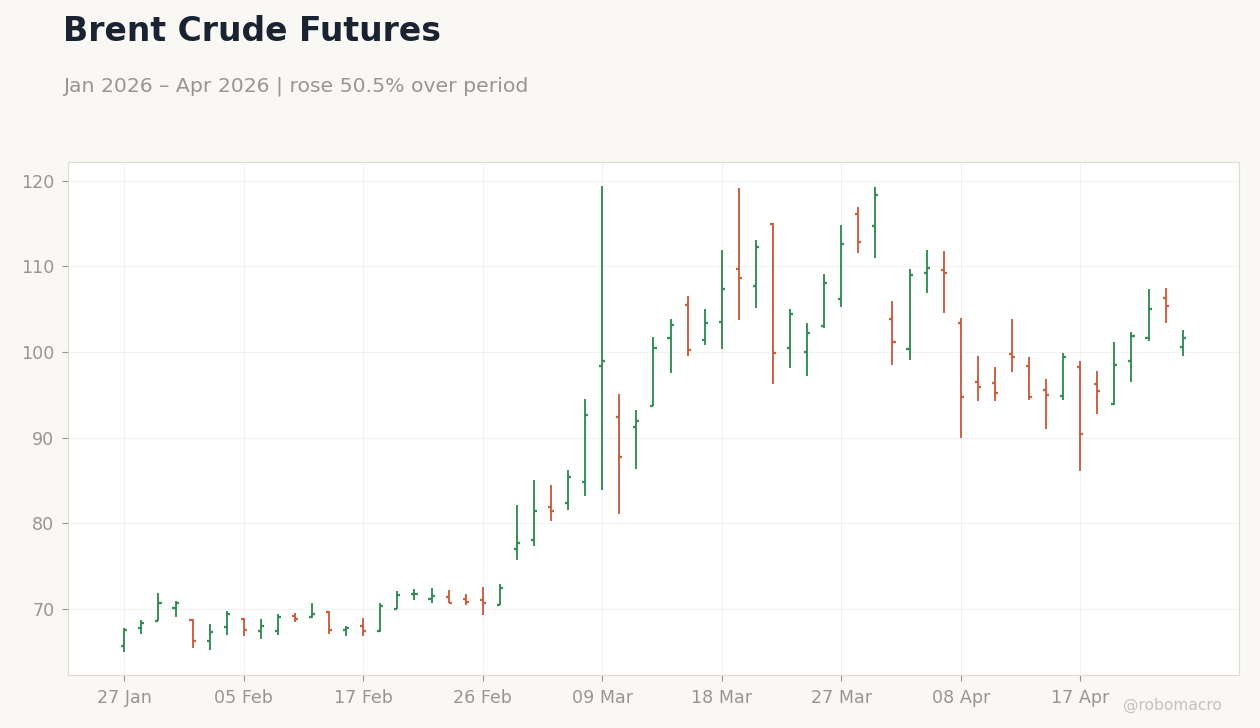
| Brent Crude | 101.80 | -3.35% |
| Bitcoin | 76,868.82 | -2.27% |
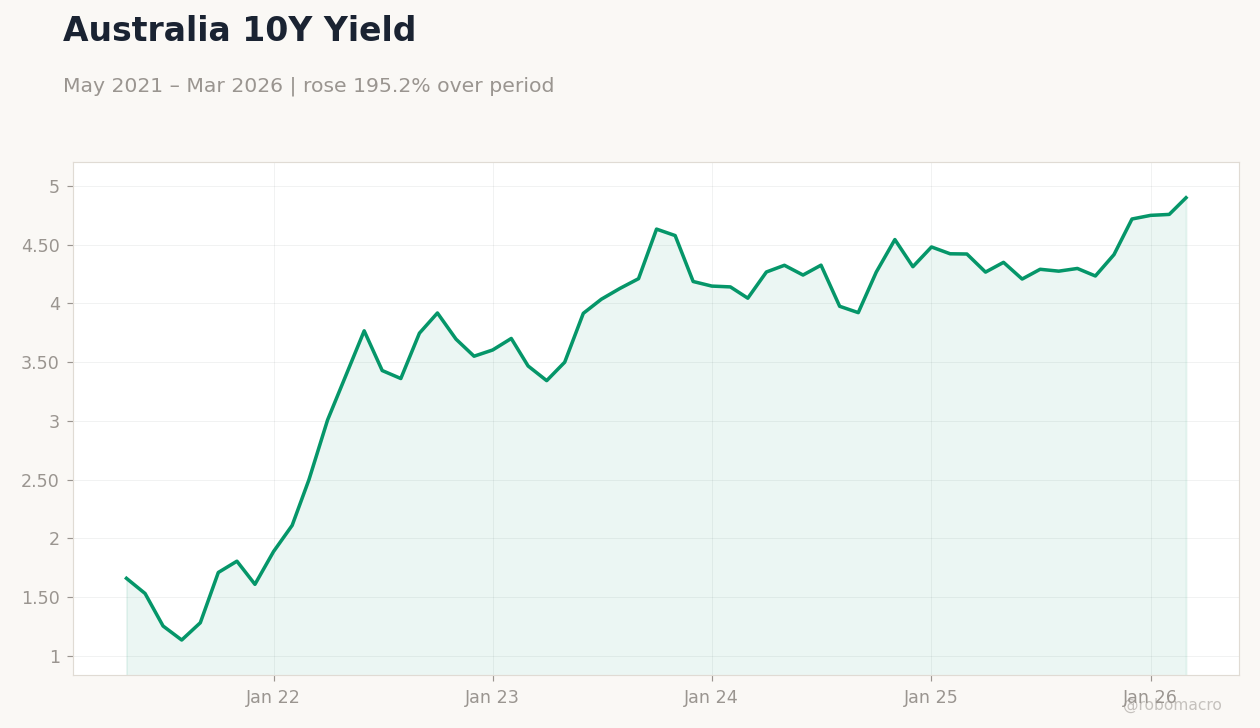
| Australia 10Y Govt Yield | 4.90% | +2.98% |
| NZ Short-term Rate | 4.33% | -9.60% |
Prior Economic Events
| Data | Prior | Cons | Actual |
|---|---|---|---|
| No events available | |||
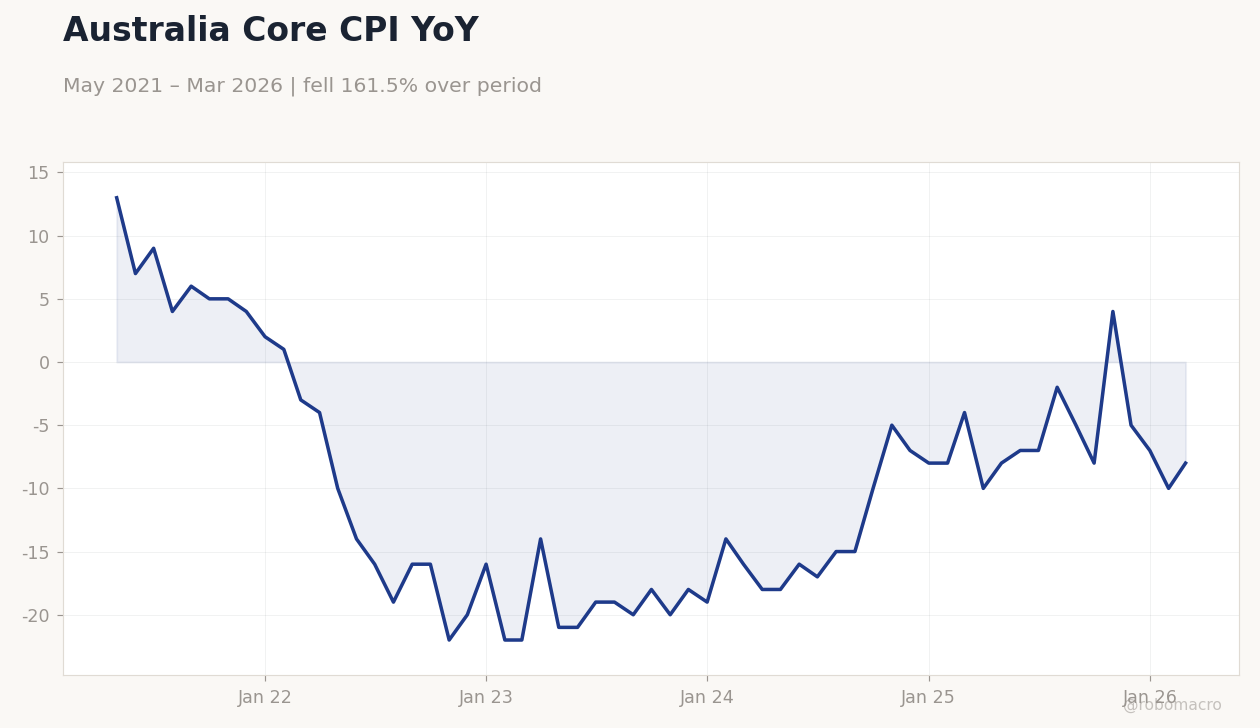 Australia Core CPI YoY | Type: macro_line | AU Core CPI % YoY: -8 (2026-03-01) | Range: -22–13 | Trend(6pt): 13,-16,-20,-5,-7,-8
Today's Economic Events
| Data | Prior | Cons | Time |
|---|---|---|---|
| Inflation Rate Month-over-Month | 0 | - | 17:30 |
| Inflation Rate Year-over-Year | 3.70 | 4.70 | 17:30 |
| Quarterly Inflation Rate Quarter-over-Quarter | 0.60 | 1.40 | 17:30 |
| Quarterly Inflation Rate Year-over-Year | 3.60 | 4.10 | 17:30 |
| Quarterly RBA Trimmed Mean CPI Quarter-over-Quarter | 0.90 | - | 17:30 |
| Quarterly RBA Trimmed Mean CPI Year-over-Year | 3.40 | - | 17:30 |
| RBA Trimmed Mean CPI Month-over-Month | 0.20 | - | 17:30 |
| RBA Trimmed Mean CPI Year-over-Year | 3.30 | - | 17:30 |
| RBNZ Gov Breman Speech | - | - | 17:30 |
| ANZ Business Confidence | 32.50 | - | 17:00 |
- Australian dollar gains as energy price surges boost RBA rate hike expectations.
- Key Australian inflation data and RBNZ speech upcoming; New Zealand-India FTA enhances trade prospects.
- Oil volatility and global central bank events influence ANZ market sentiment.
Yesterday's Recap
Australian equities closed slightly lower, with the ASX 200 at 8,786.50, down 0.08%, as gains in miners like BHP (up 0.12% to 56.10) were offset by broader weakness amid falling Brent crude prices. New Zealand's NZX 50 dipped 0.08% to 12,874.94, driven by caution in banking and export sectors due to dairy market softness. The AUD/USD advanced 0.84% to 0.72, fueled by rising energy costs heightening RBA hike bets, while NZD/USD rose 0.96% to 0.59 on positive trade news.
The AUD/NZD cross fell 0.14% to 1.22, underscoring AUD's relative strength. Gold declined 0.56% to 4,696.00, and Brent crude dropped 3.35% to 101.80, impacting Australian energy firms. Australian 10Y government yields increased 2.98% to 4.90%, reflecting inflation worries, while New Zealand short-term rates decreased 9.60% to 4.33% amid easing bets.
Bitcoin fell 2.27% to 76,868.82. No significant economic data was released in Australia or New Zealand, shifting focus to global factors like oil shocks.
The Day Ahead
Australian inflation releases headline tomorrow, with monthly year-over-year expected at 4.7% (previous 3.7%) and quarterly year-over-year at 4.1% (previous 3.6%), potentially strengthening RBA's hawkish stance if above consensus. Quarterly quarter-over-quarter is forecast at 1.4% (previous 0.6%), alongside core RBA trimmed mean measures without specific estimates, watched for persistent services inflation. New Zealand's RBNZ Governor Breman speaks at 17:30 ET, offering potential insights on rates amid wage softening.
ANZ Business Confidence follows on April 29 at 17:00 ET (previous 32.5), possibly lifted by the India FTA. Australian PPI quarter-over-quarter arrives April 30 at 17:30 ET, consensus 1.5% (previous 0.8%), indicating producer pressures.
Other Economic Notes
Australia's resource-heavy economy contends with Brent crude fluctuations, but robust China-linked iron ore and coal demand bolsters fiscal positions. New Zealand's agriculture benefits from the new India FTA, granting immediate duty-free access for lamb and wool while phasing in dairy, countering global trade uncertainties. (cont...)