| Asset | Level | Change |
|---|---|---|
| ASX 200 | 8,697.10 | -0.37% |
| NZX 50 | 13,035.70 | +0.09% |
| AUD/USD | 0.72 | -0.38% |
| NZD/USD | 0.59 | -0.32% |
| AUD/NZD | 1.22 | -0.16% |
| BHP | 54.47 | -0.87% |
| Gold | 4,566.80 | +1.05% |
| Brent Crude | 110.26 | -3.65% |
| Bitcoin | 81,646.77 | +2.28% |
| Australia 10Y Govt Yield | 4.90% | +2.98% |
| NZ Short-term Rate | 4.33% | -9.60% |
| Data | Prior | Cons | Actual |
|---|---|---|---|
| RBA Interest Rate Decision | 4.10 | 4.35 | 4.35 |
| RBA Press Conference | - | - | - |
| RBNZ Financial Stability Report | - | - | - |
Brent Crude Oil Price | Type: macro_line | Brent Crude Price: 113.9 (2026-04-27) | Range: 59.93–138.2 | Trend(6pt): 68.62,106.1,90.73,77.3,111.9,113.9
| Data | Prior | Cons | Time |
|---|---|---|---|
| Employment Change Quarter-over-Quarter | 0.50 | 0.20 | 14:45 |
| Headline Unemployment Rate | 5.40 | 5.40 | 14:45 |
| Ai Group Industry Index | -23.60 | - | 15:00 |
| RBNZ Press Conference | - | - | 17:00 |
| Trade Balance | 5,686m | 4,250m | 17:30 |
The Reserve Bank of Australia (RBA) hiked its cash rate by 25 basis points to 4.35% in line with consensus, marking the third consecutive increase this year, driven by sticky inflation and external pressures from Middle East conflicts impacting oil prices. During the subsequent RBA press conference, the governor emphasized that Australians are feeling poorer due to inflation and geopolitical tensions, forecasting a rough period ahead while noting government spending limited policy options. Australian equities softened, with the ASX 200 closing down 0.37% at 8,697.10, pressured by mining stocks like BHP which fell 0.87% to 54.47 amid volatile commodity prices.
In New Zealand, the RBNZ published its Financial Stability Report, noting resilience in the banking sector but no automatic tightening bias in response to the Hormuz shock, with board member Gai stating it does not warrant reflexive hikes. New Zealand's NZX 50 bucked the trend, rising 0.09% to 13,035.70, supported by dairy exporters amid stable global demand. Currency movements reflected caution, with AUD/USD dropping 0.38% to 0.72 and NZD/USD falling 0.32% to 0.59, while AUD/NZD eased 0.16% to 1.22.
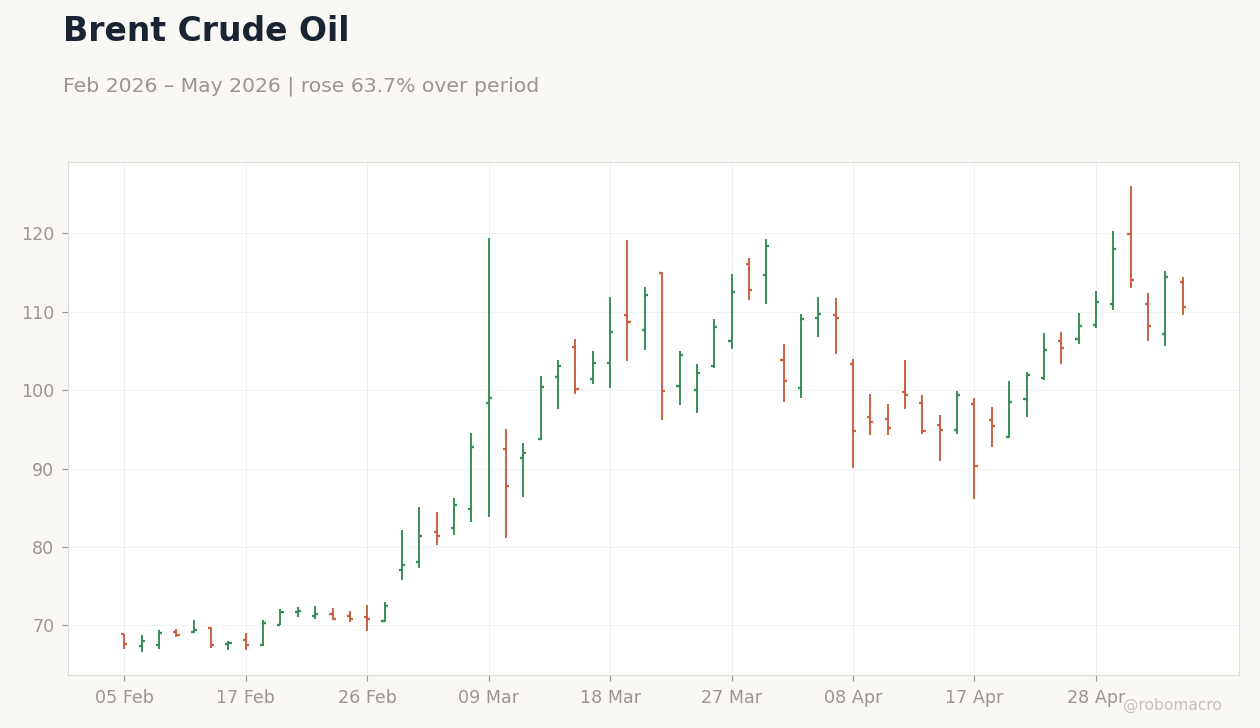
Commodity shifts included Brent crude tumbling 3.65% to 110.26, weighing on energy-linked assets, though gold rose 1.05% to 4,566.80 as a safe haven.
New Zealand's labor market data takes center stage with the Q1 employment change expected at 0.2% quarter-over-quarter and the headline unemployment rate holding steady at 5.4%, both due at 14:45 ET, providing insights into wage pressures and RBNZ's growth outlook. Australia's Ai Group Industry Index, a gauge of manufacturing sentiment, is slated for release at 15:00 ET, with prior reading at -23.6 signaling contraction amid high rates and trade uncertainties. The RBNZ press conference at 17:00 ET will elaborate on the Financial Stability Report, potentially clarifying views on housing market risks and external shocks.
Australia's trade balance for March, forecasted at A$4.25 billion surplus versus previous A$5.686 billion, arrives at 17:30 ET, critical for AUD dynamics given reliance on iron ore and coal exports to China. These releases could amplify currency volatility, especially if NZ employment softens or AU trade disappoints amid global oil disruptions.
Subscribe to ANZ Macro Daily and get each new issue delivered to your inbox.
Already a member? Visit robomacro.com to log in and manage subscriptions, or use Forgot Password to set a password.
Australia 10Y Govt Yield | Type: macro_line | AU 10Y Yield: 4.9 (2026-03-01) | Range: 1.135–4.9 | Trend(6pt): 1.531,3.361,4.633,4.313,4.758,4.9
Brent Crude Oil | Type: market_hloc | Brent Crude: 110.6 (2026-05-05) | Range: 67.42–118.3 | Trend(6pt): 67.55,72.48,112.2,99.36,114.4,110.6
ASX 200 Index | Type: market_hloc | ASX 200: 8697 (2026-05-04) | Range: 8366–9199 | Trend(5pt): 8889,9175,8498,8926,8697
NZX 50 Index | Type: market_hloc | NZX 50: 1.304e+04 (2026-05-05) | Range: 1.27e+04–1.372e+04 | Trend(5pt): 1.344e+04,1.372e+04,1.299e+04,1.302e+04,1.304e+04
Broader themes in ANZ economies highlight vulnerability to commodity price swings, with Australia's iron ore and coal exports facing headwinds from China's uneven recovery, while New Zealand's dairy sector benefits from recent global demand upticks. Housing markets remain a flashpoint, with Australian mortgage stress rising post-RBA hikes and New Zealand's construction activity slowing due to high rates, exacerbating affordability issues. Trade pacts, such as New Zealand's new supply chain agreement with Singapore for essential goods like food and energy, underscore efforts to mitigate global disruptions, potentially stabilizing NZ's import-dependent sectors.
Global macro developments are pressuring ANZ through elevated oil prices from Hormuz tensions, with Brent crude's volatility directly impacting Australia's LNG exports and inflating import costs for both nations. China's growth outlook remains pivotal, as any stimulus signals could boost demand for Australian commodities like iron ore, supporting trade balances, while New Zealand's dairy exports hinge on Asian consumption trends. Middle East conflicts are fueling inflation fears, with RBA citing them as a factor in rate decisions, and similar concerns echoed in RBNZ commentary on avoiding knee-jerk hikes.
Yen stability and dollar firmness amid war fears are influencing AUD and NZD crosses, with safe-haven flows boosting gold prices beneficial to Australian miners. Broader trade dynamics, including Australia's push for deals to counter U.S. and Chinese influences, align with New Zealand's Singapore pact to secure supply chains.
U.S. regulatory jitters on Bitcoin add to crypto volatility, indirectly affecting ANZ investor sentiment in diversified portfolios. Hong Kong's stable bad loan ratios amid solid growth offer a positive Asia-Pacific contrast, potentially encouraging capital flows to ANZ.
The RBA raised its cash rate to 4.35% from 4.1%, with the committee voting to hike in response to persistent inflation above target and external shocks like Middle East conflicts driving up energy costs. Governor statements during the press conference highlighted the economic toll on households, linking inflation to global events and domestic spending, while signaling readiness for further tightening if needed, particularly with housing market linkages amplifying rate sensitivity. In contrast, the RBNZ maintained a cautious stance in its Financial Stability Report, with no indication of imminent hikes despite the Hormuz shock, as board member Gai emphasized that it does not automatically warrant tightening.
This divergence underscores RBNZ's historical aggressiveness in rate cycles but current focus on supporting growth amid softer employment data implications. Both central banks operate inflation-targeting frameworks, yet RBA's path appears hawkish with potential for more hikes, while RBNZ may lean toward cuts if NZ unemployment rises, influenced by housing vulnerabilities in each economy. Upcoming minutes and inflation reports will be key for clarifying these trajectories, with China's demand outlook a shared external driver.