ANZ Macro Daily(Beta Mode)
RBA Hikes to 4.35%, NZ Jobs Mixed
Market Snapshot
| Asset | Level | Change |
|---|---|---|
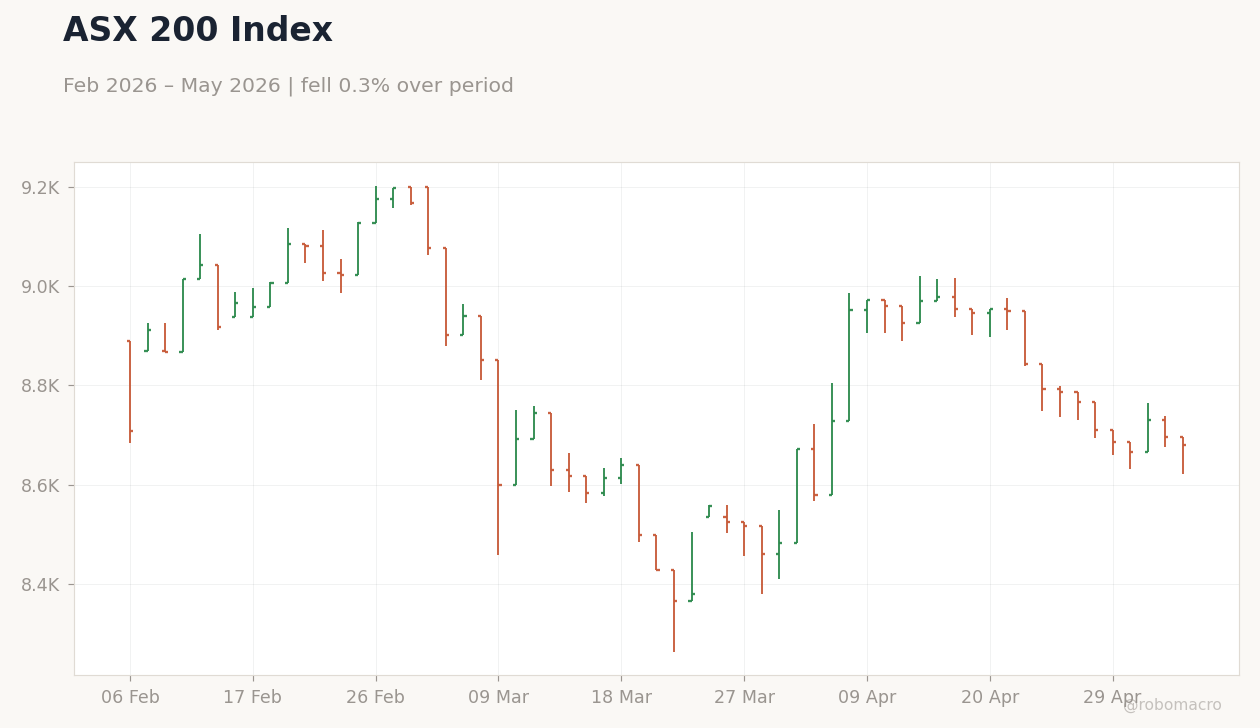
| ASX 200 | 8,680.50 | -0.19% |
| NZX 50 | 13,145.19 | +0.84% |
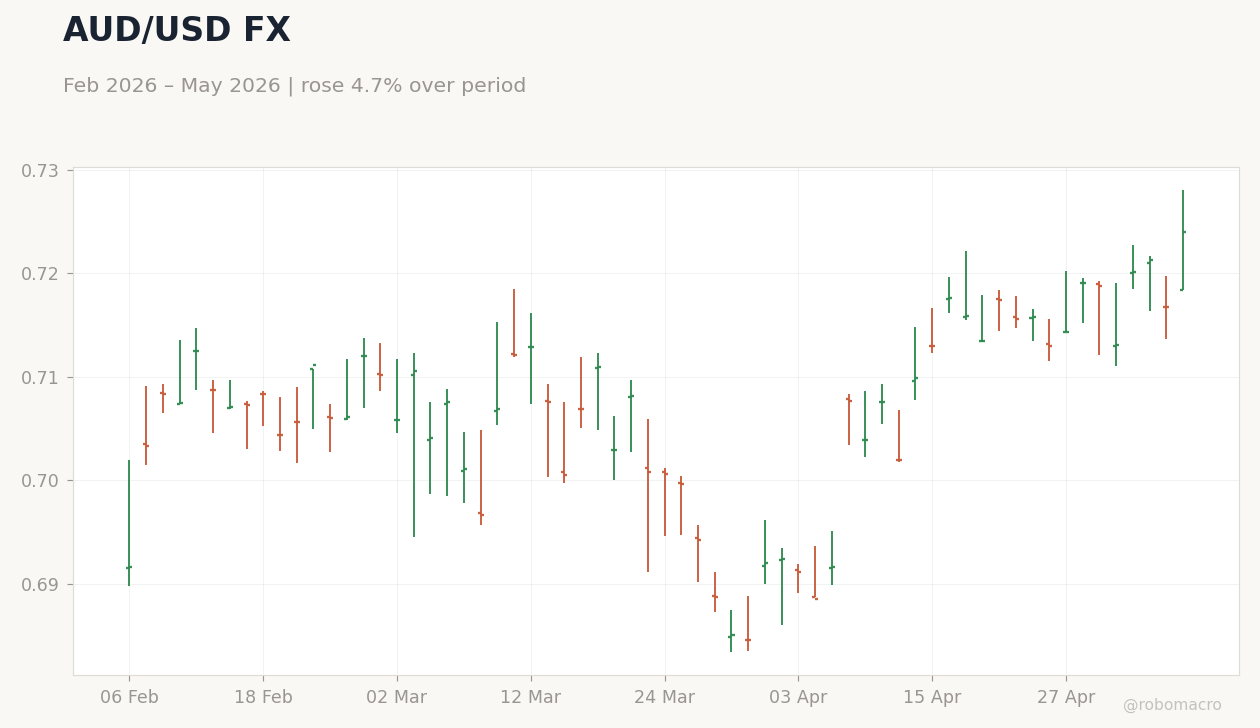
| AUD/USD | 0.72 | +1.03% |
| NZD/USD | 0.60 | +1.47% |
| AUD/NZD | 1.22 | -0.45% |
| BHP | 55.86 | +2.08% |
| Gold | 4,707.50 | +3.33% |
| Brent Crude | 101.25 | -7.85% |
| Bitcoin | 81,484.69 | +0.69% |
| Australia 10Y Govt Yield | 4.90% | +2.98% |
| NZ Short-term Rate | 4.33% | -9.60% |
Prior Economic Events
| Data | Prior | Cons | Actual |
|---|---|---|---|
| RBA Interest Rate Decision | 4.10 | 4.35 | 4.35 |
| RBA Press Conference | - | - | - |
| RBNZ Financial Stability Report | - | - | - |
| Employment Change Quarter-over-Quarter | 0.50 | 0.30 | 0.20 |
| Headline Unemployment Rate | 5.40 | 5.40 | 5.30 |
| Ai Group Industry Index | -34.20 | - | -24.40 |
| RBNZ Press Conference | - | - | - |
 Australia CPI YoY | Type: macro_line | Australia CPI YoY %: 3.32 (2026-03-01) | Range: 2.325–8.979 | Trend(5pt): 5.296,8.223,3.251,2.871,3.32
Today's Economic Events
| Data | Prior | Cons | Time |
|---|---|---|---|
| Trade Balance | 5,686m | 4,250m | 17:30 |
- RBA lifted rates 25bps to 4.35% on inflation focus, dragging ASX 200 lower.
- NZ unemployment dipped to 5.3% but employment growth softened, lifting NZX 50.
- AUD and NZD strengthened vs USD, with yields diverging on policy outlooks.
Yesterday's Recap
The Reserve Bank of Australia (RBA) increased its cash rate by 25 basis points to 4.35% from 4.1%, aligning with consensus, as it focused on curbing persistent inflation amid economic slowdown concerns. In the subsequent press conference, Governor Michele Bullock stressed that fiscal policy should support monetary tightening and reiterated the need for restrictive measures to avoid stagflation risks. New Zealand's Reserve Bank (RBNZ) issued its Financial Stability Report, noting a resilient financial system despite heightened global risks from Middle East conflicts, but warned of potential house price declines from rising mortgage rates, higher SME lending costs, and emerging insurance pressures.
NZ employment change quarter-over-quarter was 0.2%, missing the 0.3% consensus and prior 0.5%, signaling softer labor momentum, while the unemployment rate fell to 5.3% from 5.4%, beating expectations. Australia's Ai Group Industry Index rose to -24.4 from -34.2, indicating easing contraction in manufacturing. Markets responded with the ASX 200 down 0.19% to 8,680.50, pressured by the hike and commodity softness, contrasted by the NZX 50 up 0.84% to 13,145.19 on the jobs surprise.
FX saw AUD/USD rise 1.03% to 0.72 and NZD/USD up 1.47% to 0.60, while AUD/NZD dipped 0.45% to 1.22, favoring NZD.
The Day Ahead
Australia's March trade balance releases at 17:30 ET, with consensus forecasting a A$4.25 billion surplus, down from A$5.686 billion prior, possibly reflecting weaker commodity exports like iron ore due to soft Chinese demand. A miss could weigh on AUD by highlighting eroding trade surpluses and fiscal pressures. No key New Zealand data is slated, leaving room for digestion of recent employment and stability updates.
Attention may turn to commodity trends and global risk sentiment, with ANZ markets sensitive to US spillovers amid domestic export dynamics.
Other Economic Notes
Australia's rate hike intensifies housing market strains, amplifying inflation burdens for households and sparking stagflation warnings from critics, as major banks pass on increases. (cont...)