ANZ Macro Daily(Beta Mode)
NAB Tips RBA Cut as Business Confidence Rises
Market Snapshot
| Asset | Level | Change |
|---|---|---|
| ASX 200 | 8,653.30 | +0.57% |
| NZX 50 | 13,202.16 | -0.39% |
| AUD/USD | 0.71 | +0.41% |
| NZD/USD | 0.58 | +0.58% |
| AUD/NZD | 1.21 | -0.20% |
| BHP | 60.80 | +1.00% |
| Gold | 4,231.70 | +3.01% |
| Brent Crude | 89.11 | -4.29% |
| Bitcoin | 63,496.34 | +3.33% |
| Australia 10Y Govt Yield | 4.96% | +0.69% |
| NZ Short-term Rate | 4.33% | -9.60% |
Prior Economic Events
| Data | Prior | Cons | Actual |
|---|---|---|---|
| Westpac Consumer Confidence Change | 3.50 | - | -2.90 |
| Westpac Consumer Confidence Index | 83 | - | 80.60 |
| NAB Business Confidence Index | -23 | - | -14 |
| RBA Bulletin | - | - | "" |
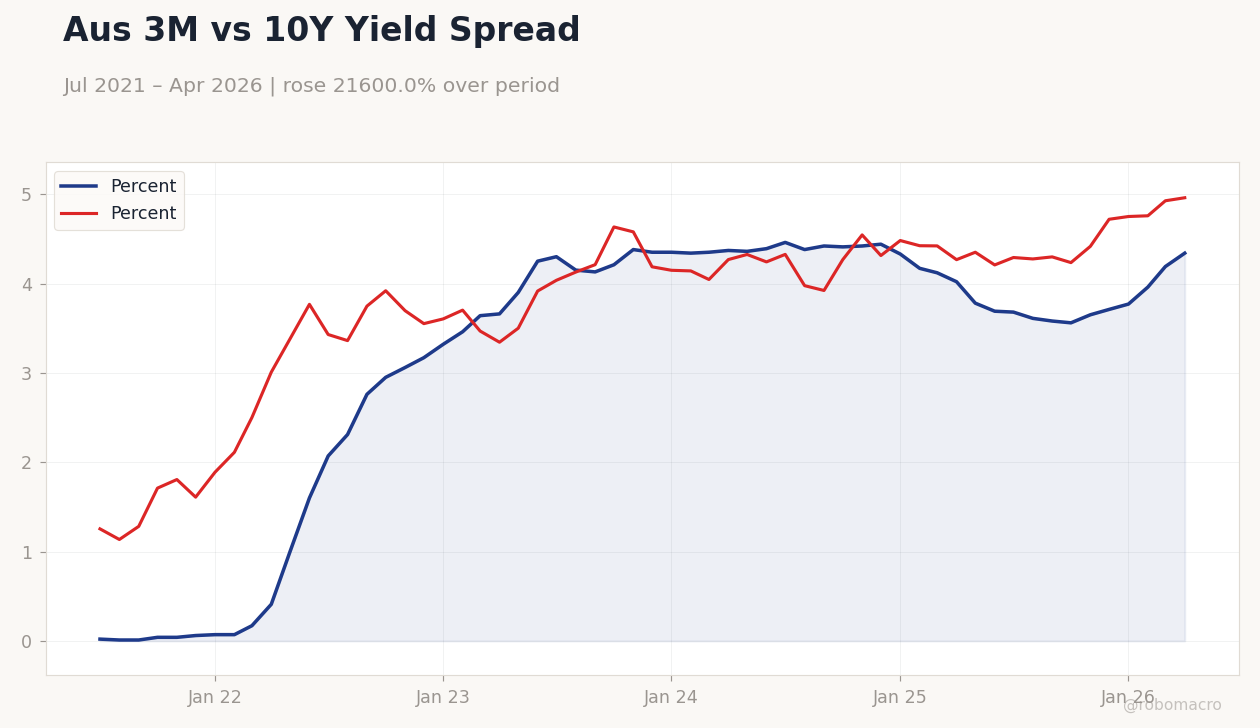 Aus 3M vs 10Y Yield Spread | Type: macro_line | Percent: 4.34 (2026-04-01) | Range: 0.01–4.46 | Trend(6pt): 0.02,2.76,4.38,4.33,4.19,4.34 | Percent: 4.96 (2026-04-01) | Range: 1.135–4.96 | Trend(6pt): 1.254,3.747,4.578,4.481,4.926,4.96
Today's Economic Events
| Data | Prior | Cons | Time |
|---|---|---|---|
| Business NZ PMI | 50.50 | - | 14:30 |
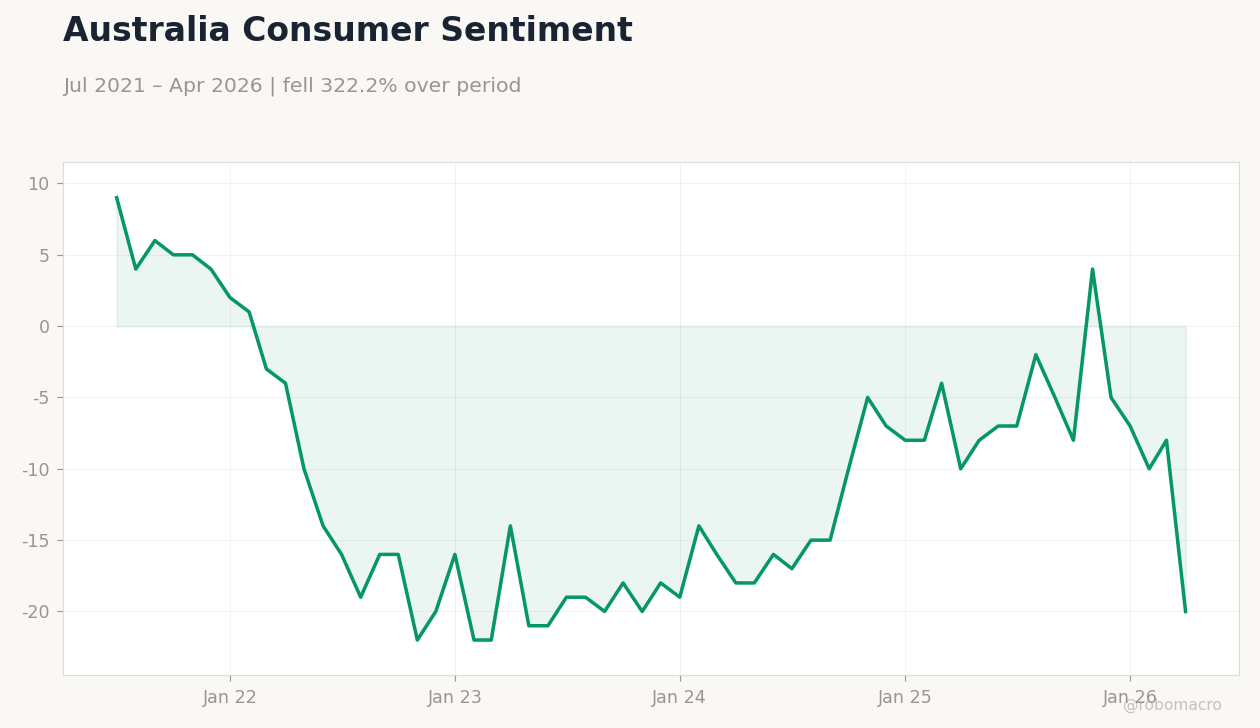
- Australian business confidence improved sharply while consumer sentiment weakened in June data
- ASX 200 rose 0.57% on RBA pause bets as banks cut home-loan rates ahead of easing
- NAB joins peers in forecasting RBA’s next move as a rate cut amid slowing growth
Yesterday's Recap
Australian Westpac Consumer Confidence Index fell to 80.6 while the change printed -2.9, signalling weaker household sentiment. NAB Business Confidence Index rose to -14 from -23, pointing to a modest recovery in firm sentiment. The RBA Bulletin offered no new policy signals.
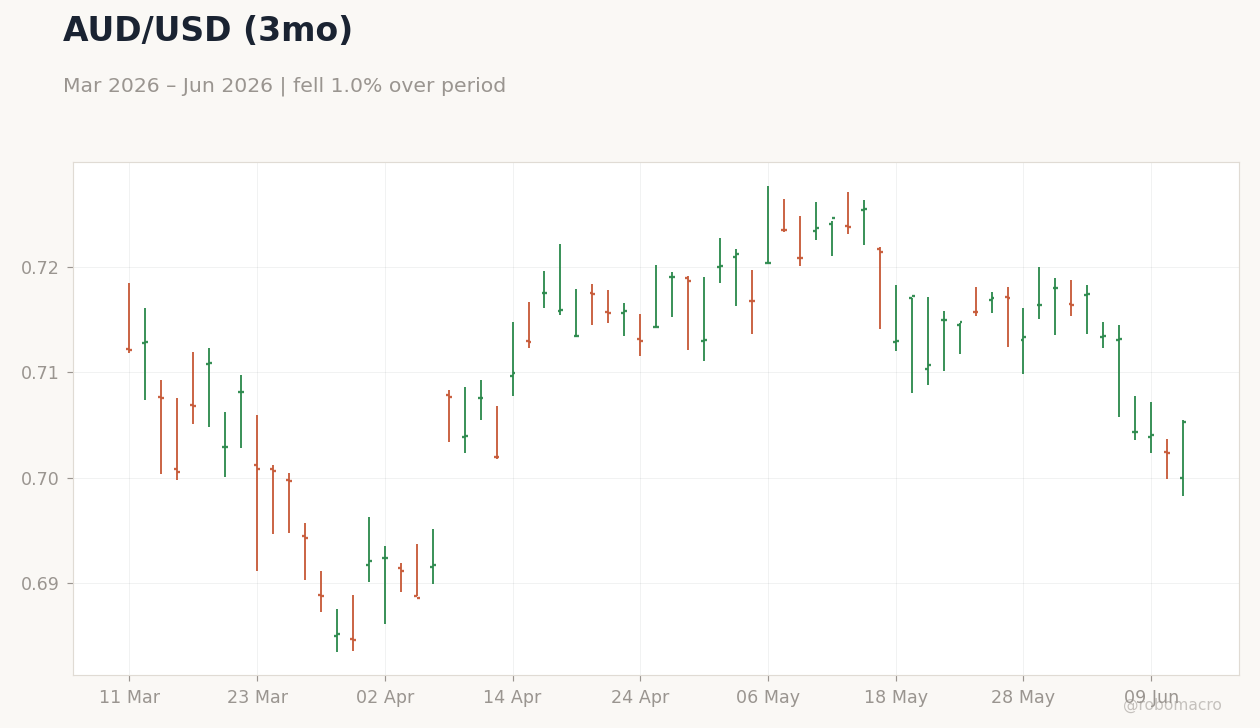
Markets responded with the ASX 200 climbing 0.57% to 8,653.30, led by BHP’s 1.00% gain to 60.80. The NZX 50 slipped 0.39% to 13,202.16. AUD/USD advanced 0.41% to 0.71 and NZD/USD gained 0.58% to 0.58.
Australia’s 10-year yield rose 0.69% to 4.96% while NZ short-term rates fell 9.60% to 4.33%. Gold surged 3.01% to 4,231.70 as Brent crude dropped 4.29% to 89.11. Bitcoin rose 3.33% to 63,496.34.
The Day Ahead
New Zealand’s Business NZ PMI releases at 14:30 today, providing the latest gauge of manufacturing momentum. Markets will watch for any downside surprise that could reinforce RBNZ easing bets. No major Australian data are scheduled.
Attention will remain on bank mortgage-rate actions and any further commentary from RBA officials. Positioning ahead of next week’s employment figures is likely to keep AUD and NZD volatility contained.
Other Economic Notes
Banks have begun cutting home-loan rates despite the RBA’s 4.10% cash rate, reflecting expectations of policy easing. NAB has dropped its prior hike call and now sees the next RBA move as a cut given the economic slowdown. Housing approvals data continue to soften, adding to evidence of cooling domestic demand.
Commodity strength, especially iron ore, continues to support Australia’s terms of trade and the AUD.
Global Macro News
Indonesia’s economy faces a confidence-driven doom loop that could weigh on regional risk appetite and AUD sentiment. Japan’s prime minister pledged to defend the yen through domestic growth measures, limiting further AUD/JPY upside. Broader Asian growth concerns are amplifying China demand signals that remain pivotal for Australian iron-ore and coal exports.
<i>↓ p.2</i>