ANZ Macro Daily(Beta Mode)
AUD Holds Firm Amid China Data as NZ Jobs Loom
Market Snapshot
| Asset | Level | Change |
|---|---|---|
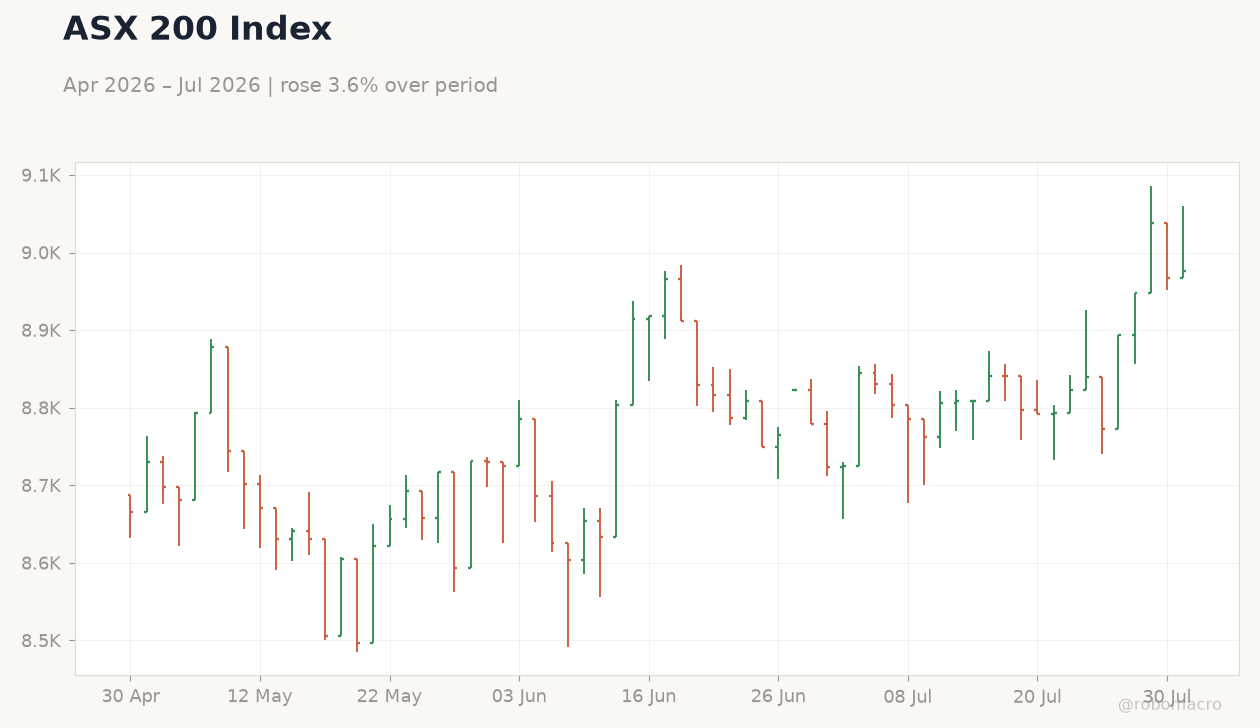
| ASX 200 | 8,976.80 | +0.10% |
| NZX 50 | 13,699.28 | -0.46% |
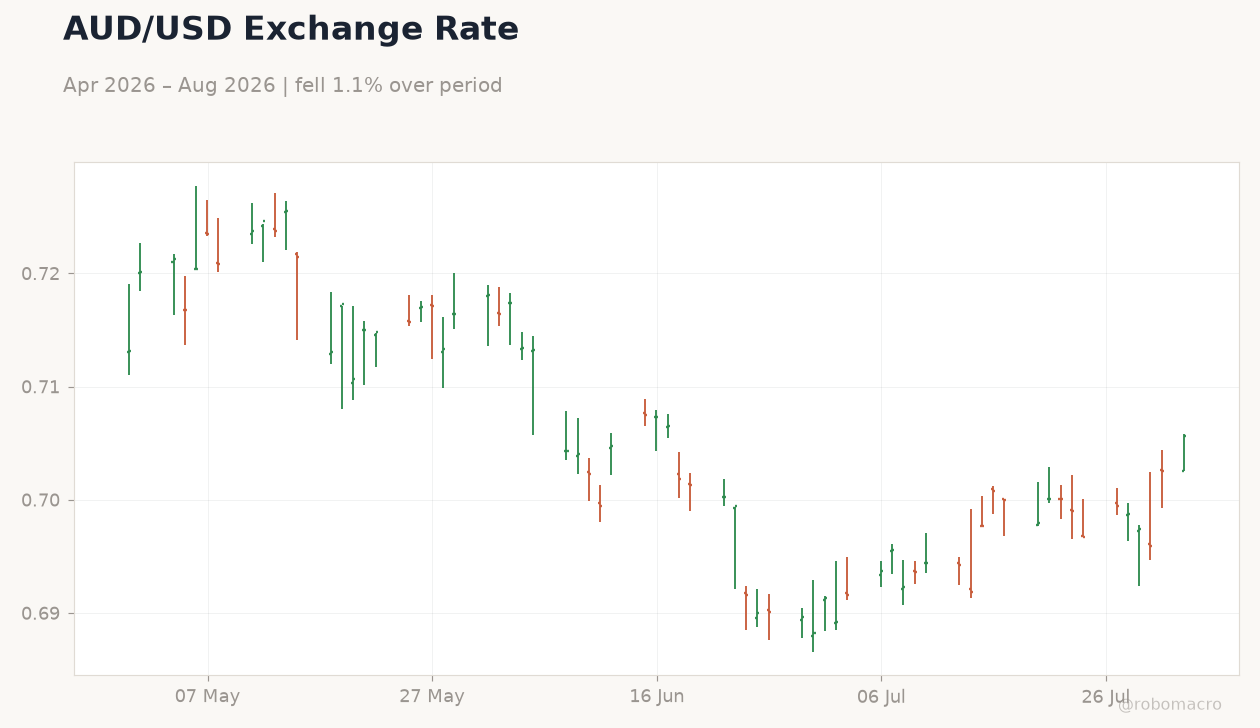
| AUD/USD | 0.71 | +0.41% |
| NZD/USD | 0.59 | +0.33% |
| AUD/NZD | 1.20 | +0.03% |
| BHP | 60.31 | +1.96% |
| Gold | 4,107.00 | +0.17% |
| Brent Crude | 90.12 | +1.22% |
| Bitcoin | 63,378.75 | +0.98% |
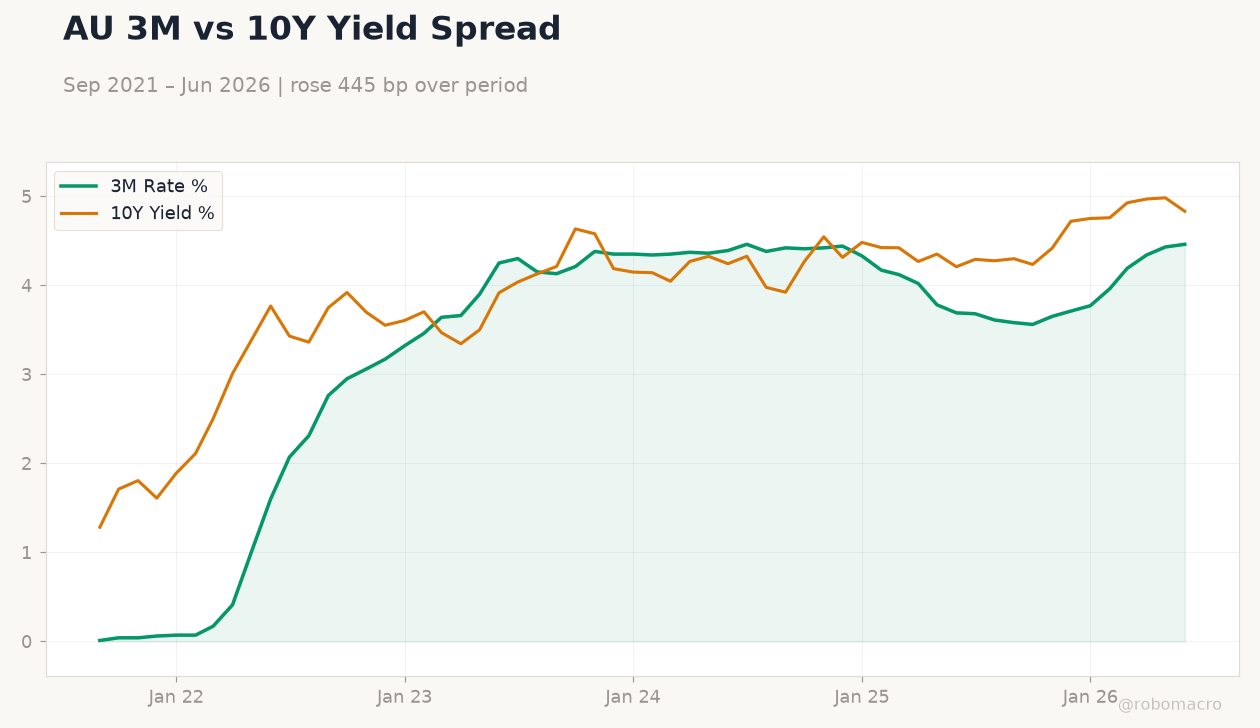
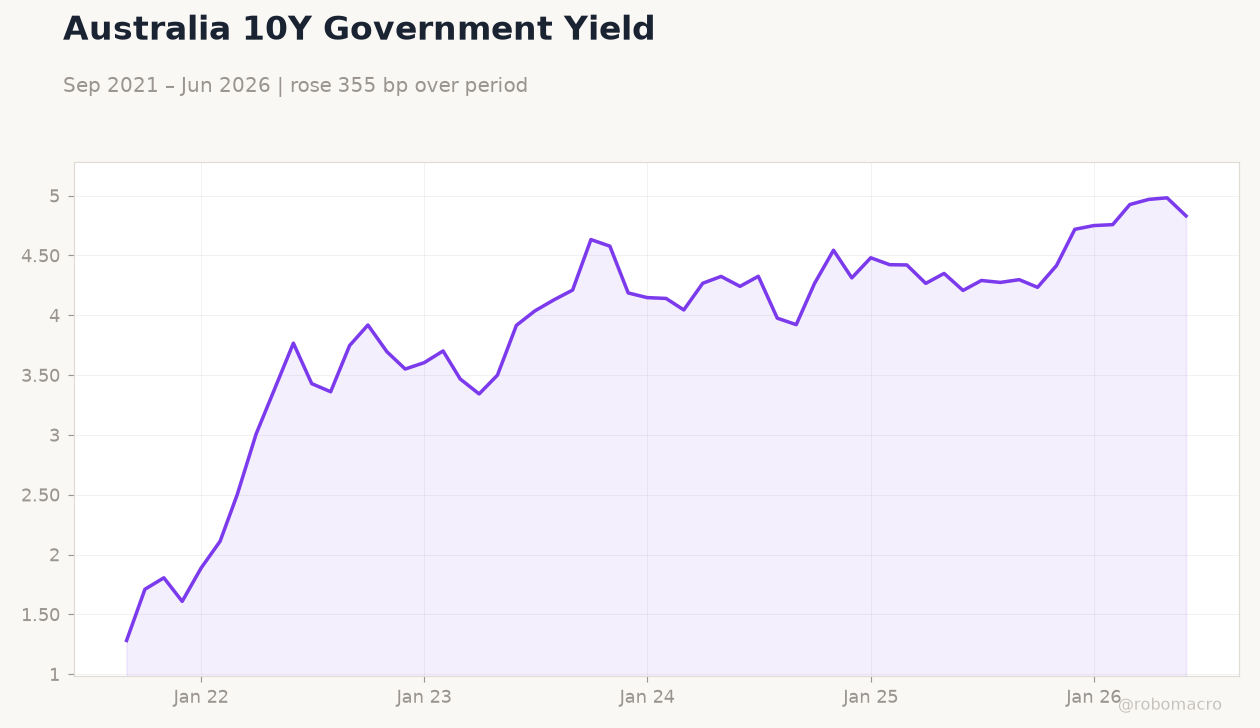
| Australia 10Y Govt Yield | 4.83% | -3.03% |
| NZ Short-term Rate | 4.33% | -9.60% |
Prior Economic Events
| Data | Prior | Cons | Actual |
|---|---|---|---|
| No events available | |||
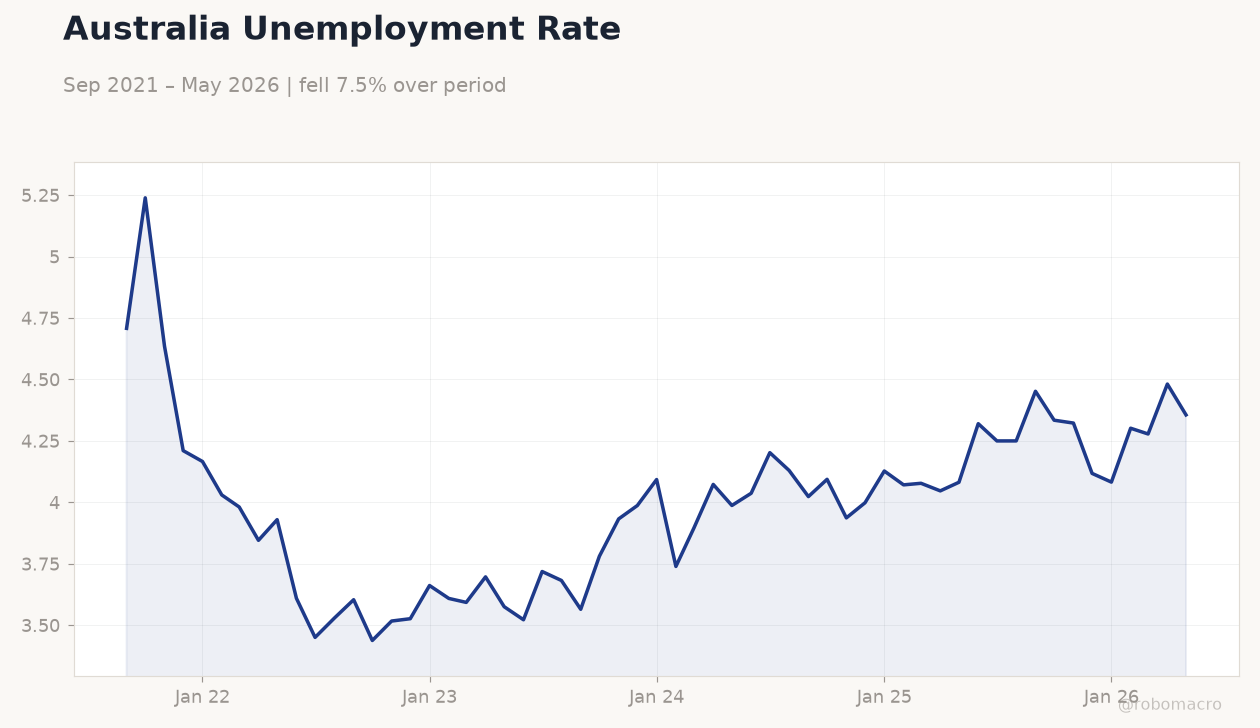 Australia Unemployment Rate | Type: macro_line | Unemployment Rate %: 4.356 (2026-05-01) | Range: 3.438–5.239 | Trend(5pt): 4.708,3.517,4.093,4.078,4.356
Today's Economic Events
| Data | Prior | Cons | Time |
|---|---|---|---|
| Employment Change Quarter-over-Quarter | 0.20 | 0.10 | 18:45 |
| Unemployment Rate | 5.30 | 5.40 | 18:45 |
| Ai Group Industry Index | -30 | - | 19:00 |
| Trade Balance | -3,018m | -1,080m | 21:30 |
- AUD/USD holds at 0.71 as soft Chinese data offsets fading RBA hike bets.
- NZX 50 falls 0.46% while ASX 200 edges up 0.10% on commodity support.
- RBA cash rate stays at 4.35% and RBNZ OCR at 2.50% with inflation above targets.
Yesterday's Recap
Markets showed modest moves with no major ANZ data releases on 1 August. The ASX 200 rose 0.10% to 8,976.80 while BHP gained 1.96% to 60.31 on iron-ore resilience. The NZX 50 declined 0.46% to 13,699.28 amid ongoing housing-market weakness.
AUD/USD climbed 0.41% to 0.71 and NZD/USD advanced 0.33% to 0.59 as softer US GDP weighed on the dollar. Australian 10-year yields fell 3.03% to 4.83% and NZ short-term rates dropped 9.60% to 4.33%. News highlighted the Australian dollar holding firm despite weak Chinese data and cooling RBA rate-hike expectations.
New Zealand house prices reached a three-year low, extending the slump that began in early 2022. Brent crude rose 1.22% to 90.12 while gold added 0.17% to 4,107.00, reflecting supply signals and safe-haven flows.
The Day Ahead
Attention turns to New Zealand employment data due 4 August, with employment change expected at 0.1% quarter-over-quarter and the unemployment rate forecast to rise to 5.4%. Australia’s Ai Group Industry Index follows later that day. The high-impact Australian trade balance release on 5 August carries a consensus of -1.08 billion AUD after the prior -3.02 billion print.
These figures will inform views on domestic demand and external balances ahead of central-bank meetings. China’s growth trajectory remains the dominant external influence on both commodity and dairy exports. Markets will also monitor any follow-through from recent BOJ policy signals.
Other Economic Notes
Australian CPI stands at 3.75% year-over-year while New Zealand CPI prints 4.06%, keeping both central banks on alert. New Zealand’s housing market faces its largest down-phase in decades, pressuring household wealth and construction activity. Australia’s commodity exports, led by iron ore and LNG, continue to benefit from selective Chinese stimulus expectations even as overall demand softens.
Retail-sales resilience in Australia has supported the RBA’s higher-for-longer stance, yet unemployment trends warrant monitoring. Divergent inflation paths and housing sensitivities underscore the independent policy settings of the RBA and RBNZ.