ANZ Macro Daily(Beta Mode)
ASX Climbs as China PMI Misses, AUD Holds Steady
Market Snapshot
| Asset | Level | Change |
|---|---|---|
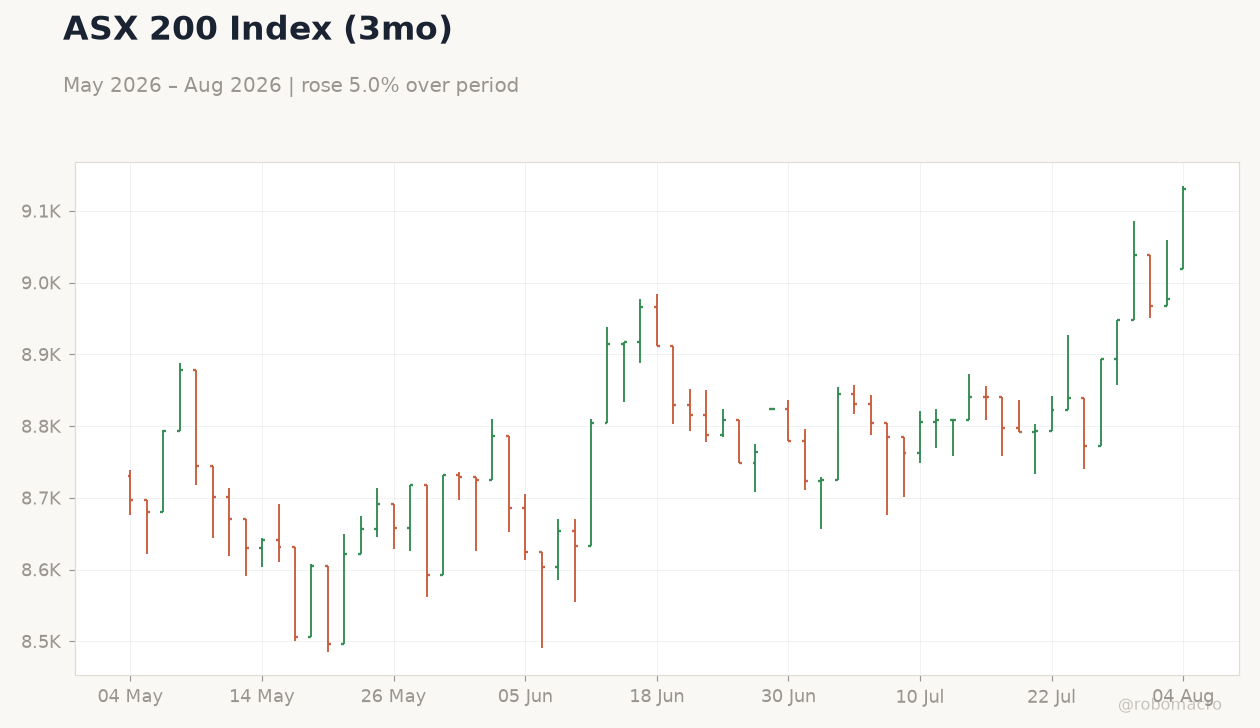
| ASX 200 | 9,128.90 | +1.69% |
| NZX 50 | 13,829.04 | +0.95% |
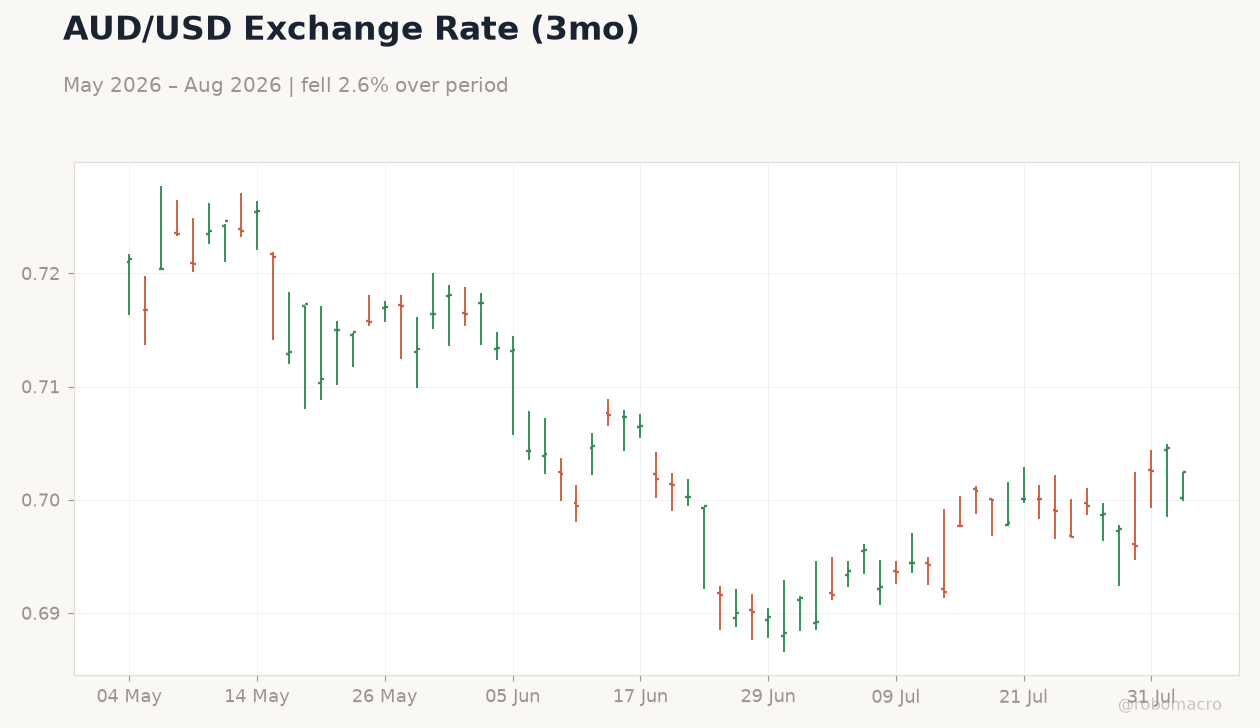
| AUD/USD | 0.70 | -0.30% |
| NZD/USD | 0.59 | -0.48% |
| AUD/NZD | 1.19 | -0.10% |
| BHP | 60.31 | +1.96% |
| Gold | 4,116.00 | +1.65% |
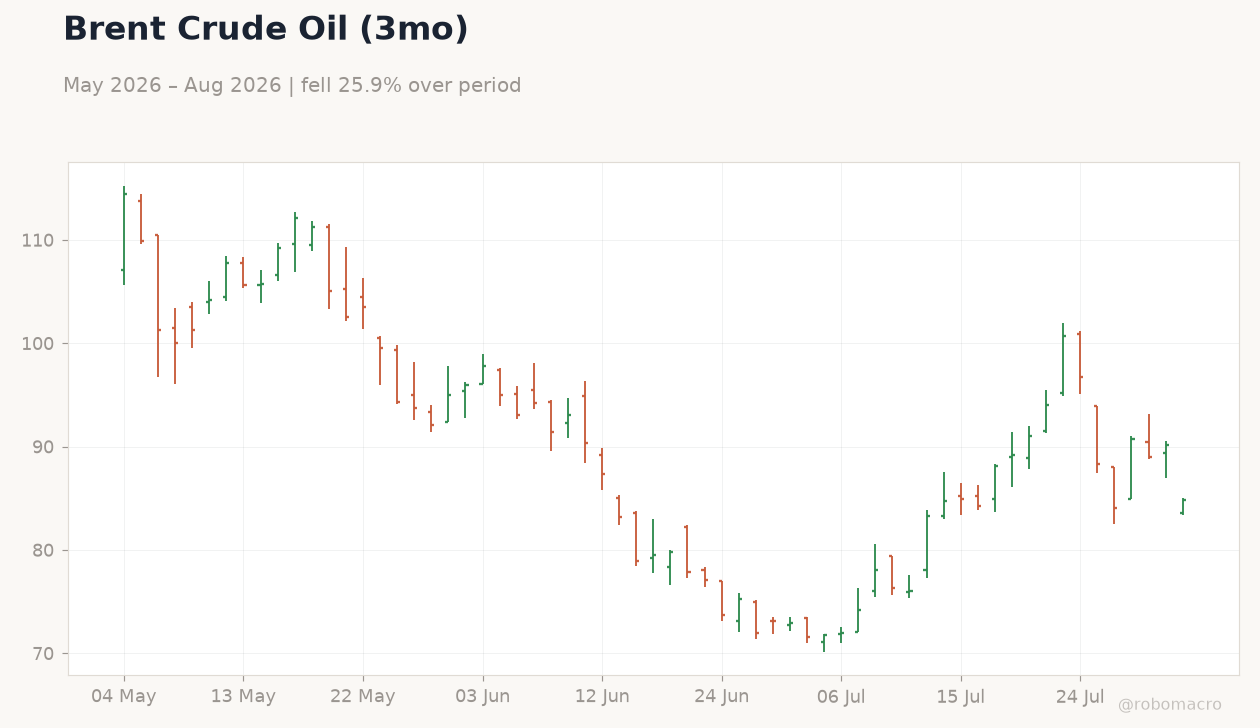
| Brent Crude | 84.76 | -5.95% |
| Bitcoin | 63,740.76 | +0.41% |
| Australia 10Y Govt Yield | 4.83% | -3.03% |
| NZ Short-term Rate | 4.33% | -9.60% |
Prior Economic Events
| Data | Prior | Cons | Actual |
|---|---|---|---|
| No events available | |||
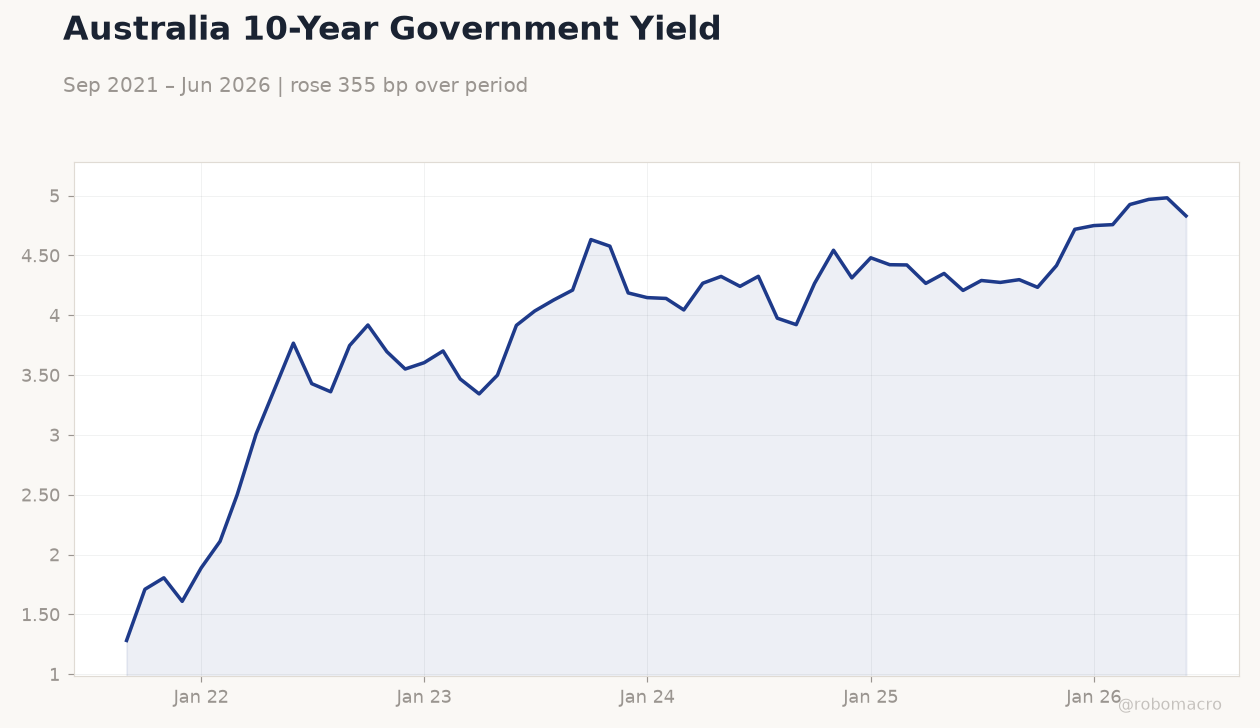 Australia 10-Year Government Yield | Type: macro_line | Yield (%): 4.831 (2026-06-01) | Range: 1.282–4.982 | Trend(6pt): 1.282,3.696,4.148,4.421,4.982,4.831
Today's Economic Events
| Data | Prior | Cons | Time |
|---|---|---|---|
| Employment Change Quarter-over-Quarter | 0.20 | 0.10 | 18:45 |
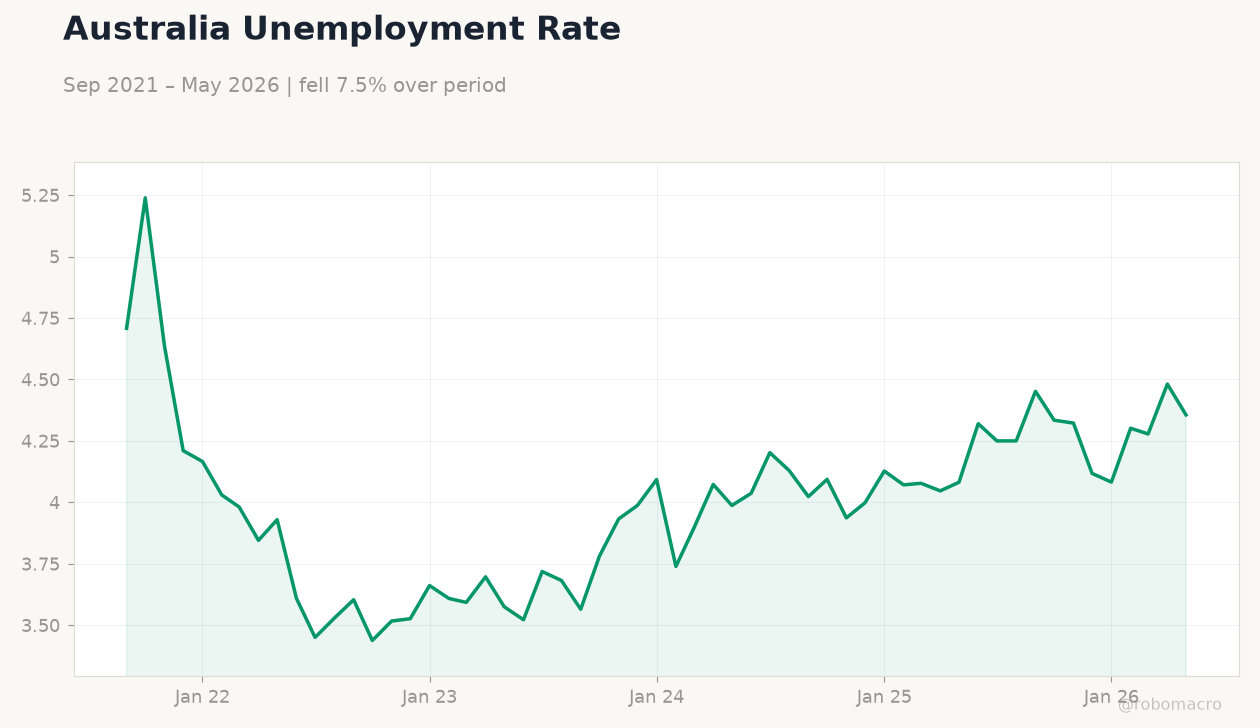
| Unemployment Rate | 5.30 | 5.40 | 18:45 |
| Ai Group Industry Index | -30 | - | 19:00 |
| Trade Balance | -3,018m | -1,100m | 21:30 |
- ASX 200 gains 1.69% to 9,128.90 while NZX 50 rises 0.95% amid commodity support.
- AUD/USD holds near 0.70 despite China manufacturing PMI easing to 50.9; NZD/USD slips to 0.59.
- Brent crude drops 5.95% to 84.76 as gold climbs 1.65% to 4,116 on safe-haven bids.
Yesterday's Recap
Equity markets in both Australia and New Zealand posted solid gains on 2 August with the ASX 200 advancing 1.69% to 9,128.90 and the NZX 50 adding 0.95% to 13,829.04. BHP shares rose 1.96% to 60.31, reflecting firmer iron-ore prices tied to Chinese steel output. The Australian dollar traded at 0.70 against the US dollar after a 0.30% decline while the New Zealand dollar fell 0.48% to 0.59.
Australian 10-year government yields eased 3.03% to 4.83% and the NZ short-term rate dropped 9.60% to 4.33%. No major ANZ data releases occurred on the day, leaving commodity and China-related flows as the dominant drivers. Bitcoin edged 0.41% higher to 63,740.76 while Brent crude fell sharply.
Commodity support from iron ore and gold helped underpin regional equities even as Brent crude prices declined sharply on shifting supply signals.
The Day Ahead
New Zealand releases Q2 employment change and unemployment rate data at 18:45 on 4 August, with consensus pointing to a 0.1% employment rise and a 5.4% jobless rate. Australia follows with the Ai Group Industry Index at 19:00 the same day. Trade balance figures for Australia are due at 21:30 on 5 August, with markets expecting a narrowing to -1.1 billion Australian dollars.
These releases will provide fresh signals on labour-market resilience in New Zealand and external demand for Australian goods. China stimulus expectations remain the key external variable shaping sentiment ahead of the prints. Markets will watch whether the NZ data confirm the expected softening in employment conditions that aligns with the RBNZ’s current easing trajectory.
Other Economic Notes
Australia’s commodity-export model continues to benefit from selective Chinese demand strength even as broader manufacturing indicators soften. New Zealand’s dairy and tourism sectors face headwinds from softer domestic retail sales reported earlier, keeping the current-account gap in focus. Housing-market linkages remain critical for both central banks given elevated household debt levels and the transmission of policy rates into mortgage costs.
<i>↓ p.2</i>