ANZ Macro Daily(Beta Mode)
NZ Unemployment Jumps, ASX Climbs on Commodities
Market Snapshot
| Asset | Level | Change |
|---|---|---|
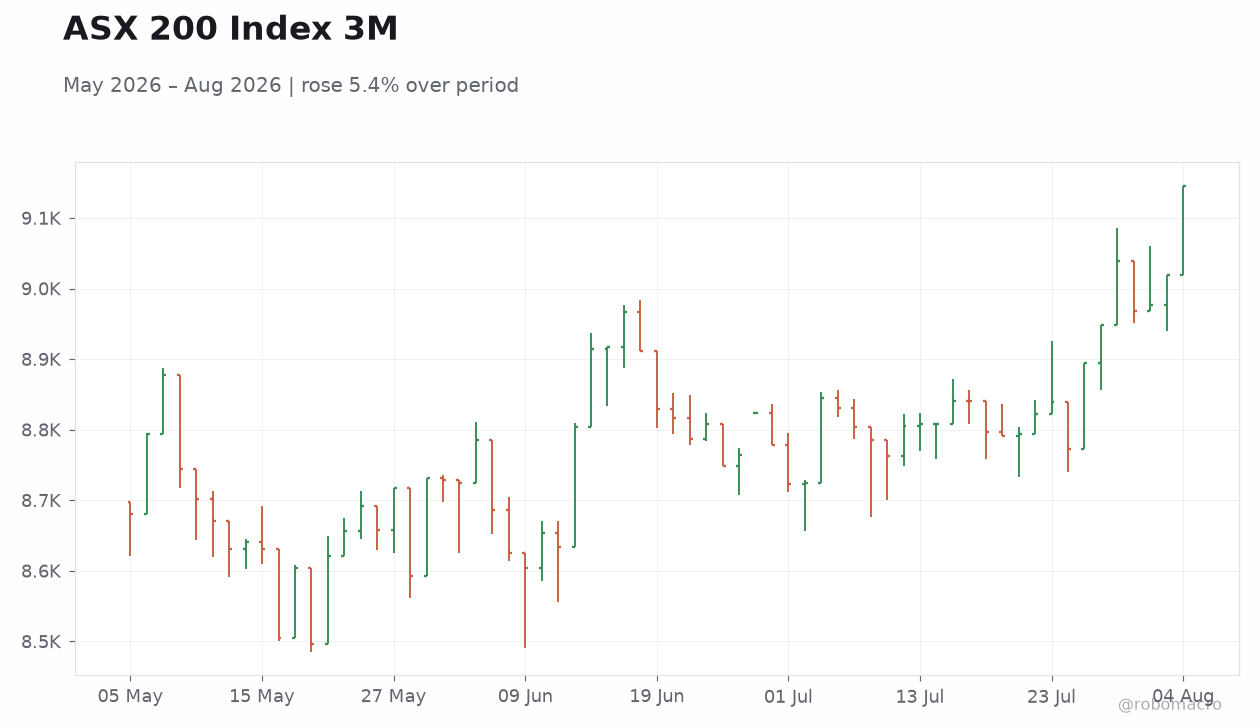
| ASX 200 | 9,145.80 | +1.40% |
| NZX 50 | 13,997.18 | +0.67% |
| AUD/USD | 0.71 | +0.86% |
| NZD/USD | 0.59 | +0.36% |
| AUD/NZD | 1.20 | +0.48% |
| BHP | 62.54 | +3.34% |
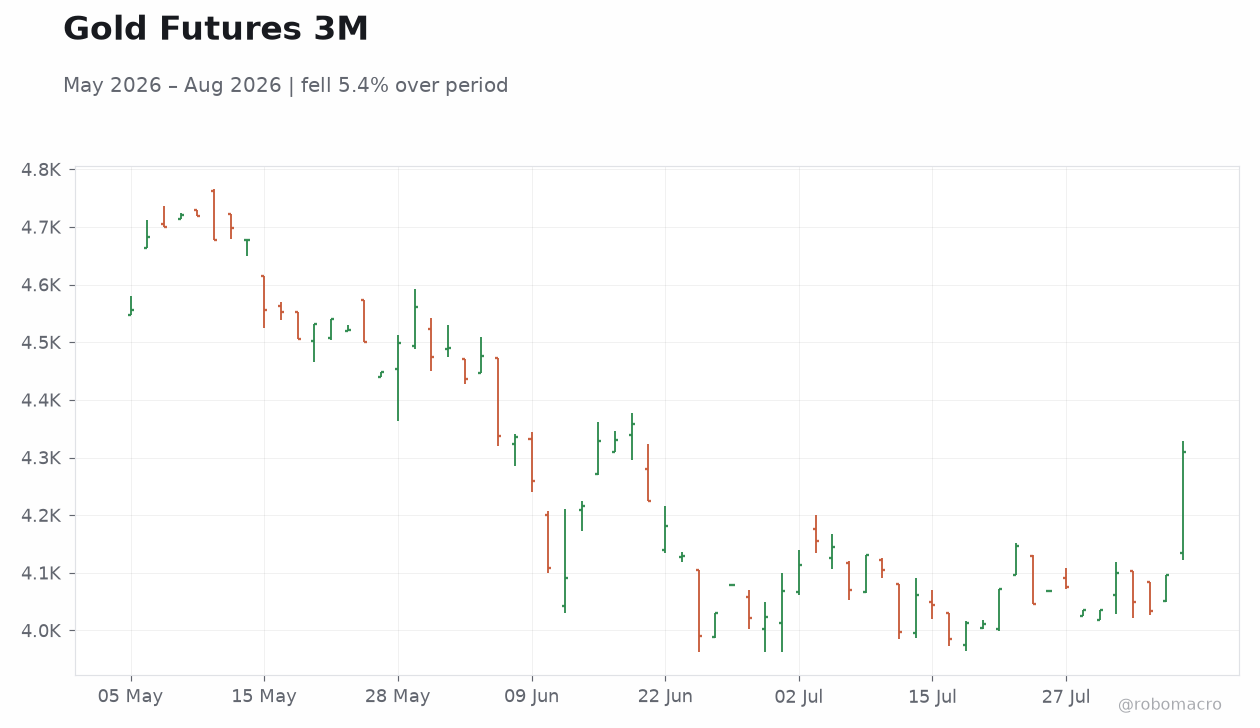
| Gold | 4,308.30 | +5.20% |
| Brent Crude | 79.40 | +0.05% |
| Bitcoin | 64,823.39 | +1.20% |
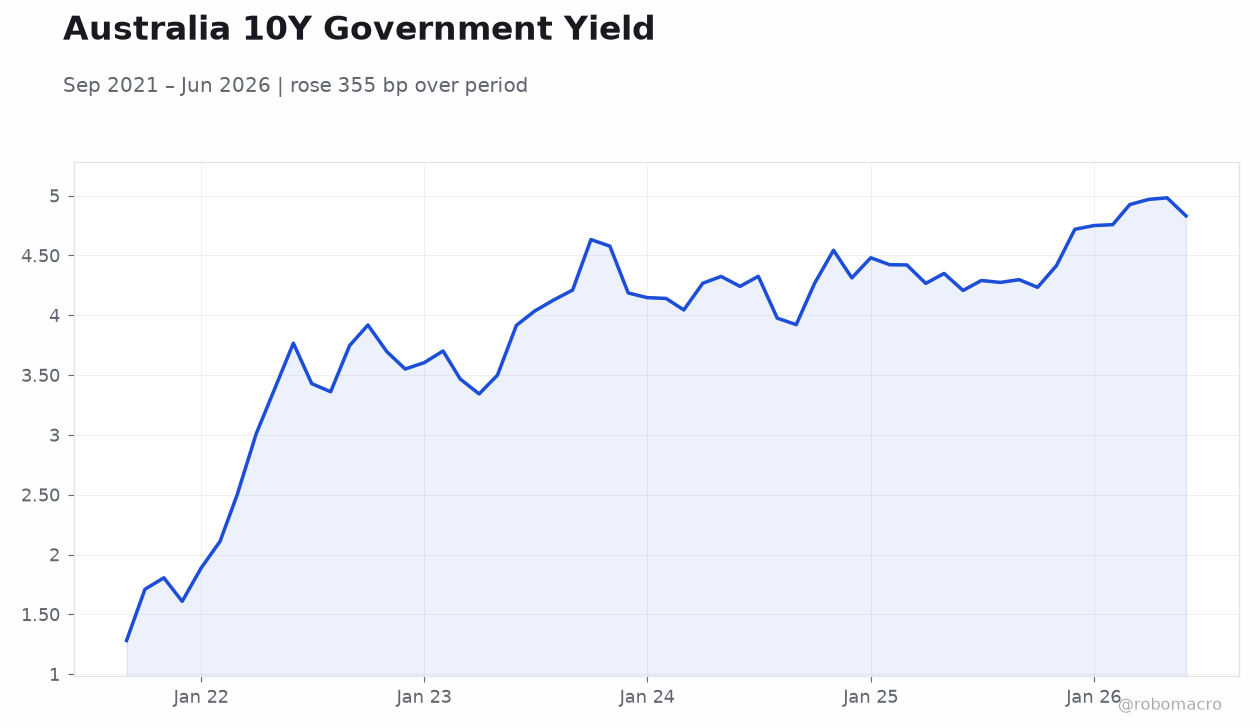
| Australia 10Y Govt Yield | 4.83% | -3.03% |
| NZ Short-term Rate | 4.33% | -9.60% |
Prior Economic Events
| Data | Prior | Cons | Actual |
|---|---|---|---|
| Employment Change Quarter-over-Quarter | 0.20 | 0.20 | 0.50 |
| Unemployment Rate | 5.40 | 5.40 | 5.60 |
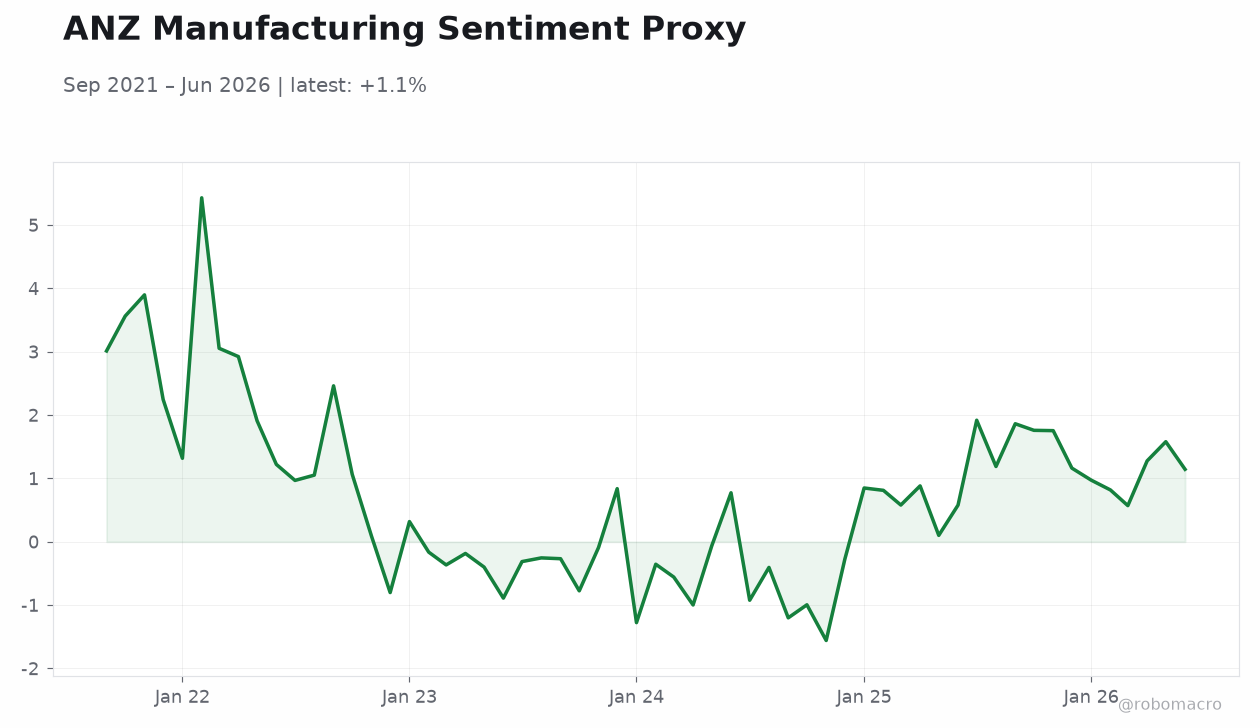
| Ai Group Industry Index | -30 | - | -29.90 |
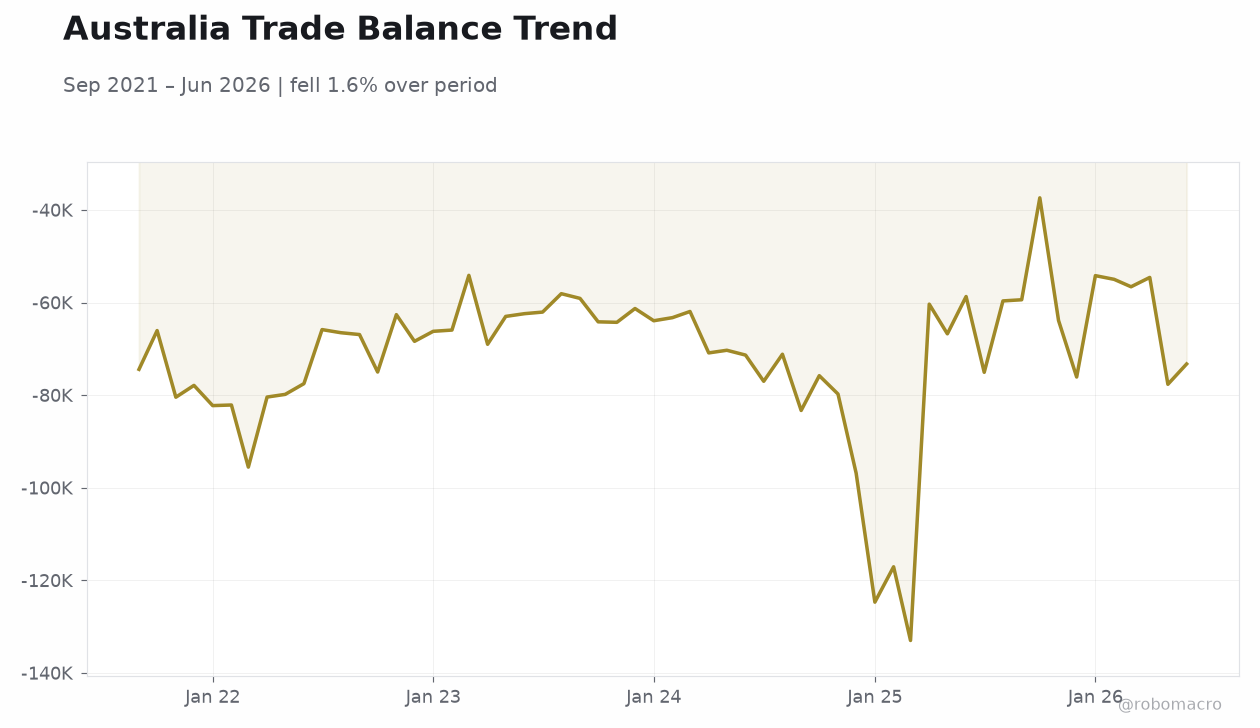 Australia Trade Balance Trend | Type: macro_line | Trade Balance (bn): -7.326e+04 (2026-06-01) | Range: -1.33e+05–-3.738e+04 | Trend(6pt): -7.442e+04,-6.261e+04,-6.392e+04,-1.33e+05,-7.765e+04,-7.326e+04
Today's Economic Events
| Data | Prior | Cons | Time |
|---|---|---|---|
| Trade Balance | -3,018m | -1,100m | 17:30 |
- New Zealand unemployment rate rose to 5.6% while employment change beat forecasts at 0.5% QoQ.
- ASX 200 advanced 1.40% to 9,145.80 and AUD/USD gained 0.86% to 0.71 amid firmer iron ore.
- Australia trade balance release today draws focus after yesterday’s mixed ANZ data prints.
Yesterday's Recap
New Zealand employment rose 0.5% quarter-over-quarter, exceeding the 0.2% consensus, yet the unemployment rate climbed to 5.6% from 5.4%, marking the highest level since 2015 and pressuring NZD/USD lower to 0.59. The Australian Ai Group Industry Index improved marginally to -29.9 from -30.0, signalling persistent weakness in manufacturing sentiment. Equity markets responded positively, with the ASX 200 surging 1.40% to 9,145.80 led by BHP’s 3.34% gain on higher iron ore prices, while the NZX 50 rose 0.67% to 13,997.18.
The Australian 10-year government yield fell 3.03% to 4.83% and the NZ short-term rate dropped 9.60% to 4.33%, reflecting safe-haven demand. AUD/NZD widened 0.48% to 1.20 as the Australian dollar outperformed its New Zealand counterpart on commodity strength. Gold advanced 5.20% to 4,308.30, underscoring external support for Australian miners, while Brent crude held near 79.40.
The NZD weakness aligns with the jobs surprise and keeps the case for RBNZ easing intact ahead of September.
The Day Ahead
Australia’s trade balance print at 17:30 AEST will test expectations of a -1.1 billion deficit after last month’s -3.018 billion outcome, with any surprise surplus likely to bolster AUD. The release carries high impact given Australia’s heavy reliance on commodity exports to China. Absent further New Zealand data, attention will shift to how the weaker NZ jobs print influences RBNZ pricing ahead of its September meeting.
Markets will also monitor iron ore and LNG flows for signals on Australian export revenues. Positioning remains cautious as participants await confirmation that the recent commodity rally can sustain currency gains.
Other Economic Notes
Australia’s 3.75% CPI reading keeps the RBA on a tighter path than the RBNZ, whose 4.06% inflation rate coexists with a 2.50% OCR that already prices in more easing. Housing credit growth and dairy auction results remain key transmission channels for both economies given their sensitivity to interest-rate changes. China’s industrial restocking cycle continues to dominate iron ore and coal price trajectories, directly affecting Australian fiscal and current-account balances.
<i>↓ p.2</i>