ASEAN Macro Daily(Beta Mode)

March 03, 2026 robomacro.com

ID Trade Miss, Inflation Up; BoT Cuts

Market Snapshot

AssetLevelChange
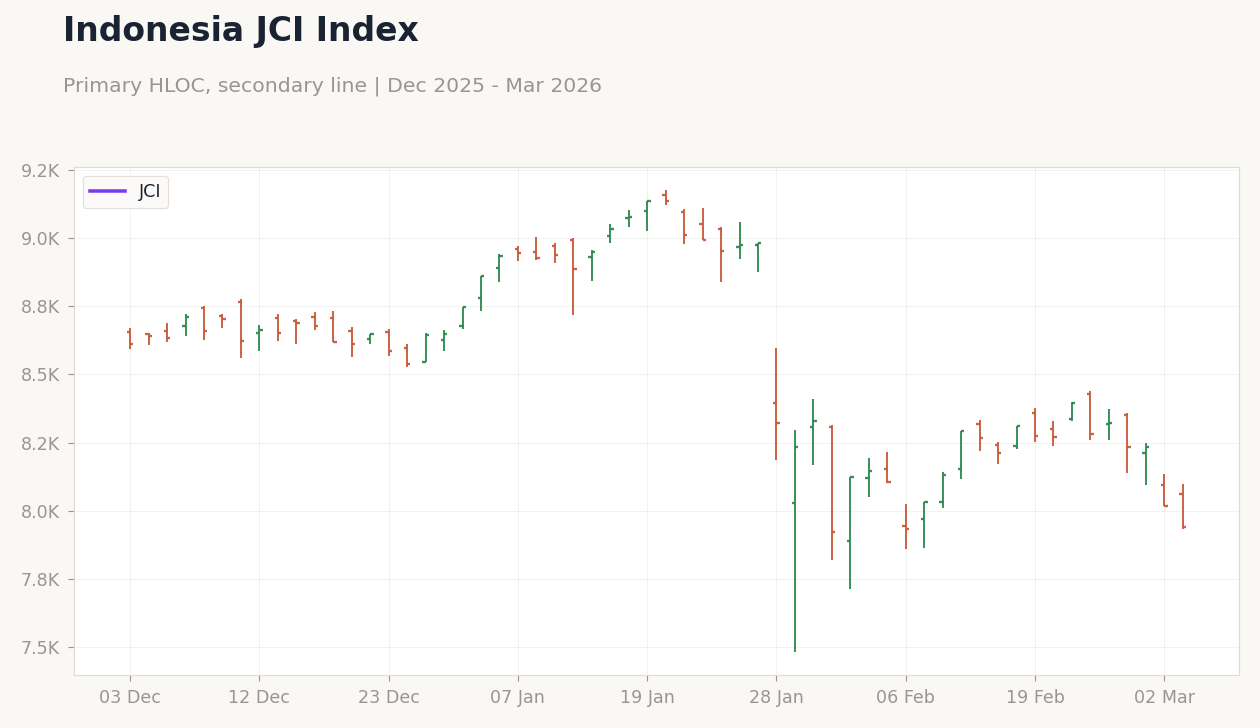
JCI7,939.77-0.96%
SET1,466.51-4.04%
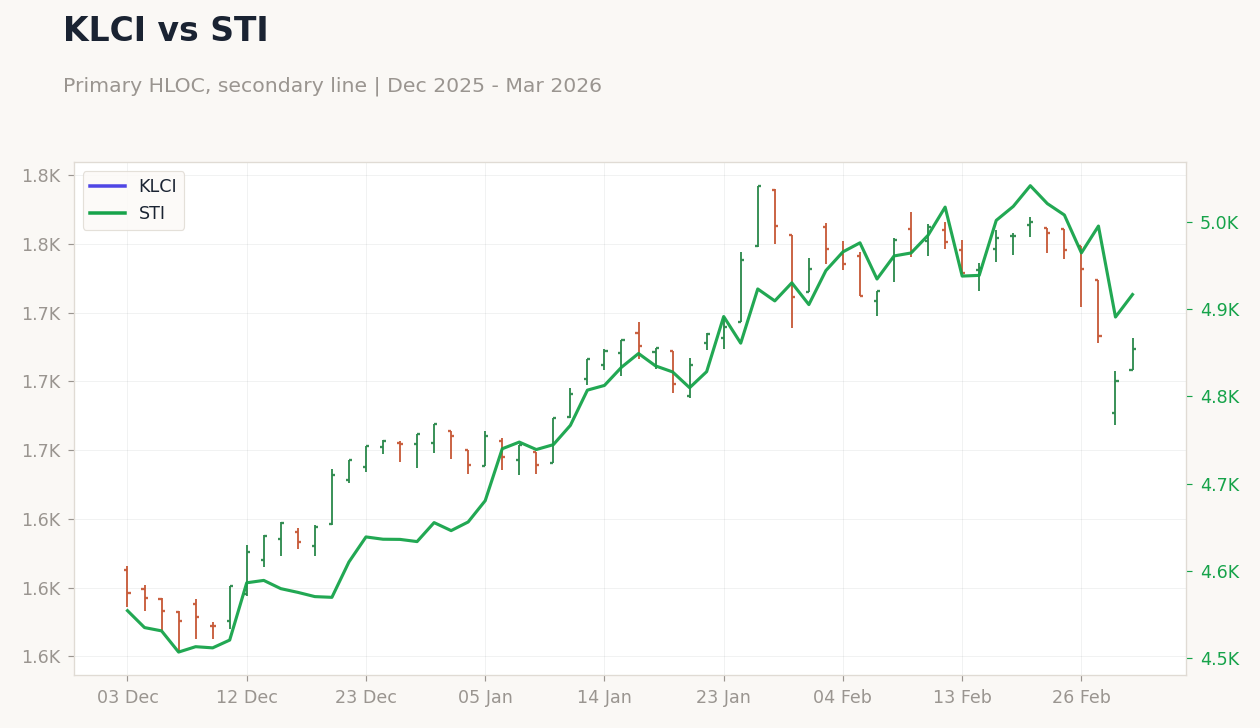
KLCI1,711.95+0.69%
PSEi6,445.38+0.29%
STI4,916.65+0.53%
USD/IDR16,865.00+0.42%
USD/THB31.40+0.85%
USD/MYR3.94+1.39%
USD/PHP58.39+1.31%
USD/SGD1.28+0.56%
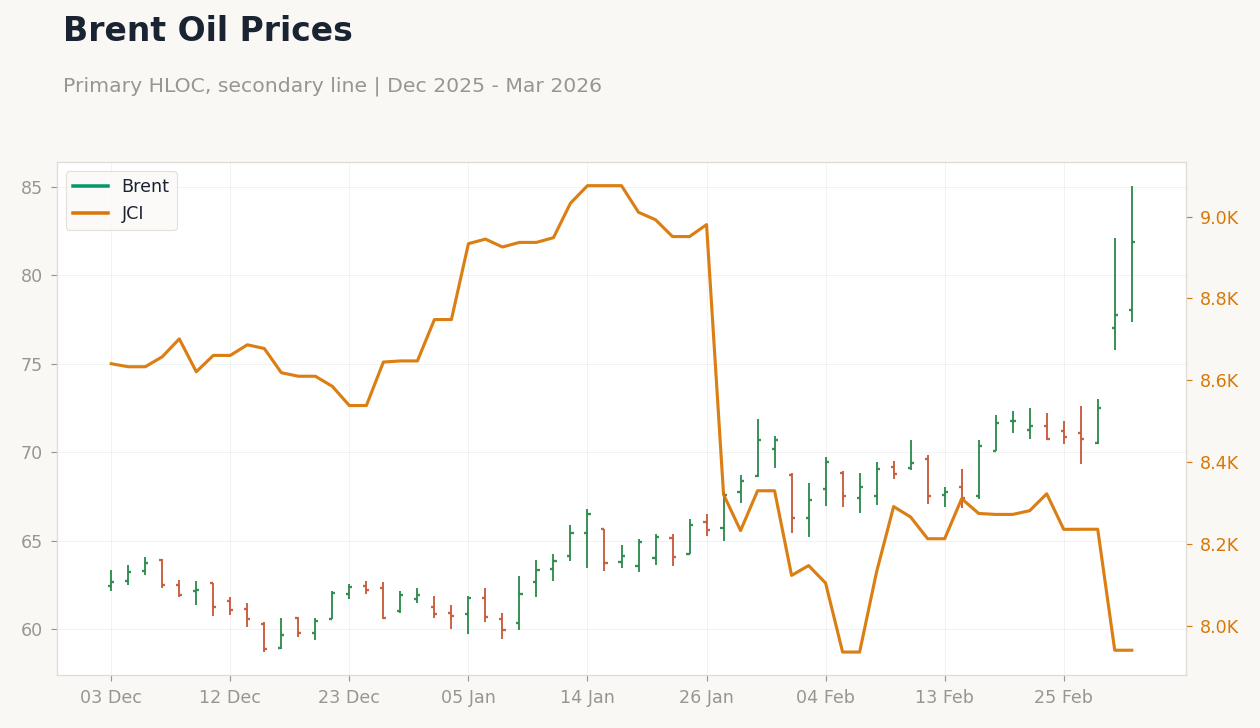
Brent Crude81.87+5.31%
Gold5,099.50-3.68%
Bitcoin68,374.10-0.58%
Indonesia 10Y Govt Yield--
Thailand 10Y Govt Yield--

Prior Economic Events

Data Prior Cons Actual
Trade Balance2,520m2,760m950m
Inflation Rate Year-over-Year3.55-4.76
Chart of the Day

Today's Economic Events

Data Prior Cons Time
Inflation Rate Year-over-Year22.4015:00
Wednesday (2026-03-04)
Inflation Rate Year-over-Year22.4015:00
  • Indonesia's trade surplus narrowed to $950M in February, missing consensus of $2.76B, while inflation rose to 4.76% YoY from 3.55%, pressuring BI's policy stance.
  • Thailand's BoT surprised with a 4-2 vote to cut rates, aiming to support recovery amid tariff uncertainties, leading to a 4.04% drop in the SET Index.
  • ASEAN equities closed mixed, with Malaysia's KLCI up 0.69% on strong Q4 GDP expectations, while FX weakened broadly against the USD.

Yesterday's Recap

Indonesia dominated headlines with its February trade balance coming in at a disappointing $950 million surplus, far below the $2.76 billion consensus and previous $2.52 billion, signaling weaker export performance amid softening commodity prices. Indonesian inflation also surged to 4.76% year-over-year, exceeding the prior 3.55% and raising concerns over food price volatility in the region's largest economy. Thai markets tumbled, with the SET Index dropping 4.04% to 1,466.51, following the Bank of Thailand's unexpected rate cut that highlighted economic fragility.

Malaysia's KLCI bucked the trend, rising 0.69% to 1,711.95, supported by optimism around Q4 GDP growth projected as the fastest in over a year. The Philippine PSEi gained 0.29% to 6,445.38 on remittance inflows, while Singapore's STI advanced 0.53% to 4,916.65 amid stock market revival measures. The Jakarta Composite Index fell 0.96% to 7,939.77, pressured by commodity-linked stocks.

Currencies depreciated against the USD, with USD/IDR up 0.42% to 16,865.00 and USD/THB climbing 0.85% to 31.40, reflecting capital outflow pressures. USD/MYR rose 1.39% to 3.94, USD/PHP increased 1.31% to 58.39, and USD/SGD gained 0.56% to 1.28.

The Day Ahead

The Philippines is set to release its February inflation rate year-over-year tomorrow, with consensus at 2.4% versus the previous 2.0%, potentially influencing BSP's easing cycle outlook. No major data drops are scheduled for today across ASEAN, allowing markets to digest yesterday's Indonesian misses and global commodity shifts. Investors will watch for any updates from Indonesia's follow-up meeting with MSCI this week on capital market reforms, following recent downgrade warnings.

Thailand's political landscape remains in focus after Prime Minister Anutin's election victory, which could stabilize policy amid nationalist sentiments. Singapore may reassess GDP forecasts if Iran tensions escalate, as noted by DPM Gan Kim Yong, impacting energy-dependent trade flows. Overall, attention turns to FX volatility, with Brent crude's 5.31% surge to $81.87 potentially aiding Indonesia's oil exports.

Page 1

ASEAN Macro Daily(Beta Mode)

March 03, 2026 robomacro.com
Chart 1
Chart 2
Chart 3
Chart 4

Other Economic Notes

Broader ASEAN themes highlight supply chain diversification, with Vietnam and Malaysia benefiting from electronics relocations from China, boosting manufacturing exports amid US tariff uncertainties. Remittance-dependent Philippines and tourism-reliant Thailand face headwinds from global slowdowns, while Singapore's financial hub status supports capital inflows despite equity volatility. Structural reforms, such as Indonesia's bond market enhancements and Malaysia's stablecoin sandbox, aim to attract FDI and deepen financial integration.

Global Macro News

Global markets are grappling with US inflation persistence, potentially delaying Federal Reserve rate cuts and strengthening the USD, which pressures ASEAN currencies like the rupiah and baht. Brent crude's sharp 5.31% rise to $81.87 reflects Middle East tensions, benefiting Indonesia's commodity exports but raising import costs for net importers like Singapore and the Philippines. Gold prices fell 3.68% to $5,099.50 as safe-haven demand waned, while Bitcoin dipped 0.58% to $68,374.10 amid crypto regulatory scrutiny.

China's economic slowdown continues to drive supply chain shifts toward Vietnam, enhancing its manufacturing edge, though ASEAN overall faces risks from US-China trade frictions. Iran's situation is under close watch in Singapore, where escalating conflicts could spike energy prices and disrupt shipping routes vital for regional trade. European and Japanese monetary easing divergences add to global rate volatility, influencing capital flows into high-yield ASEAN bonds.

Bitcoin's stability contrasts with equity swings, underscoring diversified asset plays in uncertain times.

ASEAN Central Banks Watch

Bank Indonesia (BI) faces mounting pressure after inflation jumped to 4.76%, likely prompting aggressive rupiah defense through FX interventions, given its history of prioritizing currency stability in the commodity-driven economy. The Bank of Thailand (BoT) delivered a surprise rate cut in a 4-2 vote to support recovery amid tariff risks, diverging from regional tightening trends and highlighting policy splits in tourism-heavy Thailand. Bank Negara Malaysia (BNM) maintains a steady stance, buoyed by strong Q4 GDP prospects, while exploring stablecoin innovations to enhance financial efficiency without immediate rate adjustments.

The Bangko Sentral ng Pilipinas (BSP) reaffirmed that easing may soon end as inflation returns to target, with tomorrow's data crucial for assessing reserve adequacy and remittance inflows. The Monetary Authority of Singapore (MAS) continues managing its nominal effective exchange rate (NEER) bands to curb imported inflation, unique among peers, amid monitoring of global energy shocks from Iran. Vietnam's State Bank (SBV) focuses on capital flow management to sustain high growth, with FX reserves supporting the dong amid manufacturing booms, though policy remains accommodative compared to BI's hawkishness.

(cont...)

Sponsored by Arbitrage Search
Page 2

ASEAN Macro Daily(Beta Mode)

March 03, 2026 robomacro.com

Continuation

ASEAN Central Banks Watch (continued)

Divergences persist, with BI and BSP leaning tighter on inflation risks, while BoT eases and MAS prioritizes exchange rate tools over interest rates.

Sponsored by Arbitrage Search
Page 3