ASEAN Macro Daily(Beta Mode)
BI Holds Rates Amid Rupiah Pressures
Market Snapshot
| Asset | Level | Change |
|---|---|---|
| JCI | 7,106.84 | +1.20% |
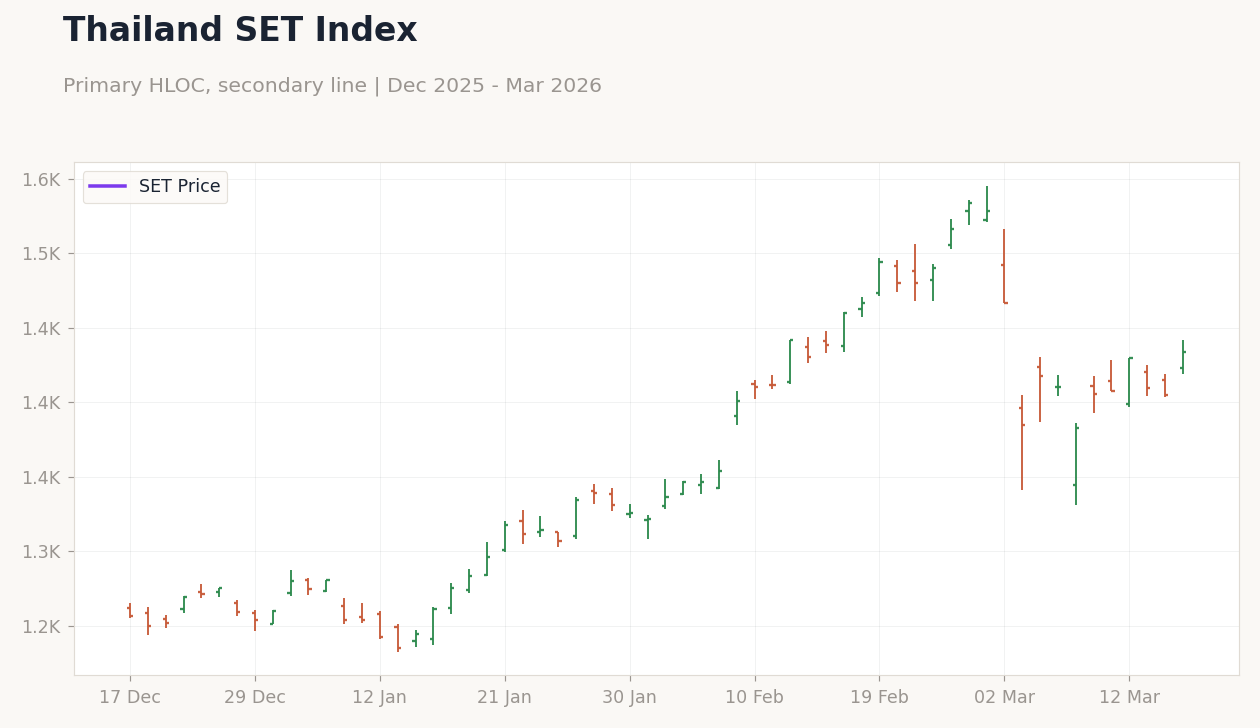
| SET | 1,433.88 | +2.05% |
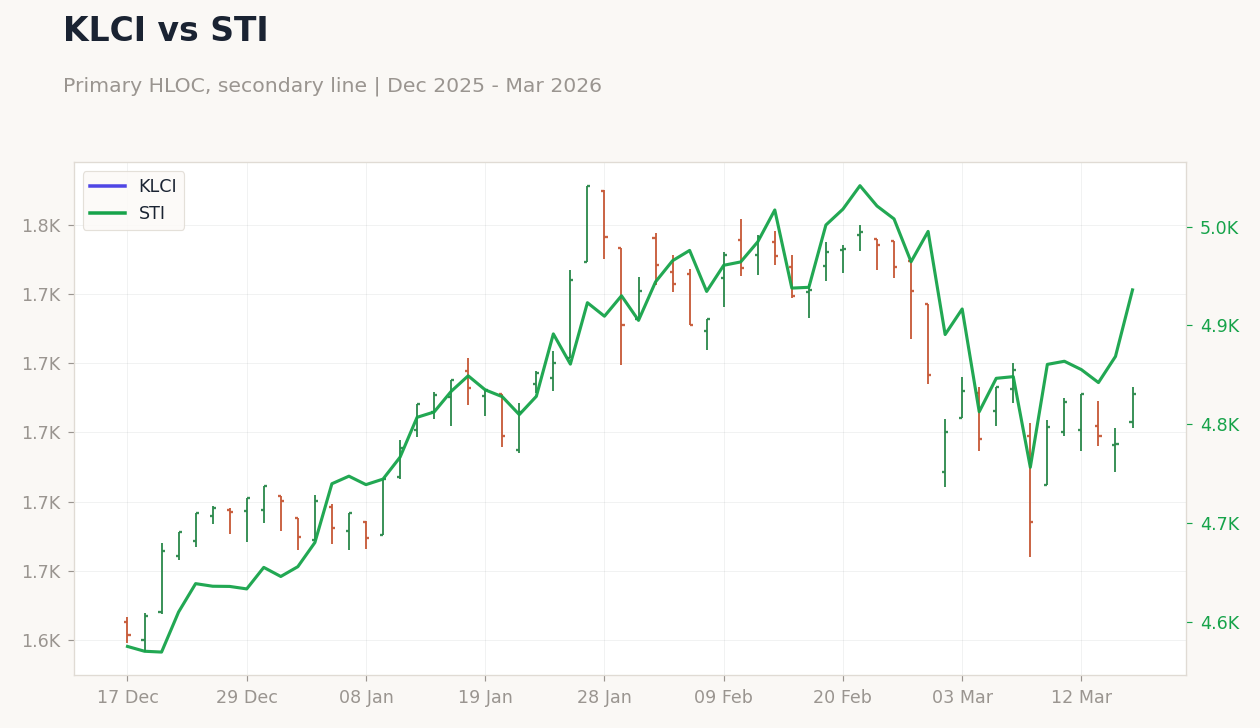
| KLCI | 1,710.99 | +0.85% |
| PSEi | 6,026.01 | +0.32% |
| STI | 4,935.97 | +1.38% |
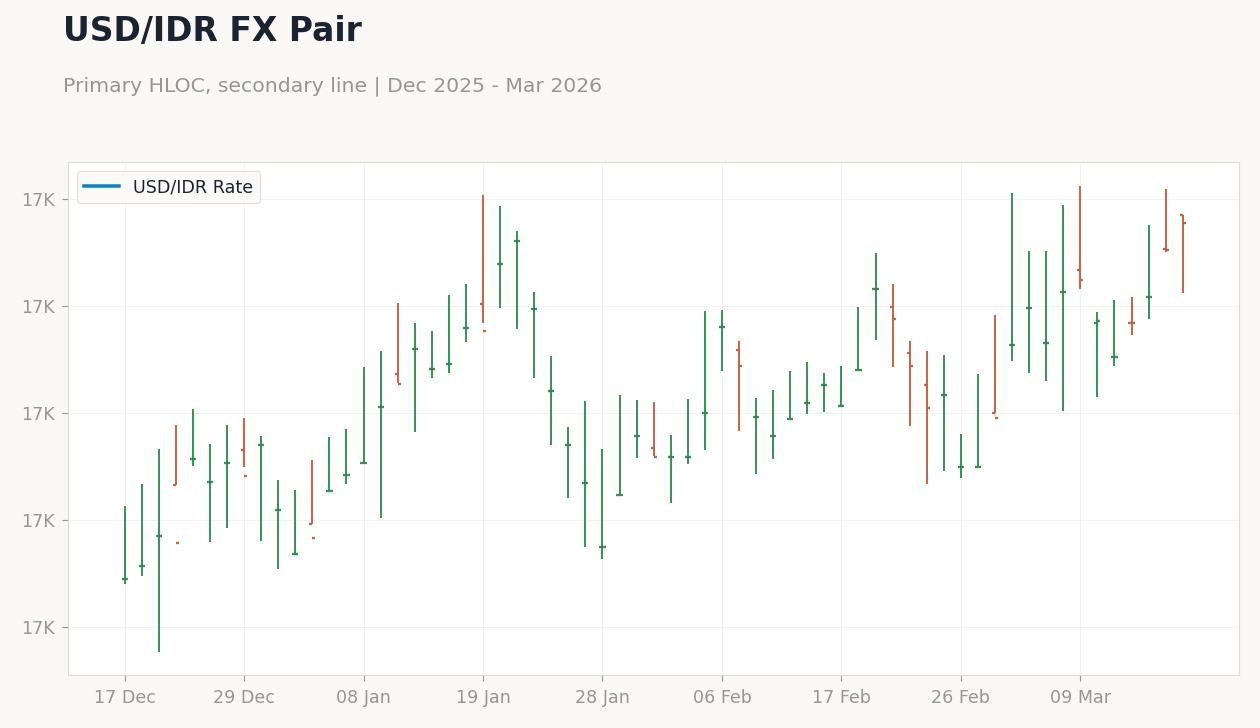
| USD/IDR | 16,977.00 | +0.15% |
| USD/THB | 32.26 | -0.13% |
| USD/MYR | 3.92 | -0.41% |
| USD/PHP | 59.64 | +2.56% |
| USD/SGD | 1.28 | -0.50% |
| Brent Crude | 103.34 | +3.12% |
| Gold | 5,002.20 | +0.16% |
| Bitcoin | 74,319.23 | -0.72% |
| Indonesia 10Y Govt Yield | - | - |
| Thailand 10Y Govt Yield | - | - |
Prior Economic Events
| Data | Prior | Cons | Actual |
|---|---|---|---|
| Central Bank Interest Rate Decision | 4.75 | 4.75 | 4.75 |
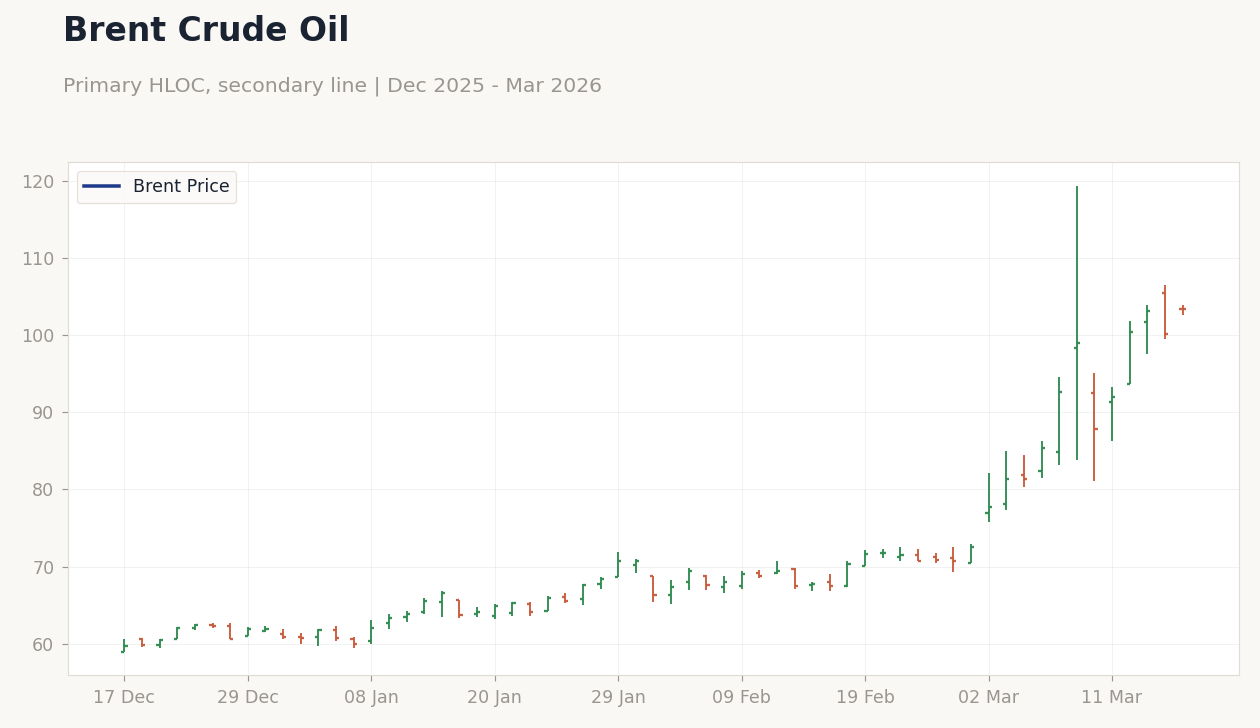 Brent Crude Oil | Type: market_hloc | Brent Price: 103.4 (2026-03-17) | Range: 59.68–103.4 | Trend(5pt): 59.68,63.34,66.3,70.77,103.4
Today's Economic Events
| Data | Prior | Cons | Time |
|---|---|---|---|
| Inflation Rate Month-over-Month | 0.10 | - | 20:00 |
| Inflation Rate Year-over-Year | 1.60 | 1.60 | 20:00 |
- Bank Indonesia kept its benchmark rate at 4.75%, adopting a hawkish tone to counter rupiah weakness and inflation risks from global tensions.
- ASEAN stocks advanced, led by Thailand's SET at +2.05%, while the Philippine peso depreciated sharply by +2.56% versus the USD.
- Malaysia's ringgit firmed on optimistic investment views, as Indonesia imposed new FX limits to stem outflows.
Yesterday's Recap
Bank Indonesia (BI) held its benchmark interest rate at 4.75% as anticipated, stressing caution against rupiah declines and imported inflation from commodity surges, while imposing a US$50,000 monthly limit on foreign exchange transactions to steady flows. The rupiah slipped further, with USD/IDR up 0.15% to 16,977 amid budget deficit fears and external debt reaching $434.7 billion. Indonesian stocks rose, with the JCI gaining 1.20% to 7,106.84, aided by commodity sectors despite market concerns.
Thailand's SET jumped 2.05% to 1,433.88, lifted by energy optimism from new LNG arrivals and trade pacts amid Middle East issues. Malaysia's KLCI increased 0.85% to 1,710.99, bolstered by ringgit gains as USD/MYR dropped 0.41% to 3.92 on positive currency sentiment. The Philippines' PSEi rose 0.32% to 6,026.01, but USD/PHP climbed 2.56% to 59.64 due to remittance pressures.
Singapore's STI advanced 1.38% to 4,935.97 with stable FX, as USD/SGD fell 0.50% to 1.28.
The Day Ahead
Malaysia's February inflation figures, covering month-over-month and year-over-year rates, are slated for release at 20:00 ET on March 18, with YoY consensus at 1.6% reflecting steady demand and commodity effects. Attention will turn to Bank Negara Malaysia (BNM) for hints on rate responses to rising oil prices. No significant data is expected from Indonesia, Thailand, Philippines, Singapore, or Vietnam, shifting focus to global factors like Brent crude trends.
ASEAN markets may respond to continued FX measures, especially Indonesia's recent steps, alongside U.S. dollar movements and supply chain updates impacting manufacturing in Vietnam and Malaysia.
Other Economic Notes
ASEAN nations are adapting to supply chain shifts, with Malaysia and Vietnam drawing FDI as companies move from China due to U.S. frictions, enhancing export manufacturing. Indonesia's commodity-based economy contends with rupiah instability and growing external debt, while Thailand's tourism and energy areas benefit from Middle East trade prospects.
The remittance-reliant Philippines and financial center Singapore exhibit durability, yet differing policies reveal uneven inflation and FX challenges region-wide.