ASEAN Macro Daily(Beta Mode)
BI Holds Rates Amid Rupiah Pressures
Market Snapshot
| Asset | Level | Change |
|---|---|---|
| JCI | 7,106.84 | +1.20% |
| SET | 1,440.85 | +0.49% |
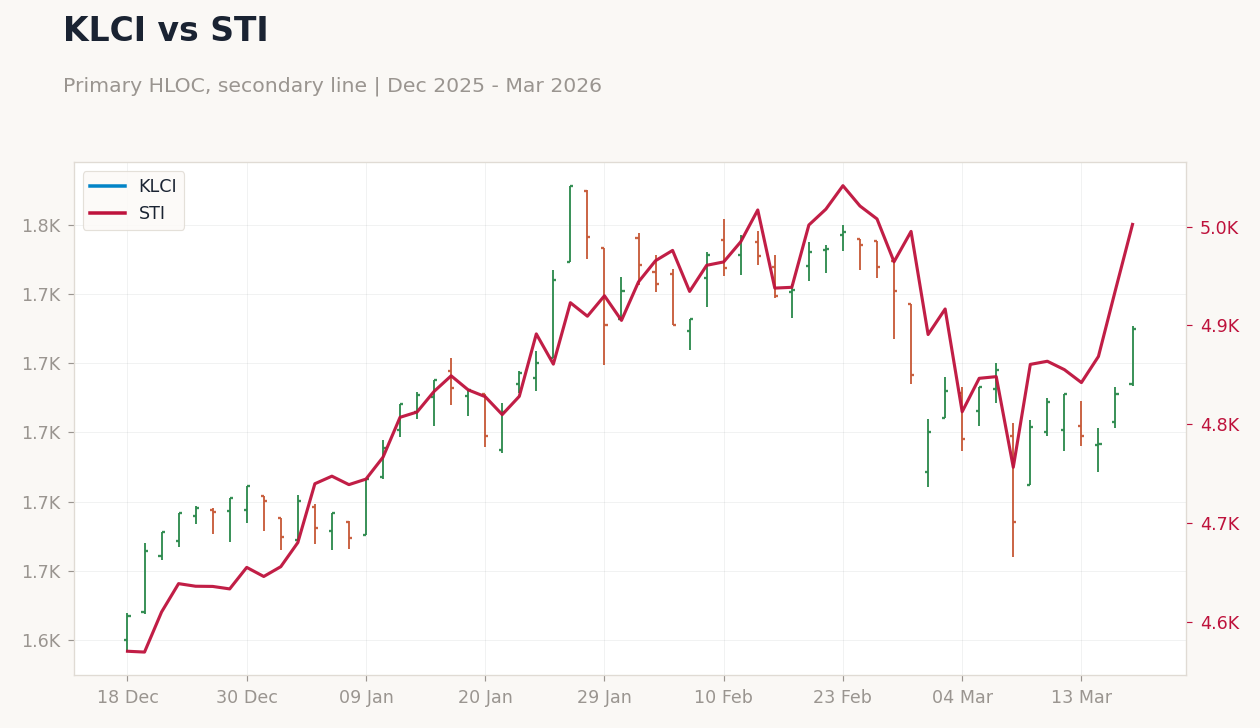
| KLCI | 1,729.81 | +1.10% |
| PSEi | 6,055.45 | +0.49% |
| STI | 5,002.17 | +1.34% |
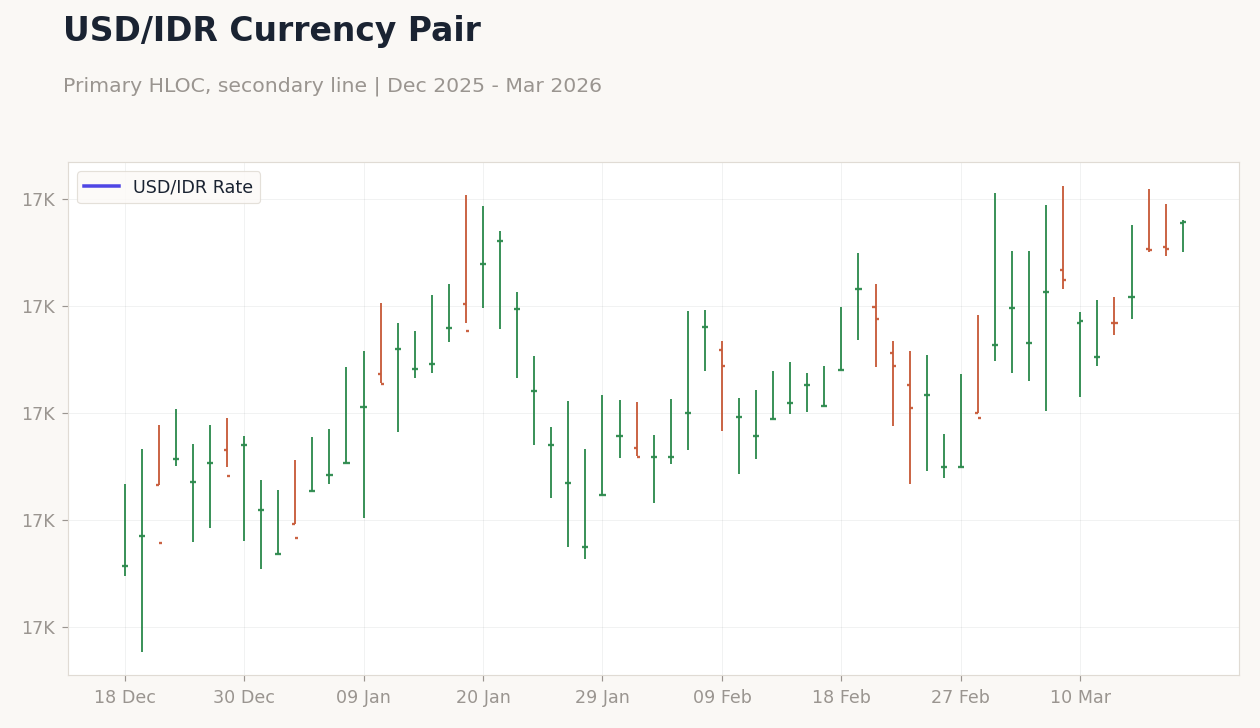
| USD/IDR | 16,978.00 | +0.15% |
| USD/THB | 32.77 | +1.30% |
| USD/MYR | 3.91 | -0.38% |
| USD/PHP | 59.72 | +0.10% |
| USD/SGD | 1.28 | +0.36% |
| Brent Crude | 106.17 | +2.66% |
| Gold | 4,823.90 | -3.54% |
| Bitcoin | 71,124.20 | -3.79% |
| Indonesia 10Y Govt Yield | - | - |
| Thailand 10Y Govt Yield | - | - |
Prior Economic Events
| Data | Prior | Cons | Actual |
|---|---|---|---|
| Central Bank Interest Rate Decision | 4.75 | 4.75 | 4.75 |
 Brent Crude Oil Prices | Type: market_hloc | Brent Price: 105.2 (2026-03-18) | Range: 59.82–105.2 | Trend(5pt): 59.82,63.87,67.33,70.85,105.2
Today's Economic Events
| Data | Prior | Cons | Time |
|---|---|---|---|
| Inflation Rate Month-over-Month | 0.10 | - | 20:00 |
| Inflation Rate Year-over-Year | 1.60 | 1.60 | 20:00 |
| Thursday (2026-03-19) | |||
| Inflation Rate Month-over-Month | 0.10 | - | 20:00 |
| Inflation Rate Year-over-Year | 1.60 | 1.60 | 20:00 |
- Bank Indonesia kept its BI-Rate at 4.75% to defend the rupiah from global volatility and geopolitical risks in the Middle East.
- ASEAN stocks advanced, led by Singapore's STI up 1.34% and Indonesia's JCI up 1.20%, amid commodity gains and mixed currency moves.
- Brent crude rose 2.66% on supply disruption fears, heightening inflation risks for energy-importing ASEAN nations.
Yesterday's Recap
Bank Indonesia held its key interest rate at 4.75% in a hawkish stance to protect the rupiah from global pressures, including Middle East tensions and Strait of Hormuz risks, while tightening FX rules to limit speculation. The central bank chief expressed confidence in rupiah stability and retained Indonesia's GDP growth outlook at 4.9%-5.7%, despite cutting its global growth forecast. The rupiah weakened slightly, with USD/IDR up 0.15% to 16,978.00, but Indonesian stocks outperformed as the JCI rose 1.20% to 7,106.84, supported by commodity rebounds.
Thailand's SET gained 0.49% to 1,440.85, buoyed by tourism-related shares, though the baht depreciated sharply with USD/THB up 1.30% to 32.77, vulnerable to oil shocks. Malaysia's KLCI advanced 1.10% to 1,729.81, aided by a firmer ringgit as USD/MYR fell 0.38% to 3.91. The Philippines' PSEi increased 0.49% to 6,055.45, despite modest peso weakening with USD/PHP up 0.10% to 59.72.
Singapore's STI led gains at 1.34% to 5,002.17, though USD/SGD rose 0.36% to 1.28. Broader ASEAN markets reflected resilience amid rising Brent crude, with energy and commodity sectors benefiting from price surges.
The Day Ahead
Malaysia's inflation releases take center stage today, with year-over-year rate expected at 1.6%, matching the previous figure, amid stable domestic pressures despite global oil volatility. Month-over-month inflation has no consensus but follows a prior 0.1% increase, potentially indicating steady demand in manufacturing and exports. Upside surprises could prompt scrutiny of Bank Negara Malaysia's policy outlook.
Tomorrow features similar Malaysian inflation data, possibly due to scheduling overlaps, providing additional insights into core trends. No key events are scheduled for other ASEAN countries, shifting attention to global developments like US indicators. These figures may highlight Malaysia's relative insulation from commodity-driven inflation compared to peers like Indonesia and Thailand.
Other Economic Notes
ASEAN nations are leveraging supply chain shifts from US-China tensions, with Vietnam and Malaysia drawing foreign direct investment in electronics and semiconductors to fuel export expansion. (cont...)