| Asset | Level | Change |
|---|---|---|
| JCI | 7,106.84 | +1.20% |
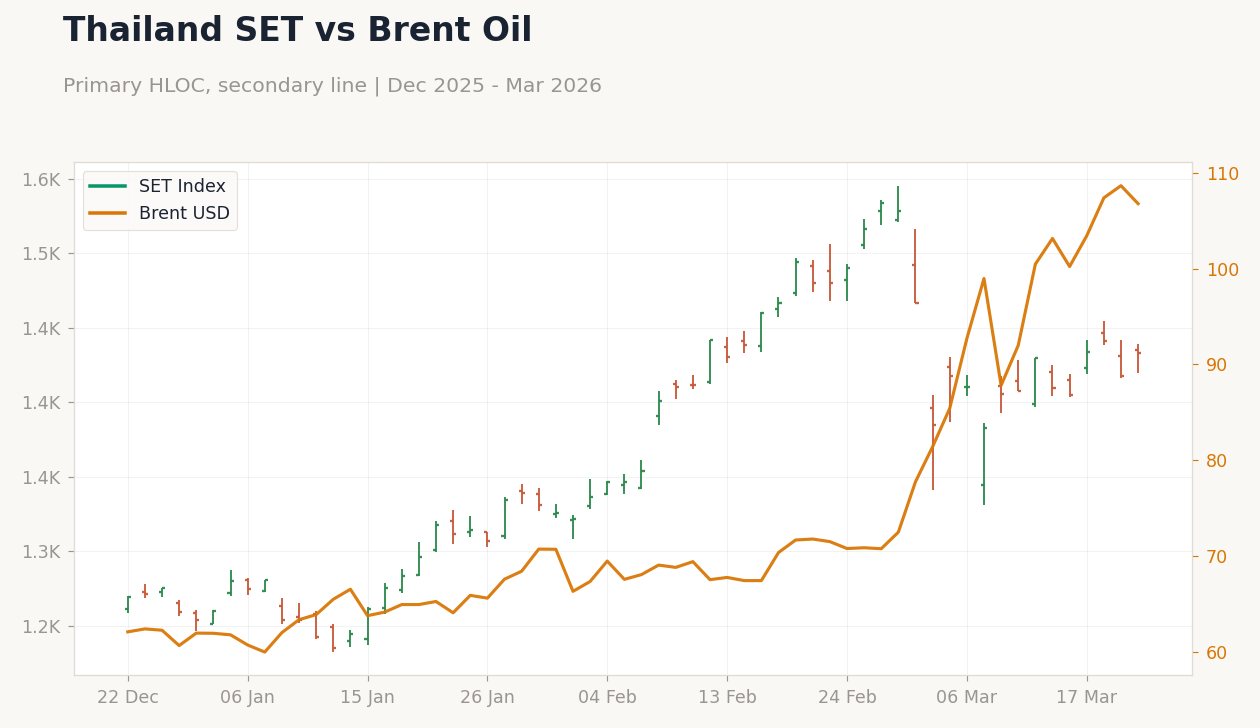
| SET | 1,432.99 | +1.10% |
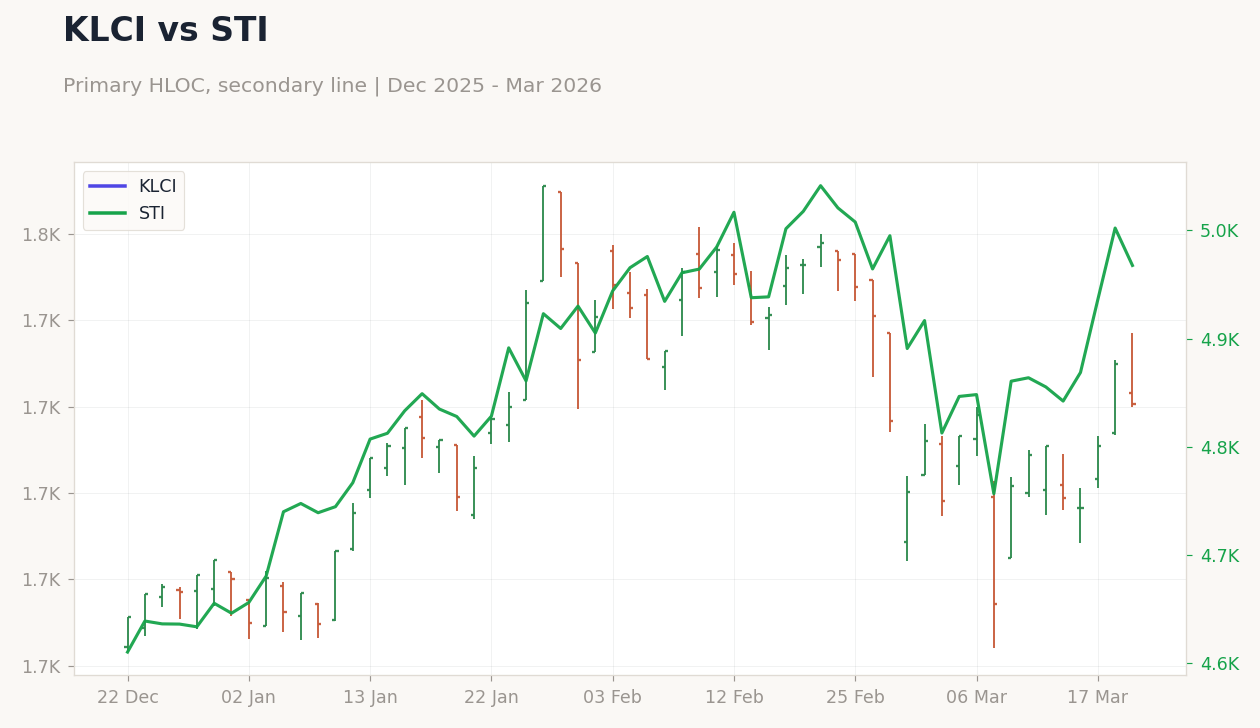
| KLCI | 1,720.71 | -0.53% |
| PSEi | 6,018.62 | -0.61% |
| STI | 4,948.87 | -0.38% |
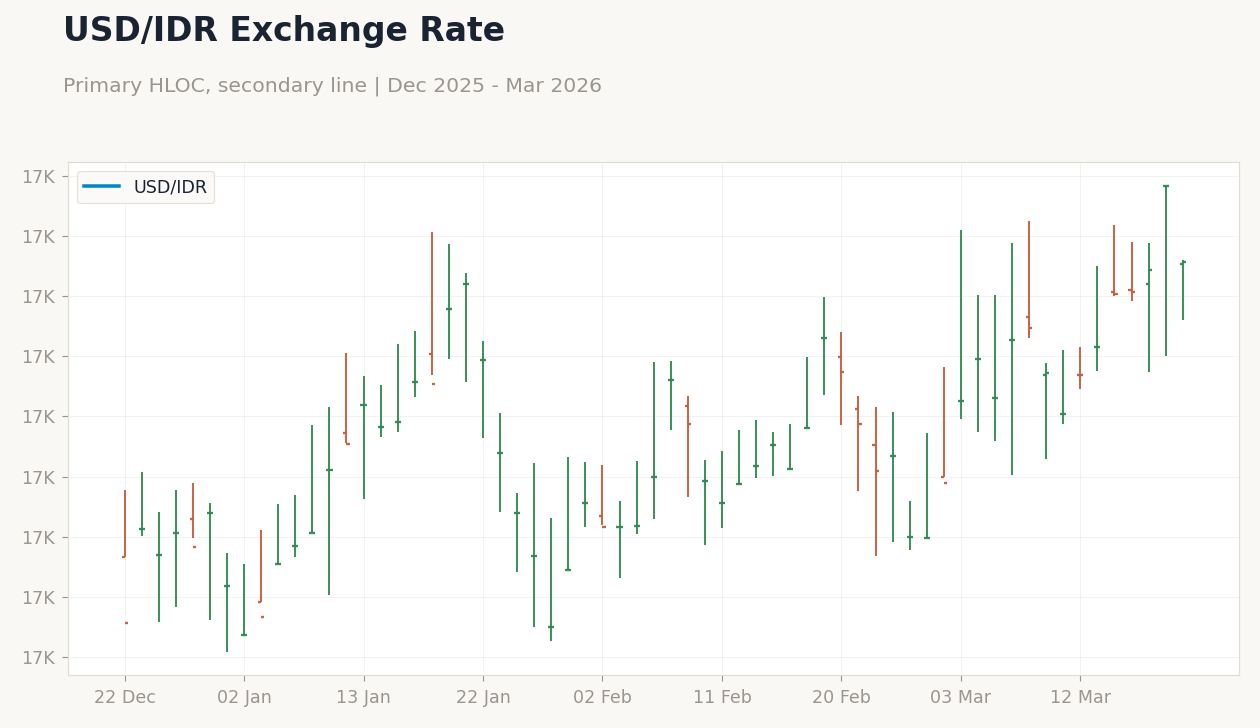
| USD/IDR | 16,978.00 | -0.37% |
| USD/THB | 32.77 | -0.09% |
| USD/MYR | 3.94 | +0.08% |
| USD/PHP | 59.80 | +0.06% |
| USD/SGD | 1.28 | -0.13% |
| Brent Crude | 106.77 | -1.73% |
| Gold | 4,492.00 | -2.36% |
| Bitcoin | 70,746.03 | +1.19% |
| Indonesia 10Y Govt Yield | - | - |
| Thailand 10Y Govt Yield | - | - |
| Data | Prior | Cons | Actual |
|---|---|---|---|
| Central Bank Interest Rate Decision | 4.75 | 4.75 | 4.75 |
| Inflation Rate Month-over-Month | 0.10 | - | 0.20 |
| Inflation Rate Year-over-Year | 1.60 | 1.60 | 1.40 |
Brent Crude Oil Prices | Type: market_hloc | Brent USD: 106.8 (2026-03-20) | Range: 59.96–108.7 | Trend(5pt): 62.07,66.52,67.55,72.48,106.8
| Data | Prior | Cons | Time |
|---|---|---|---|
| No events available | |||
Bank Indonesia (BI) held its benchmark rate steady at 4.75% in a hawkish decision, extending tight policy through 2026 to combat inflation risks from soaring oil prices and support rupiah stability amid Middle East tensions. Malaysia released softer-than-expected inflation data, with February YoY CPI at 1.4% versus consensus 1.6% and prior 1.6%, while MoM rose to 0.2% from 0.1%, potentially giving Bank Negara Malaysia (BNM) room for easing if global risks subside. Indonesian equities outperformed with the JCI rising 1.20% to 7,106.84, buoyed by commodity plays despite Brent crude falling 1.73% to 106.77, while Thailand's SET gained 1.10% to 1,432.99 on tourism optimism.
In contrast, Malaysia's KLCI dipped 0.53% to 1,720.71 amid export concerns, and the Philippines' PSEi fell 0.61% to 6,018.62 on peso weakness hitting P60 per dollar. Singapore's STI edged down 0.38% to 4,948.87, reflecting financial sector caution. Currencies showed resilience: USD/IDR declined 0.37% to 16,978.00 as BI monitored offshore rupiah moves, while USD/THB eased 0.09% to 32.77 despite Bank of Thailand (BoT) warnings on baht volatility from Iran conflict.
USD/MYR rose 0.08% to 3.94, USD/PHP increased 0.06% to 59.80, and USD/SGD fell 0.13% to 1.28. Gold dropped 2.36% to 4,492.00, pressuring resource-linked assets, while Bitcoin rose 1.19% to 70,746.03.
With no major ASEAN data releases scheduled for today or tomorrow, markets will likely focus on global cues, including any escalation in Middle East tensions that could drive oil prices higher and impact energy importers like Indonesia and Thailand. Traders in Singapore, the financial hub, may watch for updates on U.S. Treasury yields and Fed rhetoric, given the Monetary Authority of Singapore's (MAS) exchange rate policy sensitivity to dollar strength.
In the Philippines, BSP's monitoring of the Mideast conflict could influence peso trades, especially after hitting P60 per dollar. Vietnam's ongoing FDI inflows in manufacturing might support sentiment amid supply chain shifts from China. Expect thin trading in Malaysia due to the upcoming Hari Raya Aidilfitri holiday on March 21.
Overall, regional focus shifts to broader themes like commodity volatility and currency interventions.
Subscribe to ASEAN Macro Daily and get each new issue delivered to your inbox.
Already a member? Visit robomacro.com to log in and manage subscriptions, or use Forgot Password to set a password.
Thailand SET vs Brent Oil | Type: market_hloc | SET Index: 1433 (2026-03-20) | Range: 1235–1534 | Trend(5pt): 1270,1276,1354,1528,1433 | Brent USD: 106.8 (2026-03-20) | Range: 59.96–108.7 | Trend(5pt): 62.07,66.52,67.55,72.48,106.8
Indonesia JCI Index | Type: market_hloc | JCI Index: 7107 (2026-03-17) | Range: 7022–9135 | Trend(6pt): 8677,8885,7923,8281,7022,7107
USD/IDR Exchange Rate | Type: market_hloc | USD/IDR: 1.698e+04 (2026-03-20) | Range: 1.667e+04–1.704e+04 | Trend(6pt): 1.668e+04,1.684e+04,1.676e+04,1.682e+04,1.697e+04,1.698e+04
KLCI vs STI | Type: market_hloc | KLCI: 1721 (2026-03-19) | Range: 1670–1771 | Trend(6pt): 1671,1708,1748,1748,1711,1721 | STI: 4949 (2026-03-20) | Range: 4610–5041 | Trend(5pt): 4610,4813,4966,4995,4949
Indonesia's economy faces headwinds from a slowing outlook, with stocks like PT Astra International under pressure and government spending jumping 26% in January to offset risks, though high oil prices threaten fiscal budgets if Middle East conflicts persist. Thailand's growth could undershoot targets by 0.2-0.7% if oil exceeds $100 per barrel, prompting BoT to tighten cash withdrawal rules for sums over 5 million baht starting April 1 to curb volatility. Broader ASEAN themes include supply chain resilience, with Malaysia and Vietnam gaining from U.S.-China decoupling.
Philippines' remittance-dependent economy grapples with peso depreciation, while Singapore benefits from financial flows despite global risk-off. The death of Indonesia's richest man, tobacco tycoon Michael Bambang Hartono at 86, may influence business sentiment in key sectors.
Global markets are navigating U.S. Federal Reserve signals of sustained high rates, strengthening the dollar and pressuring ASEAN currencies, as seen in the ringgit easing against the greenback. Brent crude's 1.73% drop to 106.77 offers temporary relief to oil importers like Indonesia and the Philippines, but escalating Middle East tensions, including Iran conflicts, risk pushing prices above $100, which could shave Thailand's 2026 GDP by 0.2-0.7%.
Gold's 2.36% decline to 4,492.00 reflects reduced safe-haven demand, while Bitcoin rose 1.19% to 70,746.03 on ETF optimism, potentially drawing capital from emerging markets. In Canada, the Bank of Canada's uncertainty on high oil's economic impact mirrors ASEAN dilemmas, where energy costs could choke growth or lift exporters. Nigeria's balance of payments fell 38.1% in 2025, highlighting emerging market vulnerabilities to commodity shocks that echo in Vietnam's manufacturing sector.
U.S.-China trade frictions continue to redirect FDI to ASEAN, boosting Malaysia's electronics but exposing the region to supply chain disruptions. Overall, these dynamics amplify ASEAN's exposure to Fed policy divergences and geopolitical risks.
Bank Indonesia (BI) maintained its rate at 4.75% in a hawkish hold, prioritizing rupiah defense against oil-driven inflation and Fed pressures, with plans to monitor offshore markets and intervene if needed, reflecting its aggressive stance on FX stability. Bank of Thailand (BoT) is closely watching Iran war impacts, vowing to curb baht volatility amid risks of weakening to 35 per dollar if conflicts persist, while implementing stricter ID checks for large cash withdrawals to manage capital flows. Bank Negara Malaysia (BNM) faces softer inflation at 1.4% YoY, which might allow policy flexibility, though ringgit softening versus the dollar highlights reserve adequacy concerns amid U.S.
rate holds. (cont...)
Bangko Sentral ng Pilipinas (BSP) is monitoring Mideast conflicts' effects on the economy, with the peso at P60 per dollar raising inflation risks and prompting potential FX interventions to maintain stability. The Monetary Authority of Singapore (MAS) continues managing its nominal effective exchange rate (NEER) bands, with USD/SGD down 0.13% to 1.28 indicating controlled appreciation to counter imported inflation without direct rate tools. State Bank of Vietnam (SBV) remains focused on dong stability amid FDI inflows, though no recent moves were reported, showing policy divergence from BI's hawkishness to MAS's FX-centric approach.
These differences underscore varying inflation dynamics, with Indonesia and Thailand more interventionist on FX amid adequate reserves across the region.