| Asset | Level | Change |
|---|---|---|
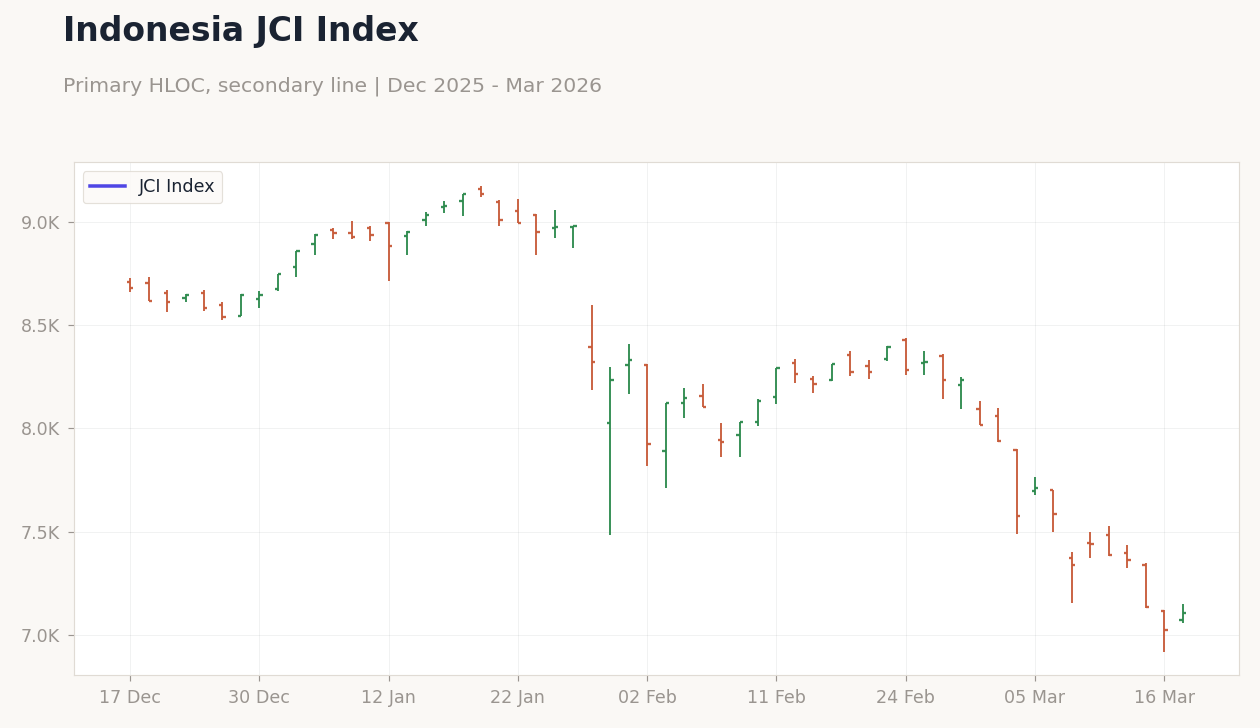
| JCI | 7,106.84 | +1.20% |
| SET | 1,410.39 | +0.93% |
| KLCI | 1,708.76 | -0.69% |
| PSEi | 5,936.20 | +0.63% |
| STI | 4,862.43 | +0.44% |
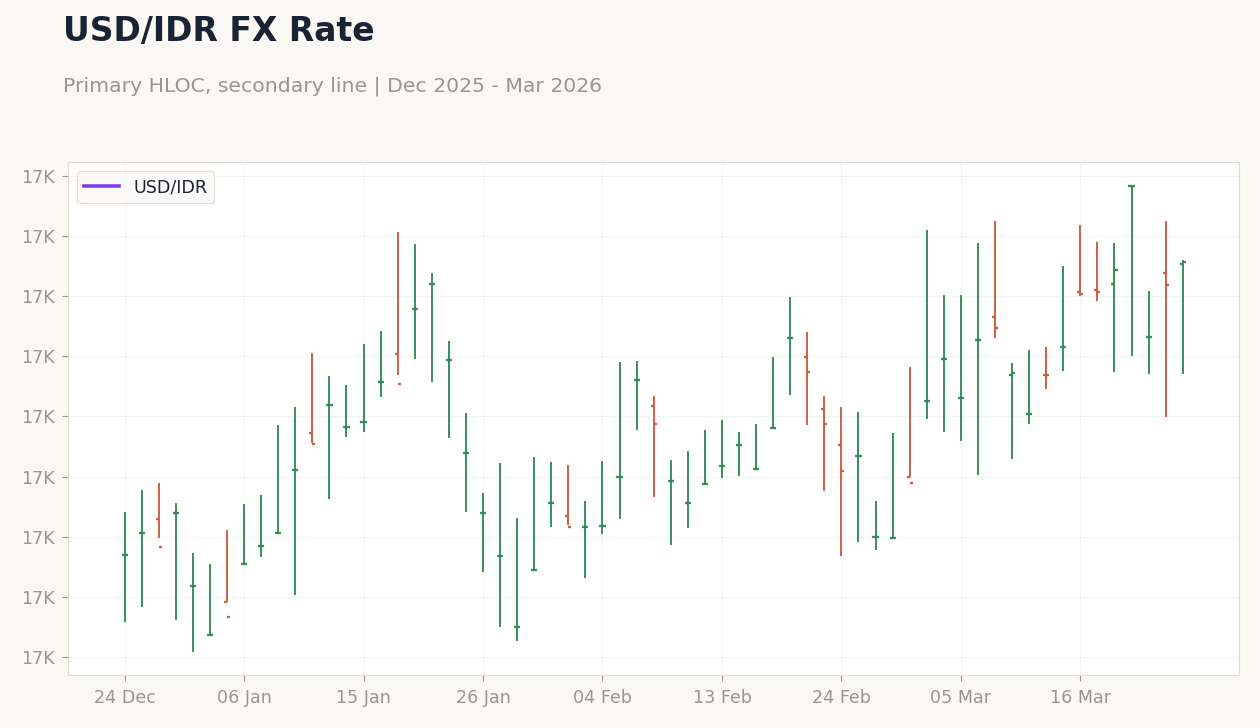
| USD/IDR | 16,978.00 | +0.11% |
| USD/THB | 32.36 | -1.59% |
| USD/MYR | 3.95 | +0.42% |
| USD/PHP | 59.88 | +0.72% |
| USD/SGD | 1.28 | -0.31% |
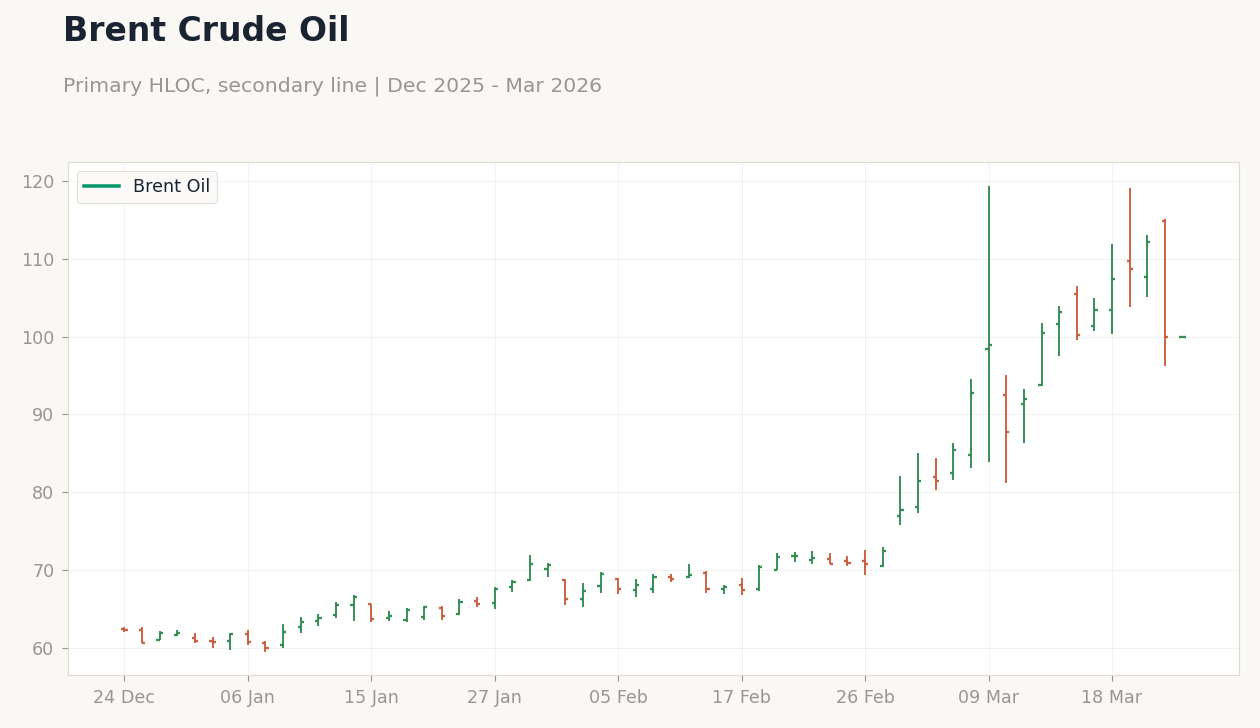
| Brent Crude | 100.04 | +0.10% |
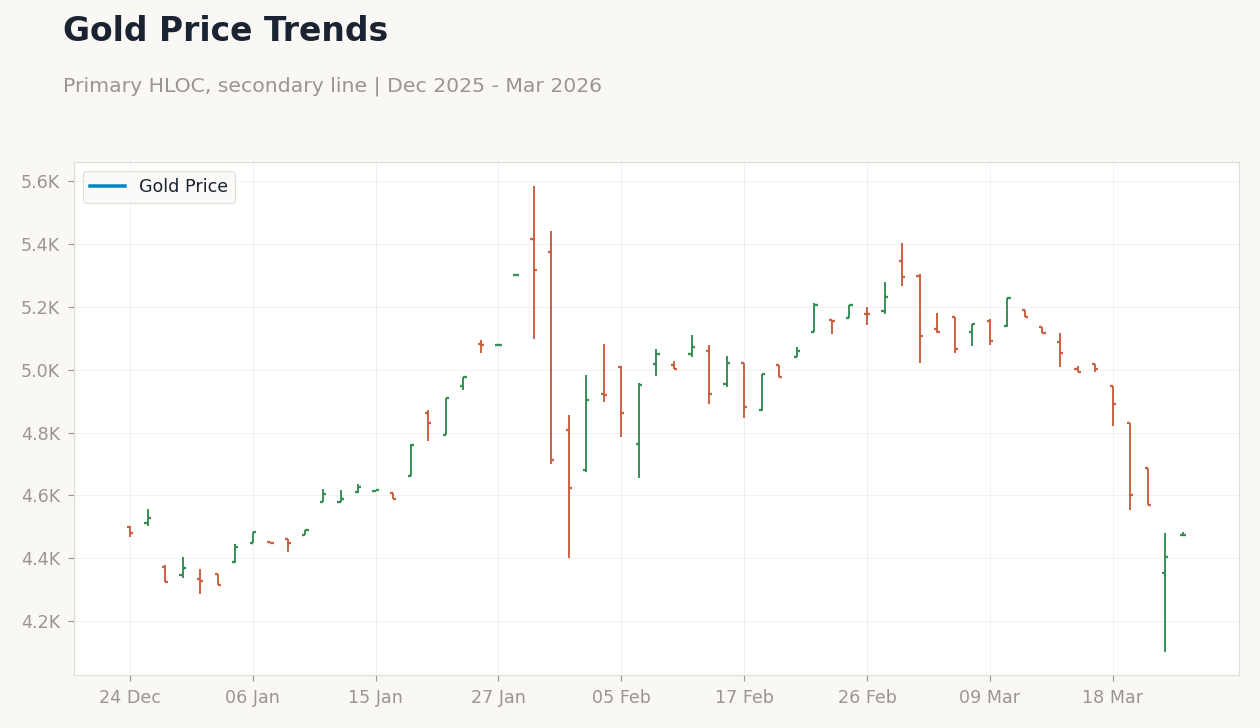
| Gold | 4,474.90 | +1.61% |
| Bitcoin | 70,269.00 | -0.91% |
| Indonesia 10Y Govt Yield | - | - |
| Thailand 10Y Govt Yield | - | - |
| Data | Prior | Cons | Actual |
|---|---|---|---|
| No events available | |||
Brent Oil Price History | Type: macro_line | Brent Crude Price: 101 (2026-03-16) | Range: 59.93–133.2 | Trend(5pt): 61.21,114.5,93.7,74.3,101
| Data | Prior | Cons | Time |
|---|---|---|---|
| No events available | |||
ASEAN markets displayed mixed performances amid geopolitical tensions and currency pressures, with no major data releases reported. Indonesia's JCI index rose 1.20% to 7,106.84, supported by commodity resilience despite rupiah concerns, as news highlighted risks of USD/IDR sliding to 20,000 due to Iran conflicts. Thailand's SET advanced 0.93% to 1,410.39, though bond outflows of $1 billion and a sharp drop in gold prices weighed on sentiment, with USD/THB declining 1.59% to 32.36.
Malaysia's KLCI fell 0.69% to 1,708.76, pressured by broader Asian outflows totaling $12.13 billion across eight markets, while USD/MYR rose 0.42% to 3.95. Philippines' PSEi gained 0.63% to 5,936.20 and Singapore's STI added 0.44% to 4,862.43, but currencies weakened with USD/PHP up 0.72% to 59.88 and USD/SGD down 0.31% to 1.28. Brent crude edged up 0.10% to 100.04, offering some support to commodity exporters like Indonesia, while gold surged 1.61% to 4,474.90 as a safe-haven asset.
Bitcoin dipped 0.91% to 70,269.00, reflecting crypto's sensitivity to global risk sentiment. Overall, FX dynamics reflected USD strength, with Indonesia's rupiah particularly vulnerable amid calls for forex restrictions to shield it.
With a quiet calendar across ASEAN, markets will monitor ongoing geopolitical developments, particularly Iran tensions impacting energy prices and currencies. Indonesia may see focus on potential BI statements regarding rupiah defense, as analysts eye further depreciation risks. Thailand's baht trajectory could draw attention following recent bond outflows and import surges, potentially influencing BoT's stance.
Malaysia and Singapore might track trade settlement data in local currencies, building on RM82.1 billion in such trades with key partners. Philippines and Vietnam could remain subdued without releases, though broader FDI flows in manufacturing may provide underlying support. Investors should watch for any unscheduled updates on Middle East conflicts affecting regional supply chains.
Subscribe to ASEAN Macro Daily and get each new issue delivered to your inbox.
Already a member? Visit robomacro.com to log in and manage subscriptions, or use Forgot Password to set a password.
Brent Crude Oil | Type: market_hloc | Brent Oil: 99.99 (2026-03-24) | Range: 59.96–112.2 | Trend(5pt): 62.24,64.13,69.04,81.4,99.99
USD/IDR FX Rate | Type: market_hloc | USD/IDR: 1.698e+04 (2026-03-24) | Range: 1.667e+04–1.704e+04 | Trend(6pt): 1.674e+04,1.688e+04,1.688e+04,1.675e+04,1.692e+04,1.698e+04
Gold Price Trends | Type: market_hloc | Gold Price: 4474 (2026-03-24) | Range: 4314–5318 | Trend(5pt): 4481,4588,5051,5107,4474
Indonesia JCI Index | Type: market_hloc | JCI Index: 7107 (2026-03-17) | Range: 7022–9135 | Trend(6pt): 8677,8885,7923,8281,7022,7107
Broader ASEAN themes include Indonesia's QRIS payment expansion across APEC, aiming to boost business efficiency and potentially save $4.7 billion amid war impacts. Thailand's imports surged on gold shipments, outpacing exports even before Middle East disruptions, while the bond market faces an unstable turnaround with $1 billion withdrawals revealing risks behind the baht's strength. Malaysia's durian tourism is rising, fueled by social media and Chinese demand, offering a niche boost amid global uncertainties.
Foreign investors recorded $12.13 billion outflows across eight Asian markets last week, pressuring regional assets. Thailand must submit comments to the US on the Section 301 probe by April 15, which could influence trade dynamics.
Global macro pressures from the Iran conflict are rippling into ASEAN, with analysts warning of slowed growth in economies like Finland and the Netherlands due to energy disruptions. The Dutch central bank highlighted the war's impact on the economy, while Finland's central bank noted already slowing activity. European Central Bank insights on AI's role in the euro area economy underscore technological shifts that could enhance ASEAN's manufacturing edge, particularly in Vietnam.
Thailand's bond outflows hit $1 billion, on track for the largest since 2022, amid global fund shifts. Broader Asian outflows reached $12.13 billion last week across eight markets, amplifying capital flight from emerging regions. These factors heighten risks for ASEAN oil importers like Singapore and the Philippines, with potential Strait of Hormuz tensions threatening global supply chains.
Bank Indonesia (BI) remains vigilant on rupiah defense, with analysts questioning if forex restrictions can prevent a slide to 20,000 amid Iran tensions and $150 billion reserves facing debt reliance risks; BI's aggressive stance on FX intervention contrasts with peers. Bank of Thailand (BoT) tightens cash rules, mandating ID checks for high-risk transactions over Bt5 million, as baht faces depreciation to 33.50 despite recent strength, highlighting reserve adequacy concerns amid $1 billion bond outflows. Bank Negara Malaysia (BNM) oversees robust local currency trade settlements worth RM82.1 billion, aiding ringgit stability, though policy divergences emerge with manufacturing focus.
Bangko Sentral ng Pilipinas (BSP) monitors peso weakness, with no immediate rate signals, but inflation dynamics could prompt adjustments given remittance dependencies. Monetary Authority of Singapore (MAS) maintains its unique exchange rate policy via NEER bands, with SGD showing resilience amid financial hub status, differing from interest rate tools used elsewhere. State Bank of Vietnam (SBV) supports fast-growing manufacturing amid FDI inflows, with FX management focused on dong stability against capital flow volatility.
(cont...)
Policy divergences persist, with BI and BoT more interventionist on currencies, while MAS prioritizes exchange rate bands over rates.