ASEAN Macro Daily(Beta Mode)
Rupiah Pressured by Iran Tensions
Market Snapshot
| Asset | Level | Change |
|---|---|---|
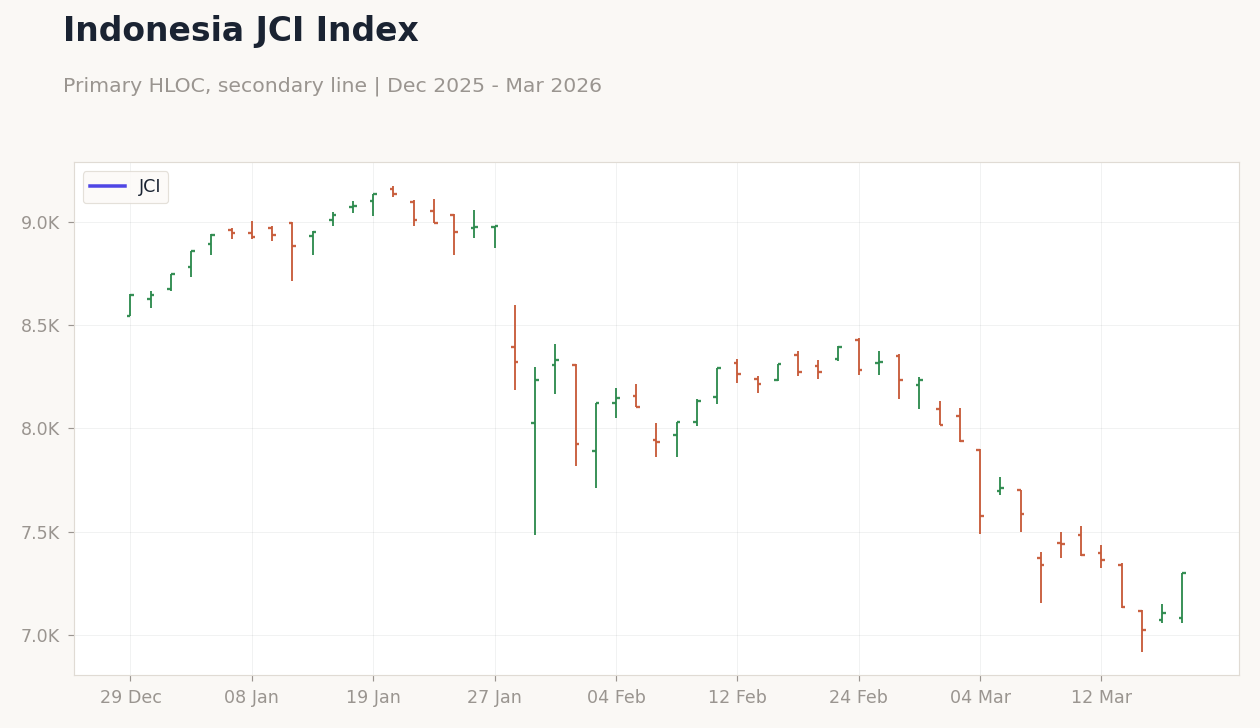
| JCI | 7,302.12 | +2.75% |
| SET | 1,457.91 | +3.37% |
| KLCI | 1,716.68 | +0.46% |
| PSEi | 6,044.17 | +1.82% |
| STI | 4,904.54 | +0.87% |
| USD/IDR | 16,900.00 | +0.21% |
| USD/THB | 32.42 | +0.03% |
| USD/MYR | 3.96 | +1.01% |
| USD/PHP | 60.06 | +0.88% |
| USD/SGD | 1.28 | +0.43% |
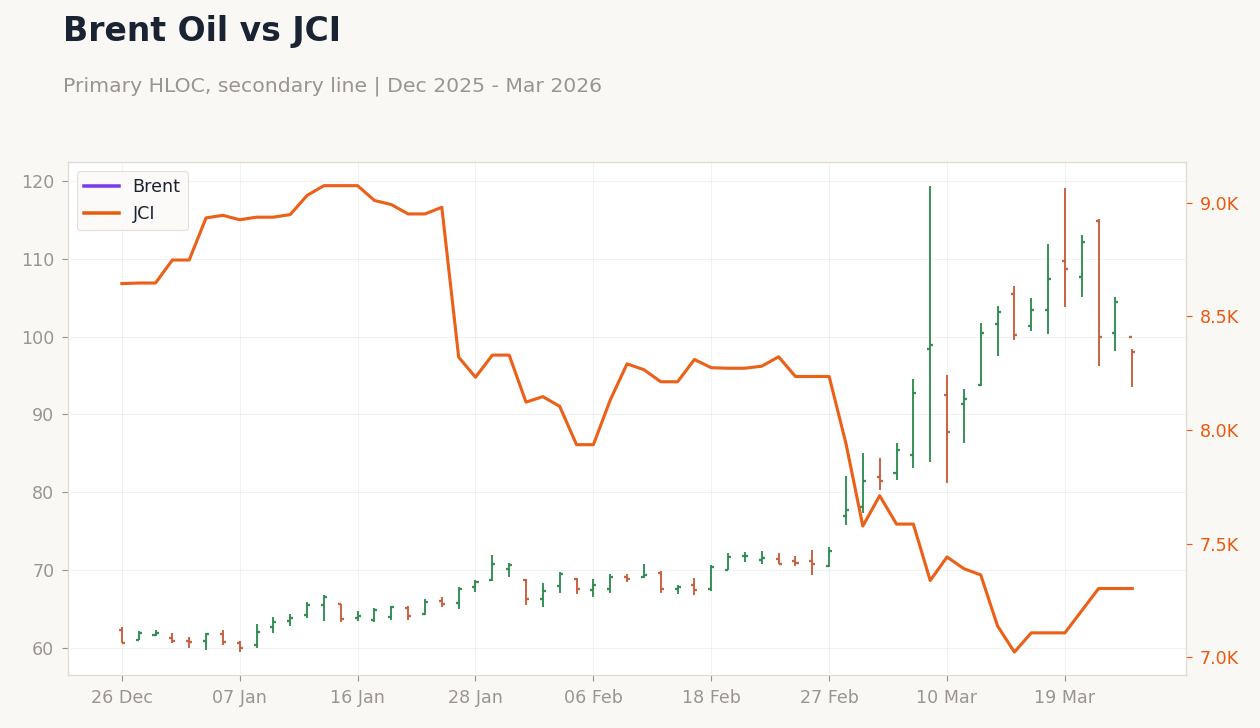
| Brent Crude | 98.05 | -6.16% |
| Gold | 4,503.30 | +2.36% |
| Bitcoin | 71,065.22 | +0.78% |
| Indonesia 10Y Govt Yield | - | - |
| Thailand 10Y Govt Yield | - | - |
Prior Economic Events
| Data | Prior | Cons | Actual |
|---|---|---|---|
| No events available | |||
 Brent Crude Oil Price | Type: macro_line | Brent Price: 103.8 (2026-03-23) | Range: 59.93–133.2 | Trend(5pt): 63.77,119.7,94.46,73.19,103.8
Today's Economic Events
| Data | Prior | Cons | Time |
|---|---|---|---|
| No events available | |||
- Indonesian rupiah weakens toward Rp20,000 amid Middle East conflict, despite BI's hawkish stance extending tight policy through 2026.
- ASEAN equities rally, led by Thailand's SET (+3.37%) and Indonesia's JCI (+2.75%), as oil prices drop 6.16% on ceasefire hopes.
- Regional currencies mixed versus USD, with MYR weakening 1.01% and PHP down 0.88%, amid global risk-off sentiment.
Yesterday's Recap
ASEAN markets showed resilience with equities broadly advancing despite geopolitical tensions from the Iran conflict. Indonesia's JCI climbed 2.75% to 7,302.12, supported by gains in commodity-linked stocks as Brent crude fell 6.16% to 98.05, easing inflation fears, though the rupiah weakened 0.21% to 16,900.00 versus USD amid warnings of potential slides to Rp20,000. Thailand's SET surged 3.37% to 1,457.91, buoyed by strong import data on gold shipments and plans for a $3.4 billion mall expansion by Central Pattana, signaling consumer sector optimism.
Malaysia's KLCI rose 0.46% to 1,716.68, aided by surging local currency trade with China, Thailand, and Indonesia reaching RM82.1 billion. Philippines' PSEi gained 1.82% to 6,044.17, while Singapore's STI advanced 0.87% to 4,904.54. Currencies faced pressure, with USD/MYR up 1.01% to 3.96 and USD/PHP rising 0.88% to 60.06, reflecting broader risk-off sentiment.
The Day Ahead
The ASEAN calendar remains light with no major data releases scheduled, allowing markets to digest recent geopolitical developments and oil price volatility. Investors will monitor any updates on Iran-US ceasefire prospects, which could influence commodity-driven economies like Indonesia and Malaysia. Thailand may see focus on export figures following yesterday's import surge, potentially impacting BoT's policy outlook.
Philippines and Singapore could track remittance and trade data previews, while Vietnam's manufacturing updates might emerge informally. Overall, attention turns to global cues, including any ECB or BoC statements on energy shocks.
Other Economic Notes
Broader ASEAN themes highlight vulnerability to Middle East disruptions, with Indonesia's $150 billion reserves offering a buffer but debt reliance exposing the rupiah to further risks. Supply chain shifts continue, as seen in Malaysia's RM82.1 billion local currency settlements with key partners, reducing USD dependence amid US-China tensions. Tourism and manufacturing resilience persists in Thailand and Vietnam, though global slowdown signals from Europe and Canada could curb FDI inflows.
Thailand's imports surged on gold shipments, outpacing exports even before Middle East disruptions, while oil price tests add fiscal strains.