ASEAN Macro Daily(Beta Mode)
BI Holds Rates Amid Oil Shock
Market Snapshot
| Asset | Level | Change |
|---|---|---|
| JCI | 7,048.22 | -0.61% |
| SET | 1,448.14 | -0.10% |
| KLCI | 1,690.36 | +0.15% |
| PSEi | 5,948.94 | +1.35% |
| STI | 4,885.45 | -0.24% |
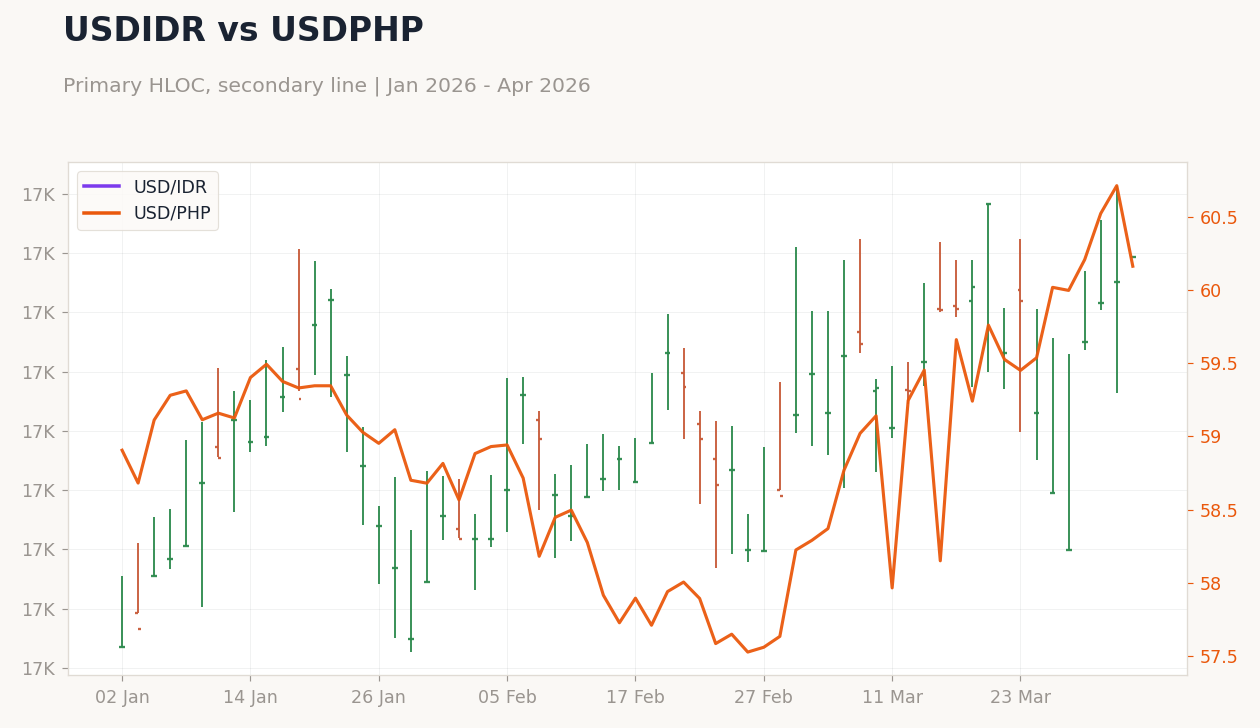
| USD/IDR | 16,997.00 | +0.13% |
| USD/THB | 32.62 | -0.70% |
| USD/MYR | 4.02 | -0.15% |
| USD/PHP | 60.16 | -0.91% |
| USD/SGD | 1.28 | -0.70% |
| Brent Crude | 100.30 | -15.25% |
| Gold | 4,784.60 | +2.95% |
| Bitcoin | 68,211.99 | -0.03% |
| Indonesia 10Y Govt Yield | - | - |
| Thailand 10Y Govt Yield | - | - |
Prior Economic Events
| Data | Prior | Cons | Actual |
|---|---|---|---|
| Trade Balance | 960m | 1,550m | 1,280m |
| Inflation Rate Year-over-Year | 4.76 | 3.60 | 3.48 |
 Brent Oil Price Trend | Type: macro_line | Brent Crude Oil Price: 121.9 (2026-03-30) | Range: 59.93–133.2 | Trend(5pt): 61.47,121.8,94.46,74.58,121.9
Today's Economic Events
| Data | Prior | Cons | Time |
|---|---|---|---|
| Inflation Rate Year-over-Year | 2.40 | - | 21:00 |
| Headline Unemployment Rate | 5.80 | - | 21:00 |
- Indonesia's inflation eased to 3.48% YoY, below consensus, while trade balance hit $1.28B amid global tensions.
- ASEAN equities mixed; PSEi surged 1.35% on bank lending growth, while JCI fell 0.61% on rupiah weakness.
- Middle East conflict drove Brent to $100.30 with volatile trading, pressuring energy-dependent ASEAN economies.
Yesterday's Recap
Indonesia's inflation rate dropped to 3.48% year-over-year, undershooting the 3.60% consensus and down from 4.76% prior, reflecting effective subsidies amid easing commodity pressures. The trade balance registered $1.28 billion, below the $1.55 billion expected but up from $0.96 billion previous, impacted by Middle East disruptions to shipping routes. ASEAN equity markets were mixed: Indonesia's JCI declined 0.61% to 7,048.22 on rupiah depreciation, while the Philippines' PSEi rallied 1.35% to 5,948.94, supported by bank lending growth of 9.5% in February.
Thailand's SET edged down 0.10% to 1,448.14 amid fuel price hikes of 22% after subsidy cuts, and Malaysia's KLCI rose 0.15% to 1,690.36 on an upgraded 2026 growth outlook. Singapore's STI slipped 0.24% to 4,885.45, with no major data releases. Currencies showed varied moves against the USD: USD/IDR up 0.13% to 16,997.00, USD/THB down 0.70% to 32.62, USD/MYR down 0.15% to 4.02, USD/PHP down 0.91% to 60.16 despite peso weakness concerns, and USD/SGD down 0.70% to 1.28.
Commodities were volatile: Brent crude fell 15.25% to $100.30 amid Middle East tensions, gold rose 2.95% to $4,784.60 as a safe haven, and Bitcoin edged down 0.03% to $68,211.99. Indonesia's 10-year government yield data was unavailable.
The Day Ahead
The Philippines releases March inflation year-over-year at 21:00 ET, with the previous at 2.4%, which could shape BSP policy amid peso pressures and rising fuel costs from the Middle East conflict. Headline unemployment follows at the same time, last at 5.8%, providing labor market insights in a remittance-driven economy. No other major ASEAN data is scheduled, directing attention to global oil volatility and its effects on trade-reliant nations like Malaysia and Vietnam.
Singapore is monitoring the Iran situation closely, with Deputy Prime Minister Gan Kim Yong indicating possible GDP forecast adjustments if energy prices escalate. In the Philippines, joint House hearings on Middle East crisis response start April 8, potentially leading to fiscal actions. Markets expect limited volatility absent new geopolitical developments.
Other Economic Notes
Strait of Hormuz tensions threaten ASEAN economies, with oil above $100 per barrel straining budgets and inflating costs region-wide. (cont...)