ASEAN Macro Daily(Beta Mode)
Indonesian Finance Expands Amid Market Dip
Market Snapshot
| Asset | Level | Change |
|---|---|---|
| JCI | 7,026.78 | -2.19% |
| SET | 1,454.00 | -0.80% |
| KLCI | 1,695.50 | -0.16% |
| PSEi | 5,998.68 | +0.84% |
| STI | 4,947.50 | -0.57% |
| USD/IDR | 17,010.00 | +0.30% |
| USD/THB | 32.64 | +0.12% |
| USD/MYR | 4.03 | -0.20% |
| USD/PHP | 60.19 | +0.04% |
| USD/SGD | 1.29 | +0.16% |
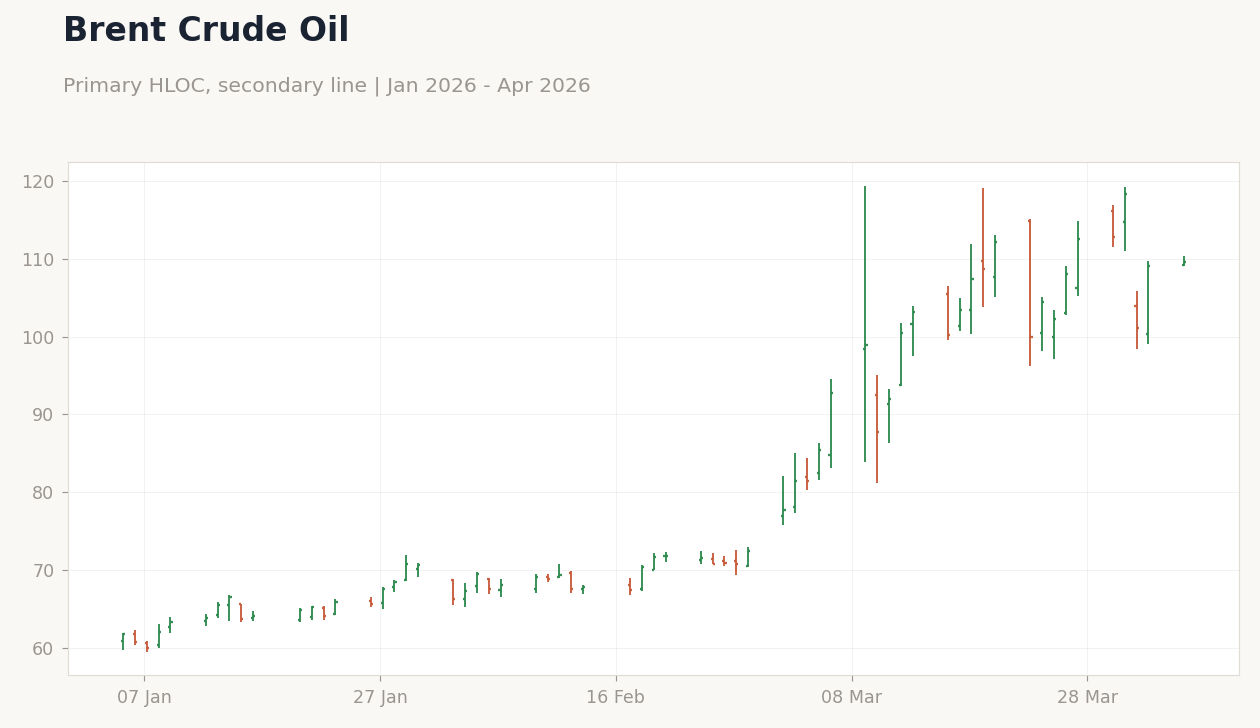
| Brent Crude | 109.05 | +7.80% |
| Gold | 4,702.70 | -1.68% |
| Bitcoin | 67,691.09 | +0.60% |
| Indonesia 10Y Govt Yield | - | - |
| Thailand 10Y Govt Yield | - | - |
Prior Economic Events
| Data | Prior | Cons | Actual |
|---|---|---|---|
| No events available | |||
 USD/IDR FX Pair | Type: market_hloc | USD/IDR: 1.701e+04 (2026-04-05) | Range: 1.667e+04–1.704e+04 | Trend(6pt): 1.668e+04,1.673e+04,1.684e+04,1.688e+04,1.696e+04,1.701e+04
Today's Economic Events
| Data | Prior | Cons | Time |
|---|---|---|---|
| Inflation Rate Year-over-Year | 2.40 | - | 21:00 |
| Headline Unemployment Rate | 5.80 | - | 21:00 |
- Indonesia's Islamic finance assets reach $183B, boosted by Danantara's 2.7T rupiah asset manager merger for sector consolidation.
- ASEAN equities mixed: JCI falls 2.19% on rupiah weakness, PSEi rises 0.84% amid positive sentiment.
- Brent crude surges 7.80% to $109.05, heightening inflation risks for ASEAN oil importers like Thailand and Philippines.
Yesterday's Recap
ASEAN markets closed mixed on April 4, with Indonesia's JCI dropping 2.19% to 7,026.78 amid rupiah weakening to 17,010.00 (+0.30% vs USD), influenced by capital outflows and Danantara's asset manager merger valued at 2.7 trillion rupiah. Thailand's SET fell 0.80% to 1,454.00, pressured by tourism concerns, while Malaysia's KLCI slipped 0.16% to 1,695.50 despite ringgit gains at 4.03 (-0.20% vs USD). Philippines' PSEi advanced 0.84% to 5,998.68, supported by remittance inflows, contrasting Singapore's STI decline of 0.57% to 4,947.50 as global yields weighed on financials.
Broader ASEAN FX showed modest USD strength, with USD/THB up 0.12% to 32.64 and USD/PHP up 0.04% to 60.19, while USD/SGD rose 0.16% to 1.29. No major data releases occurred yesterday, but Indonesia's push for local currency use in inter-state transactions highlighted efforts to lessen USD dependence. Commodity pressures intensified, with Brent jumping 7.80% to 109.05, adding to import costs for energy-reliant economies in the region.
The Day Ahead
Philippines inflation rate year-over-year releases at 21:00 ET on April 6, with previous at 2.4%, offering insights into BSP policy amid World Bank warnings on Middle East tensions. Philippines headline unemployment rate follows at 21:00 ET on April 7, previous at 5.8%, potentially affecting growth views in a remittance-driven economy. No other immediate ASEAN data is scheduled, shifting attention to global indicators like US employment figures.
Markets may track Indonesia's local currency trade initiatives and Vietnam's manufacturing FDI trends for broader regional cues.
Other Economic Notes
Indonesia's Islamic finance assets have grown to $183 billion, underscoring diversification in funding sources amid commodity-led expansion, with Danantara's $159 million merger targeting asset management efficiency. Malaysia's ringgit holds firm in 2026 outlooks, backed by export strength in manufacturing despite geopolitical risks. Philippines contends with potential inflation shocks from Middle East conflicts, as flagged by the World Bank, which could hinder growth in its remittance-dependent sectors.
Global Macro News
Global sentiment stays cautious amid Brent crude's 7.80% rise to 109.05 on Middle East tensions, elevating import bills and inflation for ASEAN nations like Thailand and Philippines. (cont...)