ASEAN Macro Daily(Beta Mode)
Rupiah Pressured by Deficit, USD Strength
Market Snapshot
| Asset | Level | Change |
|---|---|---|
| JCI | 7,026.78 | -2.19% |
| SET | 1,454.00 | -0.80% |
| KLCI | 1,695.50 | -0.16% |
| PSEi | 5,998.68 | +0.84% |
| STI | 4,947.50 | -0.57% |
| USD/IDR | 17,032.00 | +0.43% |
| USD/THB | 32.54 | -0.18% |
| USD/MYR | 4.03 | -0.27% |
| USD/PHP | 60.05 | -0.43% |
| USD/SGD | 1.28 | -0.06% |
| Brent Crude | 109.63 | +0.55% |
| Gold | 4,676.10 | +0.53% |
| Bitcoin | 69,432.70 | +0.65% |
| Indonesia 10Y Govt Yield | - | - |
| Thailand 10Y Govt Yield | - | - |
Prior Economic Events
| Data | Prior | Cons | Actual |
|---|---|---|---|
| No events available | |||
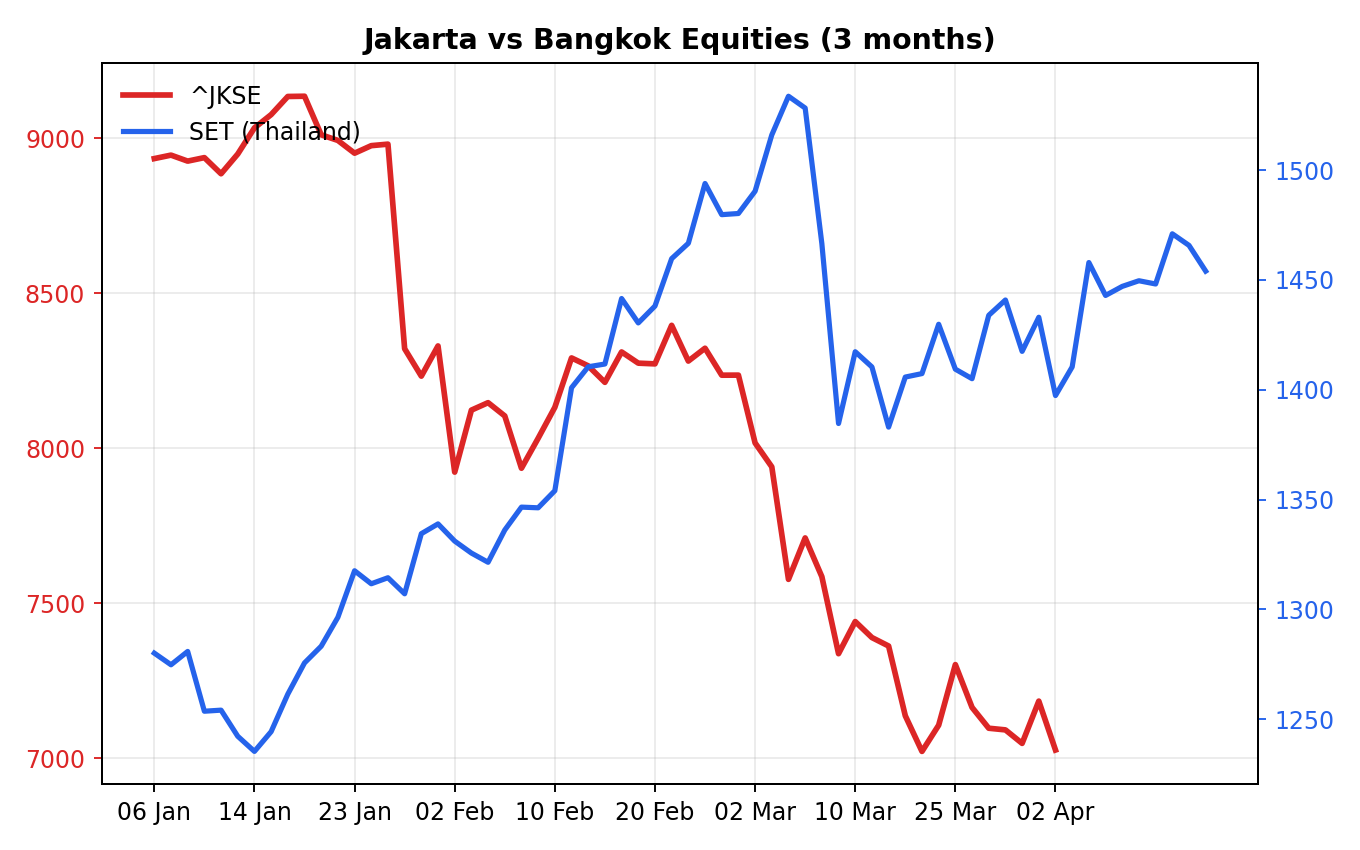
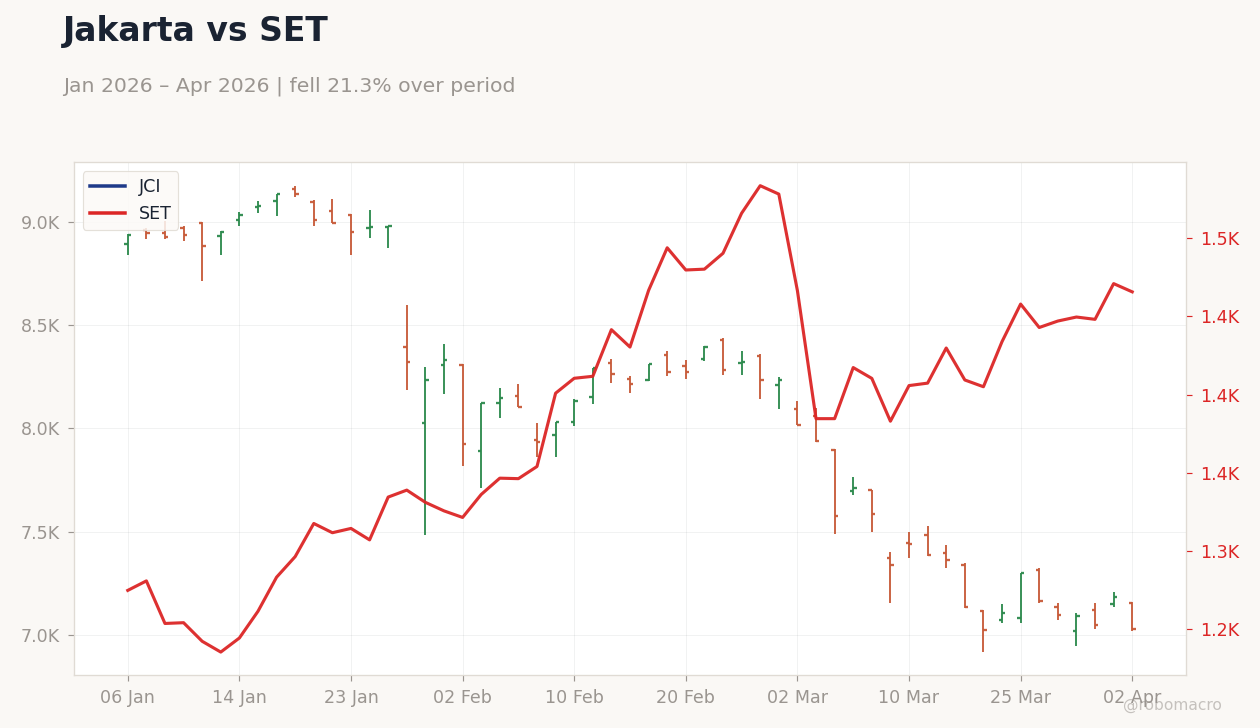 Jakarta vs SET | Type: market_hloc | JCI: 7027 (2026-04-02) | Range: 7022–9135 | Trend(6pt): 8934,8975,8265,7711,7048,7027 | SET: 1454 (2026-04-03) | Range: 1235–1534 | Trend(5pt): 1280,1334,1467,1409,1454
Today's Economic Events
| Data | Prior | Cons | Time |
|---|---|---|---|
| Inflation Rate Year-over-Year | 2.40 | 3.60 | 21:00 |
| Headline Unemployment Rate | 5.80 | - | 21:00 |
| Tuesday (2026-04-07) | |||
| Inflation Rate Year-over-Year | 2.40 | 3.60 | 21:00 |
- Indonesian rupiah weakens amid strong USD, energy risks, and Q1 budget deficit of $14B, dragging JCI down 2.19%.
- Philippine peso gains ground with PSEi up 0.84%, bucking mixed ASEAN equity and FX trends.
- Indonesia advances local currency push, Islamic finance growth to $183B, and cross-border payments with South Korea.
Yesterday's Recap
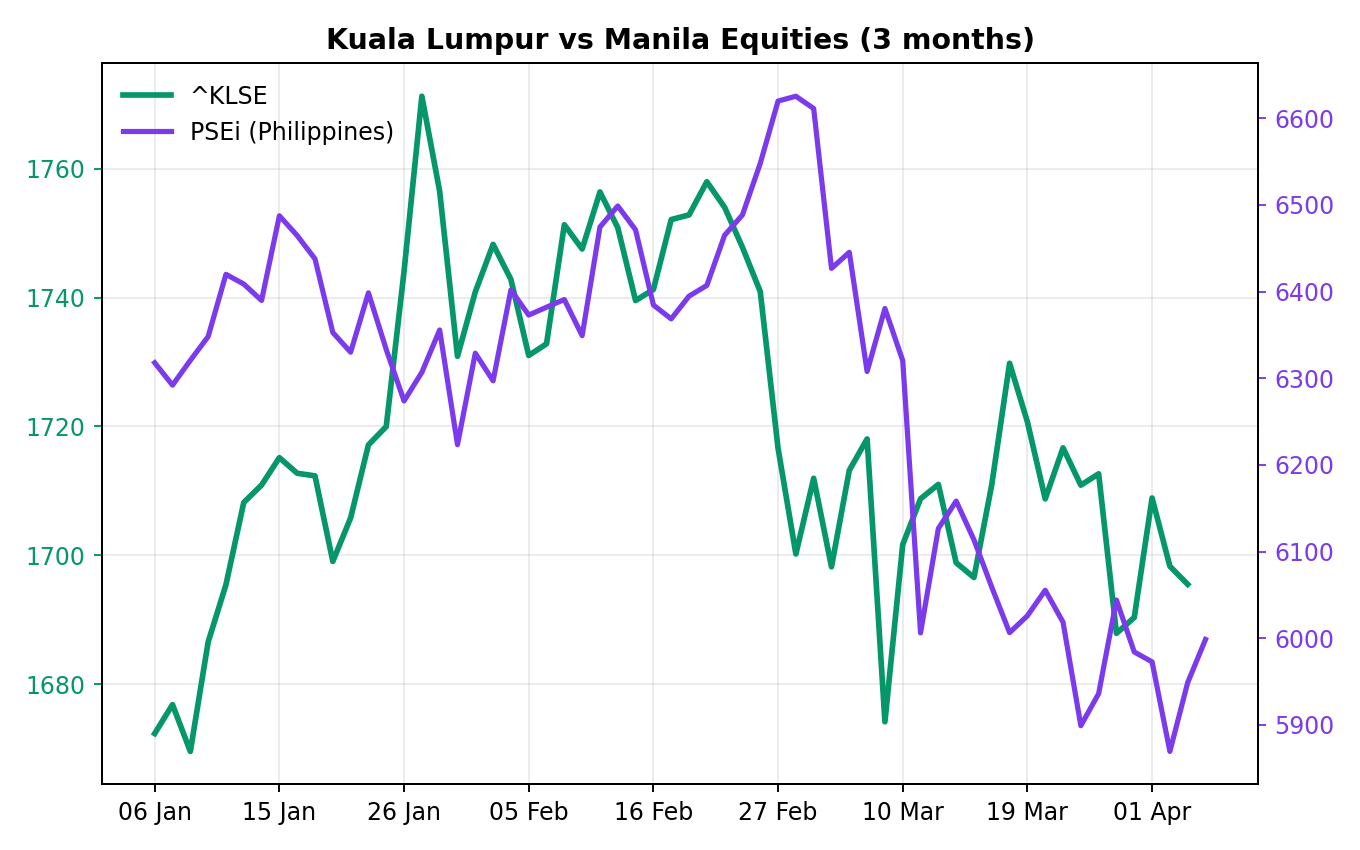
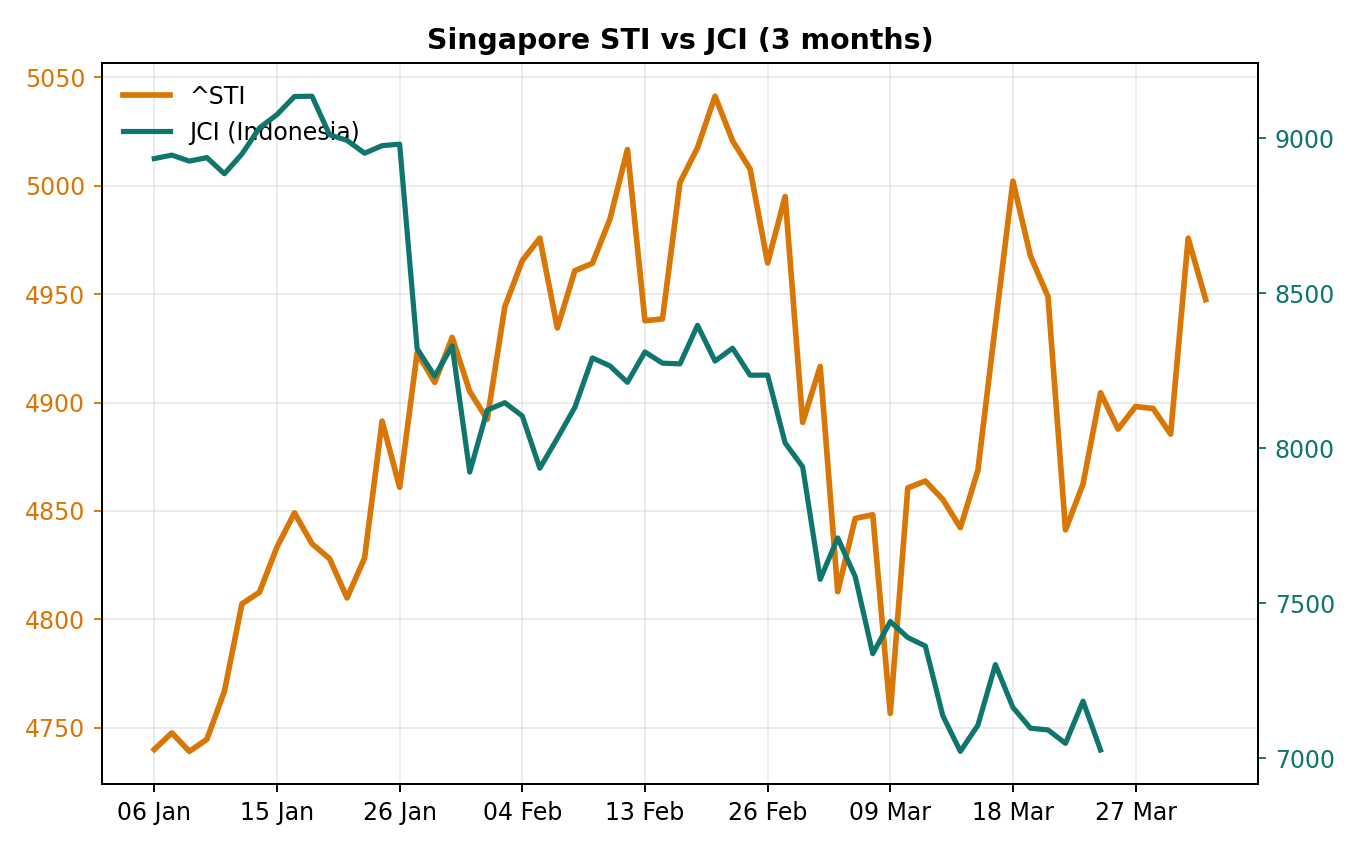
ASEAN equities showed mixed results amid USD strength and commodity shifts, with Indonesia's JCI falling 2.19% to 7,026.78, weighed by rupiah depreciation and a Q1 budget deficit of $14 billion as spending exceeded revenue. Thailand's SET declined 0.80% to 1,454.00, potentially reflecting tourism concerns. Malaysia's KLCI slipped 0.16% to 1,695.50, while the Philippines' PSEi rose 0.84% to 5,998.68, aided by peso appreciation.
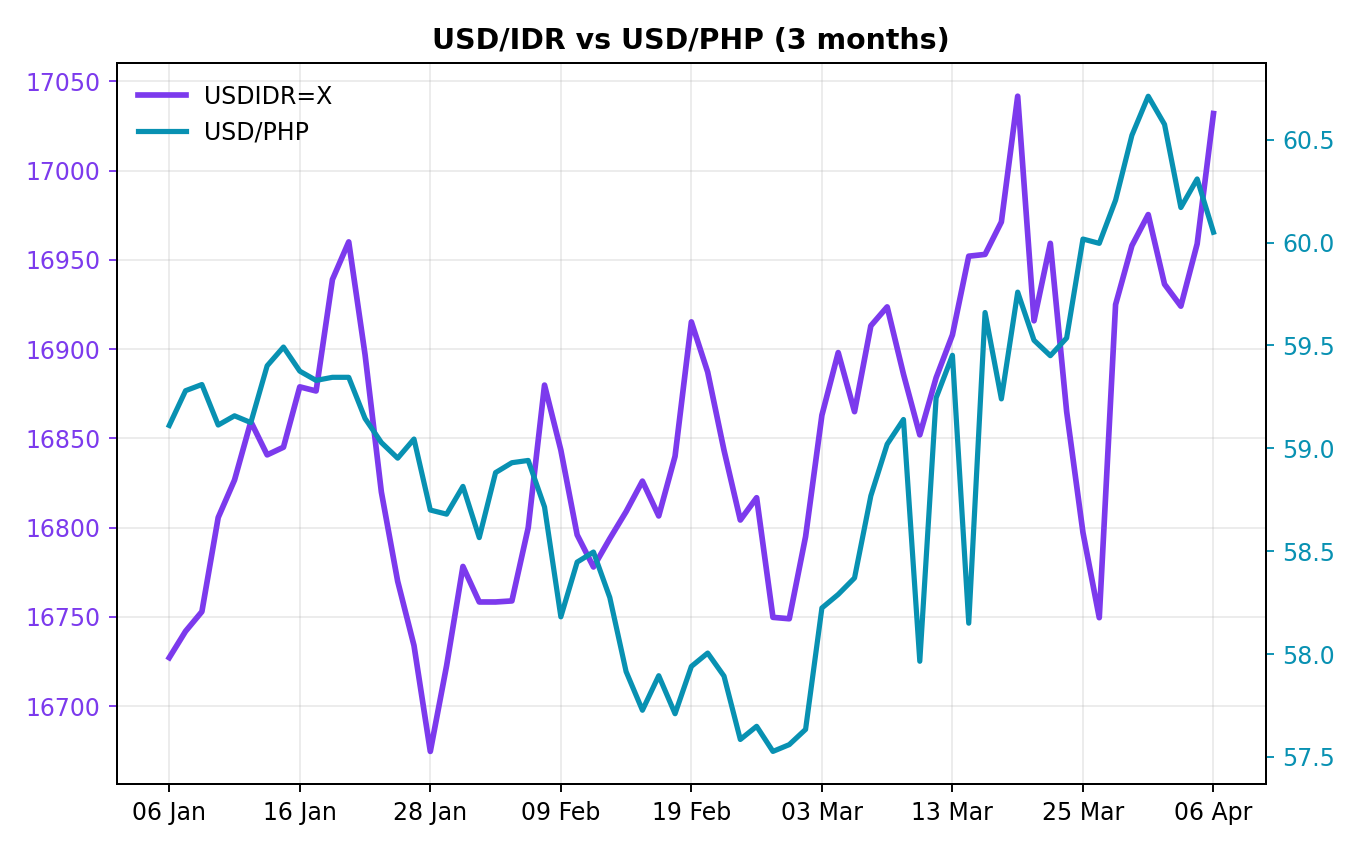
Singapore's STI dropped 0.57% to 4,947.50, mirroring regional caution. In FX, USD/IDR rose 0.43% to 17,032.00 on dollar firmness and energy risks, USD/THB fell 0.18% to 32.54, USD/MYR decreased 0.27% to 4.03, USD/PHP dropped 0.43% to 60.05, and USD/SGD eased 0.06% to 1.28. Brent crude climbed 0.55% to 109.63, supporting exporters like Indonesia, while gold rose 0.53% to 4,676.10 on safe-haven demand.
Bitcoin gained 0.65% to 69,432.70. No significant data releases occurred, but news highlighted Indonesia's asset manager merger at 2.7 trillion rupiah ($159 million equivalent), cross-border QRIS payments with South Korea, and Islamic finance assets reaching $183 billion.
The Day Ahead
Focus turns to the Philippines' inflation rate year-over-year at 21:00 ET, with consensus at 3.6% against previous 2.4%, which could shape BSP policy amid consumption and remittance trends. The headline unemployment rate follows at the same time, previous at 5.8% with no consensus, providing labor market clues. Tomorrow's calendar merges an additional Philippine inflation event, potentially overlapping with today's data.
No other key ASEAN releases are slated, leaving markets to absorb global signals like U.S. indicators. Updates on Indonesia's local currency efforts or Malaysia's ringgit outlook could draw attention, with medium-impact data possibly sparking PHP volatility and PSEi shifts.
Other Economic Notes
Indonesia pushes for local currency use in inter-state transactions to mitigate USD reliance, amid rupiah pressures and energy risks. Its Islamic finance assets have grown to $183 billion, bolstering diversification in a commodity-heavy economy. Danantara's asset manager merger, valued at 2.7 trillion rupiah ($159 million), advances financial sector consolidation.
(cont...)