ASEAN Macro Daily(Beta Mode)
BI Defends Rupiah Amid Oil Volatility
Market Snapshot
| Asset | Level | Change |
|---|---|---|
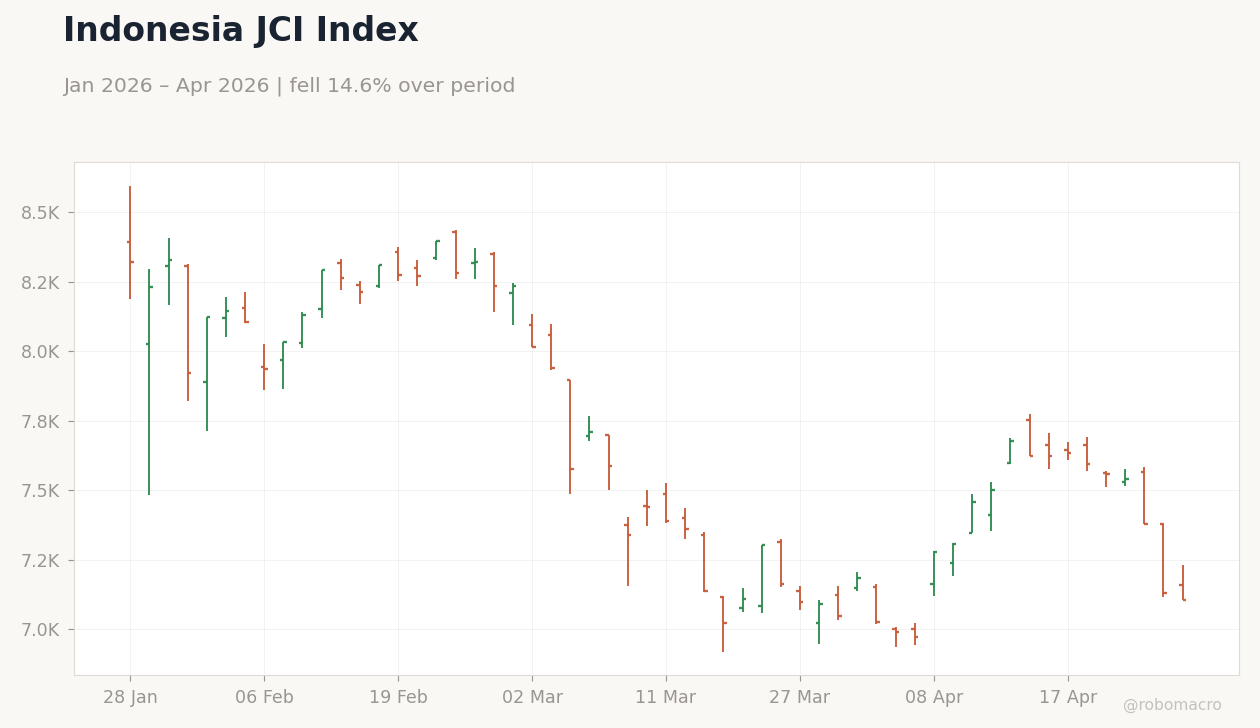
| JCI | 7,106.52 | -0.32% |
| SET | 1,479.13 | +1.58% |
| KLCI | 1,717.27 | -0.18% |
| PSEi | 5,901.15 | -0.71% |
| STI | 4,892.73 | -0.61% |
| USD/IDR | 17,240.00 | -0.03% |
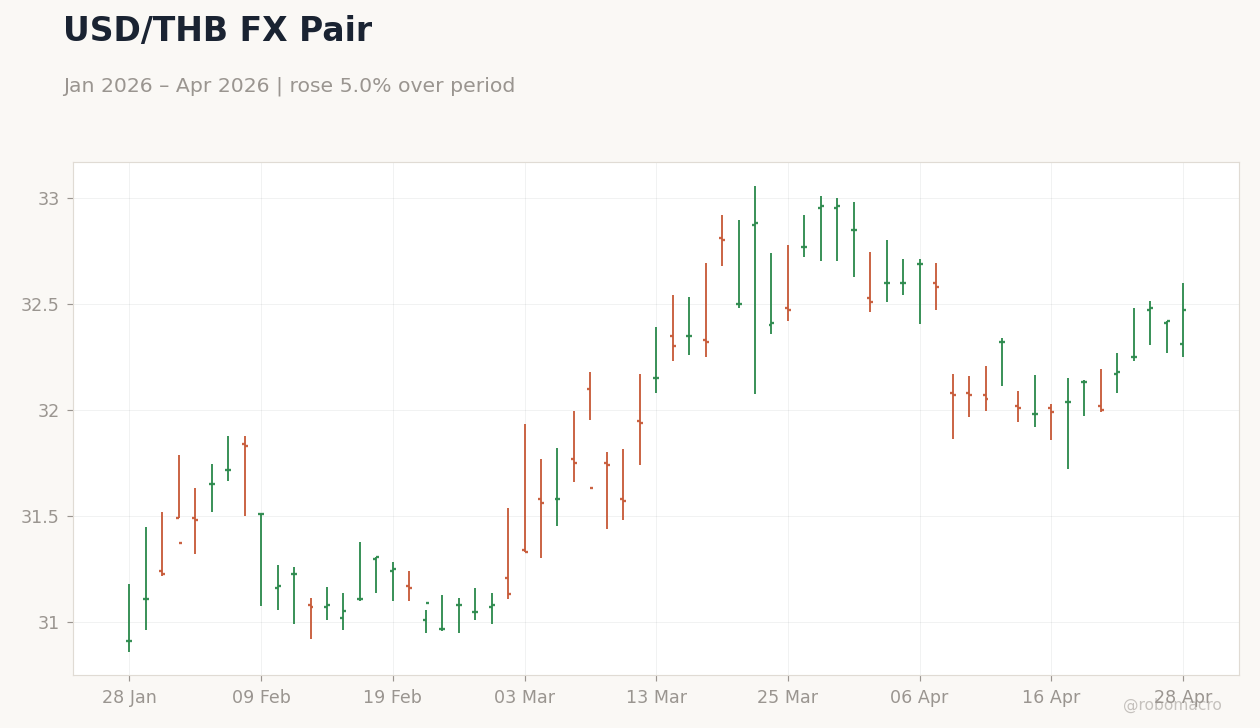
| USD/THB | 32.47 | +0.15% |
| USD/MYR | 3.95 | -0.34% |
| USD/PHP | 61.03 | +0.68% |
| USD/SGD | 1.28 | -0.06% |
| Brent Crude | 104.30 | -3.63% |
| Gold | 4,609.60 | -1.41% |
| Bitcoin | 76,430.65 | -1.21% |
| Indonesia 10Y Govt Yield | - | - |
| Thailand 10Y Govt Yield | - | - |
Prior Economic Events
| Data | Prior | Cons | Actual |
|---|---|---|---|
| No events available | |||
 Brent Crude Oil | Type: market_hloc | Brent Crude: 104 (2026-04-28) | Range: 66.3–118.3 | Trend(6pt): 68.4,71.66,100.5,109,105.3,104
Today's Economic Events
| Data | Prior | Cons | Time |
|---|---|---|---|
| Central Bank Interest Rate Decision | 1 | 1 | 23:00 |
| Wednesday (2026-04-29) | |||
| Central Bank Interest Rate Decision | 1 | 1 | 23:00 |
- Indonesia's BI holds rates steady, viewing rupiah as undervalued and vowing market interventions despite criticism, amid triple shocks from oil above $100, currency weakness, and rising costs.
- Thai baht under pressure from energy costs and Mideast crisis, with car production up 2.7% y/y in March on EV demand, while Thailand plans 20% electricity cut for low-use households.
- ASEAN equities mixed: Thailand's SET +1.58% on manufacturing gains, offset by PSEi -0.71%, STI -0.61%, JCI -0.32%, and KLCI -0.18%; Brent crude -3.63% to $104.30.
Yesterday's Recap
ASEAN markets displayed mixed results amid oil price fluctuations, with Brent crude falling 3.63% to $104.30, easing some pressure on importers like Indonesia and Thailand. Indonesia's JCI declined 0.32% to 7,106.52, as rupiah held steady at USD/IDR 17,240.00 (-0.03%), supported by BI's commitment to interventions despite global risk-off sentiment and oil-driven costs. Thailand's SET advanced 1.58% to 1,479.13, bolstered by March car production rising 2.7% y/y on stronger EV demand, though USD/THB increased 0.15% to 32.47 due to energy import concerns.
Malaysia's KLCI slipped 0.18% to 1,717.27, with USD/MYR dropping 0.34% to 3.95 as ringgit strengthened against regional currencies amid geopolitical tensions. Philippines' PSEi dropped 0.71% to 5,901.15, while USD/PHP rose 0.68% to 61.03, reflecting remittance support offsetting equity pressures. Singapore's STI fell 0.61% to 4,892.73, with USD/SGD easing 0.06% to 1.28, as financial sector weakness prevailed.
The Day Ahead
Thailand's BoT issues its interest rate decision at 23:00 ET today, with consensus for a hold at 1% given subdued inflation and tourism recovery priorities. The calendar lists a repeat BoT event for tomorrow, likely an overlap, with no other ASEAN releases scheduled. Attention will focus on BoT guidance regarding FX interventions to address baht weakness from oil shocks.
Investors may watch for Indonesia BI updates on rupiah strategies, while broader sentiment tracks global energy developments.
Other Economic Notes
Indonesia's economy exhibits resilience with a strong growth outlook and recession risk below 5%, countering global uncertainties via commodity exports. Officials highlight stability amid rising costs and rupiah projections of further weakening from risk-off sentiment, though prospects of Iran-US talks could strengthen the currency. Thailand anticipates weaker growth and higher inflation from Mideast conflicts, prompting fiscal measures like a 20% electricity tariff reduction for low-usage households to ease living expenses.
Its trade deficit with China expanded due to faster import growth, while car production benefited from EV demand. (cont...)