ASEAN Macro Daily(Beta Mode)
BI Hikes Rates Off-Cycle to 5.50%
Market Snapshot
| Asset | Level | Change |
|---|---|---|
| JCI | 5,342.14 | -4.52% |
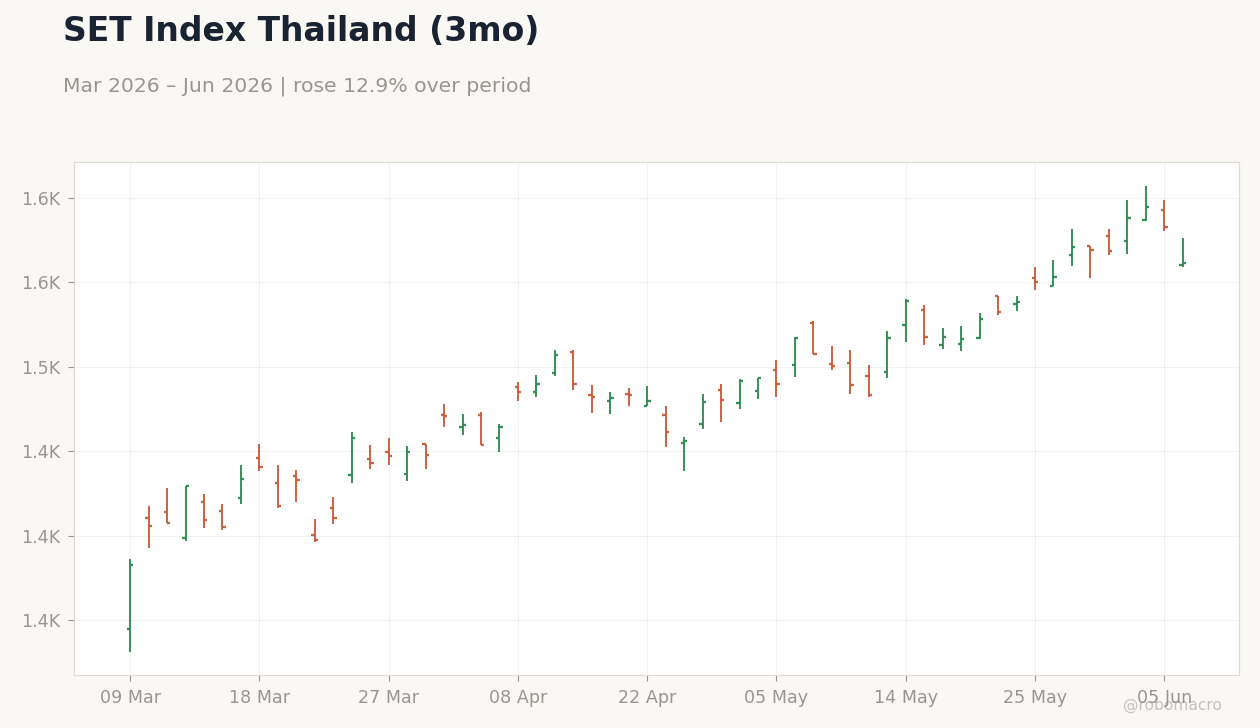
| SET | 1,561.68 | -1.32% |
| KLCI | 1,679.52 | -0.82% |
| PSEi | 5,879.41 | -0.99% |
| STI | 4,963.67 | -1.71% |
| USD/IDR | 18,136.00 | +0.59% |
| USD/THB | 32.87 | +0.06% |
| USD/MYR | 4.06 | +0.29% |
| USD/PHP | 61.50 | -0.41% |
| USD/SGD | 1.29 | -0.31% |
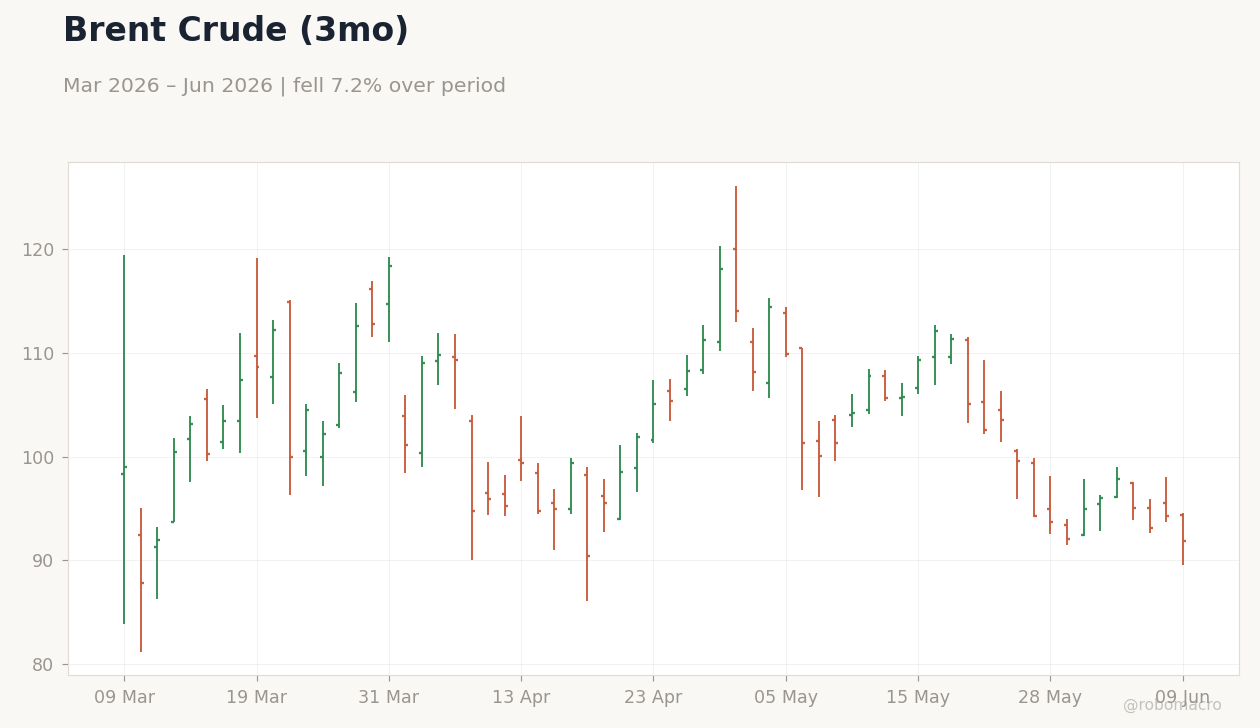
| Brent Crude | 91.83 | -2.57% |
| Gold | 4,284.80 | -1.18% |
| Bitcoin | 61,683.19 | -2.23% |
| Indonesia 10Y Govt Yield | - | - |
| Thailand 10Y Govt Yield | - | - |
Prior Economic Events
| Data | Prior | Cons | Actual |
|---|---|---|---|
| Headline Unemployment Rate | 5 | - | 4.70 |
| Central Bank Interest Rate Decision | 5.25 | - | 5.50 |
 USD/IDR (3mo) | Type: market_hloc | Rate: 1.814e+04 (2026-06-09) | Range: 1.675e+04–1.814e+04 | Trend(6pt): 1.692e+04,1.698e+04,1.713e+04,1.75e+04,1.796e+04,1.814e+04
Today's Economic Events
| Data | Prior | Cons | Time |
|---|---|---|---|
| No events available | |||
- Bank Indonesia raised its benchmark rate to 5.50% in a surprise move to stabilize the rupiah.
- Philippine unemployment fell to 4.7% in May, beating prior 5.0% reading.
- Regional equities fell sharply with JCI down 4.52% while USD/IDR rose 0.59%.
Yesterday's Recap
Bank Indonesia delivered an off-cycle 25 bp hike to 5.50%, its first tightening since 2023, explicitly aimed at arresting rupiah depreciation. The decision followed sustained capital outflows and pushed USD/IDR to 18,136, up 0.59% on the day. Philippine labor data showed the unemployment rate declining to 4.7% in May, indicating resilient household income support from overseas remittances.
Equity markets across ASEAN posted broad losses, led by JCI’s 4.52% drop to 5,342.14 and STI’s 1.71% decline to 4,963.67. Thailand’s SET fell 1.32% amid reports of a shrinking current-account surplus, while the ringgit and baht posted modest losses against the dollar. Brent crude’s 2.57% decline to 91.83 added to regional risk-off sentiment.
The Day Ahead
No major data releases are scheduled for ASEAN markets today. Focus will remain on follow-through from Bank Indonesia’s rate decision and any official comments on further intervention. Thailand’s fiscal spending data for the first eight months of FY2026 showed 2.8 trillion baht injected into the economy.
Market participants will monitor USD/IDR and regional bond yields for signs of stabilization after yesterday’s volatility. MAS is expected to maintain its current S$NEER policy band without adjustment.
Other Economic Notes
Indonesia’s surprise tightening highlights the trade-off between currency defense and growth in the region’s largest economy. Thailand’s shrinking external surplus raises medium-term baht stability concerns despite ongoing fiscal support. Malaysia’s import restrictions on Thai shrimp underscore ongoing supply-chain frictions within ASEAN.
China’s stronger-than-expected export surge continues to support electronics and commodity flows into Vietnam and Malaysia. Regional equity valuations remain sensitive to US dollar strength and global commodity price swings.
Global Macro News
China’s export growth exceeded forecasts, driven by AI-related shipments and providing a tailwind for ASEAN manufacturing hubs. South Korea’s faster-than-expected GDP print reinforced hawkish signals from the Bank of Korea, indirectly pressuring regional currencies. US jobs data continued to cloud expectations for near-term Federal Reserve easing, supporting broad dollar strength.
<i>↓ p.2</i>