ASEAN Macro Daily(Beta Mode)
BI Hikes to 5.50% to Stem Rupiah Slide
Market Snapshot
| Asset | Level | Change |
|---|---|---|
| JCI | 5,746.65 | +7.57% |
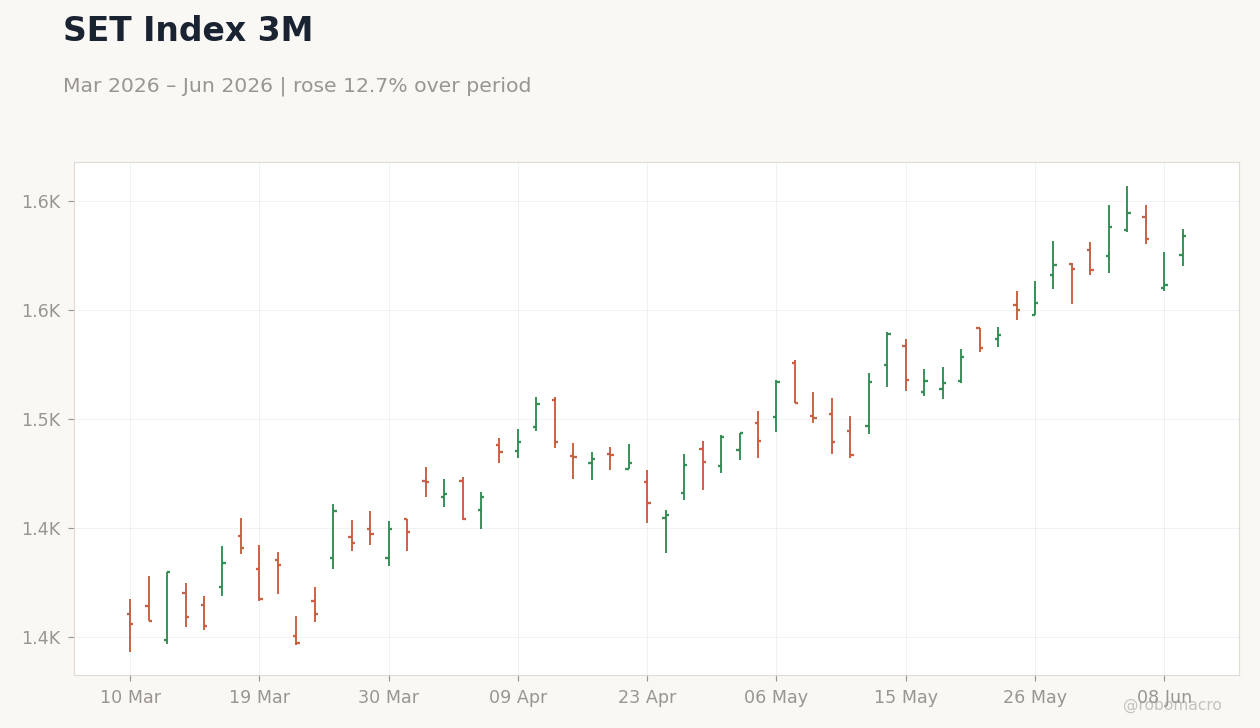
| SET | 1,584.14 | +1.44% |
| KLCI | 1,675.50 | -0.24% |
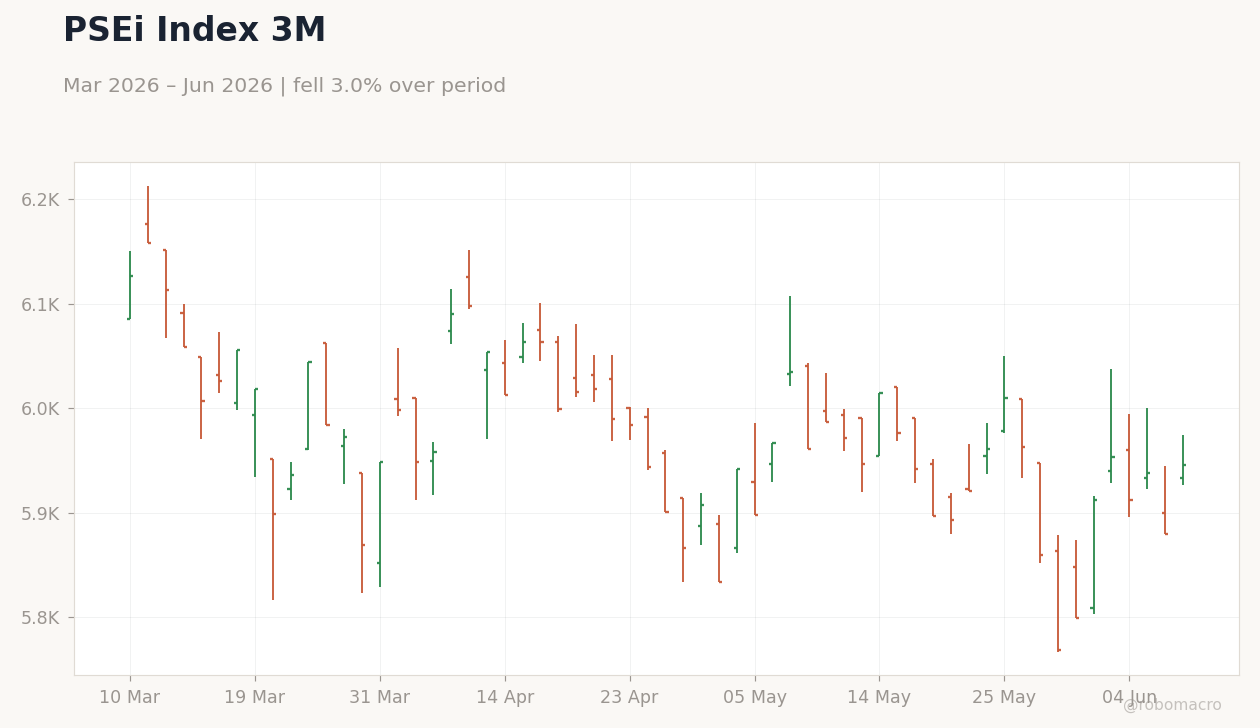
| PSEi | 5,945.71 | +1.13% |
| STI | 5,023.25 | +1.20% |
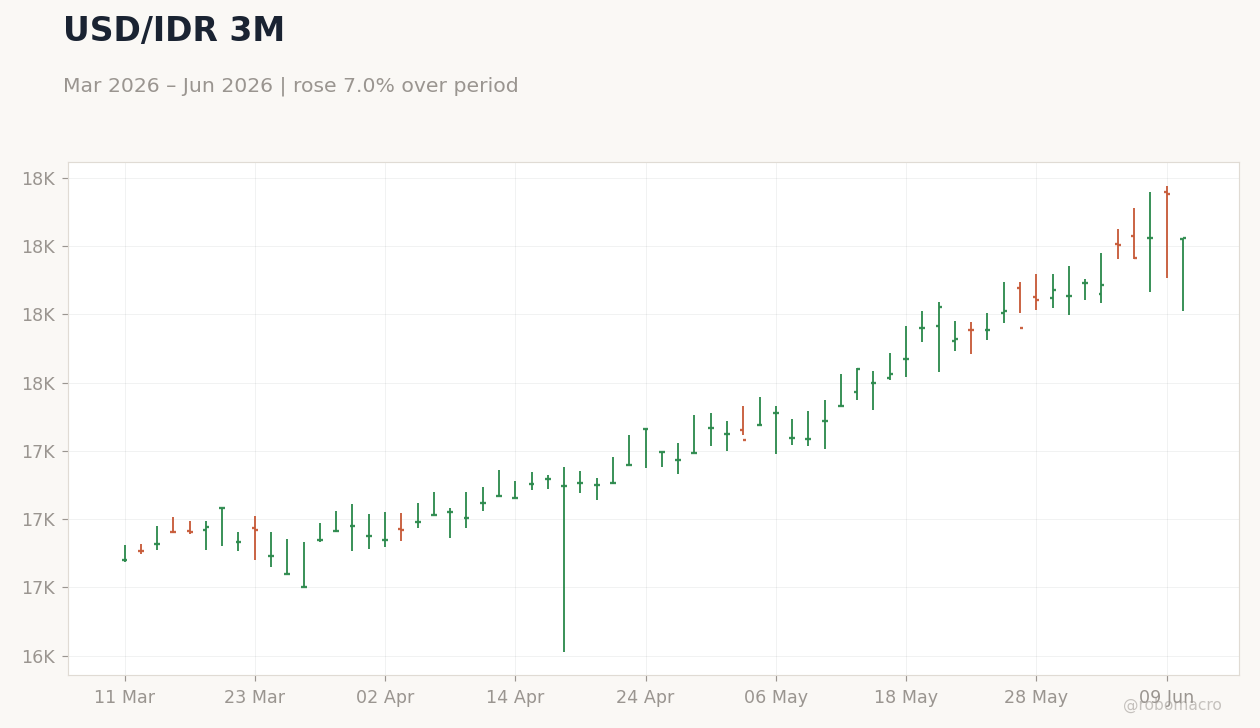
| USD/IDR | 18,031.00 | -0.88% |
| USD/THB | 32.97 | +0.12% |
| USD/MYR | 4.06 | -0.00% |
| USD/PHP | 61.44 | -0.09% |
| USD/SGD | 1.29 | +0.09% |
| Brent Crude | 95.79 | +4.75% |
| Gold | 4,072.40 | -4.40% |
| Bitcoin | 61,282.69 | -0.59% |
| Indonesia 10Y Govt Yield | - | - |
| Thailand 10Y Govt Yield | - | - |
Prior Economic Events
| Data | Prior | Cons | Actual |
|---|---|---|---|
| Headline Unemployment Rate | 5 | - | 4.70 |
| Central Bank Interest Rate Decision | 5.25 | - | 5.50 |
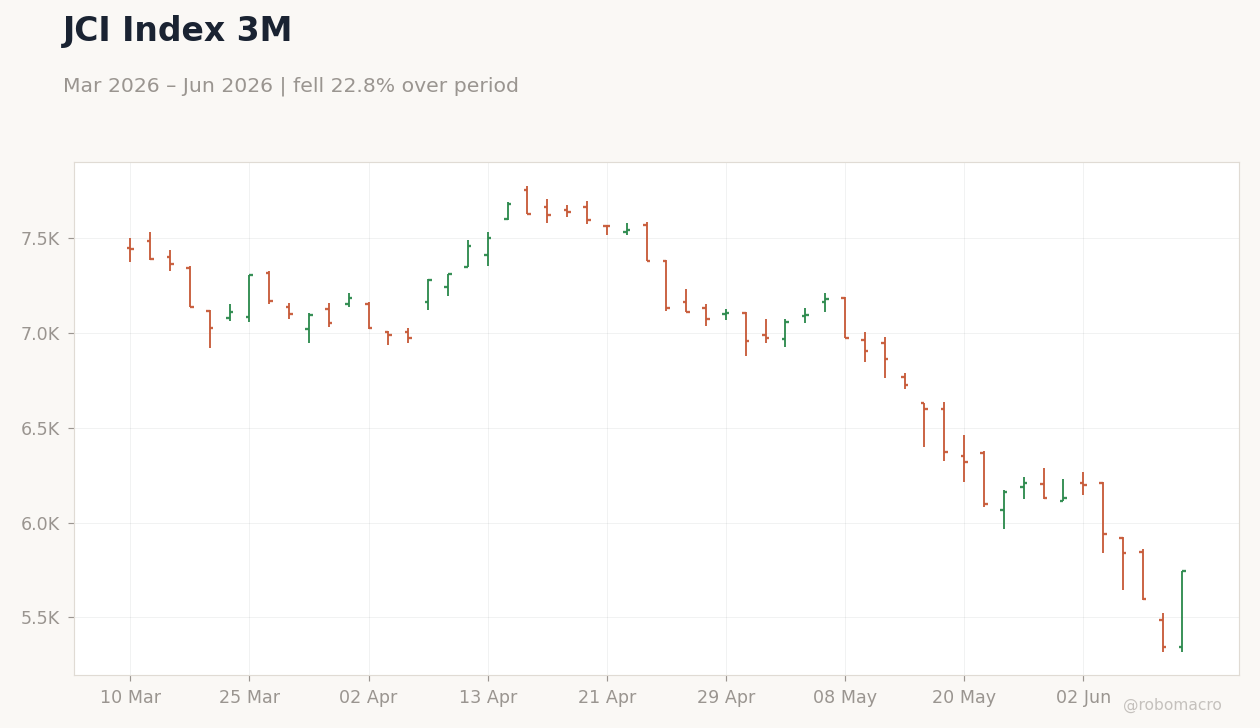 JCI Index 3M | Type: market_hloc | Index: 5747 (2026-06-09) | Range: 5342–7676 | Trend(6pt): 7441,6989,7379,6723,5342,5747
Today's Economic Events
| Data | Prior | Cons | Time |
|---|---|---|---|
| No events available | |||
- Bank Indonesia raises policy rate 25 bp to 5.50% in off-cycle move to defend rupiah
- Philippines unemployment rate improves to 4.7% from 5.0%
- JCI surges 7.57% while USD/IDR falls 0.88% on BI action
Yesterday's Recap
Bank Indonesia delivered a surprise 25 bp rate hike to 5.50%, its first emergency tightening since 2022, explicitly aimed at arresting rupiah depreciation and restoring market confidence. The decision triggered an immediate 7.57% rally in the JCI index to 5,746.65 and a 0.88% appreciation in USD/IDR to 18,031. Indonesia’s equity and currency gains stood in contrast to more modest moves elsewhere, with the SET index rising 1.44% and the STI adding 1.20%.
In the Philippines, the unemployment rate fell to 4.7% in May, beating expectations and signaling continued labor-market resilience. Thailand’s baht remained under pressure amid reports of a shrinking current-account surplus, while Malaysian reserves hit a 12-year high supported by a stable ringgit. Brent crude jumped 4.75% to 95.79, adding to imported inflation concerns across the region.
The Day Ahead
No major data releases are scheduled across the six ASEAN economies today. Markets will continue to monitor capital-flow reactions to Bank Indonesia’s emergency hike and any follow-through intervention by the central bank. Thailand’s ongoing current-account concerns and baht stability will remain in focus after recent warnings from the Bank of Thailand.
Investors are also watching US Treasury yields and Brent crude for spillovers into regional funding costs and inflation. Singapore’s MAS is expected to maintain its current NEER policy band absent fresh inflation surprises.
Other Economic Notes
Indonesia’s off-cycle tightening highlights the tension between defending external stability and supporting domestic growth in the region’s largest economy. Thailand faces parallel baht pressures from a narrowing surplus and rising US yields, increasing the risk of capital outflows from the SET. Malaysia’s record reserves provide a buffer, yet subsidy costs tied to elevated energy prices threaten fiscal targets.
Vietnam continues to benefit from supply-chain shifts, though the broader ASEAN manufacturing recovery remains uneven.
Global Macro News
Softer US inflation prints have eased some pressure on emerging-market currencies but have not offset the impact of elevated Brent crude prices on ASEAN import bills. Rising US Treasury yields continue to draw portfolio flows away from regional bonds, amplifying pressure on Indonesia and Thailand. <i>↓ p.2</i>