ASEAN Macro Daily(Beta Mode)
BI, BSP Decisions Loom as Rupiah Recovers
Market Snapshot
| Asset | Level | Change |
|---|---|---|
| JCI | 6,254.97 | +4.12% |
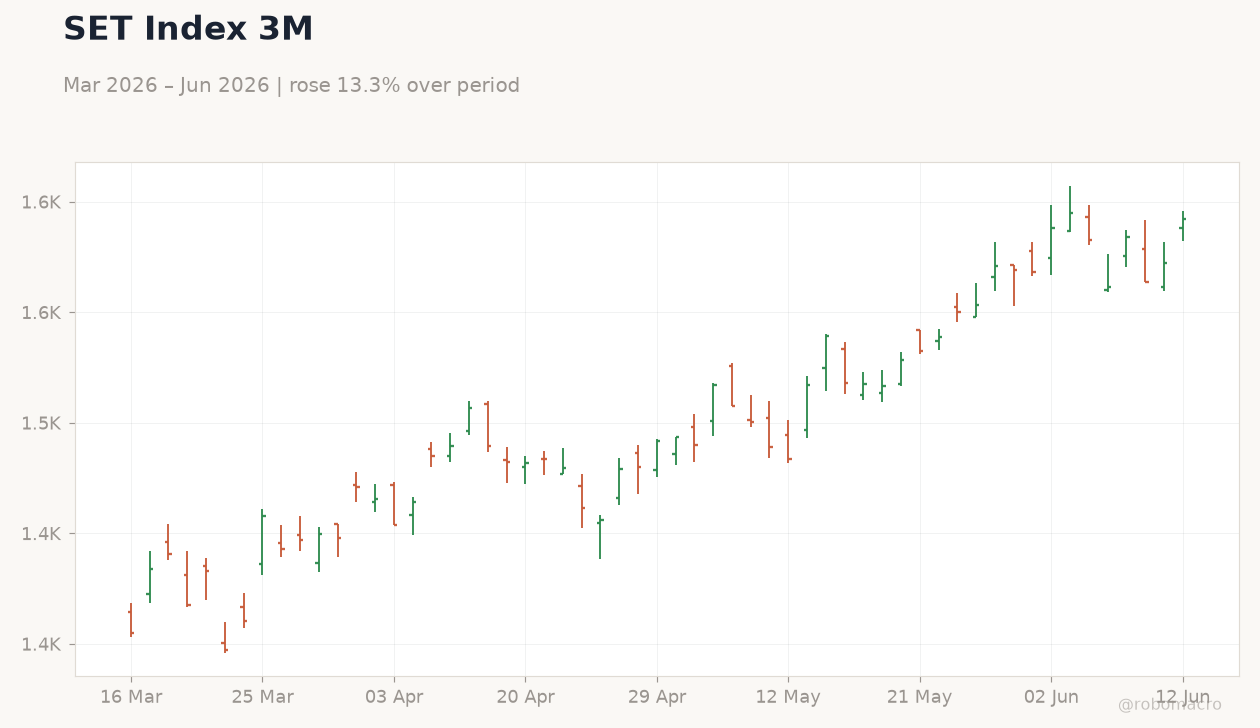
| SET | 1,592.41 | +1.28% |
| KLCI | 1,691.39 | +0.46% |
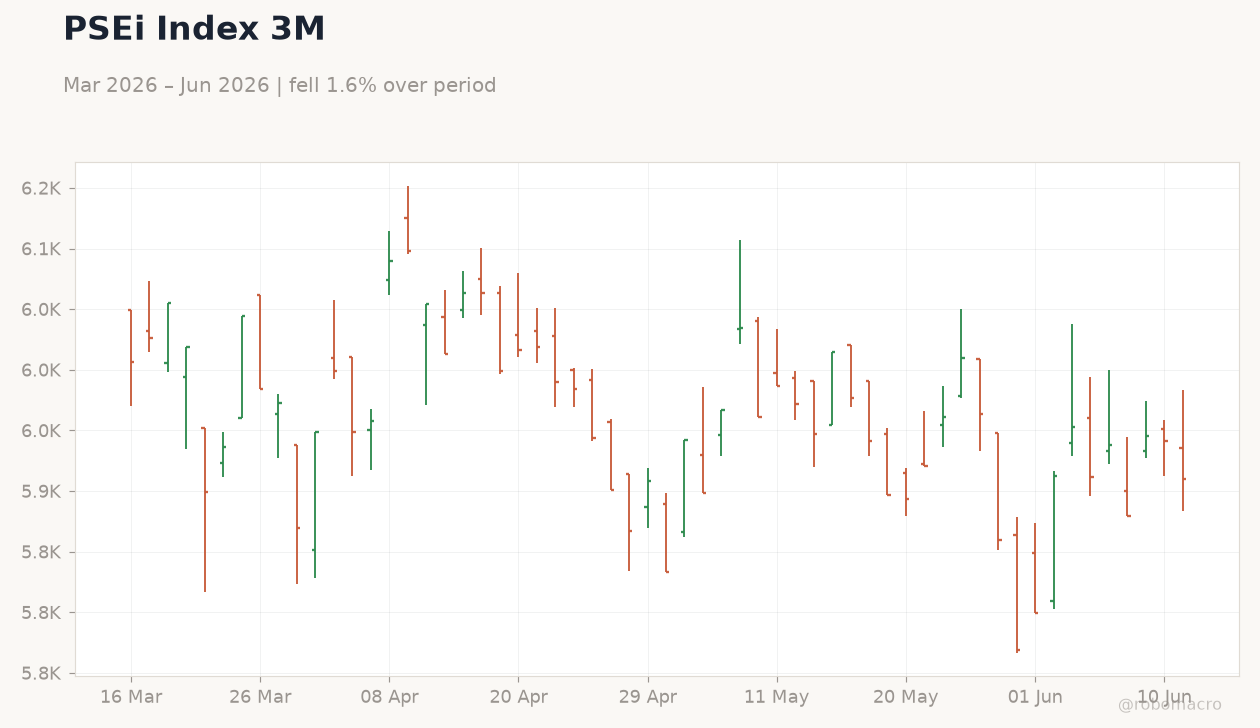
| PSEi | 5,910.06 | -0.53% |
| STI | 5,077.29 | +1.02% |
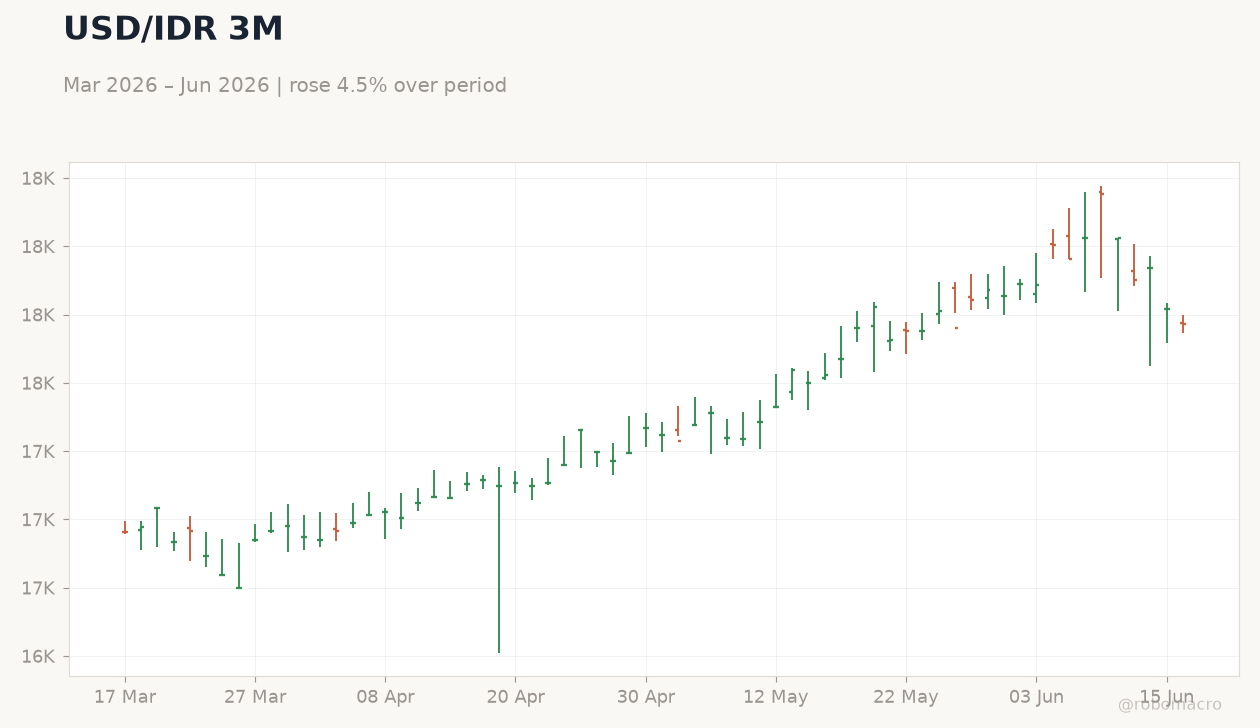
| USD/IDR | 17,716.00 | -0.32% |
| USD/THB | 32.51 | -0.06% |
| USD/MYR | 4.05 | +0.04% |
| USD/PHP | 60.23 | -0.05% |
| USD/SGD | 1.28 | +0.00% |
| Brent Crude | 79.46 | -4.46% |
| Gold | 4,350.50 | +0.52% |
| Bitcoin | 65,643.18 | -0.97% |
| Indonesia 10Y Govt Yield | - | - |
| Thailand 10Y Govt Yield | - | - |
Prior Economic Events
| Data | Prior | Cons | Actual |
|---|---|---|---|
| No events available | |||
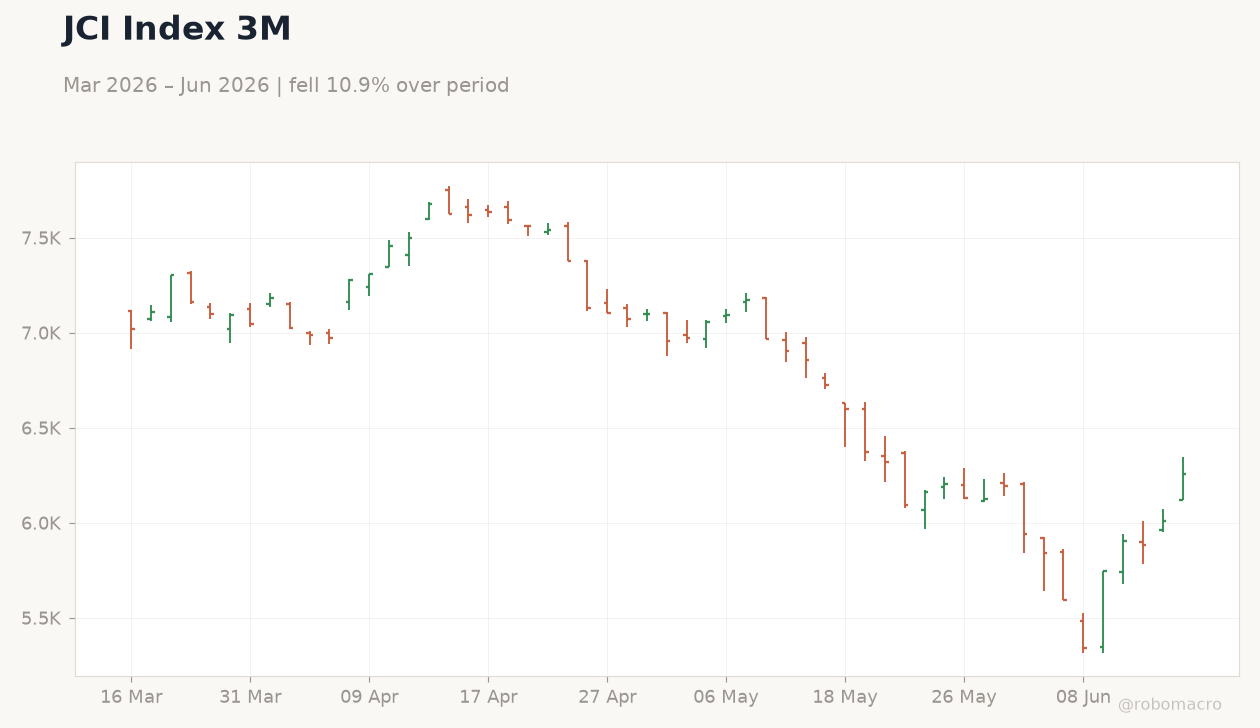 JCI Index 3M | Type: market_hloc | Index: 6255 (2026-06-15) | Range: 5342–7676 | Trend(6pt): 7022,7458,7101,6095,6008,6255
Today's Economic Events
| Data | Prior | Cons | Time |
|---|---|---|---|
| Central Bank Interest Rate Decision | 4.50 | 4.75 | 22:30 |
| Central Bank Interest Rate Decision | 5.50 | - | 23:30 |
| Inflation Rate Month-over-Month | 0.40 | - | 20:00 |
| Inflation Rate Year-over-Year | 1.90 | 2.10 | 20:00 |
- Indonesia rupiah strengthens 0.32% as BI prepares to hold rates amid recovering sentiment.
- JCI surges 4.12% while regional equities post modest gains on easing Middle East risks.
- BSP and BI monetary policy decisions tomorrow anchor near-term ASEAN market focus.
Yesterday's Recap
Indonesian assets led regional moves as USD/IDR fell to 17,716.00 on reduced safe-haven demand. JCI rose 4.12% to 6,254.97, supported by improving market perception toward Indonesia. SET gained 1.28% to 1,592.41 while KLCI added 0.46% to 1,691.39.
Thailand cut retail fuel prices by 1-1.20 baht per litre, easing near-term inflation pressure. Hong Kong and China signed an MOU with Indonesia to expand rupiah-renminbi settlement channels. No major data releases occurred across ASEAN economies on 15 June.
PSEi slipped 0.53% to 5,910.06 despite broader risk-on tone.
The Day Ahead
BSP is scheduled to announce its policy rate at 22:30 ET on 17 June with consensus pointing to a 25 bp hike to 4.75%. BI follows at 23:30 ET, where markets expect the 5.50% benchmark to be held. Malaysia will release May inflation data on 18 June, with year-over-year expected at 2.1%.
Thailand fuel price cuts may temper June CPI prints. MAS continues to manage the SGD NEER band without an interest-rate decision. No major releases are slated for Vietnam or Singapore today.
Other Economic Notes
Indonesia’s sovereign wealth fund is exploring a 30-year Panda bond to attract Chinese investors following its recent debut sale. Thailand cabinet approved participation in the OECD global tax information exchange framework. Malaysia plans to eliminate interbank ATM fees, supporting consumer spending.
Broader ASEAN FDI flows remain supported by electronics supply-chain shifts from China. Commodity exporters benefit from Brent crude at 79.46 despite the 4.46% daily drop.
Global Macro News
Australia’s central bank held the cash rate at 4.35% as growth slowed. Eurozone data showed continued resilience, supporting external demand for ASEAN exports. Oman’s economy is projected to expand 2.4% in 2026 per World Bank forecasts.
Middle East risk reduction aided EM currency recovery including the rupiah. China’s push for greater use of renminbi in regional trade aligns with the new Indonesia-HK MOU. Global equity sentiment improved on lower energy prices.