ASEAN Macro Daily(Beta Mode)
BI Hikes Rates to Defend Rupiah, SET Slips
Market Snapshot
| Asset | Level | Change |
|---|---|---|
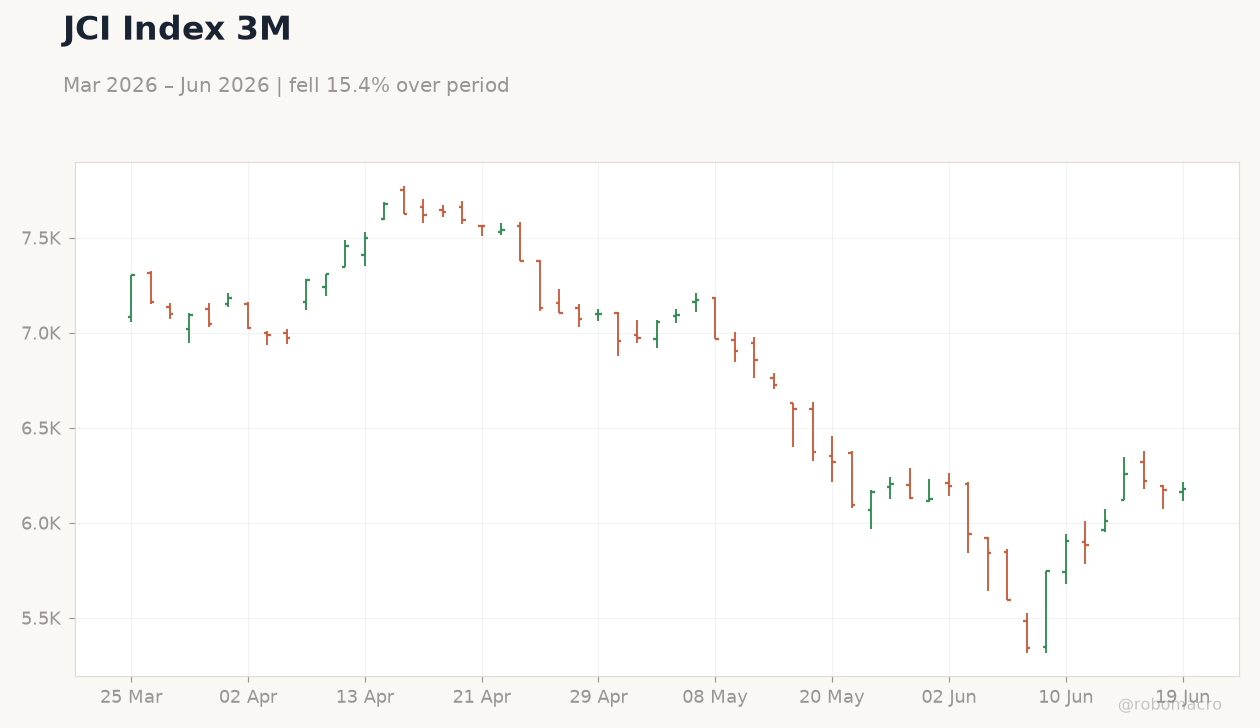
| JCI | 6,177.14 | +0.08% |
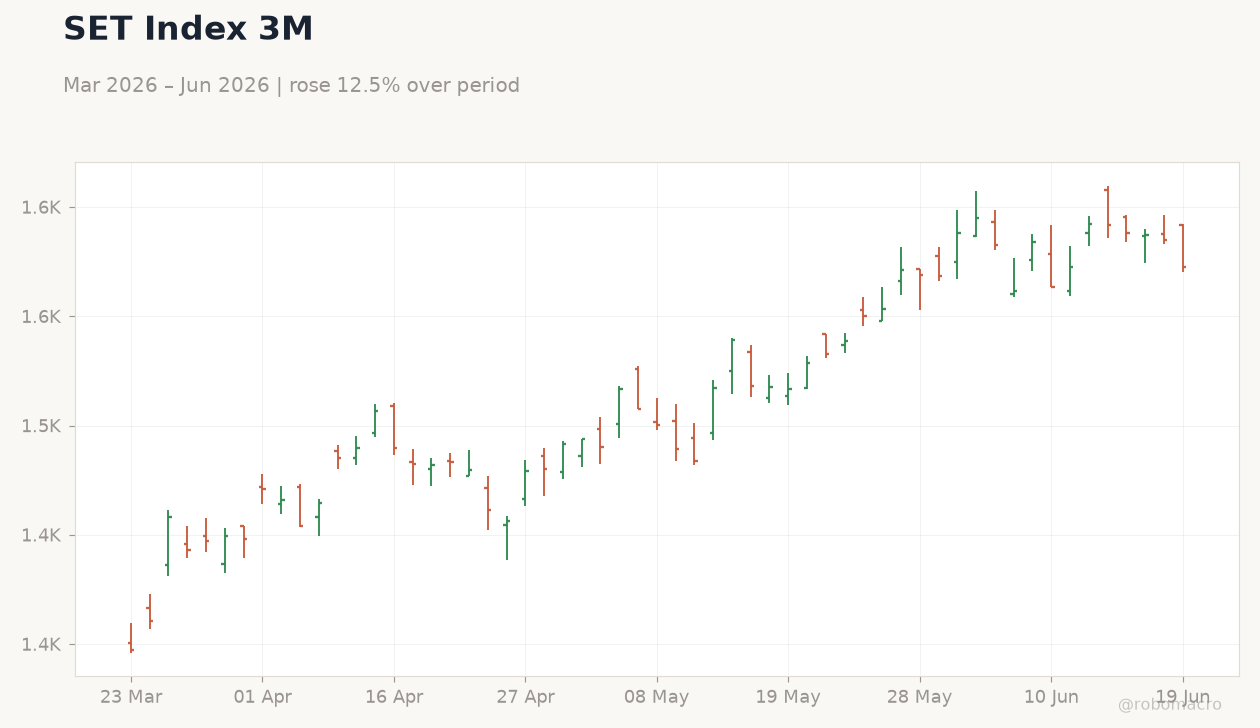
| SET | 1,572.50 | -0.79% |
| KLCI | 1,712.03 | +0.04% |
| PSEi | 6,135.35 | -0.30% |
| STI | 5,192.70 | -0.39% |
| USD/IDR | 17,814.00 | +0.15% |
| USD/THB | 32.95 | +0.09% |
| USD/MYR | 4.15 | +0.26% |
| USD/PHP | 60.64 | +0.31% |
| USD/SGD | 1.29 | +0.06% |
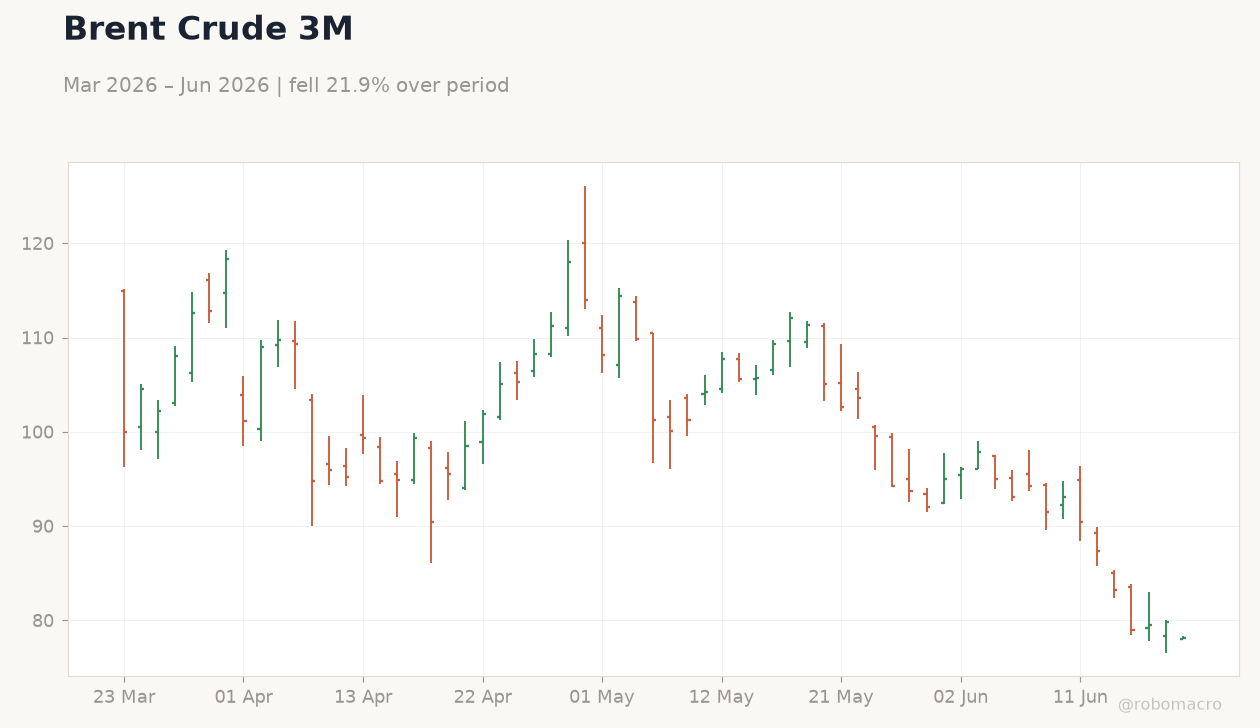
| Brent Crude | 78.10 | -2.19% |
| Gold | 4,209.20 | -0.35% |
| Bitcoin | 63,940.11 | +1.11% |
| Indonesia 10Y Govt Yield | - | - |
| Thailand 10Y Govt Yield | - | - |
Prior Economic Events
| Data | Prior | Cons | Actual |
|---|---|---|---|
| No events available | |||
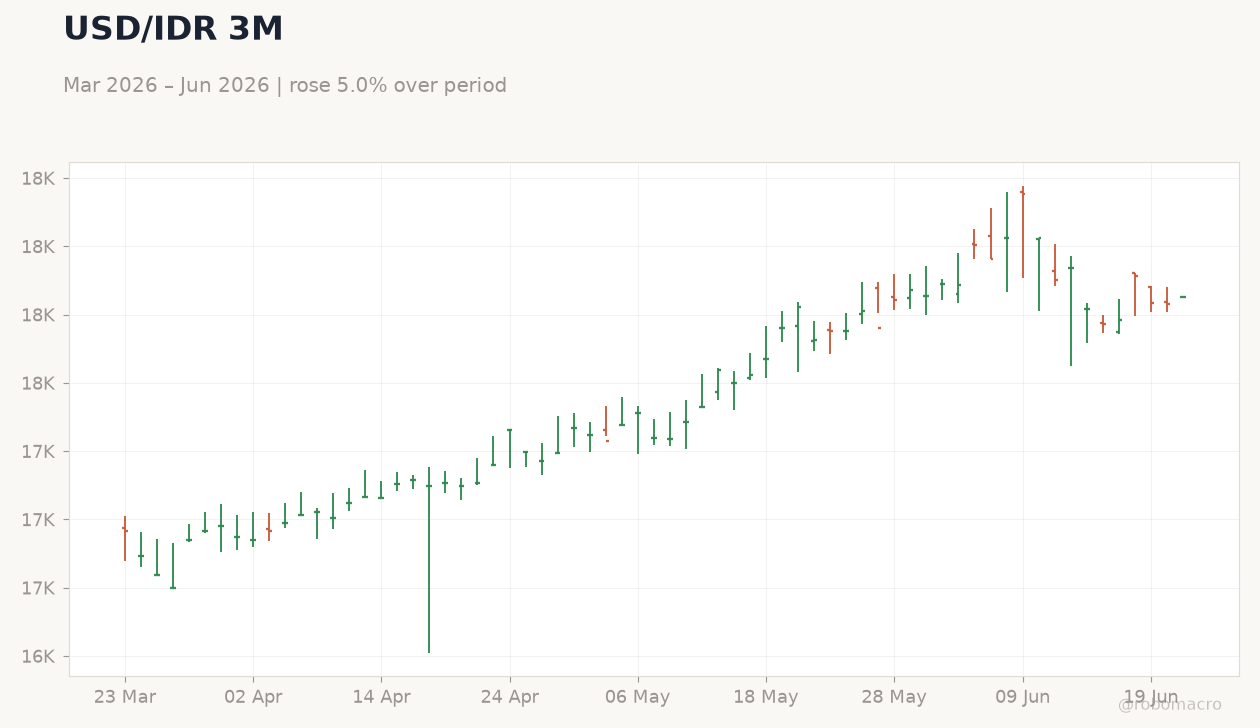 USD/IDR 3M | Type: market_hloc | Rate: 1.781e+04 (2026-06-23) | Range: 1.675e+04–1.819e+04 | Trend(6pt): 1.696e+04,1.708e+04,1.739e+04,1.78e+04,1.779e+04,1.781e+04
Today's Economic Events
| Data | Prior | Cons | Time |
|---|---|---|---|
| Central Bank Interest Rate Decision | 1 | 1 | 23:00 |
- Bank Indonesia raised policy rates again to defend the rupiah, which traded back under the IDR18,000 per USD threshold.
- Indonesia unveiled a 26.34 trillion rupiah stimulus package to offset external shocks and capital outflows.
- Thai baht weakened further as oil prices and a hawkish Fed weighed on regional currencies.
Yesterday's Recap
Bank Indonesia delivered another rate increase to support the rupiah after it hit fresh lows against the dollar. The central bank stated that aggressive hikes are helping stabilize the currency amid MSCI warnings and capital outflows. Indonesia also announced a 26.34 trillion rupiah fiscal stimulus to cushion external shocks.
Equity markets showed mixed performance with the JCI edging up 0.08% to 6,177.14 while the SET fell 0.79% to 1,572.50. The rupiah closed at 17,814 per USD, weaker by 0.15%, and the Thai baht slipped 0.09% to 32.95. Other ASEAN bourses were little changed, with the KLCI up 0.04% and the PSEi down 0.30%.
Brent crude dropped 2.19% to $78.10, adding pressure on energy importers.
The Day Ahead
The Bank of Thailand is scheduled to announce its policy rate decision tonight with consensus pointing to a hold at 1.0%. No major data releases are due in Indonesia, Malaysia, Philippines, Singapore or Vietnam. Markets will watch for any signals on further rupiah defense measures from BI officials.
Regional investors will also track USD strength and oil price moves for implications on current-account balances. MAS is expected to maintain its current SGD NEER band settings absent fresh inflation surprises.
Other Economic Notes
Indonesia’s stimulus targets rupiah stability and external resilience while tourism transactions are now required to use local currency. Thailand faces added strain from higher oil costs that are eroding the baht’s external position. Malaysia continues to adjust civil-service asset rules following recent governance concerns.
Broader ASEAN economies remain focused on supply-chain diversification away from China, supporting FDI inflows into Vietnam and the Philippines.
Global Macro News
A hawkish Fed outlook continues to support the dollar and pressure emerging-market currencies across Asia. Oil prices fell sharply on softer demand signals, easing some imported inflation risks for ASEAN importers. The ECB signaled preference for larger cross-border banks to strengthen Europe’s financial system.
<i>↓ p.2</i>