ASEAN Macro Daily(Beta Mode)
BoT Holds at 1% as Rupiah Faces MSCI Risks
Market Snapshot
| Asset | Level | Change |
|---|---|---|
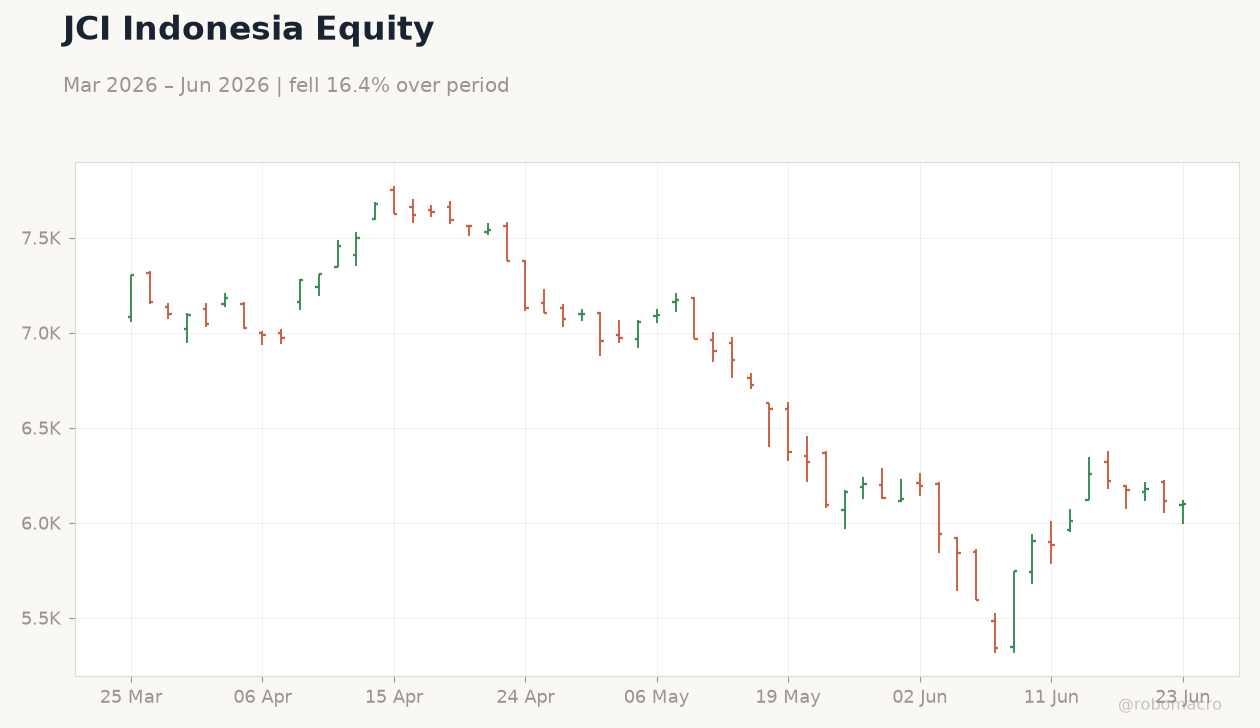
| JCI | 6,101.33 | -0.25% |
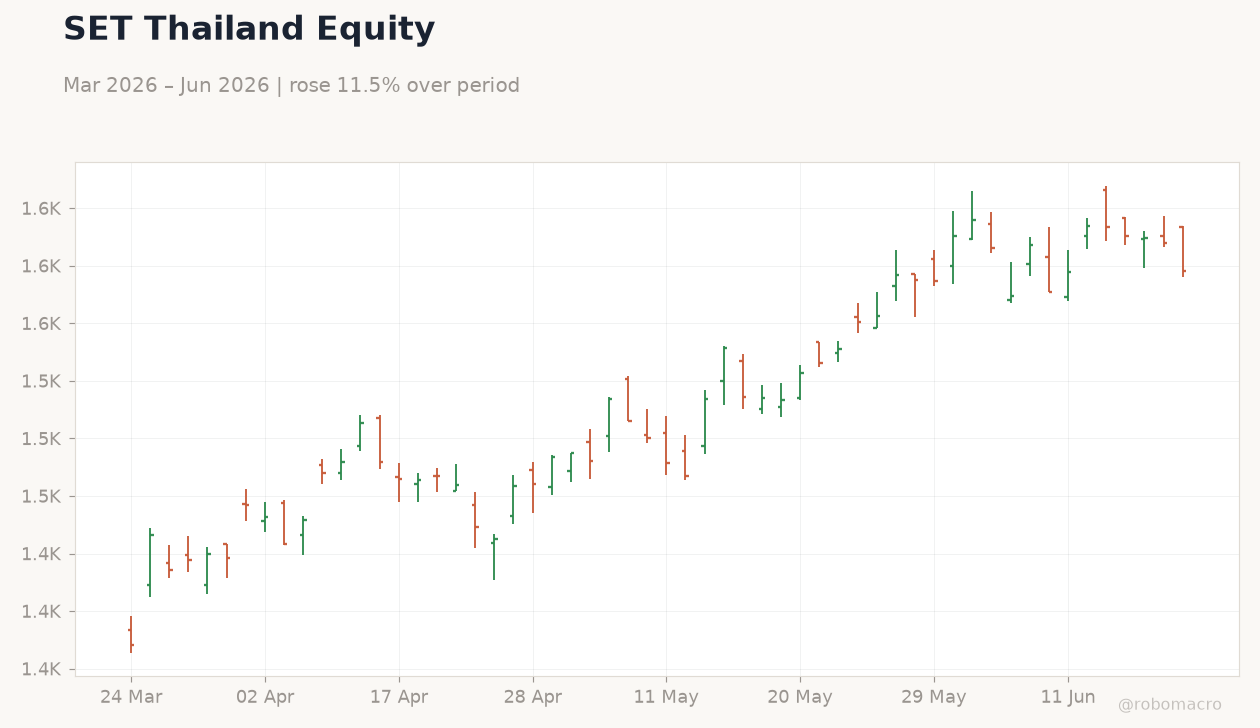
| SET | 1,572.50 | -0.79% |
| KLCI | 1,679.92 | -1.23% |
| PSEi | 6,135.35 | -0.30% |
| STI | 5,205.74 | +0.03% |
| USD/IDR | 17,916.00 | +0.30% |
| USD/THB | 33.43 | +0.48% |
| USD/MYR | 4.14 | -0.21% |
| USD/PHP | 61.38 | +0.53% |
| USD/SGD | 1.30 | +0.06% |
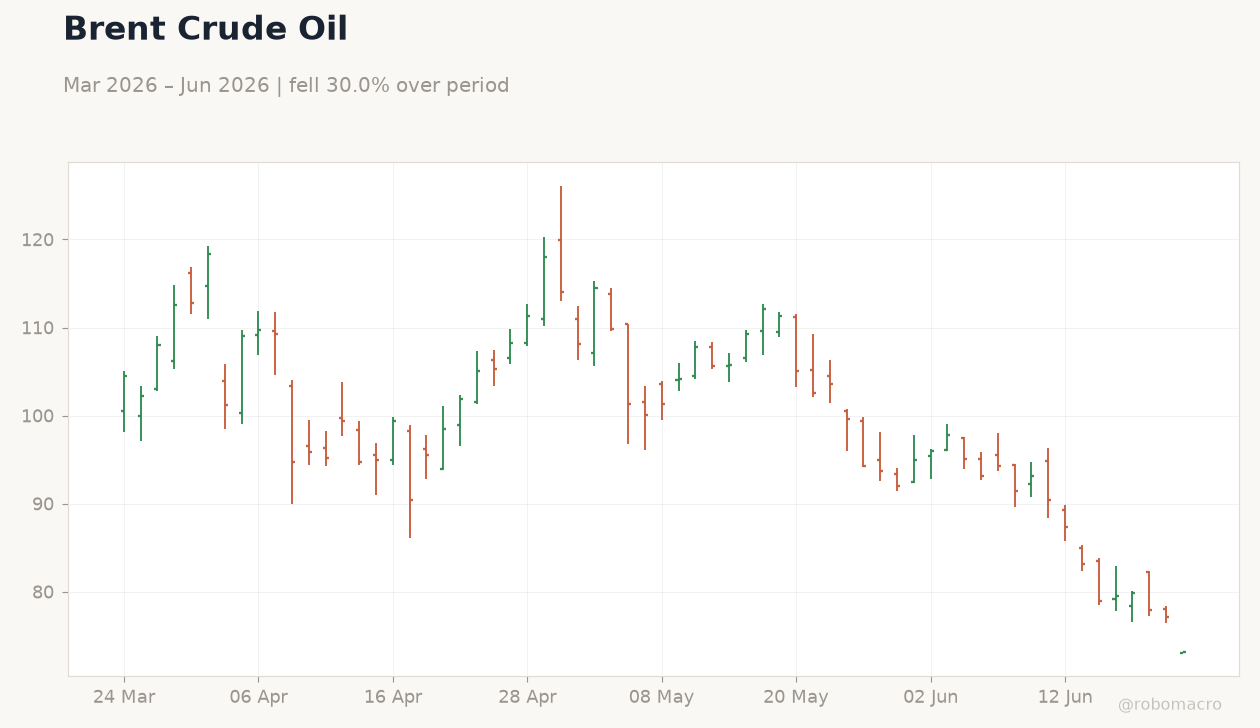
| Brent Crude | 73.11 | -5.15% |
| Gold | 4,014.10 | -2.80% |
| Bitcoin | 60,769.97 | -3.03% |
| Indonesia 10Y Govt Yield | - | - |
| Thailand 10Y Govt Yield | - | - |
Prior Economic Events
| Data | Prior | Cons | Actual |
|---|---|---|---|
| Central Bank Interest Rate Decision | 1 | 1 | 1 |
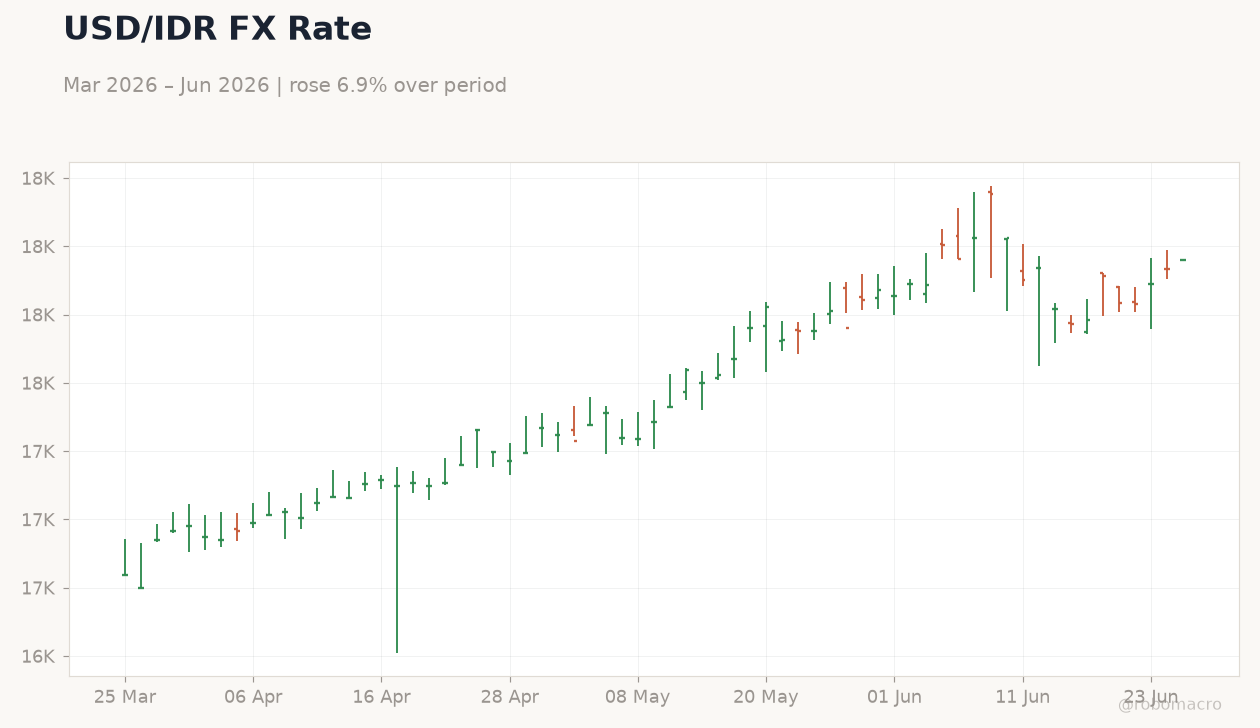 USD/IDR FX Rate | Type: market_hloc | FX Rate: 1.795e+04 (2026-06-25) | Range: 1.675e+04–1.819e+04 | Trend(6pt): 1.68e+04,1.715e+04,1.729e+04,1.782e+04,1.786e+04,1.795e+04
Today's Economic Events
| Data | Prior | Cons | Time |
|---|---|---|---|
| No events available | |||
- Thailand's central bank kept its policy rate unchanged at 1.0%
- Indonesian rupiah weakened further amid MSCI downgrade concerns
- Regional equities declined with KLCI falling 1.23% and SET down 0.79%
Yesterday's Recap
Thailand's Bank of Thailand left its benchmark interest rate unchanged at 1.0% as widely expected. The decision aligns with the prior rate and consensus forecast. Indonesia's rupiah came under pressure with USD/IDR rising 0.30% to 17,916 amid MSCI index downgrade risks.
Malaysia's ringgit showed relative strength as USD/MYR fell 0.21% to 4.14 on positive domestic data. Equity markets closed lower across most ASEAN bourses, led by KLCI's 1.23% drop and SET's 0.79% decline, while STI gained 0.03%. Brent crude fell sharply by 5.15% to 73.11, adding downside pressure to commodity-exposed currencies.
Barclays noted potential rupiah stabilization after recent weakness despite ongoing IDR softness.
The Day Ahead
No major economic releases are scheduled across ASEAN economies. Markets will track any Bank Indonesia signals on rupiah support measures. Thailand's finance officials reiterated no immediate pressure to adjust rates.
Investors remain focused on Malaysian efforts to attract currency inflows. Regional FX flows will continue to reflect US dollar movements. Broader attention stays on capital flow management by the six central banks.
Other Economic Notes
Indonesia's economy has demonstrated resilience amid global volatility. Thailand faces rising household debt risks illustrated by buy-now-pay-later usage for everyday items. Strong Malaysian fundamentals continue to underpin ringgit performance.
Vietnam maintains its position in electronics supply-chain shifts. Singapore's financial markets showed relative stability despite regional equity weakness.
Global Macro News
A firmer US dollar weighed on ASEAN currencies through broad USD strength. Potential shifts in Fed policy influence expectations for capital flows into the region. Sharp declines in Brent crude and gold added to risk-off sentiment affecting commodity-linked economies.
Global tech earnings softness contributed to equity market declines. Bitcoin's 3.03% drop reinforced cautious investor positioning. Supply-chain diversification away from China continues to support Vietnam and Malaysia's manufacturing exports.
MSCI-related concerns specifically pressured Indonesian assets and sentiment.