ASEAN Macro Daily(Beta Mode)
Indonesia's Inflation Cools, Trade Gap Narrows
Market Snapshot
| Asset | Level | Change |
|---|---|---|
| JCI | 6,274.40 | +0.61% |
| KLCI | 1,727.94 | +0.18% |
| STI | 5,621.96 | -0.12% |
| USD/IDR | 17,986.00 | -0.24% |
| USD/THB | 33.46 | +0.36% |
| USD/MYR | 4.09 | +0.23% |
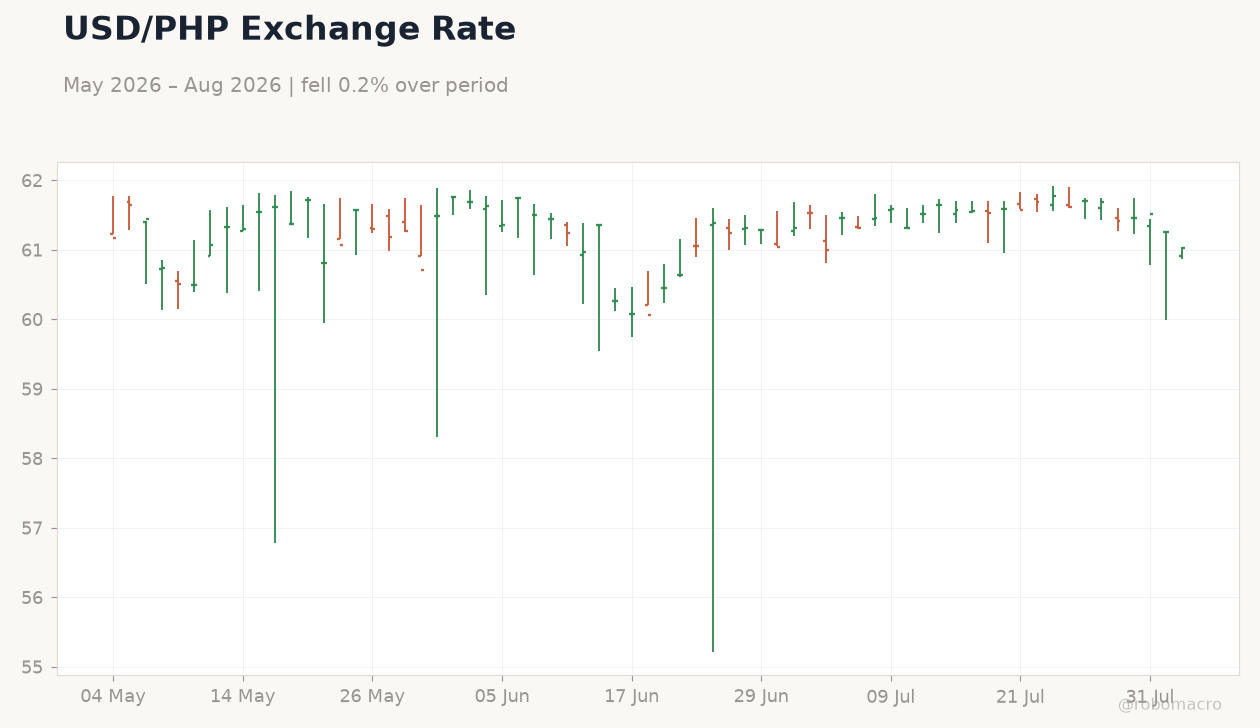
| USD/PHP | 61.03 | -0.36% |
| USD/SGD | 1.28 | +0.12% |
| Brent Crude | 84.70 | -6.01% |
| Gold | 4,111.70 | +1.55% |
| Bitcoin | 63,767.32 | +0.45% |
| Indonesia 10Y Govt Yield | - | - |
| Thailand 10Y Govt Yield | - | - |
Prior Economic Events
| Data | Prior | Cons | Actual |
|---|---|---|---|
| Trade Balance | -1,610m | -790m | -450m |
| Inflation Rate Year-over-Year | 3.34 | 3.20 | 2.88 |
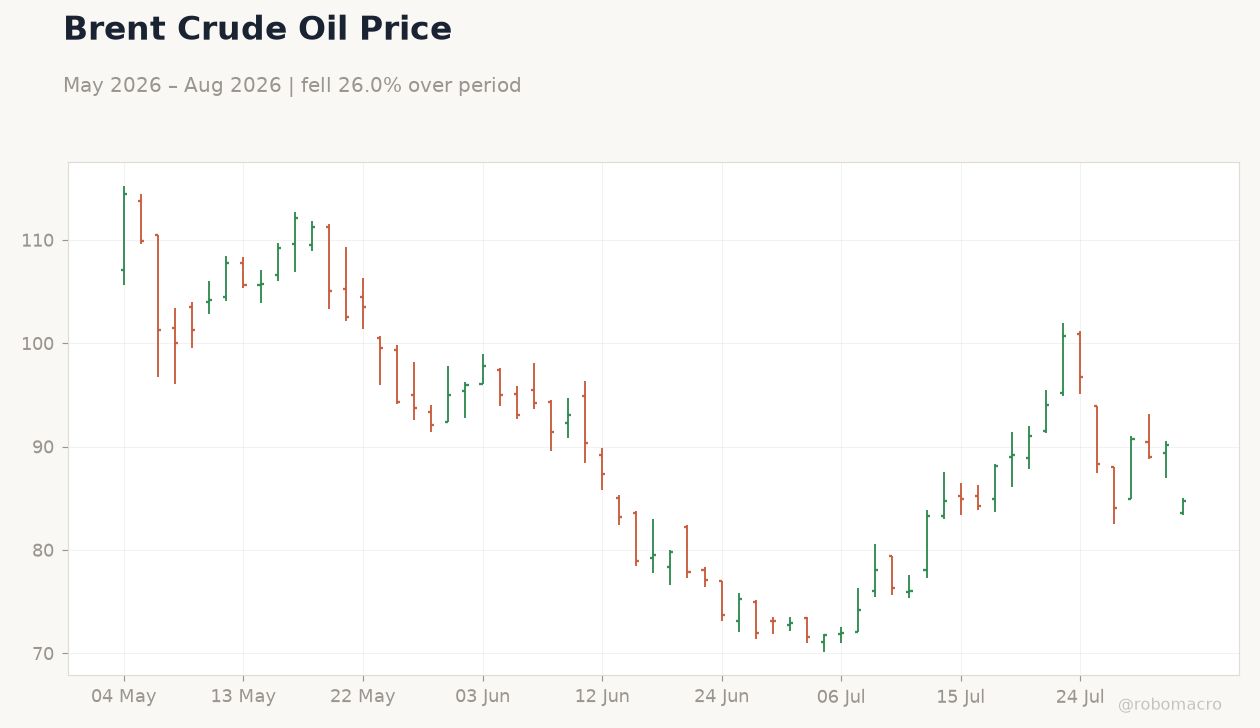 Brent Crude Oil Price | Type: market_hloc | Brent USD/bbl: 84.71 (2026-08-03) | Range: 71.57–114.4 | Trend(6pt): 114.4,99.58,78.96,76.3,89.03,84.71
Today's Economic Events
| Data | Prior | Cons | Time |
|---|---|---|---|
| Inflation Rate Year-over-Year | 6.40 | 6.40 | 21:00 |
| GDP Growth Year-over-Year | 5.61 | 5.10 | 00:00 |
| Unemployment Rate | 4.80 | - | 21:00 |
| GDP Growth Quarter-over-Quarter | 0.90 | - | 22:00 |
| GDP Growth Year-over-Year | 2.80 | 2.90 | 22:00 |
- Indonesia July inflation fell to 2.88% y/y, below consensus, while June trade deficit narrowed to US$450 million.
- Regional equities mixed as JCI rose 0.61% and KLCI gained 0.18%, with USD/IDR easing 0.24%.
- Philippines July inflation expected steady at 6.4% y/y; Singapore dollar strengthened further against regional peers.
Yesterday's Recap
Indonesia reported a narrower June trade deficit of US$450 million versus the consensus forecast of US$790 million, driven by surging imports. July inflation eased to 2.88% y/y from 3.34% previously, undershooting the 3.2% consensus and marking the lowest reading in three months. Core inflation stood at 2.76%.
Equity markets closed mixed, with Indonesia’s JCI advancing 0.61% to 6,274.40 while Singapore’s STI slipped 0.12%. The rupiah strengthened 0.24% to 17,986 per dollar. Malaysia’s KLCI edged 0.18% higher.
Brent crude fell sharply 6.01% to 84.70 amid softer global demand signals. Analysts noted the data leaves Bank Indonesia with greater policy flexibility amid slowing growth momentum. Gold rose 1.55% to 4,111.70, reflecting hedging flows.
The Day Ahead
Philippines July inflation is due tonight with consensus pointing to a steady 6.4% y/y print. Indonesia will release second-quarter GDP growth tomorrow, expected to slow to 5.1% y/y from 5.61%. Philippine unemployment and GDP figures follow later in the week.
No central bank meetings are scheduled across the region today. Singapore’s NODX data and Vietnam industrial production are also eyed for fresh supply-chain signals. Markets will monitor any follow-through from Bank Indonesia’s push for higher commercial lending.
Regional currencies face continued scrutiny as USD/IDR holds near 18,000 and USD/MYR edges 0.23% weaker.
Other Economic Notes
Indonesia’s second consecutive trade deficit highlights rising import demand that may pressure the current account in coming quarters. Malaysia continues to attract semiconductor and chemical FDI, positioning it as a key beneficiary of global supply-chain diversification away from China. Singapore’s stronger currency is curbing imported inflation but risks weighing on export competitiveness as regional peers keep exchange rates weaker.
Broader ASEAN growth remains uneven, with commodity exporters facing softer external demand while manufacturing hubs show resilience. Capital flows into the region have been selective, favoring economies with credible policy frameworks. Thailand’s tourism recovery supports retail sales, while Vietnam electronics exports remain a bright spot.