Andeans Macro Daily(Beta Mode)
Andean Stocks Surge on Commodities
Market Snapshot
| Asset | Level | Change |
|---|---|---|
| MSCI Colombia | 9.02 | +0.00% |
| MSCI Chile | 39.76 | +3.87% |
| MSCI Peru | 80.71 | +5.99% |
| USD/COP | 3,674.23 | +0.21% |
| USD/CLP | 918.82 | -0.06% |
| USD/PEN | 3.42 | +1.10% |
| Copper | 5.59 | +0.16% |
| Gold | 4,671.80 | +0.32% |
| Brent Crude | 110.52 | +0.68% |
| Bitcoin | 68,361.49 | -0.72% |
| Colombia 10Y Govt Yield | - | - |
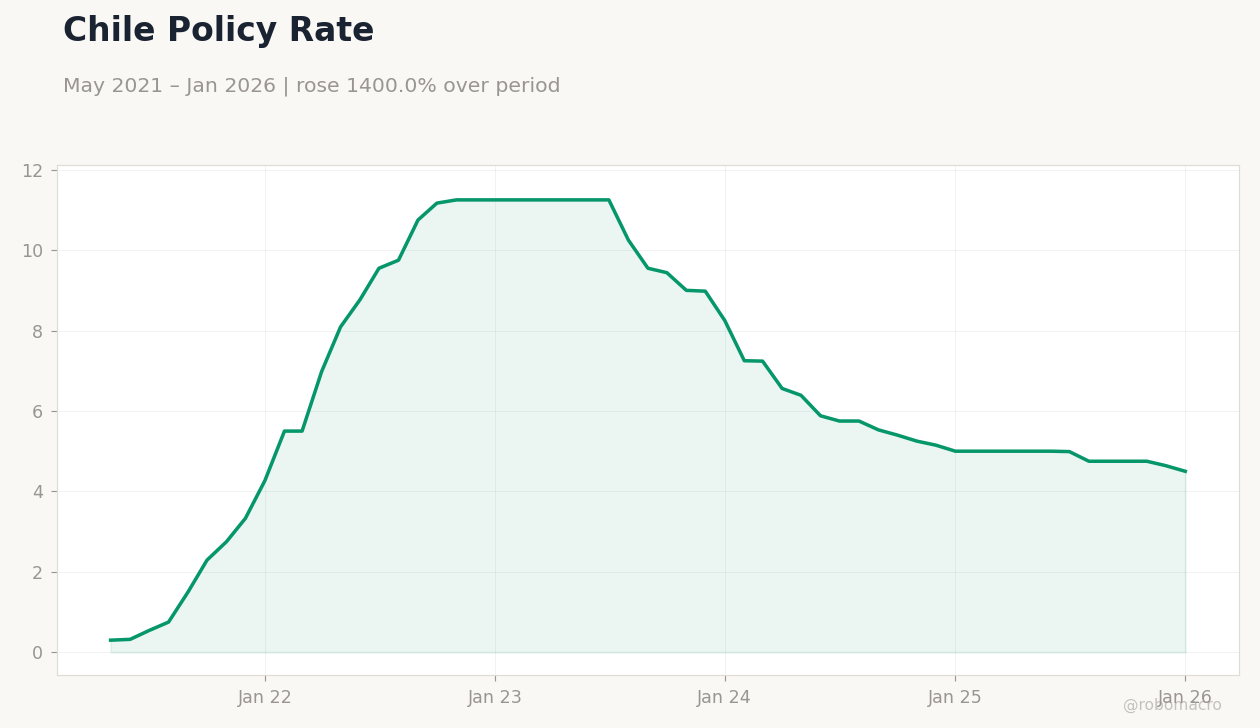
| Chile Short-term Rate | 4.50% | -3.02% |
Prior Economic Events
| Data | Prior | Cons | Actual |
|---|---|---|---|
| No events available | |||
 Chile Copper vs Production | Type: macro_line | Copper Price USD: 38.8 (2026-02-01) | Range: -22.16–94.02 | Trend(6pt): 94.02,-20.17,6.851,10.82,44.67,38.8
Today's Economic Events
| Data | Prior | Cons | Time |
|---|---|---|---|
| No events available | |||
- Andean equities rallied strongly, with Chile and Peru leading gains on rising copper and gold prices.
- FX showed mixed performance: COP and PEN weakened against USD, while CLP edged firmer.
- Commodities provided uplift amid global economic concerns, supporting regional exporters.
Yesterday's Recap
Andean markets displayed robust performance yesterday, with MSCI Chile climbing 3.87% to 39.76, fueled by copper's 0.16% increase to 5.59, enhancing prospects for Chilean miners. MSCI Peru advanced 5.99% to 80.71, bolstered by gold's 0.32% rise to 4,671.80, which aids Peru's significant mining sector. MSCI Colombia held steady at 9.02 with no change, as Brent crude's 0.68% gain to 110.52 offered modest support to Colombian oil firms, though fiscal consolidation efforts tempered enthusiasm.
FX movements were varied: USD/COP increased 0.21% to 3,674.23, indicating ongoing inflationary strains in Colombia; USD/CLP declined 0.06% to 918.82, reflecting central bank stability in Chile; USD/PEN rose 1.10% to 3.42, adding pressure to Peru's external accounts. Chile's short-term rate decreased to 4.50% with a -3.02% change, suggesting easing monetary conditions despite commodity fluctuations. Bitcoin fell 0.72% to 68,361.49, contributing to broader risk sentiment but with limited direct Andean impact.
No significant economic data releases occurred in the region, directing attention to commodity trends and their implications for fiscal revenues, particularly gold's role in cushioning Peru against copper variability.
The Day Ahead
The Andean economic calendar is empty today, with no releases or events scheduled for Colombia, Chile, or Peru. Market focus will likely remain on global commodity developments, especially copper and gold prices, which influence export earnings in Chile and Peru. Broader Latin American dynamics, including potential currency interventions, could gain attention if PEN faces further depreciation.
Tomorrow's schedule is also clear, underscoring reliance on external drivers like oil price shifts for Colombia's economy. Traders should anticipate potential volatility from international macro updates, such as US indicators affecting USD dynamics against Andean currencies.
Other Economic Notes
Andean economies continue to exhibit heavy reliance on commodities, leaving Chile and Peru exposed to copper price swings amid uncertainties in global demand, particularly from China. Colombia's oil industry benefits from higher Brent levels, supporting fiscal stability but heightening vulnerability to geopolitical events like Iran-related tensions. (cont...)