Andeans Macro Daily(Beta Mode)
Andean FX Mixed on Brent Drop
Market Snapshot
| Asset | Level | Change |
|---|---|---|
| MSCI Colombia | 9.02 | +0.00% |
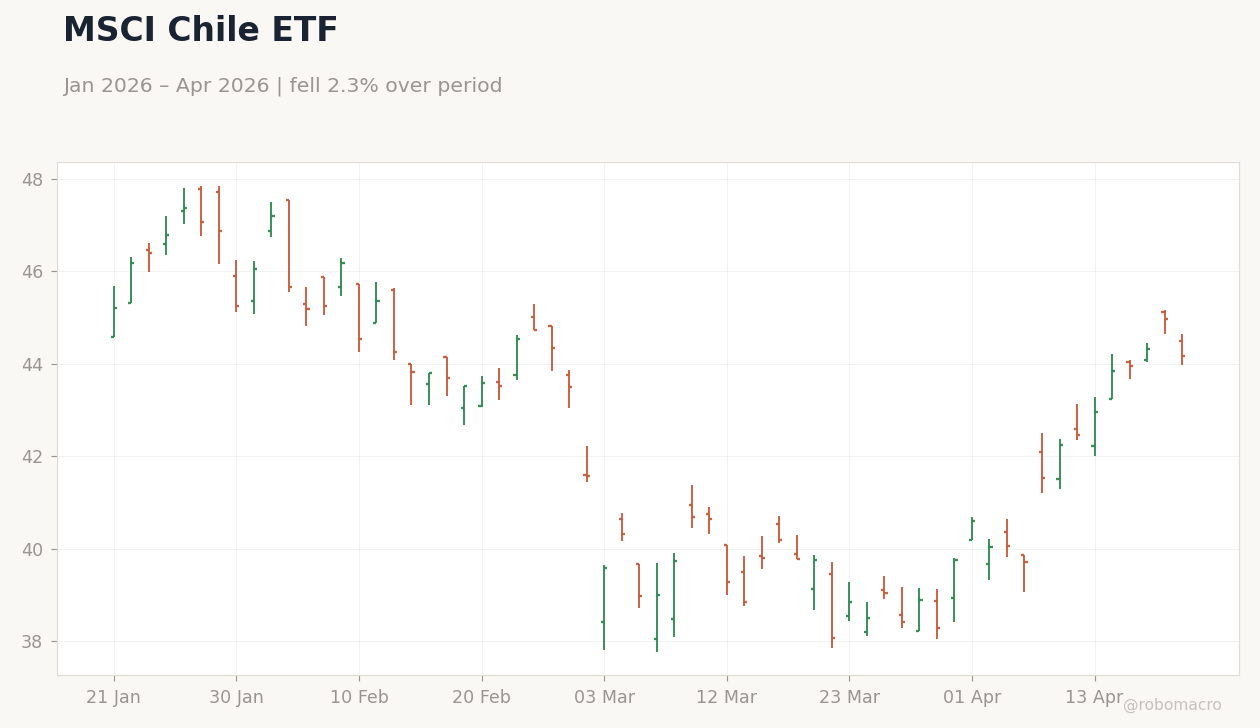
| MSCI Chile | 44.16 | -1.80% |
| MSCI Peru | 84.82 | -0.41% |
| USD/COP | 3,569.41 | -0.96% |
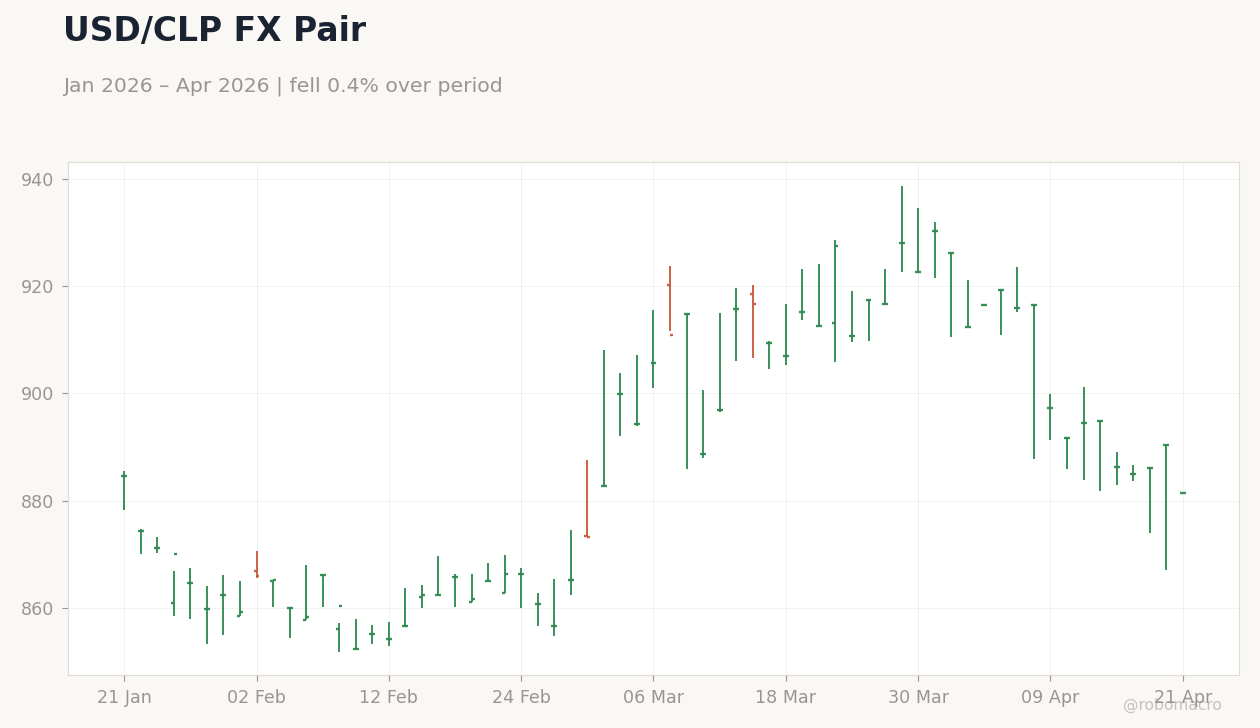
| USD/CLP | 881.49 | -0.99% |
| USD/PEN | 3.43 | +1.40% |
| Copper | 6.04 | +0.03% |
| Gold | 4,802.20 | -0.09% |
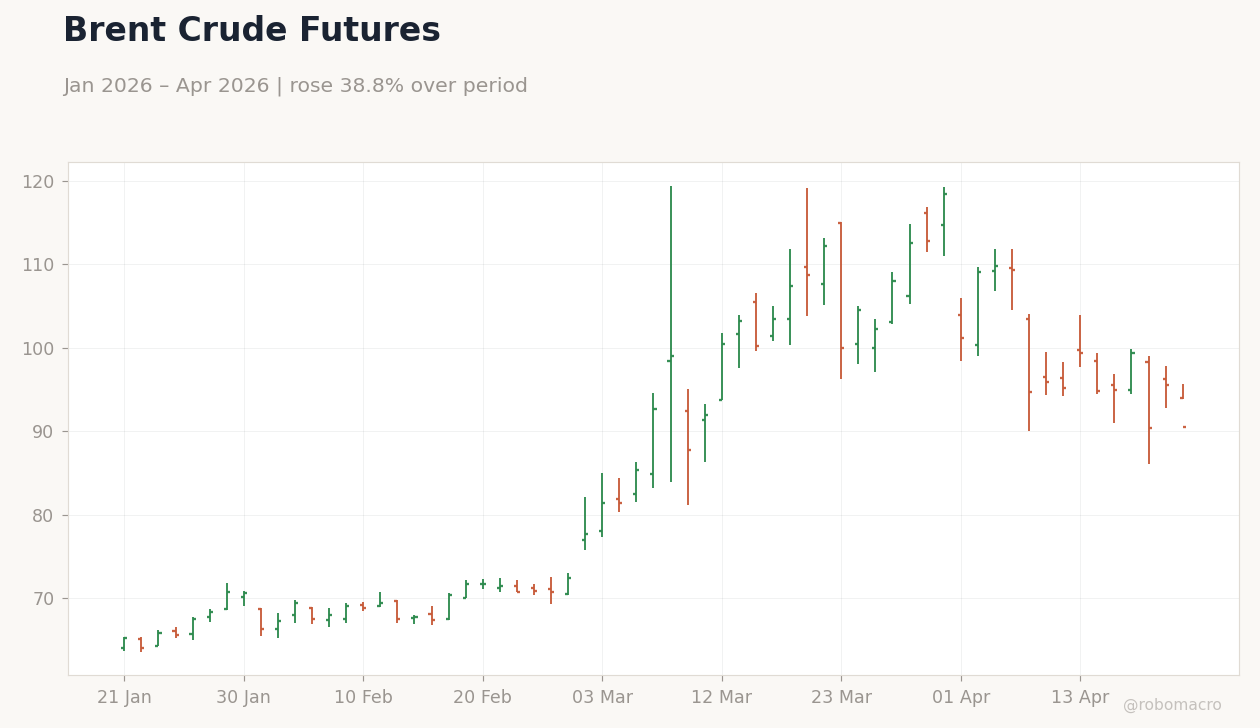
| Brent Crude | 90.48 | -5.24% |
| Bitcoin | 76,571.33 | +0.92% |
| Colombia 10Y Govt Yield | - | - |
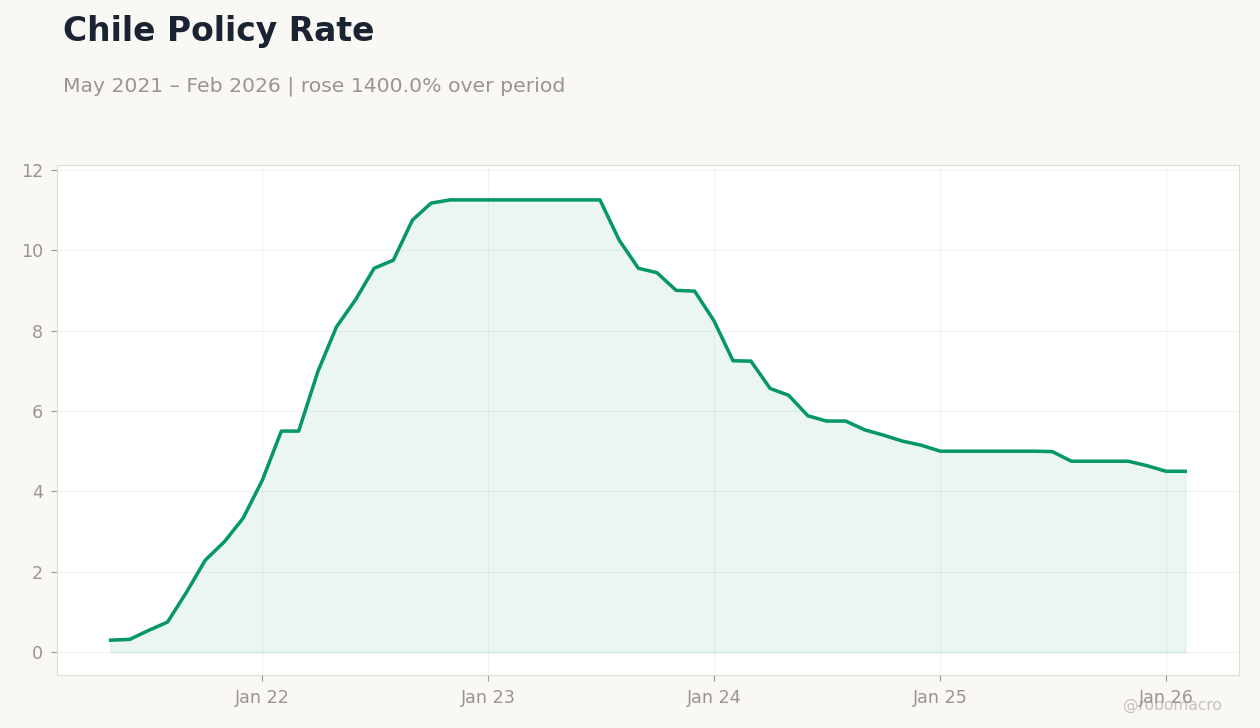
| Chile Short-term Rate | 4.50% | +0.00% |
Prior Economic Events
| Data | Prior | Cons | Actual |
|---|---|---|---|
| No events available | |||
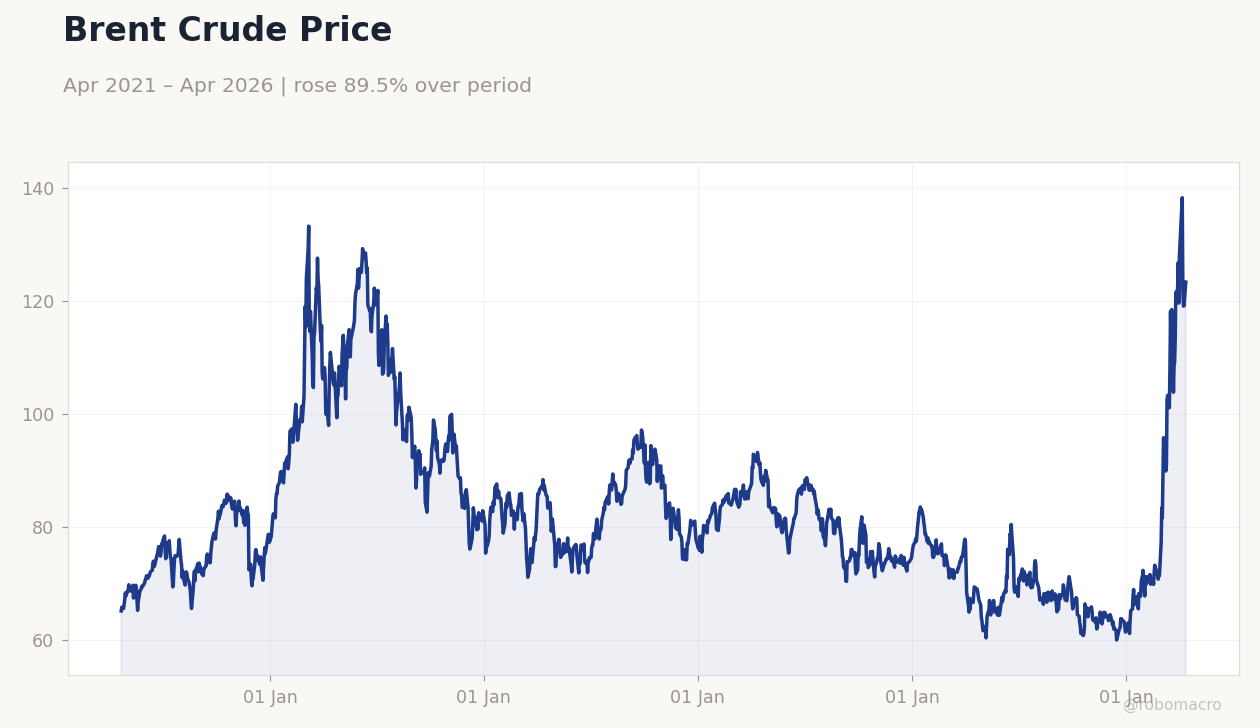 Brent Crude Price | Type: macro_line | Brent Crude: 123.3 (2026-04-13) | Range: 59.93–138.2 | Trend(5pt): 65.07,115,92.52,82.39,123.3
Today's Economic Events
| Data | Prior | Cons | Time |
|---|---|---|---|
| No events available | |||
- Andean currencies showed mixed performance amid Brent's 5.24% plunge to $90.48, pressuring Colombia's oil exports while copper's slight 0.03% gain to $6.04 provided minimal support for Chile and Peru.
- Equities declined overall: MSCI Chile fell 1.80% to 44.16 on commodity pressures; MSCI Peru dipped 0.41% to 84.82; MSCI Colombia stayed flat at 9.02 with 0.00% change.
- US-Iran war tensions heightened energy risks, with Chinese copper output records adding supply concerns for Andean miners, alongside Chile's new battery storage project signaling infrastructure growth.
Yesterday's Recap
Andean markets faced commodity-driven volatility, with Brent crude dropping 5.24% to $90.48, impacting Colombia heavily as oil comprises over half of exports and supports fiscal revenues, especially amid Ecopetrol's production issues. Chile's MSCI index declined 1.80% to 44.16, as copper's modest 0.03% rise to $6.04 failed to counter broader mining strains, including Codelco-linked challenges. Peru's MSCI index fell 0.41% to 84.82, with gold easing 0.09% to $4,802.20, though mining exports offered some offset.
FX dynamics varied: USD/COP decreased 0.96% to 3,569.41, reflecting COP strengthening despite oil weakness; USD/CLP fell 0.99% to 881.49, indicating CLP resilience; USD/PEN increased 1.40% to 3.43, signaling PEN depreciation amid risk aversion. Chile's short-term rate remained at 4.50% with no change, highlighting the central bank's steady approach. Bitcoin rose 0.92% to $76,571.33, adding to global asset fluctuations.
Without key data releases, attention centered on commodity trends, with Peru's mining sector displaying relative steadiness versus Chile's copper reliance.
The Day Ahead
No economic events are scheduled for Andean nations tomorrow, so markets will track global commodity movements, especially copper and oil, for insights into Chile and Colombia. Updates on Chile's 1,500 MWh battery energy storage system project by Copenhagen Infrastructure Partners could emerge, enhancing mining sustainability prospects. Peru's central bank may offer informal comments on FX management given PEN's recent depreciation.
US-Iran war developments might influence energy sentiment, potentially affecting import costs. Colombia could see fiscal updates related to oil revenue impacts. Trading may remain subdued absent major external events.
Other Economic Notes
Andean economies grapple with commodity reliance, as Chile's 2026 fiscal deficit is projected near 2.5% of GDP due to reduced copper royalties. Peru's current account deficit has expanded to around 2% of GDP from import dependencies and export variability. (cont...)