Andeans Macro Daily(Beta Mode)
Andean FX Gains on Commodity Surge
Market Snapshot
| Asset | Level | Change |
|---|---|---|
| MSCI Colombia | 9.02 | +0.00% |
| MSCI Chile | 40.52 | +1.02% |
| MSCI Peru | 78.56 | +0.90% |
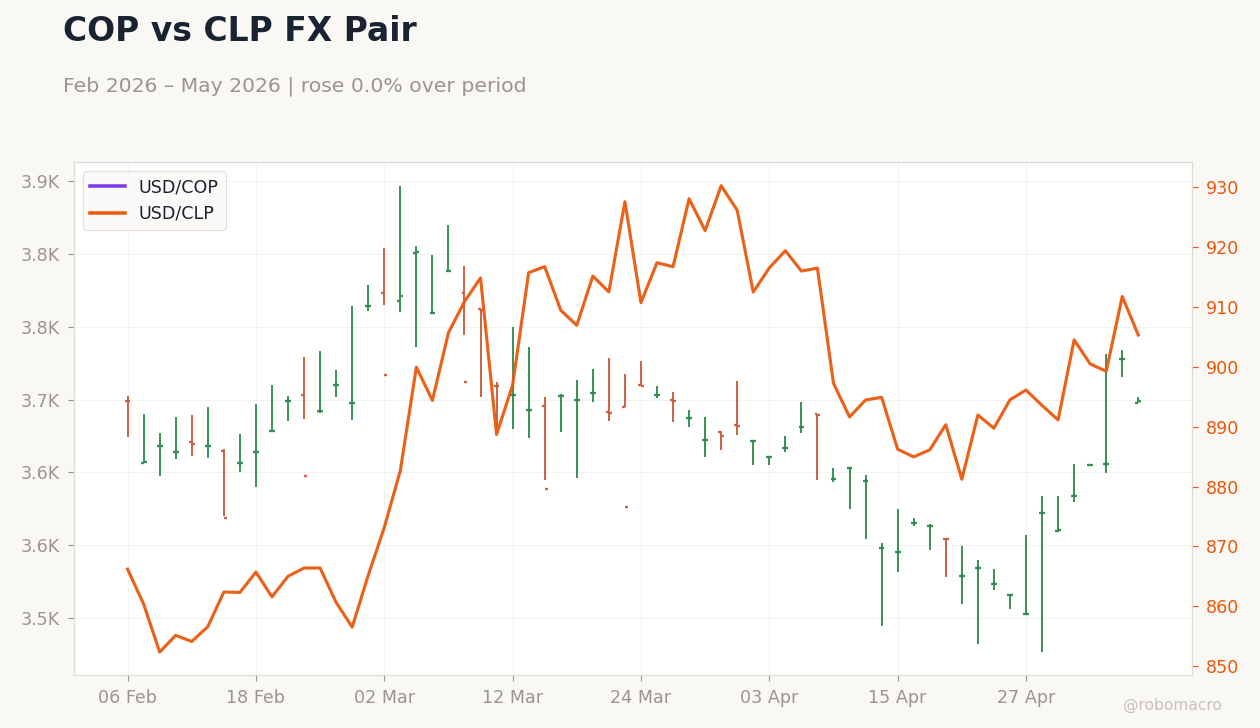
| USD/COP | 3,699.96 | -0.75% |
| USD/CLP | 905.30 | -0.70% |
| USD/PEN | 3.49 | -0.49% |
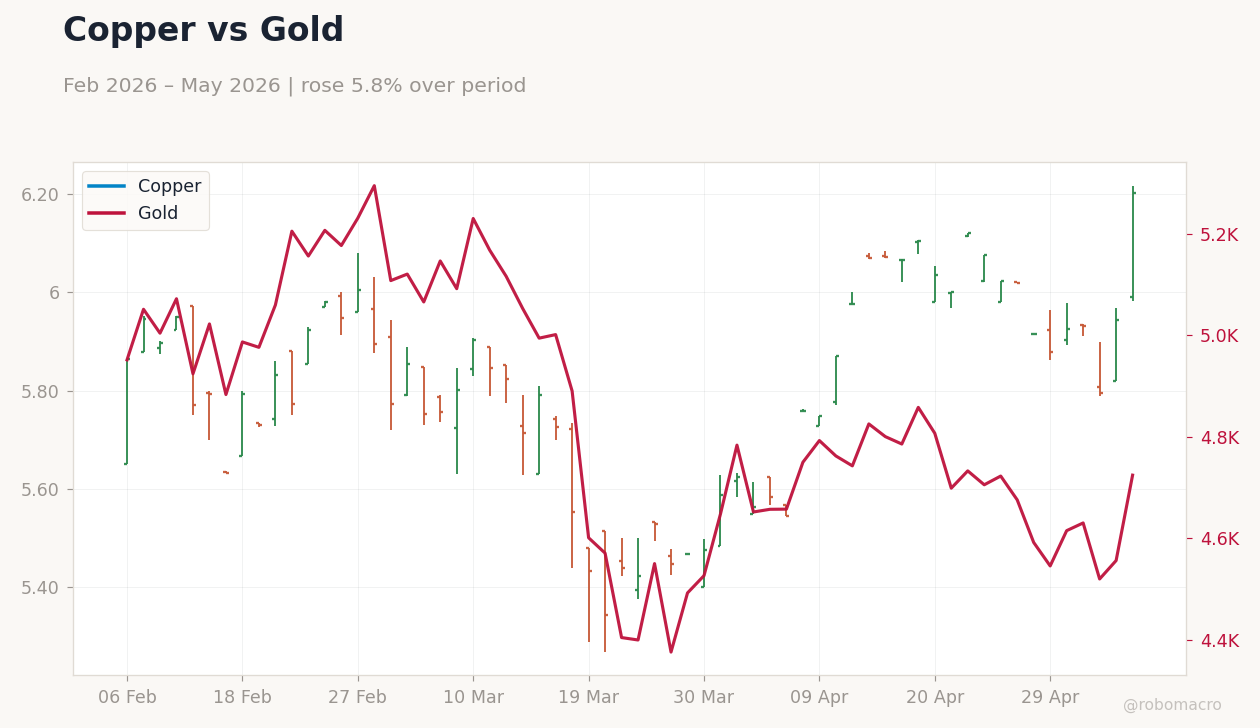
| Copper | 6.20 | +4.31% |
| Gold | 4,731.90 | +3.87% |
| Brent Crude | 97.09 | -11.63% |
| Bitcoin | 82,527.93 | +1.98% |
| Colombia 10Y Govt Yield | - | - |
| Chile Short-term Rate | 4.50% | +0.00% |
Prior Economic Events
| Data | Prior | Cons | Actual |
|---|---|---|---|
| No events available | |||
 Chile Equity vs Copper | Type: market_hloc | MSCI Chile ETF: 40.52 (2026-05-05) | Range: 38.06–46.17 | Trend(5pt): 45.24,41.56,38.85,43.85,40.52 | Copper Futures: 6.202 (2026-05-06) | Range: 5.343–6.202 | Trend(6pt): 5.864,5.894,5.439,6.07,5.943,6.202
Today's Economic Events
| Data | Prior | Cons | Time |
|---|---|---|---|
| No events available | |||
- Andean currencies strengthened amid rising copper and gold prices, offsetting Brent's sharp decline.
- Equities in Chile and Peru rose, while Colombia's held flat; mining news highlighted regional risks and opportunities.
- No major data releases, with focus shifting to global commodity trends and US-Brazil talks.
Yesterday's Recap
Andean markets showed resilience driven by commodity dynamics, with Chile's MSCI index climbing 1.02% to 40.52 on copper's 4.31% surge to $6.20, bolstering export revenues. Peru's MSCI advanced 0.90% to 78.56, supported by gold's 3.87% rise to $4,731.90 and news of Pecoy Copper deploying a third drill rig at its project, signaling mining sector expansion. Colombia's MSCI remained flat at 9.02 with a 0.00% change, pressured by Brent crude's 11.63% drop to $97.09, which hurts oil-dependent fiscal balances, compounded by a deadly coal mine explosion in Sutatausa that killed nine workers and raised safety concerns in the sector.
FX markets reflected these trends: USD/COP fell 0.75% to 3,699.96 as the peso firmed despite oil weakness, USD/CLP declined 0.70% to 905.30 on copper strength, and USD/PEN dropped 0.49% to 3.49 amid gold gains. Chile's short-term rate held steady at 4.50%, with no immediate policy shifts. Broader sentiment was lifted by Bitcoin's 1.98% increase to $82,527.93, though irrelevant to core Andean exports.
Overall, commodity splits underscored Chile and Peru's gains versus Colombia's vulnerabilities.
The Day Ahead
With no scheduled economic releases across the Andean bloc tomorrow, markets will likely monitor global commodity fluctuations, particularly copper and gold prices that underpin Chile and Peru's external accounts. Attention may turn to any spillover from US President Trump's upcoming meeting with Brazil's Lula on economy and security, potentially influencing regional trade dynamics given Brazil's proximity. In Colombia, ongoing fiscal deficit concerns could pressure sovereign spreads if oil prices remain soft.
Chile's mining sector might see updates following recent output data, while Peru could benefit from continued gold momentum. Investors should watch for FX interventions if currencies extend gains. The quiet calendar shifts focus to external risks like US economic indicators.
Other Economic Notes
Broader Andean themes include diverging commodity exposures, with Chile and Peru leveraging copper and gold rallies to improve trade balances, while Colombia grapples with oil price volatility amid fiscal reforms. Political risks persist, such as Colombia's mining accidents highlighting regulatory gaps that could deter investment. Emerging sectors like lithium in Chile offer long-term upside but face price softness, capping immediate fiscal benefits.