Argentina Macro Daily(Beta Mode)
Merval Gains as Peso Steadies
Market Snapshot
| Asset | Level | Change |
|---|---|---|
| MERVAL | 2,693,891.25 | +1.16% |
| USD/ARS | 1,393.00 | -0.23% |
| YPF | 39.48 | +3.59% |
| MercadoLibre | 1,690.26 | -2.19% |
| Globant | 44.27 | -0.81% |
| Soybeans | 1,166.75 | +0.43% |
| Gold | 4,706.10 | -3.76% |
| Bitcoin | 70,099.64 | -1.61% |
Prior Economic Events
| Data | Prior | Cons | Actual |
|---|---|---|---|
| No events available | |||
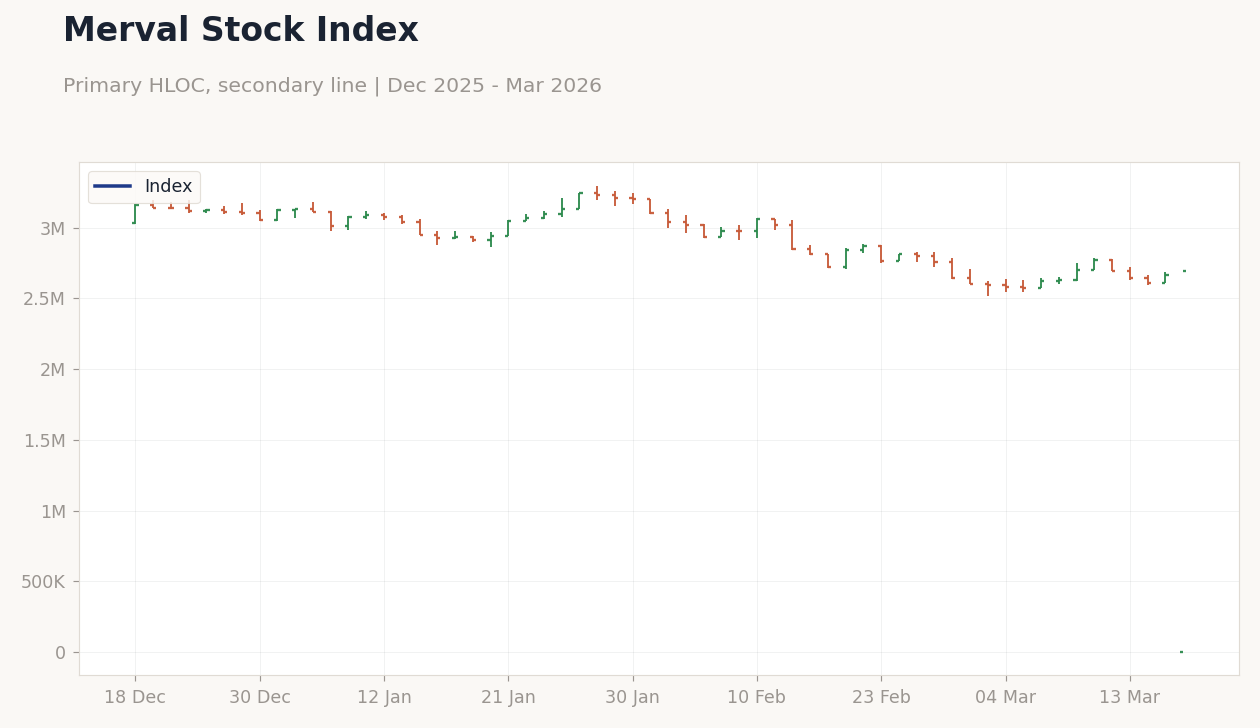 Merval Stock Index | Type: market_hloc | Index: 2.694e+06 (2026-03-18) | Range: 2.571e+06–3.244e+06 | Trend(5pt): 3.163e+06,3.036e+06,3.039e+06,2.754e+06,2.694e+06
Today's Economic Events
| Data | Prior | Cons | Time |
|---|---|---|---|
| No events available | |||
- Merval index rose 1.16% to 2,693,891.25, led by energy sector strength.
- USD/ARS fell 0.23% to 1,393.00, easing parallel rate pressures.
- YPF advanced 3.59% to 39.48 amid positive Vaca Muerta reports.
Yesterday's Recap
Argentine markets displayed mixed results yesterday, with the Merval index up 1.16% to 2,693,891.25, fueled by gains in energy and select stocks. YPF climbed 3.59% to 39.48, supported by ongoing developments in Vaca Muerta shale production and global oil demand trends. The official USD/ARS rate declined 0.23% to 1,393.00, helping narrow the spread with parallel blue dollar rates.
MercadoLibre dropped 2.19% to 1,690.26 due to investor caution in tech, while Globant fell 0.81% to 44.27 amid broader sector hesitancy. Soybean prices increased 0.43% to 1,166.75, bolstering export prospects, but gold prices tumbled 3.76% to 4,706.10, reflecting shifts in safe-haven demand. Bitcoin decreased 1.61% to 70,099.64, highlighting crypto market fluctuations.
No significant economic data was released, though sentiment improved on hints of fiscal adjustments.
The Day Ahead
The calendar is empty today with no Argentine economic events scheduled, shifting attention to global commodity movements affecting exports. Markets may watch for any BCRA updates on reserves amid IMF-related talks. Volatility could emerge from parallel currency shifts if informal rates fluctuate.
Energy stocks might react to Vaca Muerta news, while international oil price risks, as observed in other emerging markets, could influence broader trading. Overall, expect subdued activity absent surprise central bank actions.
Other Economic Notes
Argentina faces persistent inflation challenges, but recent trends suggest potential for subsidy adjustments under IMF guidelines. The Vaca Muerta region's shale expansion promises export growth, though logistical constraints hinder optimal output. Efforts toward fiscal stability continue, with debt management key, but political uncertainties ahead of elections may impact market confidence.
Global Macro News
Rising global oil prices, evidenced by the Philippine peso breaching 60 per dollar—a record low—due to energy cost pressures, could elevate Argentina's import expenses and inflation risks. This may challenge BCRA reserve building, offset somewhat by soybeans rising 0.43% to 1,166.75 for export support. (cont...)


