Argentina Macro Daily(Beta Mode)
Merval Edges Up Amid Stable FX
Market Snapshot
| Asset | Level | Change |
|---|---|---|
| MERVAL | 3,006,248.00 | +0.23% |
| USD/ARS | 1,392.50 | +0.18% |
| YPF | 46.22 | +0.22% |
| MercadoLibre | 1,729.02 | +6.78% |
| Globant | 46.11 | +0.94% |
| Soybeans | 1,166.50 | -0.02% |
| Gold | 4,710.40 | +1.15% |
| Bitcoin | 68,968.47 | +0.16% |
Prior Economic Events
| Data | Prior | Cons | Actual |
|---|---|---|---|
| No events available | |||
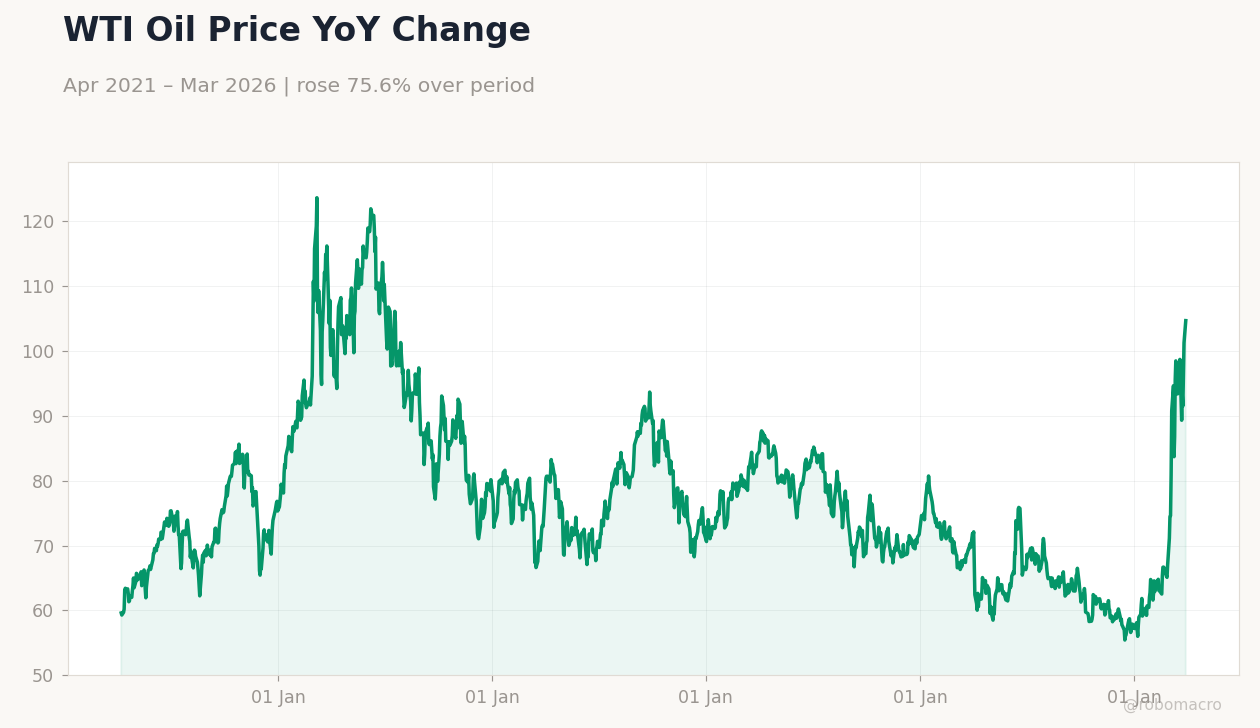
 Brent Oil Price YoY Change | Type: macro_line | Brent YoY %: 121.9 (2026-03-30) | Range: 59.93–133.2 | Trend(6pt): 62.09,110.5,94.46,74.24,113.4,121.9
Today's Economic Events
| Data | Prior | Cons | Time |
|---|---|---|---|
| No events available | |||
- Argentine stocks rose modestly, with MERVAL up 0.23% on gains in energy and tech sectors.
- USD/ARS advanced 0.18%, reflecting controlled devaluation under BCRA's crawling peg.
- Commodity prices mixed, supporting local resilience despite global inflation risks from Iran war.
Yesterday's Recap
Argentine markets showed slight gains, with the MERVAL index closing at 3,006,248.00, up 0.23%, led by YPF at 46.22 (+0.22%) and MercadoLibre at 1,729.02 (+6.78%). Globant advanced 0.94% to 46.11, buoyed by tech optimism. The USD/ARS official rate ended at 1,392.50, up 0.18%, with steady parallel rates narrowing gaps on minimal BCRA action.
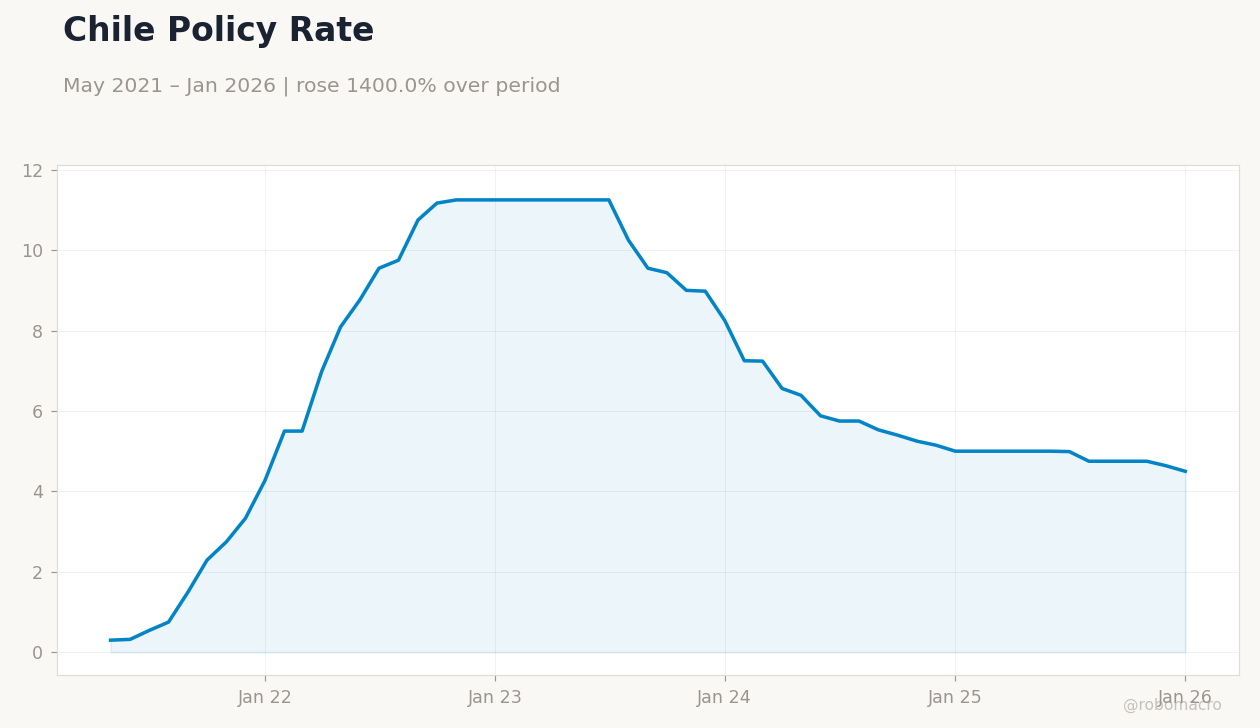
Soybean prices slipped 0.02% to 1,166.50 due to global oversupply, while gold climbed 1.15% to 4,710.40, aiding inflation hedges. Bitcoin rose 0.16% to 68,968.47. No economic data was released, per calendar, but sentiment improved on news of Chile's President Kast's planned Buenos Aires visit for potential trade talks.
Sovereign bonds remained stable with tight spreads, signaling IMF program confidence. Trading volumes were average, with ADRs stronger than locals.
The Day Ahead
No events on the calendar today, so attention turns to possible BCRA reserve reports, which may affect peso dynamics if energy exports boost inflows. Markets will watch for IMF compliance updates on reserves. Parallel FX fluctuations could drive intraday moves.
Global risks from Middle East tensions may impact commodity assets. The Kast visit could produce comments on regional ties, influencing sentiment. Trading likely subdued absent surprises.
Other Economic Notes
Fiscal surplus progress bolsters stability, with IMF highlighting reserve goals. Vaca Muerta production supports FX via energy exports amid global shifts. Deregulation efforts encourage investment, but BCRA must monitor inflation closely for sustained disinflation.
Global Macro News
Iran war escalates global inflation, per IMF, threatening slower growth and higher prices for emerging markets like Argentina. Oil volatility could aid energy exports but raise import costs, fueling inflation. IMF warns of budget strains in countries like Morocco from infrastructure, relevant for Argentina's projects.
Eurozone inflation hit 2.5%, pressuring ECB and LatAm flows. (cont...)