Argentina Macro Daily(Beta Mode)
Merval Gains, Peso Strengthens
Market Snapshot
| Asset | Level | Change |
|---|---|---|
| MERVAL | 3,011,186.00 | +1.30% |
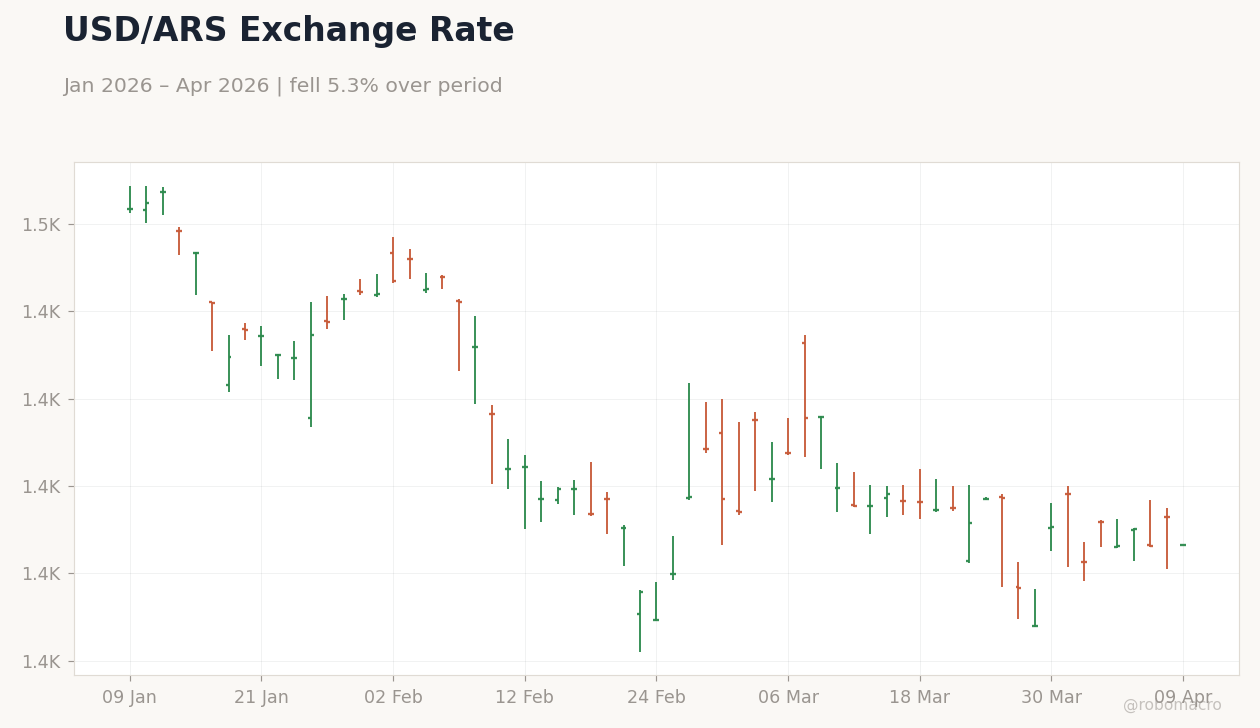
| USD/ARS | 1,386.50 | -0.46% |
| YPF | 43.48 | -1.56% |
| MercadoLibre | 1,775.74 | +1.92% |
| Globant | 45.81 | -0.63% |
| Soybeans | 1,164.25 | +0.19% |
| Gold | 4,751.40 | +0.04% |
| Bitcoin | 71,126.77 | +0.00% |
Prior Economic Events
| Data | Prior | Cons | Actual |
|---|---|---|---|
| No events available | |||
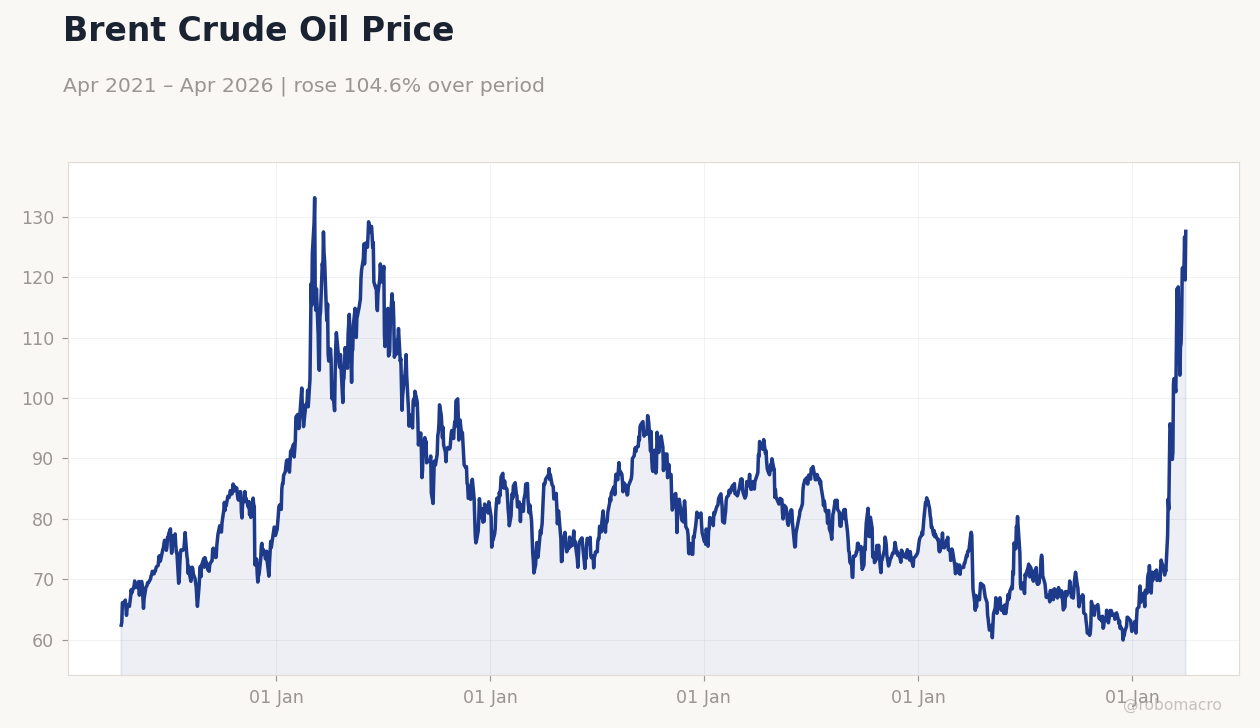 Brent Crude Oil Price | Type: macro_line | Brent Oil Price ($/bbl): 127.6 (2026-04-02) | Range: 59.93–133.2 | Trend(5pt): 62.38,114,91.37,77.84,127.6
Today's Economic Events
| Data | Prior | Cons | Time |
|---|---|---|---|
| No events available | |||
- Merval index rose 1.30% to 3,011,186.00 on global risk-on mood from Mideast ceasefire.
- USD/ARS fell 0.46% to 1,386.50, bolstered by easing geopolitical tensions.
- Mixed stock performance: YPF down 1.56%, MercadoLibre up 1.92%, soybeans edged higher.
Yesterday's Recap
Argentine markets advanced yesterday amid improved global sentiment following reports of a Mideast ceasefire, which reduced energy price risks and supported emerging market assets. The Merval index climbed 1.30% to close at 3,011,186.00, reflecting broader risk appetite. The official USD/ARS rate depreciated 0.46% to 1,386.50, indicating peso firmness as demand for dollar safe-havens waned.
YPF shares dropped 1.56% to 43.48, influenced by stable oil markets, while MercadoLibre gained 1.92% to 1,775.74, benefiting from positive e-commerce sentiment. Globant declined 0.63% to 45.81, but soybean futures rose 0.19% to 1,164.25, aiding export outlooks. Gold inched up 0.04% to 4,751.40 on lingering safe-haven flows, and Bitcoin held steady at 71,126.77 with no change.
No economic data was released, keeping focus on external factors. Sovereign bond spreads likely narrowed as global tensions eased, with thin trading volumes in the absence of domestic catalysts.
The Day Ahead
With no scheduled events from INDEC or BCRA today, attention shifts to global commodity and currency movements impacting Argentina's reserves and trade. Markets may react to ongoing Mideast developments, potentially influencing energy imports and soybean exports. Traders will watch for updates on fiscal reforms and IMF interactions, given recent global warnings on war shocks.
Volatility could stem from gold and Bitcoin fluctuations, key for investor sentiment. Parallel FX rates remain in focus, with potential for further premium compression if risk-on persists. Unscheduled BCRA actions on liquidity could emerge if needed to stabilize flows.
Other Economic Notes
Argentina's energy sector advances with Vaca Muerta production supporting export growth and reducing import reliance. Fiscal austerity measures align with efforts to meet surplus targets, though inflation persistence challenges broader recovery. Labor reforms encounter resistance, potentially slowing productivity improvements.
Commodity price stability, including soybeans and gold, bolsters external accounts amid global uncertainties.