Argentina Macro Daily(Beta Mode)
Merval Dips, YPF Rallies
Market Snapshot
| Asset | Level | Change |
|---|---|---|
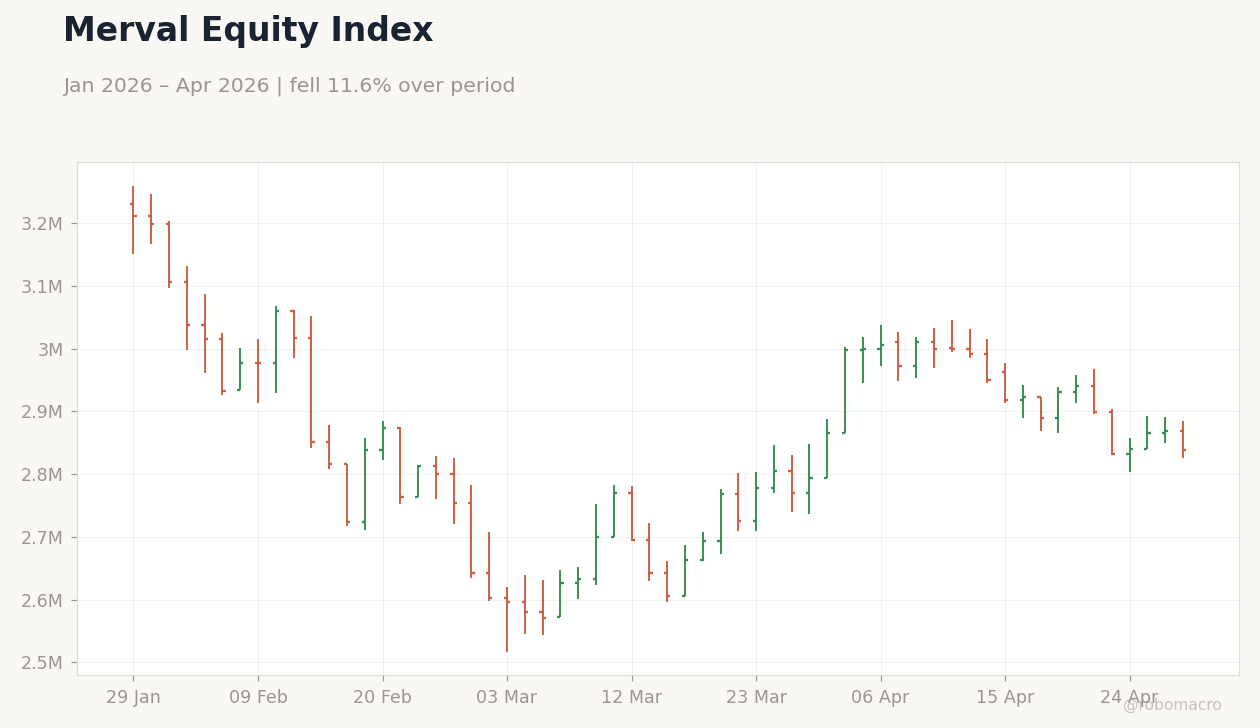
| MERVAL | 2,838,835.00 | -1.07% |
| USD/ARS | 1,390.00 | -1.05% |
| YPF | 44.81 | +3.27% |
| MercadoLibre | 1,767.02 | -1.39% |
| Globant | 40.66 | -0.88% |
| Soybeans | 1,199.75 | +1.48% |
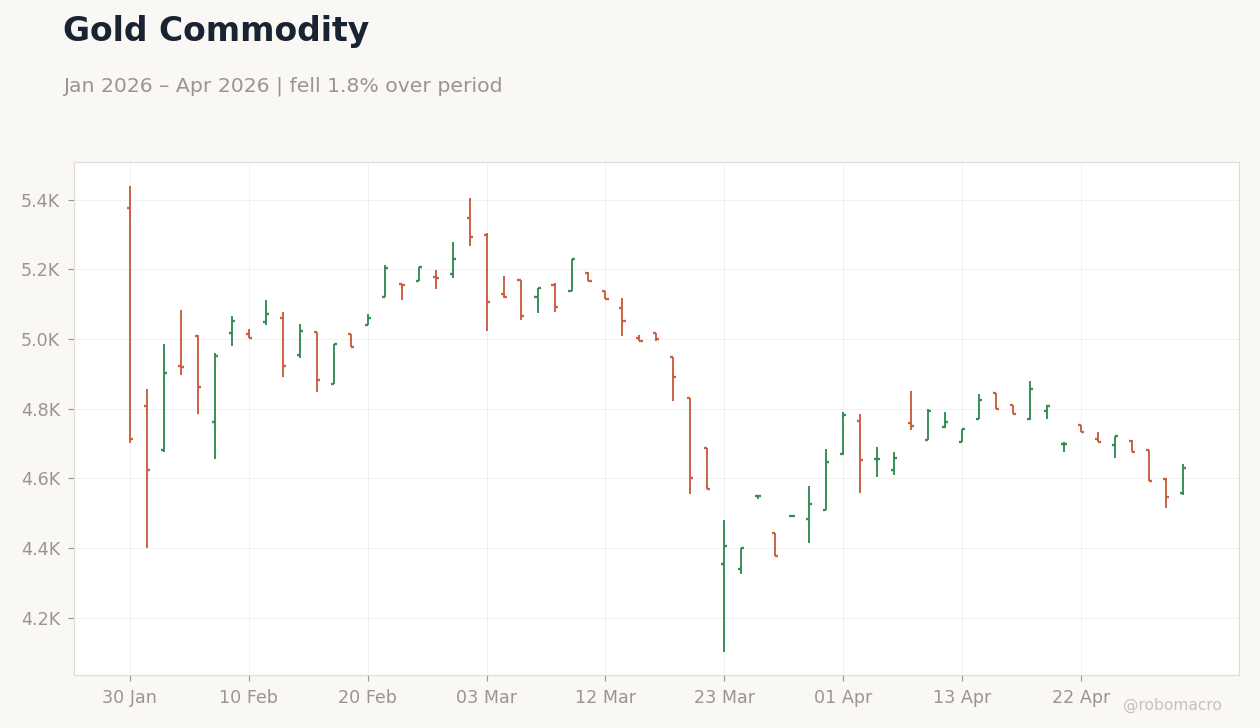
| Gold | 4,629.00 | +1.84% |
| Bitcoin | 76,060.97 | +0.38% |
Prior Economic Events
| Data | Prior | Cons | Actual |
|---|---|---|---|
| No events available | |||
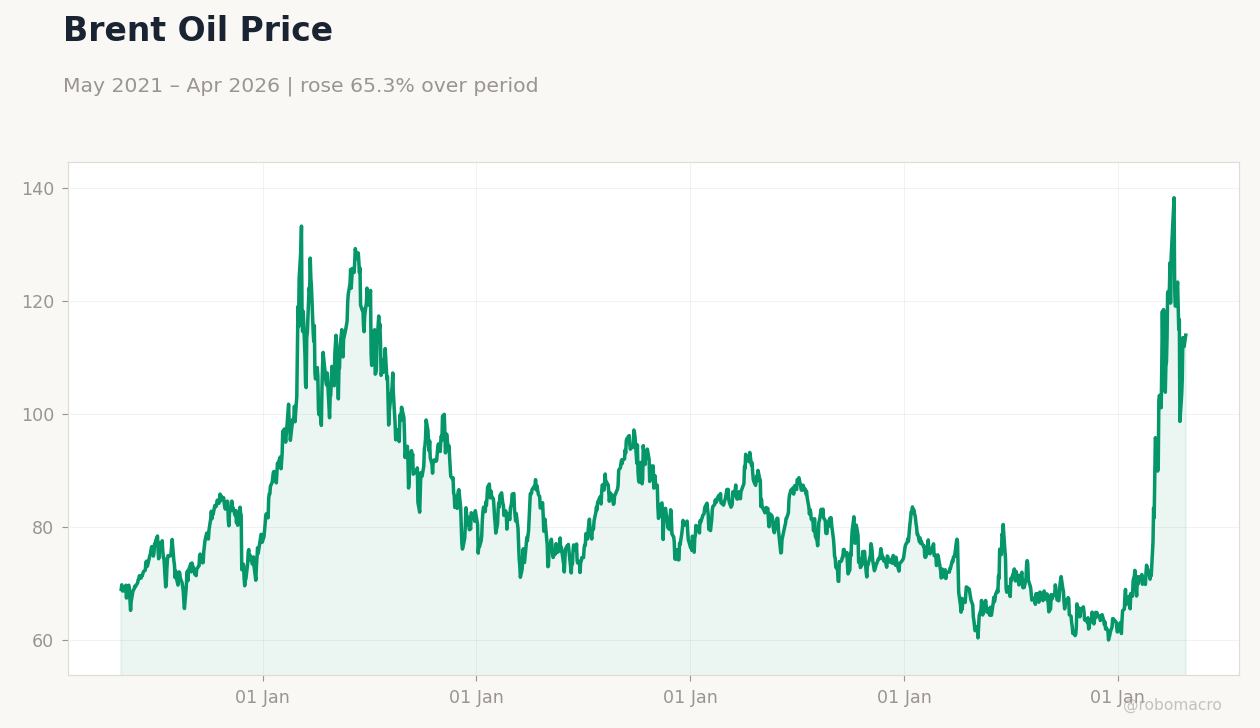
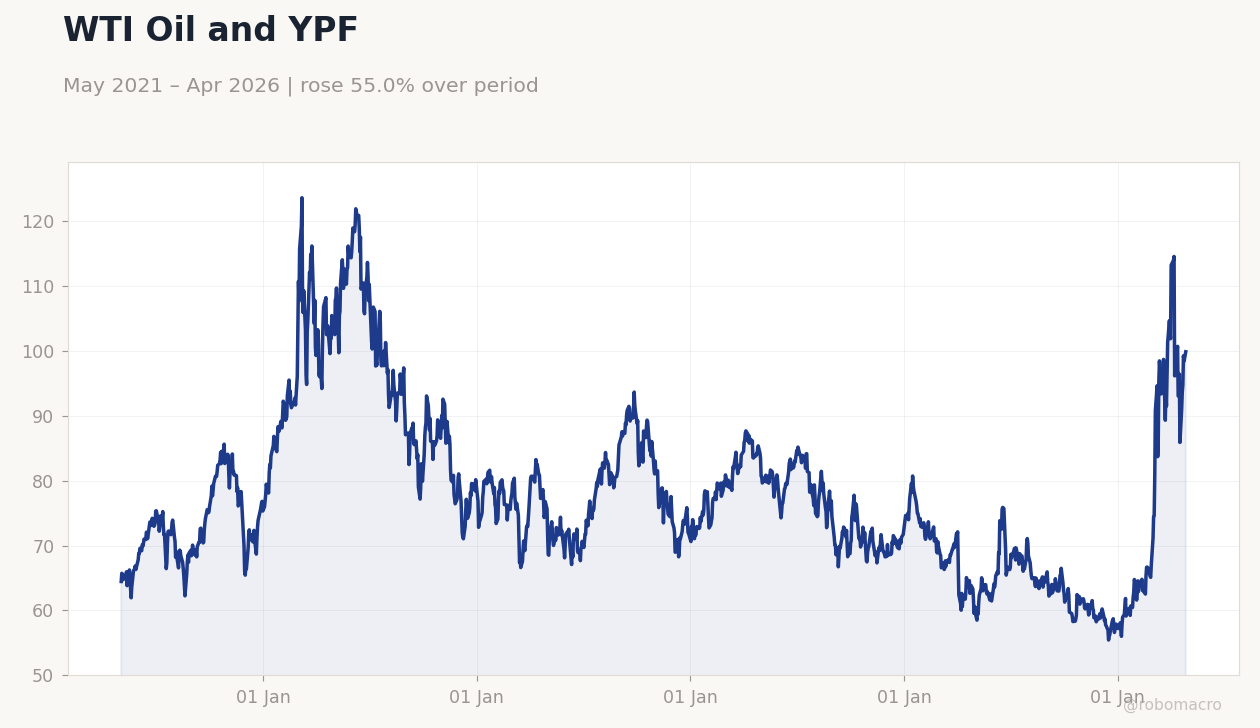 WTI Oil and YPF | Type: macro_line | WTI USD: 99.89 (2026-04-27) | Range: 55.44–123.6 | Trend(5pt): 64.46,99.11,84.58,73.51,99.89
Today's Economic Events
| Data | Prior | Cons | Time |
|---|---|---|---|
| No events available | |||
- Merval fell 1.07% to 2,838,835 amid global risk aversion and tariff concerns.
- USD/ARS slid 1.05% to 1,390, signaling crawling peg strains and reserve pressures.
- YPF jumped 3.27% on Vaca Muerta optimism, while soybeans and gold gained.
Yesterday's Recap
Argentine markets ended mixed on April 29, with the Merval index dropping 1.07% to 2,838,835, pressured by emerging market sell-offs from global tariff threats and oil volatility. The USD/ARS official rate weakened 1.05% to 1,390, underscoring crawling peg adjustments and likely BCRA moves to bolster reserves. YPF advanced 3.27% to 44.81, supported by Vaca Muerta production growth and export potential in a rising energy market.
MercadoLibre fell 1.39% to 1,767.02, mirroring tech sector weakness, and Globant declined 0.88% to 40.66 amid Nasdaq dips. Soybeans rose 1.48% to 1,199.75, aiding agricultural exports, while gold climbed 1.84% to 4,629 on safe-haven demand, indirectly lifting bond sentiment. Bitcoin edged up 0.38% to 76,060.97 despite regulatory concerns.
No key data emerged, but flows aligned with commodity trends and IMF progress, holding EMBI spreads stable. The day highlighted Argentina's exposure to global commodities and FX shifts.
The Day Ahead
April 30 brings no major releases, shifting attention to global drivers like oil prices influencing Vaca Muerta deals. Markets will watch BCRA hints on reserves under the 2% monthly crawling peg. IMF talks on fiscal surplus may sway bonds.
Commodity trends in soybeans and gold could impact exports. The May 1 holiday may reduce liquidity, advising care on FX trades. Positioning for upcoming CPI may subtly affect peso moves.
Other Economic Notes
Argentina's regenerative salt landscapes project spotlights sustainable extraction, rethinking mining in vast terrains for critical minerals. This aligns with global AI and clean energy demand but raises water and health concerns in poor areas. Fiscal reforms progress in the Senate with pension changes, backing IMF surplus goals of 0.4% GDP.
Deregulation eases agribusiness rules, boosting soybean and energy exports.