Argentina Macro Daily(Beta Mode)
Merval Slides as Country Risk Nears 500
Market Snapshot
| Asset | Level | Change |
|---|---|---|
| MERVAL | 3,084,617.00 | -2.83% |
| USD/ARS | 1,438.00 | +0.07% |
| EUR/ARS | 1,660.89 | -0.47% |
| Gold | 4,356.10 | +0.44% |
| Brent Crude | 94.16 | +1.15% |
| Soybean | 1,118.25 | -0.29% |
| Bitcoin | 63,352.04 | +0.18% |
| Argentina 10Y | - | - |
Prior Economic Events
| Data | Prior | Cons | Actual |
|---|---|---|---|
| No events available | |||
 Argentina Real Effective Exchange Rate | Type: macro_line | Index: 122.1 (2026-04-01) | Range: 98.98–122.1 | Trend(6pt): 112.3,115.8,101.6,109.6,120.4,122.1
Today's Economic Events
| Data | Prior | Cons | Time |
|---|---|---|---|
| No events available | |||
- Merval drops 2.83% to 3,084,617 amid profit-taking and external pressure.
- USD/ARS rises 0.07% to 1,438 while BCRA caps peso moves through intervention.
- Country risk edges toward 500 points as inflation concerns resurface.
Yesterday's Recap
Argentine equities closed sharply lower with the Merval posting its largest weekly decline since February. Profit-taking in energy and financial names combined with a weaker external backdrop to drive the 2.83% fall. The official USD/ARS rate ticked up 0.07% to 1,438 as the BCRA sold dollars to limit volatility.
EUR/ARS eased 0.47% to 1,660.89, tracking euro softness against the dollar. Soybean futures slipped 0.29% to 1,118.25, trimming export margins ahead of the new crop. Brent crude gained 1.15% to 94.16, offering modest support to fiscal revenues.
Country risk climbed toward 500 points, reflecting investor caution on fiscal consolidation progress.
The Day Ahead
Markets face a data-light session with no major Argentine releases scheduled. Attention will center on BCRA weekly monetary aggregates and any further FX intervention signals. Global risk sentiment and U.S.
inflation prints due later in the week may influence ARS crosses. Soybean and Brent price action will continue to shape export-tax collections and reserve dynamics. Traders will monitor peso forward points for signs of shifting devaluation expectations.
Other Economic Notes
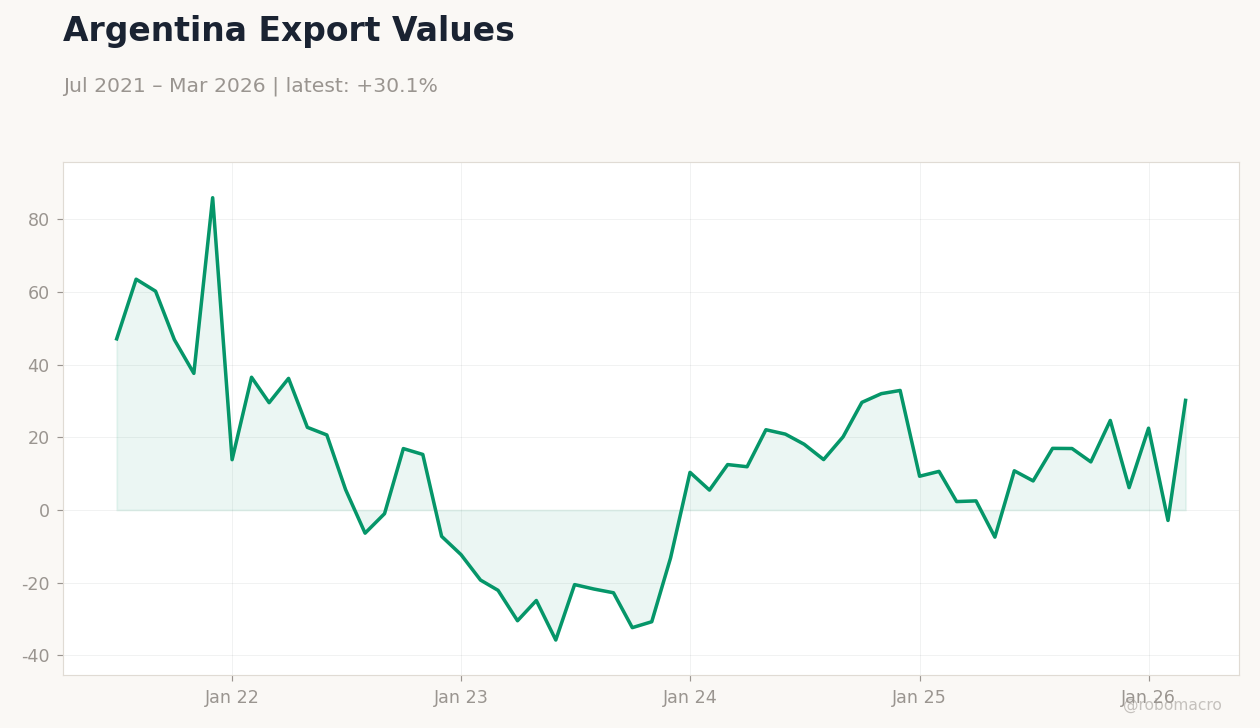
A former central bank official warned that persistent inflation pressures could complicate the policy outlook. Export-tax receipts rose modestly in May, helping narrow the primary fiscal deficit on a rolling basis. Private analysts have trimmed 2026 GDP forecasts after softer Q1 activity data.
The government secured a USD 1.2 bn syndicated loan from CAF and IDB, providing limited FX relief. Net international reserves remain the key threshold cited by policymakers for any future easing.
Global Macro News
The ECB signaled it can still raise rates even as euro-area growth slows, supporting a stronger dollar. Carmignac extended inflation-linked bond duration, betting that fiscal deficits will keep central banks tolerant of higher inflation. Indonesia’s bond and currency rout deepened, highlighting EM vulnerability to tighter global financial conditions.
<i>↓ p.2</i>