Argentina Macro Daily(Beta Mode)
MERVAL Rises 1.14% as USD/ARS Climbs 0.3%
Market Snapshot
| Asset | Level | Change |
|---|---|---|
| MERVAL | 3,291,883.00 | +1.14% |
| USD/ARS | 1,441.00 | +0.30% |
| EUR/ARS | 1,659.85 | -0.49% |
| Gold | 4,285.70 | -1.68% |
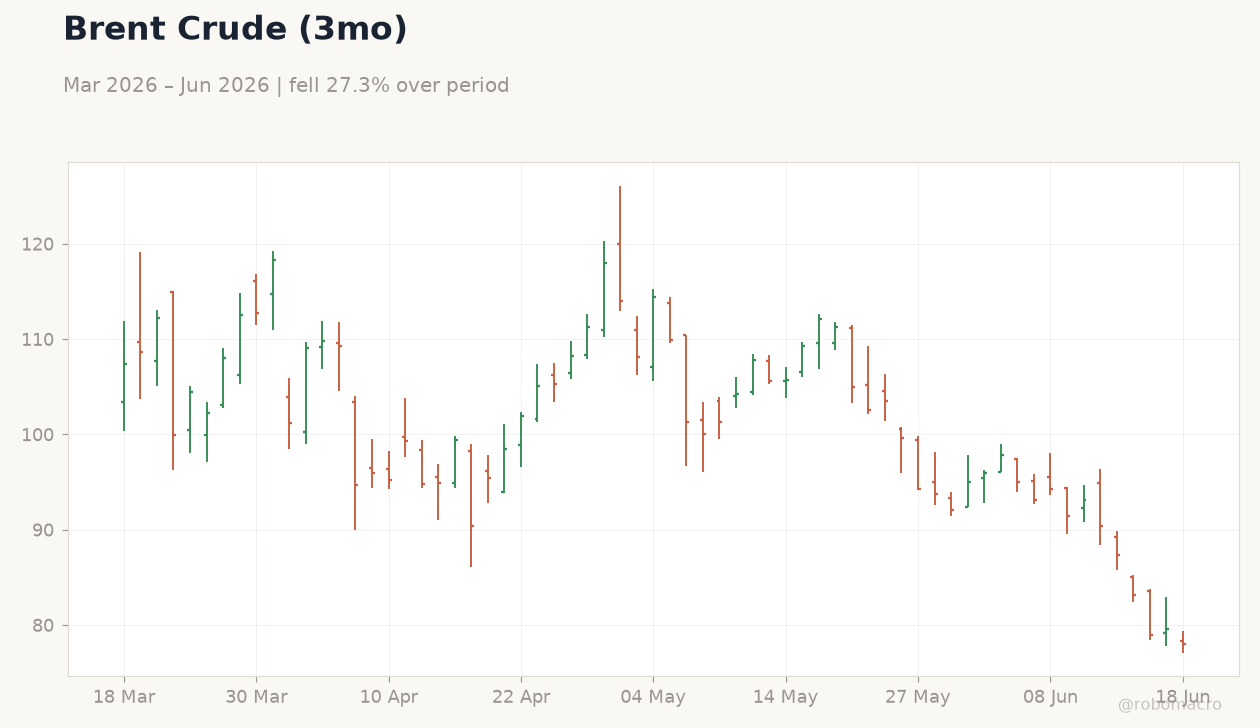
| Brent Crude | 78.06 | -1.87% |
| Soybean | 1,141.75 | +0.86% |
| Bitcoin | 63,949.99 | -2.52% |
| Argentina 10Y | - | - |
Prior Economic Events
| Data | Prior | Cons | Actual |
|---|---|---|---|
| No events available | |||
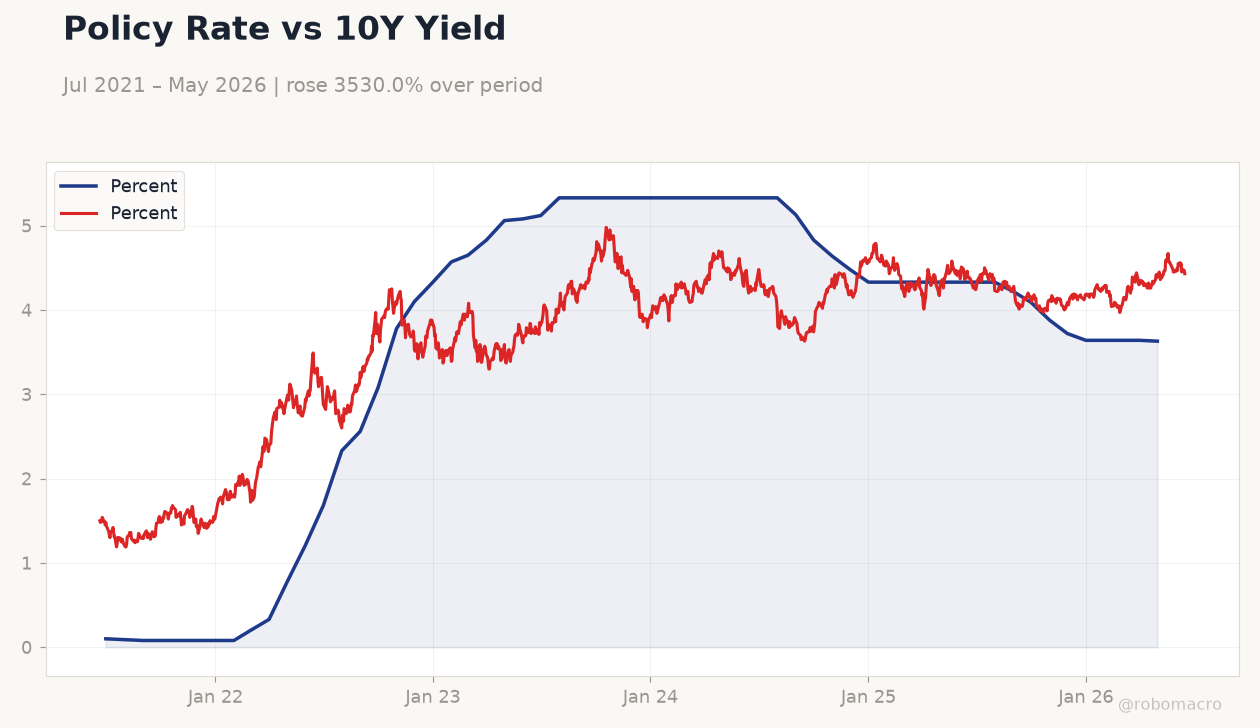 Policy Rate vs 10Y Yield | Type: macro_line | Percent: 3.63 (2026-05-01) | Range: 0.08–5.33 | Trend(6pt): 0.1,2.56,5.33,4.33,3.64,3.63 | Percent: 4.43 (2026-06-16) | Range: 1.19–4.98 | Trend(6pt): 1.5,3.45,3.92,4.31,4.48,4.43
Today's Economic Events
| Data | Prior | Cons | Time |
|---|---|---|---|
| No events available | |||
- MERVAL advanced 1.14% to 3,291,883 on domestic equity demand
- USD/ARS increased 0.30% to 1,441, extending gradual peso depreciation
- Soybean prices gained 0.86% while Brent crude fell 1.87%
Yesterday's Recap
Equity markets posted gains as the MERVAL index rose 1.14 percent, driven by bank and energy shares. The official USD/ARS rate advanced 0.30 percent to 1,441, consistent with the BCRA’s managed crawl. EUR/ARS declined 0.49 percent to 1,659.85 amid cross-rate moves.
Gold fell 1.68 percent to 4,285.70 and Brent crude dropped 1.87 percent to 78.06 on softer global demand signals. Soybean futures climbed 0.86 percent to 1,141.75, bolstering Argentina’s export outlook. Bitcoin declined 2.52 percent to 63,949.99.
No economic data releases occurred on the calendar.
The Day Ahead
No releases are scheduled for today or tomorrow, leaving markets focused on BCRA signals and fiscal flows. Attention centers on any updates to the monthly crawl rate and reserve management. Treasury operations will likely involve routine LETRAS rollovers without new auctions.
Soybean export volumes and global prices remain key watchpoints for trade balances. IMF program compliance discussions continue to shape medium-term expectations. Investors will track peso liquidity and any intervention commentary from the central bank.
Other Economic Notes
Siemens South America CEO Eduardo Gorchs stated that resumed dividend payments have restored investor trust in Argentina. The company plans to prioritize human-capital investment over the medium term. These comments align with ongoing fiscal consolidation and improved primary surpluses.
Labor-market reforms under the Ley Bases framework aim to reduce rigidities and support formal employment. Broader confidence indicators point to gradual normalization in private-sector activity.
Global Macro News
The Swiss central bank held rates steady while revising inflation forecasts higher due to geopolitical pressures. The Philippine central bank raised its policy rate to steer inflation back toward target. Indonesia’s central bank also implemented a rate hike to address domestic price pressures.
The UAE central bank kept its benchmark at 3.65 percent following the latest Fed decision. The Philippine peso settled at 60.393 per dollar after the tightening move. <i>↓ p.2</i>