Argentina Macro Daily(Beta Mode)
Peso Weakens as MERVAL Slips on Thin Trade
Market Snapshot
| Asset | Level | Change |
|---|---|---|
| MERVAL | 3,168,608.00 | -0.26% |
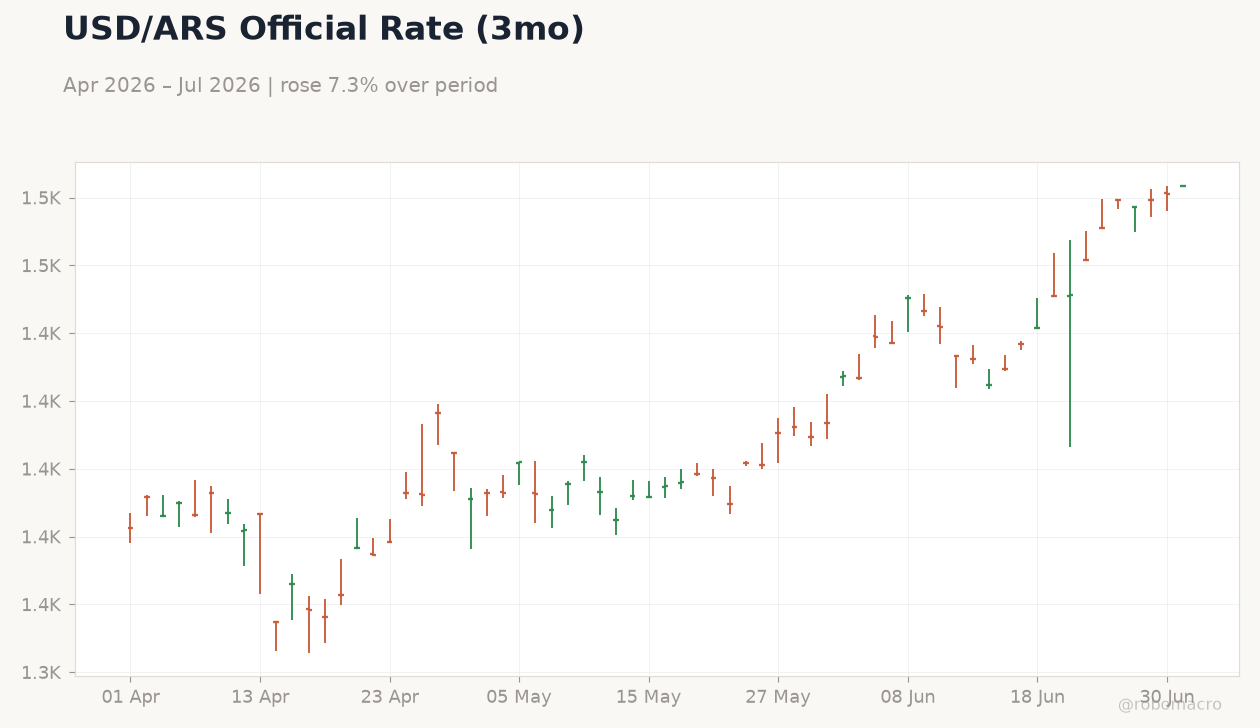
| USD/ARS | 1,483.50 | +0.16% |
| EUR/ARS | 1,691.96 | +0.03% |
| Gold | 3,987.40 | -0.88% |
| Brent Crude | 71.84 | -1.48% |
| Soybean | 1,144.50 | +2.48% |
| Bitcoin | 58,945.94 | +0.66% |
| Argentina 10Y | - | - |
Prior Economic Events
| Data | Prior | Cons | Actual |
|---|---|---|---|
| No events available | |||
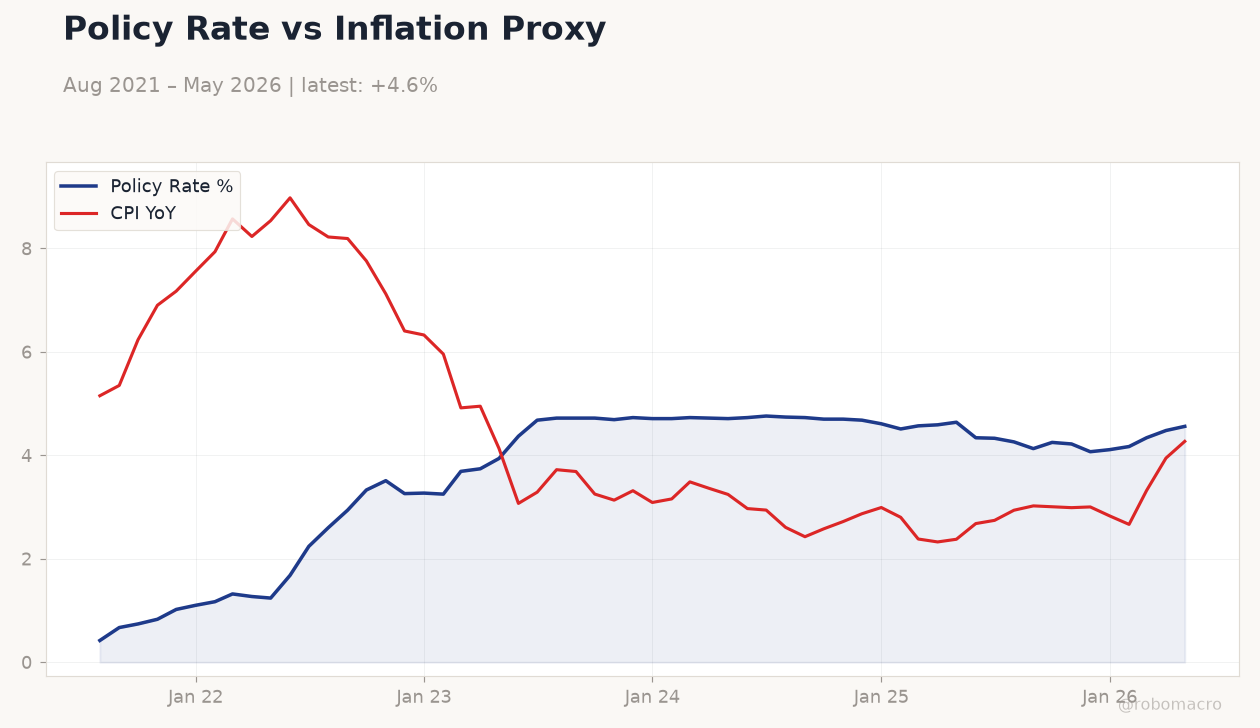 Policy Rate vs Inflation Proxy | Type: macro_line | Policy Rate %: 4.56 (2026-05-01) | Range: 0.42–4.76 | Trend(6pt): 0.42,3.33,4.73,4.51,4.48,4.56 | CPI YoY: 4.27 (2026-05-01) | Range: 2.325–8.979 | Trend(5pt): 5.152,7.759,3.316,2.802,4.27
Today's Economic Events
| Data | Prior | Cons | Time |
|---|---|---|---|
| No events available | |||
- MERVAL fell 0.26% while USD/ARS rose 0.16% to 1,483.50 amid thin trading.
- Soybean prices jumped 2.48%, bolstering Argentina’s export outlook.
- No domestic data releases left markets focused on global cues and Milei policy signals.
Yesterday's Recap
Equity and FX markets moved modestly on the final day of June. The MERVAL index closed 0.26% lower at 3,168,608 as investors trimmed positions ahead of the holiday period. USD/ARS advanced 0.16% to 1,483.50, reflecting mild peso depreciation in official markets.
EUR/ARS gained just 0.03%, showing limited euro-driven pressure. Brent Crude dropped 1.48% to 71.84, while gold fell 0.88% to 3,987.40 on reduced safe-haven demand. Soybeans rose sharply by 2.48% to 1,144.50, supporting expectations for stronger agricultural export proceeds.
Bitcoin added 0.66%, providing a minor offset in risk assets.
The Day Ahead
July 1 brings no scheduled Argentine economic releases or policy announcements. Markets will monitor BCRA foreign-exchange operations for any intervention signals. Attention turns to President Milei’s ongoing comments on exchange-rate management and fiscal targets.
July 2 also lacks major prints, keeping focus on soybean export flows and reserve accumulation. Traders await any updates on IMF program reviews that could influence sentiment later in the week.
Other Economic Notes
BTG Pactual highlighted Argentina’s zig-zag growth path under continued exchange controls, noting both fiscal progress and lingering external vulnerabilities. Soybean export strength remains central to reserve rebuilding and trade-surplus maintenance. Milei’s administration continues to balance gradual disinflation with efforts to normalize the currency regime without abrupt adjustments.
Broader investor focus stays on whether improved market access for dollar-linked debt can be sustained.
Global Macro News
The European Central Bank signaled openness to a rate pause as inflation indicators softened, easing pressure on emerging-market funding costs. ECB’s Rehn stressed the need for flexible policy amid geopolitical risks that could still lift imported inflation. Australia’s central bank flagged conflict and oil-price volatility as key upside risks to its outlook.
Bangladesh kept rates unchanged, underscoring caution across smaller economies facing external shocks. <i>↓ p.2</i>