Argentina Macro Daily(Beta Mode)
Peso Firms as MERVAL Declines on Quiet Day
Market Snapshot
| Asset | Level | Change |
|---|---|---|
| MERVAL | 3,233,105.00 | -0.71% |
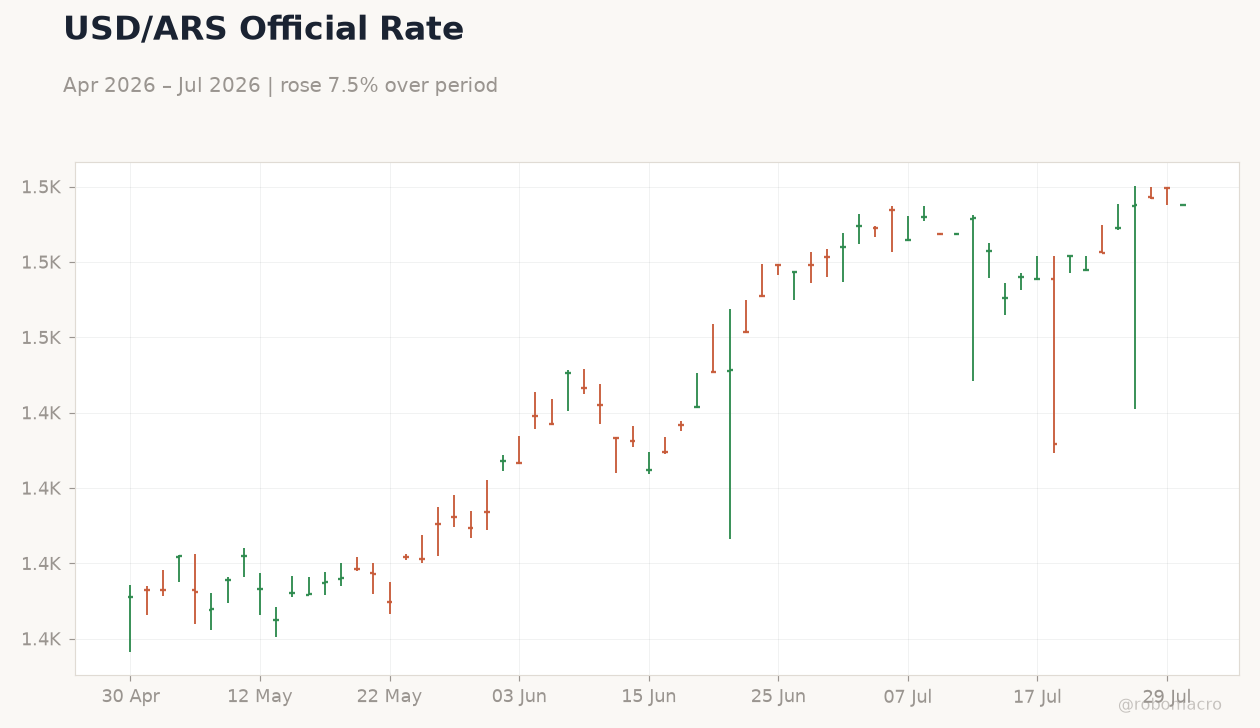
| USD/ARS | 1,495.00 | -0.32% |
| EUR/ARS | 1,712.00 | +0.26% |
| Gold | 4,125.00 | +2.24% |
| Brent Crude | 91.40 | +0.73% |
| Soybean | 1,194.75 | +1.42% |
| Bitcoin | 64,317.30 | +0.64% |
| Argentina 10Y | - | - |
Prior Economic Events
| Data | Prior | Cons | Actual |
|---|---|---|---|
| No events available | |||
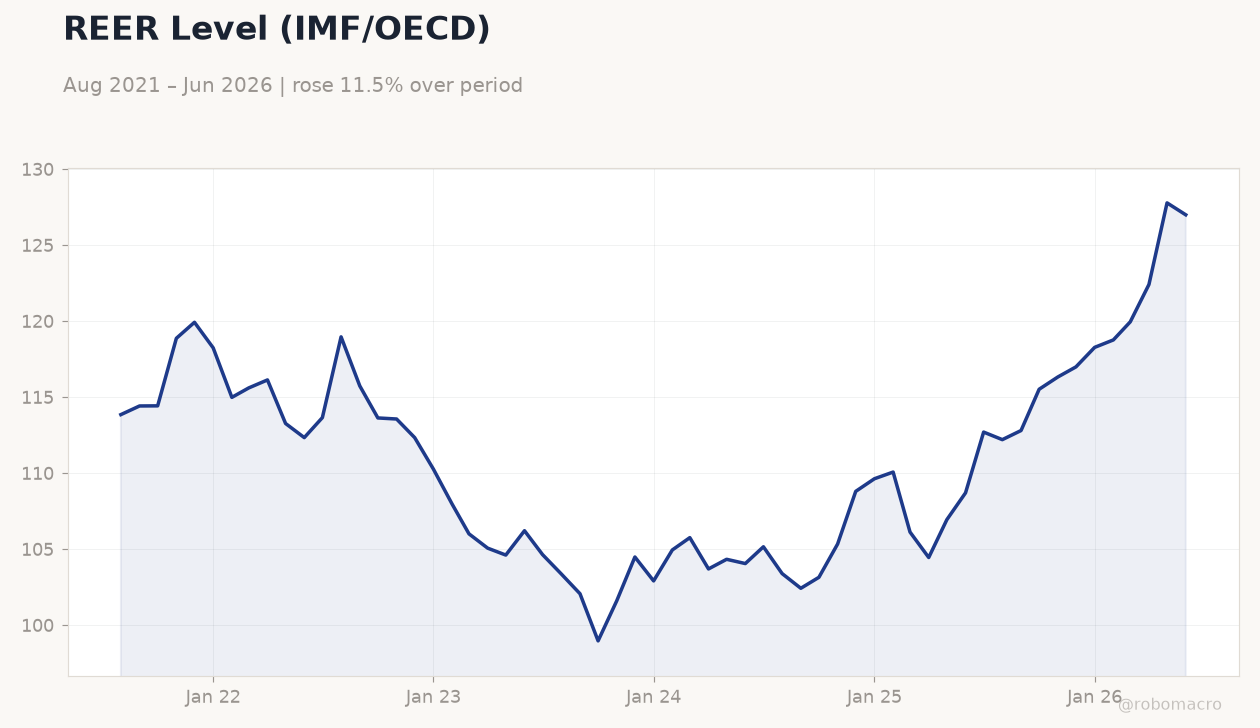 REER Level (IMF/OECD) | Type: macro_line | Index 2015=100: 127 (2026-06-01) | Range: 98.97–127.8 | Trend(6pt): 113.9,113.6,104.5,110.1,122.4,127
Today's Economic Events
| Data | Prior | Cons | Time |
|---|---|---|---|
| No events available | |||
- MERVAL falls 0.71% while USD/ARS dips 0.32% amid zero data releases
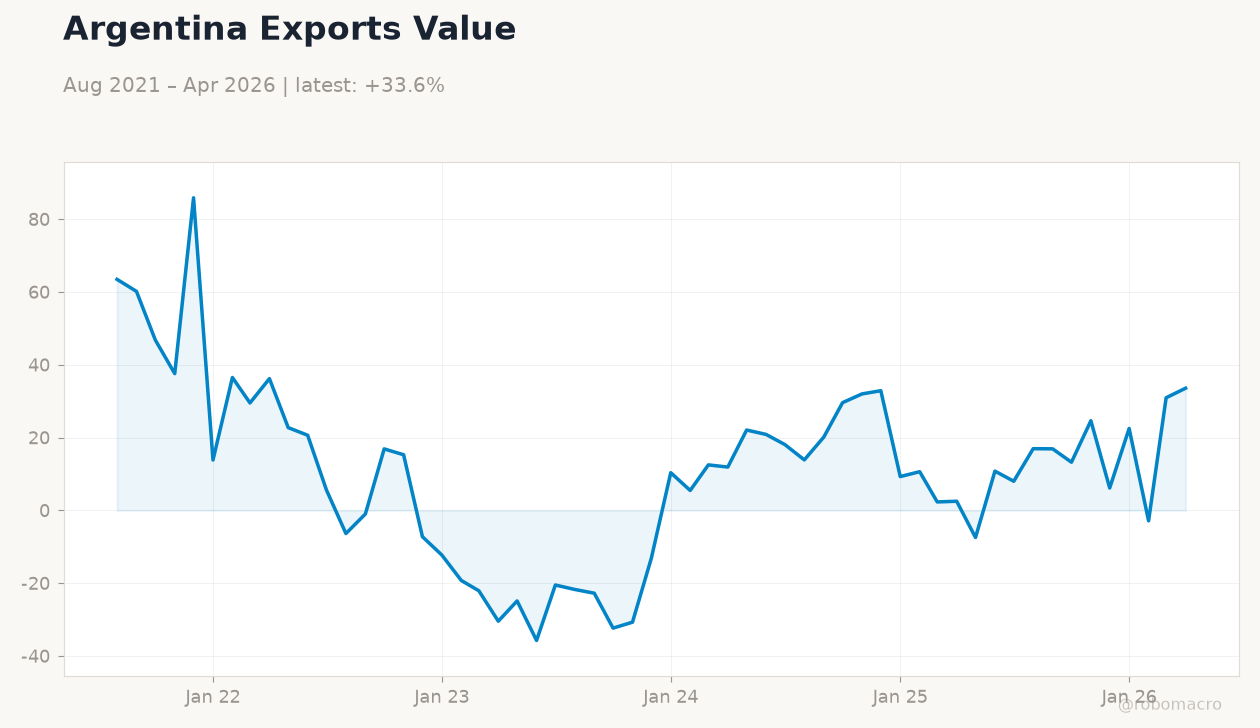
- Soybean futures climb 1.42% supporting export outlook and reserves
- IMF chief voices confidence in Milei fiscal stance while probing FX policy
Yesterday's Recap
Argentina markets recorded modest moves on a data-empty session. The MERVAL index closed down 0.71% at 3,233,105.00 as profit-taking hit financial names. The official USD/ARS rate declined 0.32% to 1,495.00 while EUR/ARS rose 0.26% to 1,712.00.
Soybean prices advanced 1.42% to 1,194.75, lifting prospects for export receipts and BCRA reserve accumulation. Gold gained 2.24% to 4,125.00 and Brent crude added 0.73% to 91.40, providing a mild tailwind for commodity-linked assets. No INDEC or BCRA releases occurred, leaving price action driven by global flows and positioning ahead of month-end.
Bitcoin rose 0.64% to 64,317.30, offering limited spillover support to risk assets.
The Day Ahead
No scheduled economic releases or policy events appear on the calendar for 30 July. Market participants will monitor Treasury USD-linked note auctions and any follow-up comments from IMF managing director Kristalina Georgieva on the exchange-rate regime. Agricultural financing announcements from Banco Provincia may draw attention for their potential impact on the 2026/27 crop season.
Traders will also track global commodity prices given Argentina’s heavy reliance on soybean and corn shipments. Absent fresh BCRA guidance, attention is likely to remain on reserve dynamics and parallel-market spreads. The lack of INDEC data keeps focus on external drivers such as Brent crude and soybean futures.
Other Economic Notes
Kristalina Georgieva reiterated confidence in President Milei’s commitment to fiscal balance while raising questions about the sustainability of the current exchange-rate path. The government continues to target a primary surplus of 1.5% of GDP for 2026 under the resumed IMF program framework. Banco Provincia’s new credit lines for the campaña gruesa, including zero-percent financing in dollars and pesos, aim to support producers amid improved weather conditions.
Private analysts have lifted 2026 GDP forecasts on the back of stronger agricultural output, though external financing needs remain elevated. These developments reinforce the focus on export competitiveness and reserve rebuilding. Net international reserves stand near USD 26.4 billion after recent Treasury sales.