Argentina Macro Daily(Beta Mode)
MERVAL Slips as Central Banks Hold
Market Snapshot
| Asset | Level | Change |
|---|---|---|
| MERVAL | 3,291,323.00 | -0.41% |
| USD/ARS | 1,485.00 | -0.27% |
| EUR/ARS | 1,711.91 | -0.23% |
| Gold | 4,114.50 | +1.62% |
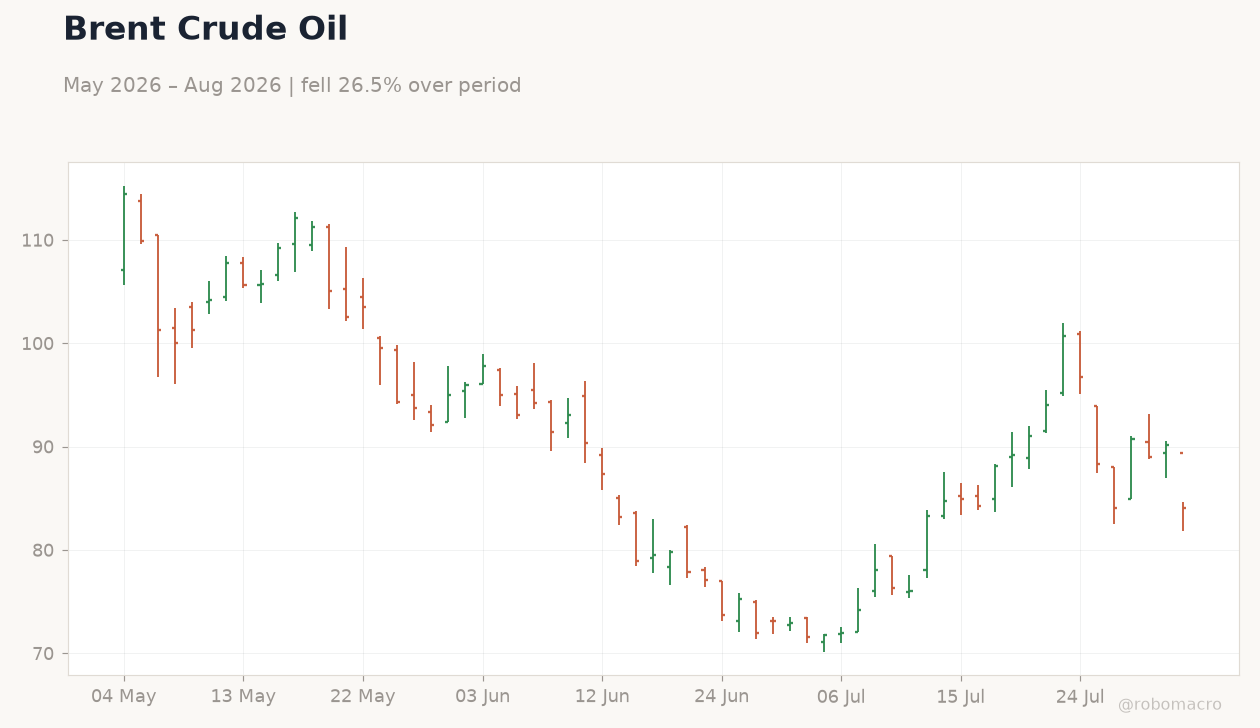
| Brent Crude | 84.04 | -6.75% |
| Soybean | 1,181.00 | +0.77% |
| Bitcoin | 62,484.00 | -0.45% |
| Argentina 10Y | - | - |
Prior Economic Events
| Data | Prior | Cons | Actual |
|---|---|---|---|
| No events available | |||
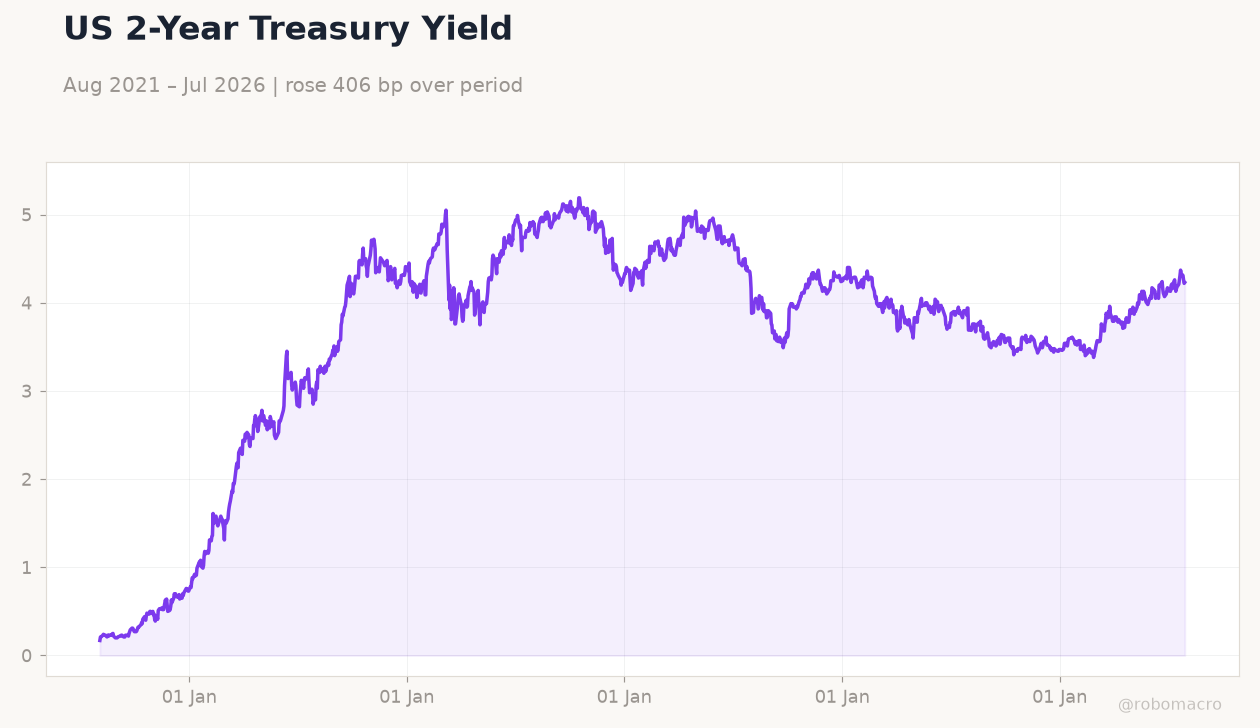
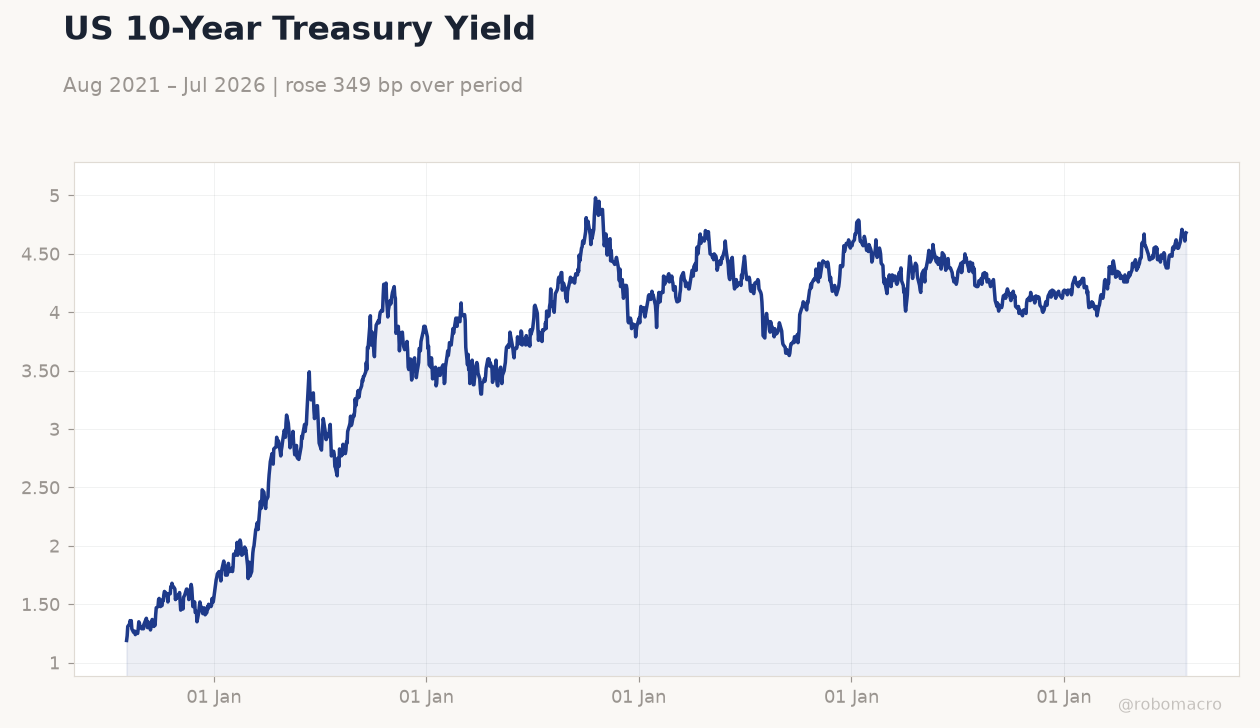 US 10-Year Treasury Yield | Type: macro_line | Percent: 4.68 (2026-07-30) | Range: 1.19–4.98 | Trend(6pt): 1.19,4.07,3.99,4.17,4.67,4.68
Today's Economic Events
| Data | Prior | Cons | Time |
|---|---|---|---|
| No events available | |||
- MERVAL declines 0.41% to 3,291,323 on light volume.
- USD/ARS eases 0.27% to 1,485.00 while soybean futures gain 0.77%.
- Brent crude falls 6.75% to 84.04 as gold rises 1.62% to 4,114.50.
Yesterday's Recap
With no economic releases scheduled, Argentine markets digested global central bank decisions and commodity swings. The MERVAL index posted a 0.41% decline to close at 3,291,323 amid subdued trading. The peso firmed modestly as USD/ARS fell 0.27% to 1,485.00 and EUR/ARS slipped 0.23% to 1,711.91.
Soybean prices advanced 0.77% to 1,181.00, bolstering the outlook for export tax receipts that support fiscal consolidation. Brent crude’s 6.75% drop to 84.04 weighed on energy names while gold’s 1.62% gain to 4,114.50 offered a safe-haven bid. Bitcoin edged 0.45% lower to 62,484.00, reflecting broader risk-off sentiment.
The quiet domestic calendar left focus on external drivers and BCRA reserve management.
The Day Ahead
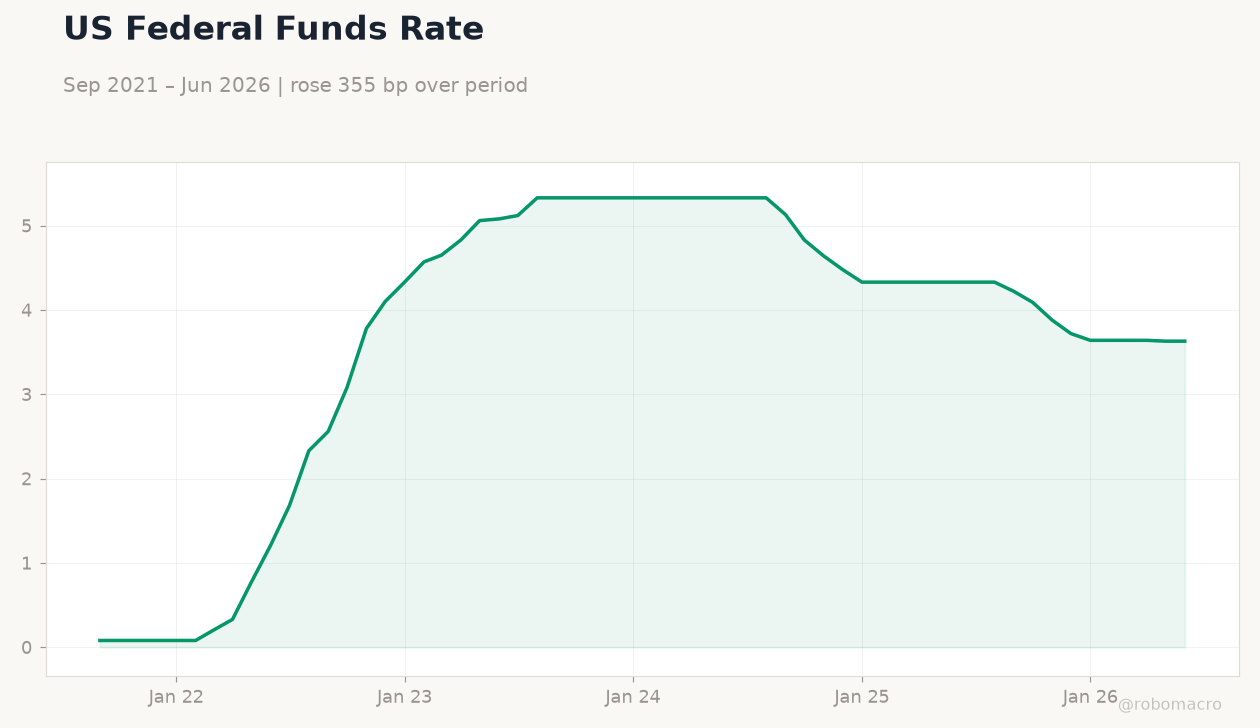
The calendar remains empty through August 4, pointing to a data-light stretch for Argentine indicators. Attention will center on BCRA reserve accumulation trends and any Treasury operations that affect peso liquidity. Global central bank signals from the US, UK and Japan continue to shape expectations for emerging-market flows into Argentine assets.
Soybean export registrations and associated fiscal revenues stay key for monitoring compliance with IMF targets. Market participants will also track any updates on the syndicated loan with CAF and IDB that aims to strengthen net reserves ahead of October primaries. Volatility in energy prices adds uncertainty to inflation trajectories and BCRA policy calibration.
Other Economic Notes
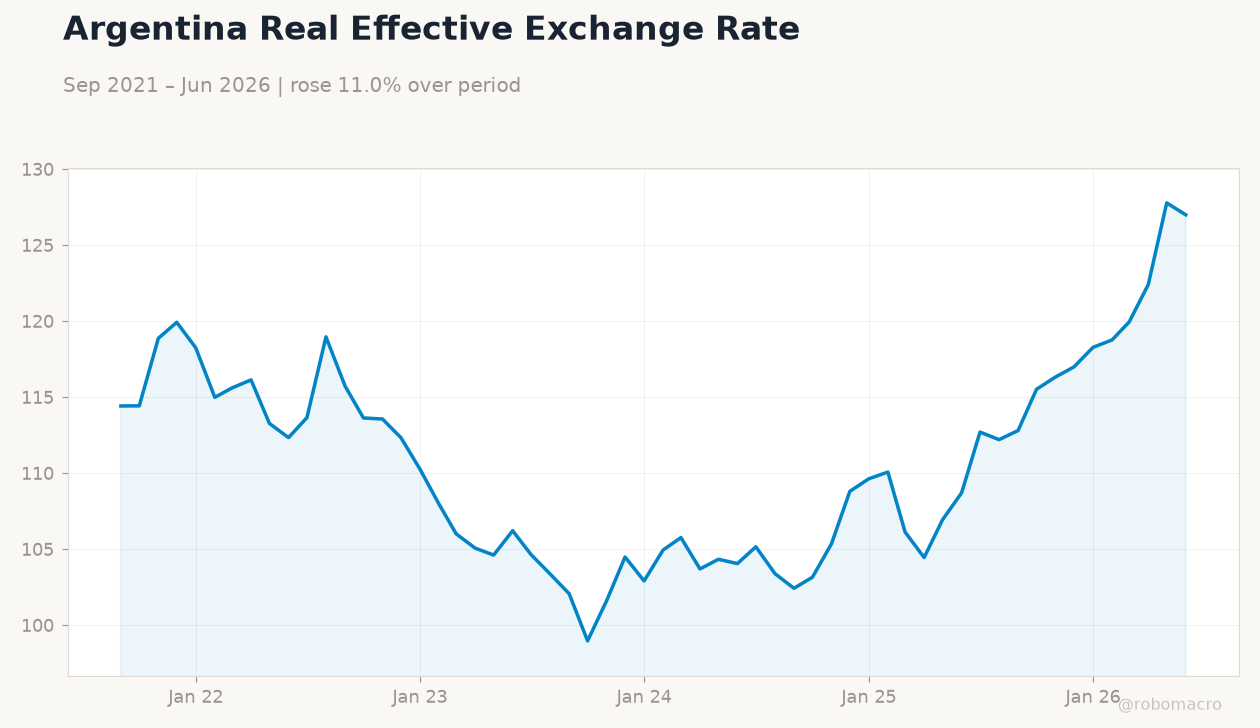
Argentina’s annual inflation stood at 33.6% as of June 2026 per BCRA data, confirming the disinflation path that eases pressure on real interest rates. Robust soybean export tax collections continue to underpin the primary surplus and improve debt dynamics. The stable peso corridor supports import compression and reserve rebuilding, though external financing needs remain elevated.
Moody’s recent outlook revision to stable highlights progress on fiscal metrics and lower inflation prints. Private-sector wage settlements tracking below earlier BCRA reference paths further aid the disinflation process.