Argentina Macro Daily(Beta Mode)
MERVAL Slips as Peso Weakens
Market Snapshot
| Asset | Level | Change |
|---|---|---|
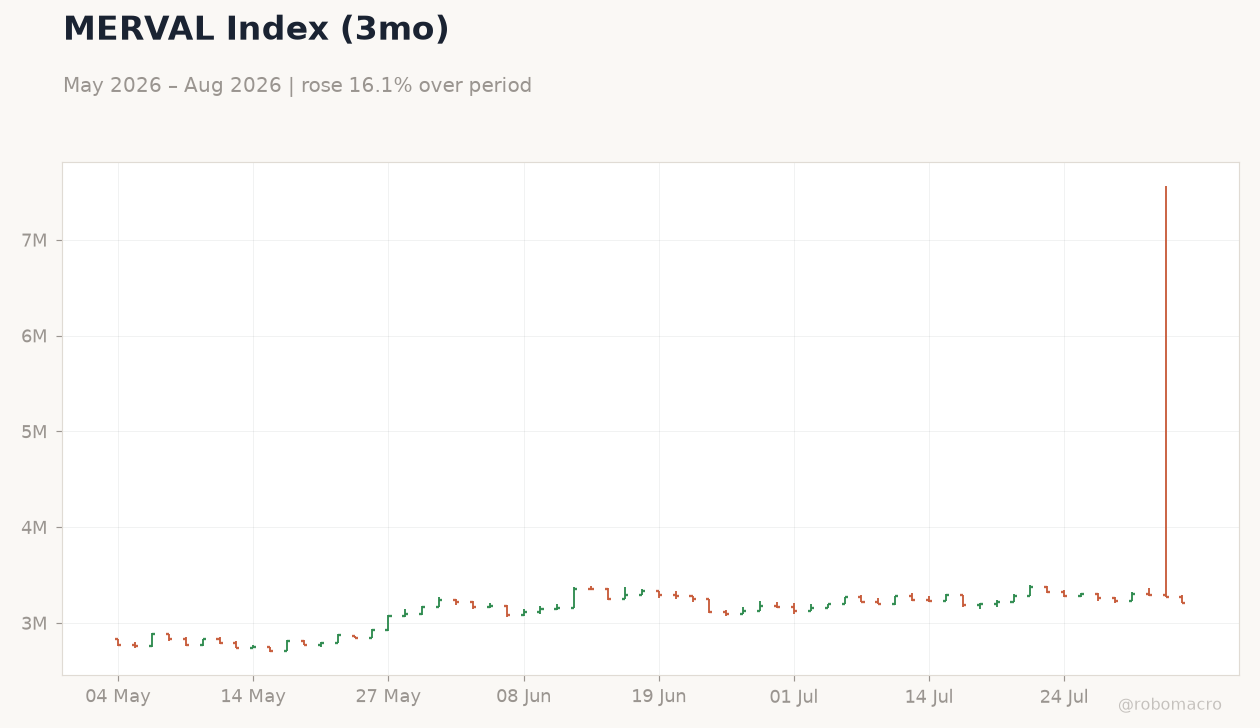
| MERVAL | 3,291,323.00 | -0.41% |
| USD/ARS | 1,496.00 | +0.84% |
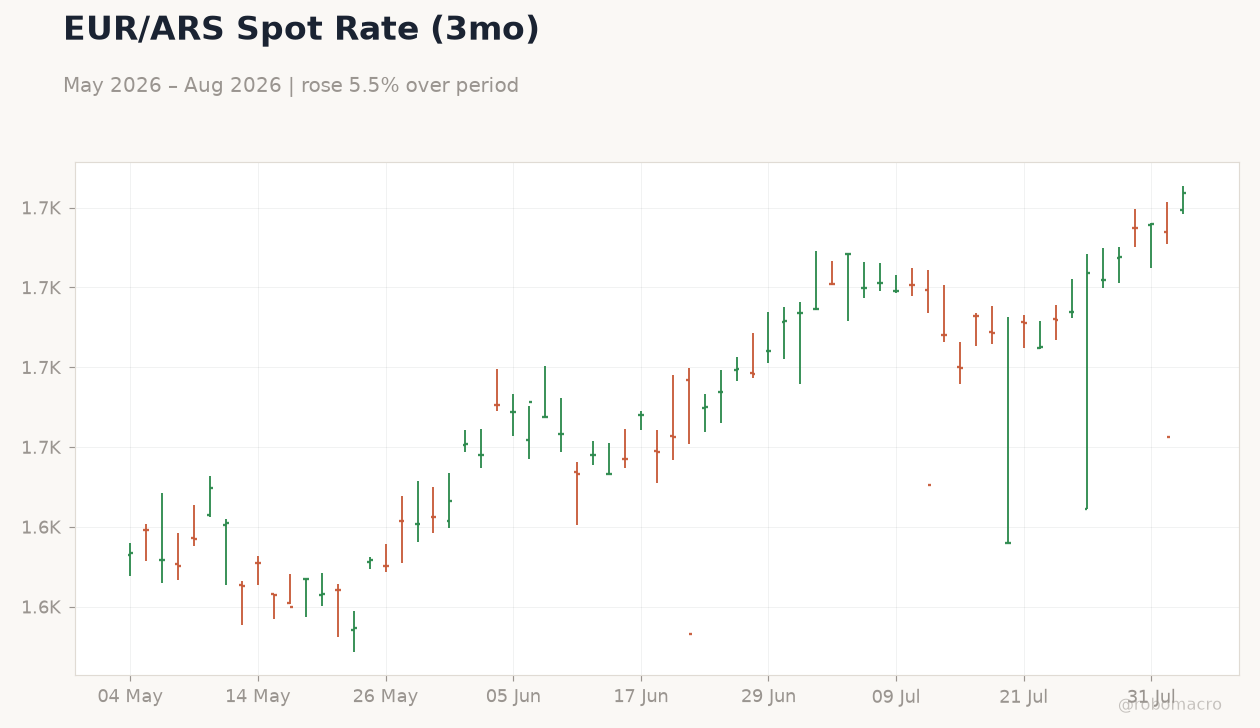
| EUR/ARS | 1,723.74 | +3.68% |
| Gold | 4,144.40 | +2.74% |
| Brent Crude | 79.28 | -5.36% |
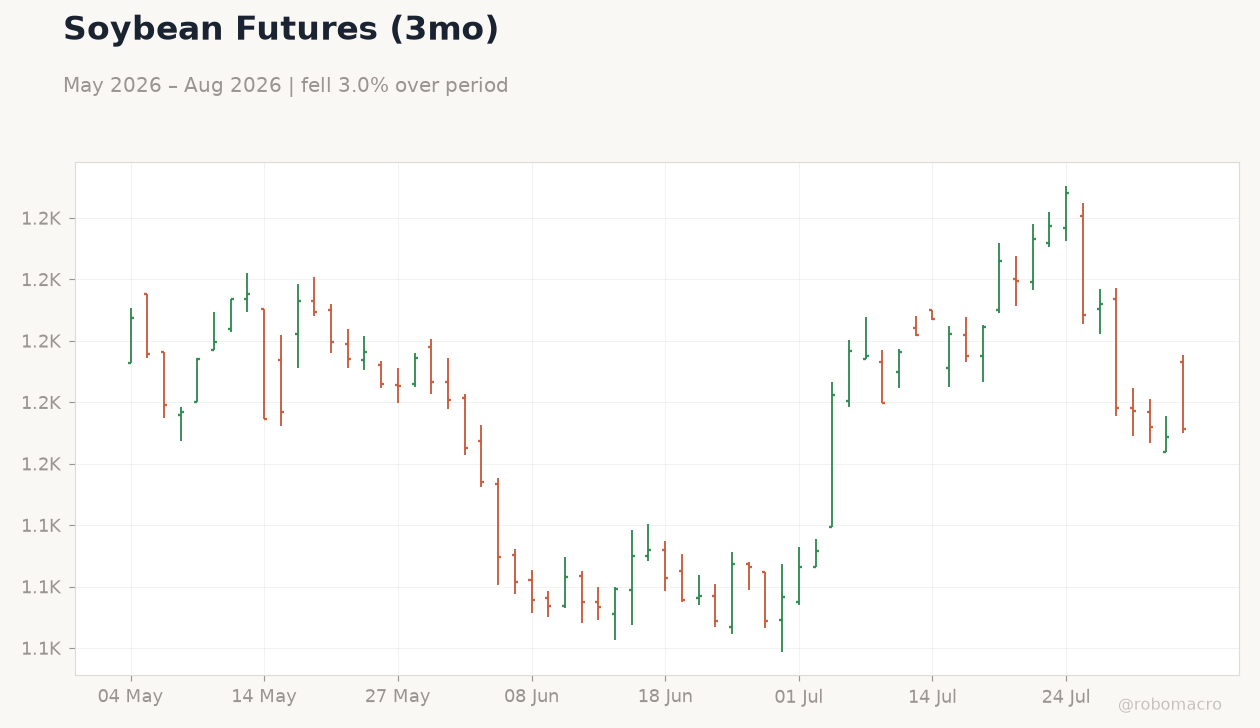
| Soybean | 1,171.00 | +0.19% |
| Bitcoin | 63,991.17 | +0.84% |
| Argentina 10Y | - | - |
Prior Economic Events
| Data | Prior | Cons | Actual |
|---|---|---|---|
| No events available | |||
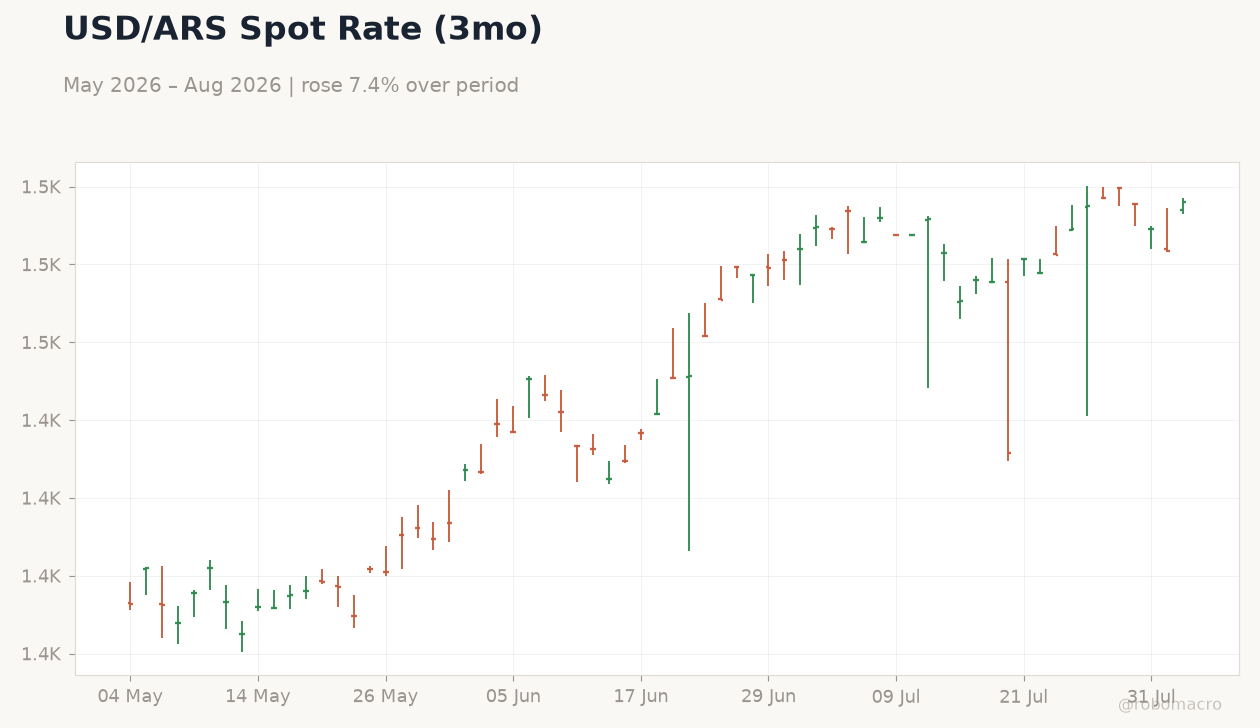 USD/ARS Spot Rate (3mo) | Type: market_hloc | ARS per USD: 1496 (2026-08-04) | Range: 1385–1500 | Trend(6pt): 1393,1401,1437,1487,1489,1496
Today's Economic Events
| Data | Prior | Cons | Time |
|---|---|---|---|
| No events available | |||
- MERVAL fell 0.41% to 3,291,323 amid thin trading and peso depreciation.
- USD/ARS rose 0.84% to 1,496 while EUR/ARS jumped 3.68%, signaling renewed FX pressure.
- Soybean prices edged up 0.19% to 1,171, offering limited support to export revenues.
Yesterday's Recap
Argentine markets closed lower on August 3 with the MERVAL index declining 0.41% to 3,291,323 on subdued volume as investors reduced exposure ahead of potential policy shifts. The official USD/ARS rate climbed 0.84% to 1,496, widening the gap with parallel rates and highlighting persistent currency demand. EUR/ARS advanced 3.68% to 1,723.74, amplifying imported inflation risks for local producers.
Gold rose 2.74% to 4,144.40 per ounce, providing a hedge for reserve managers, while Brent crude dropped 5.36% to 79.28 per barrel, easing energy import costs. Soybean futures gained 0.19% to 1,171, supporting expectations for steady export inflows. Bitcoin added 0.84% to 63,991.17, reflecting modest risk-on flows into digital assets.
With no economic releases reported, price action reflected positioning around fiscal targets and IMF program compliance.
The Day Ahead
The calendar remains empty through August 5, leaving markets to focus on reserve accumulation trends and soybean shipment data. Traders will monitor any BCRA interventions in the spot market to cap further peso slippage. Attention also centers on Treasury LETES auctions and their implied yields as indicators of domestic funding costs.
External drivers include U.S. data prints that could influence global risk sentiment toward emerging-market currencies. Analysts expect limited volatility unless fresh comments emerge on the October IMF review or the new China swap line.
Fiscal consolidation metrics and private-sector wage settlements will likely shape medium-term inflation expectations.
Other Economic Notes
The government continues to prioritize fiscal balance through short-term debt placements that have tightened yields by 150 basis points in recent weeks. Soybean export proceeds remain the primary source of hard-currency inflows, directly supporting BCRA reserve rebuilding efforts ahead of the next IMF assessment. Private wage agreements settling near 42% for the second half of 2026 suggest moderating price pressures that could ease the path toward gradual monetary easing.
Broader themes include the sustainability of the $2 billion China swap facility and its role in buffering external shocks. <i>↓ p.2</i>