Brazil Macro Daily(Beta Mode)
Bovespa Dips, Oil Spikes
Market Snapshot
| Asset | Level | Change |
|---|---|---|
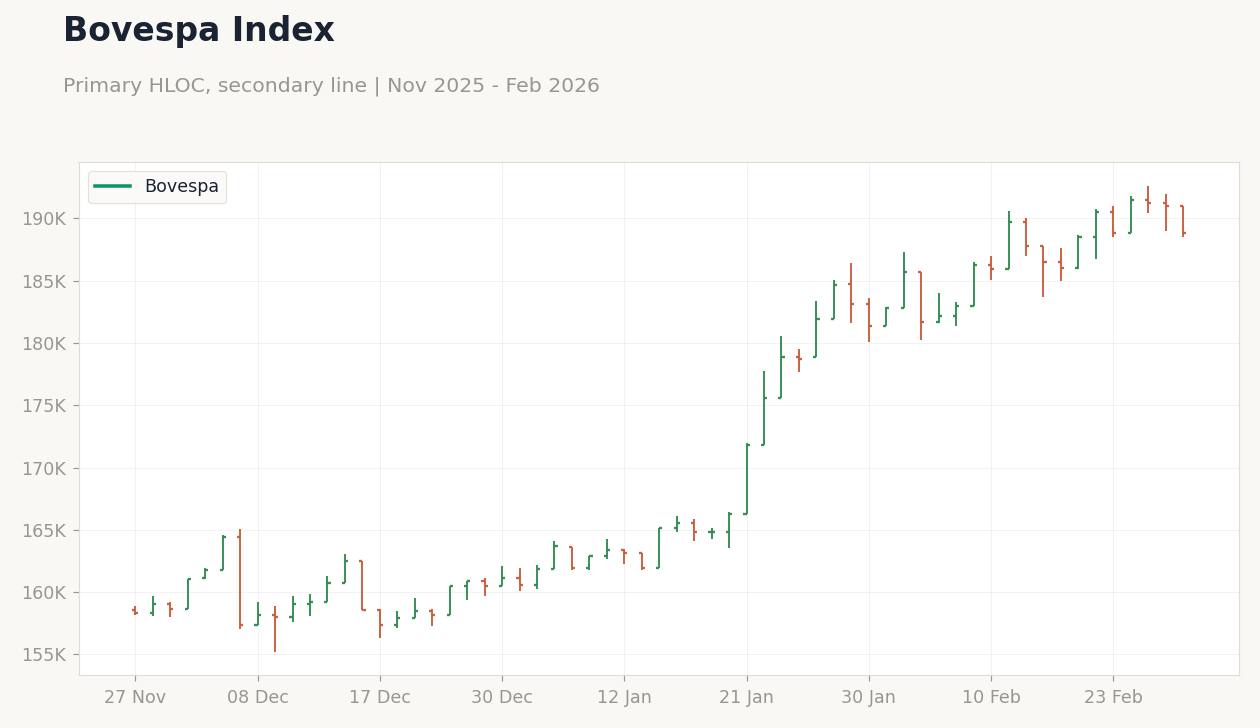
| Bovespa | 188,787.00 | -1.16% |
| USD/BRL | 5.13 | -0.13% |
| EUR/BRL | 6.05 | -0.20% |
| Vale | 17.18 | -0.75% |
| Petrobras | 16.63 | +0.12% |
| WTI Crude | 72.09 | +7.56% |
| Gold | 5,405.80 | +3.35% |
| Bitcoin | 66,257.48 | +0.79% |
| Brazil Short-term Rate | 15.00% | +0.00% |
| Brazil Long-term Rate | - | - |
Prior Economic Events
| Data | Prior | Cons | Actual |
|---|---|---|---|
| No events available | |||

Today's Economic Events
| Data | Prior | Cons | Time |
|---|---|---|---|
| Tuesday (2026-03-03) | |||
| GDP Growth Quarter-over-Quarter | 0.10 | - | 02:00 |
| GDP Growth Year-over-Year | 1.80 | - | 02:00 |
| Wednesday (2026-03-04) | |||
| S&P Global Services PMI | 51.30 | - | 03:00 |
| Thursday (2026-03-05) | |||
| Headline Unemployment Rate | 5.10 | - | 02:00 |
| Trade Balance | 4,340m | - | 08:00 |
| Friday (2026-03-06) | |||
| Industrial Production Month-over-Month | -1.20 | - | 02:00 |
- Bovespa index fell 1.16% amid domestic flood disruptions and global volatility.
- USD/BRL eased 0.13% to 5.13, reflecting stable real despite commodity swings.
- WTI crude surged 7.56% to 72.09, boosting Petrobras slightly by 0.12%.
Yesterday's Recap
The Bovespa index closed at 188,787.00, down 1.16% from the prior session, pressured by reports of deadly floods in Minas Gerais that displaced hundreds and raised concerns over infrastructure damage impacting commodity exports. USD/BRL traded at 5.13, a 0.13% decline, as the Brazilian real held firm amid mixed global cues, while EUR/BRL fell 0.20% to 6.05. Key stocks like Vale dropped 0.75% to 17.18, reflecting softer iron ore sentiment, whereas Petrobras edged up 0.12% to 16.63, supported by rising oil prices.
No major economic data releases occurred yesterday, but ongoing flood recovery efforts in Brazil highlighted risks to fiscal spending and agricultural output, particularly soybeans. Brazil's short-term rate remained steady at 15.00%, with no changes, while long-term rates were unchanged, signaling market caution. Gold climbed 3.35% to 5,405.80, and Bitcoin rose 0.79% to 66,257.48, but these had limited direct impact on Brazilian markets.
The Day Ahead
Tomorrow features Brazil's GDP growth data for quarter-over-quarter and year-over-year at 02:00 ET, with prior figures at 0.1% and 1.8% respectively, potentially influencing fiscal sustainability views. Wednesday brings the S&P Global Services PMI at 03:00 ET, following a previous 51.3, offering insights into service sector resilience amid flood disruptions. Thursday includes the headline unemployment rate at 02:00 ET (prior 5.1%) and trade balance at 08:00 ET (prior 4.34 billion), critical for assessing labor market strength and export dynamics in commodities like oil and iron ore.
Friday's industrial production month-over-month at 02:00 ET (prior -1.2%) could signal manufacturing recovery or ongoing challenges from global demand. These releases may drive volatility in Bovespa and USD/BRL, especially if GDP undershoots expectations.
Other Economic Notes
Recent floods in Minas Gerais, killing at least 30 and leaving 39 missing, underscore vulnerabilities in Brazil's infrastructure and could strain fiscal resources for reconstruction, potentially widening the budget deficit. The conviction of politician brothers for ordering the murder of councillor Marielle Franco highlights ongoing political instability in Rio de Janeiro, which may erode investor confidence in governance and rule of law. Campaigners' success in halting waterway privatization in the Amazon signals stronger environmental protections, benefiting sustainable commodity exports like soybeans but raising costs for agribusiness.