Brazil Macro Daily(Beta Mode)
Bovespa Rises on Commodity Rebound
Market Snapshot
| Asset | Level | Change |
|---|---|---|
| Bovespa | 179,875.44 | +1.25% |
| USD/BRL | 5.23 | -1.89% |
| EUR/BRL | 6.01 | -0.34% |
| Vale | 15.05 | +2.52% |
| Petrobras | 19.17 | +3.23% |
| WTI Crude | 96.49 | +3.20% |
| Gold | 5,027.40 | +0.67% |
| Bitcoin | 74,214.28 | -0.86% |
| Brazil Short-term Rate | 15.00% | +0.00% |
| Brazil Long-term Rate | - | - |
Prior Economic Events
| Data | Prior | Cons | Actual |
|---|---|---|---|
| No events available | |||
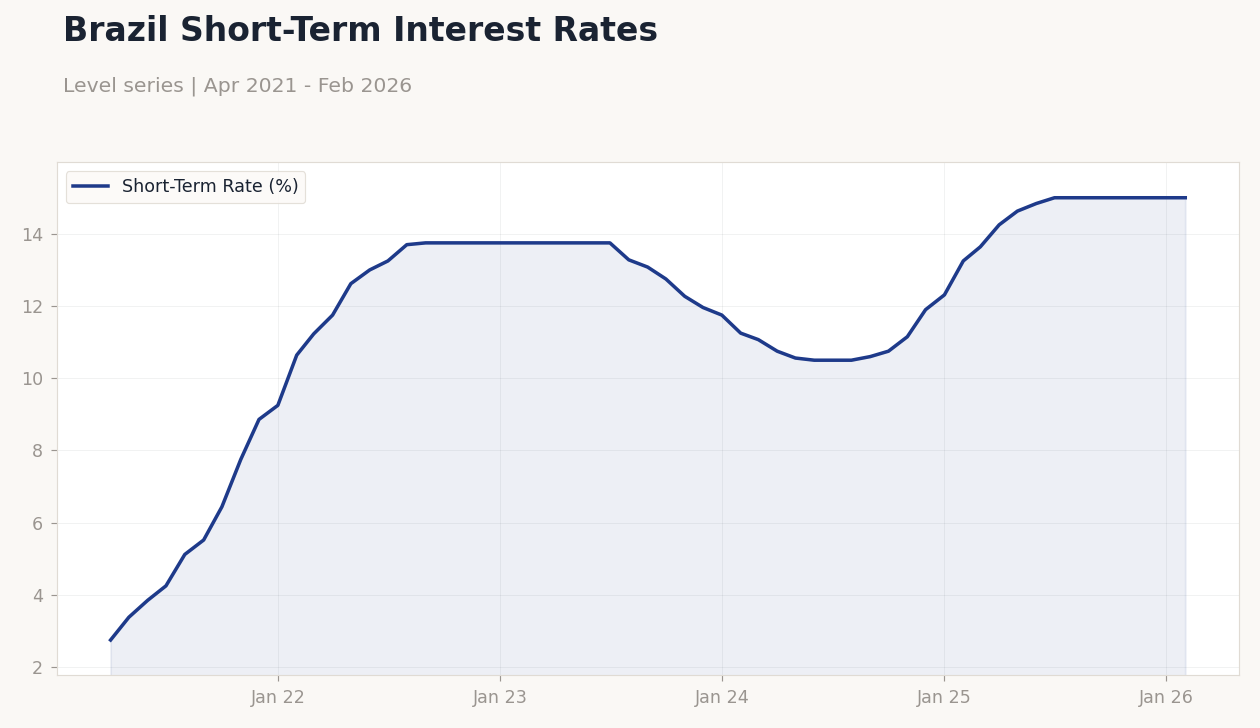 Brazil Short-Term Interest Rates | Type: macro_line | Short-Term Rate (%): 15 (2026-02-01) | Range: 2.75–15 | Trend(5pt): 2.75,13,13.28,10.75,15
Today's Economic Events
| Data | Prior | Cons | Time |
|---|---|---|---|
| Wednesday (2026-03-18) | |||
| Business Confidence Index | 48.20 | - | 06:00 |
| Central Bank Interest Rate Decision | 15 | 14.75 | 13:30 |
- Bovespa gained 1.25% to 179,875.44, led by energy and mining stocks.
- USD/BRL fell 1.89% to 5.23 as real strengthened on risk appetite.
- BCB rate decision tomorrow may cut Selic to 14.75% from 15.00%.
Yesterday's Recap
Brazilian markets advanced yesterday amid a commodity price rebound, lifting key sectors. The Bovespa index climbed 1.25% to 179,875.44, fueled by gains in energy and materials. Petrobras rose 3.23% to 19.17, mirroring a 3.20% increase in WTI crude to 96.49.
Vale advanced 2.52% to 15.05, supported by positive global demand cues. USD/BRL declined 1.89% to 5.23, reflecting improved sentiment and real gains. EUR/BRL eased 0.34% to 6.01.
Bitcoin dipped 0.86% to 74,214.28, while gold rose 0.67% to 5,027.40. The short-term rate remained at 15.00%. No economic data was released, but optimism around a potential Mercosur-EU trade deal in May boosted trade-exposed stocks.
The Day Ahead
The Business Confidence Index is due at 06:00 ET tomorrow, with the previous reading at 48.2 and no consensus available. The Central Bank Interest Rate Decision follows at 13:30 ET, with consensus for a cut to 14.75% from 15.00%. Markets will focus on guidance regarding inflation trends and fiscal outlook.
These releases could drive shifts in Selic expectations and currency movements. Global commodity dynamics may also influence broader sentiment.
Other Economic Notes
A potential Mercosur-EU trade agreement starting in May could expand Brazil's export opportunities, especially in agriculture and minerals. Private equity trends show companies remaining in portfolios longer, with the share over six years rising from 24% in 2020 to 29% in 2025, indicating cautious strategies amid economic uncertainty. Morocco's OCP Group shipped 90,000 tonnes of fertilizers to Latin America, helping stabilize supply chains disrupted by global conflicts and supporting Brazil's agribusiness costs.
FGV is linking Chinese executives to Brazil's creative and circular economy models, fostering potential investment ties.
Global Macro News
Currency volatility persists globally, with Asian central banks intervening to curb depreciation, which could aid emerging market stability including Brazil. Taiwan's swaps indicate bets on rate hikes due to inflation from oil prices and currency weakness, echoing Brazil's challenges. (cont...)


