Brazil Macro Daily(Beta Mode)
Bovespa Dips as Petrobras Gains
Market Snapshot
| Asset | Level | Change |
|---|---|---|
| Bovespa | 181,557.00 | -0.64% |
| USD/BRL | 5.24 | +0.17% |
| EUR/BRL | 6.04 | +0.07% |
| Vale | 15.03 | +0.54% |
| Petrobras | 20.77 | +2.16% |
| WTI Crude | 100.86 | +1.22% |
| Gold | 4,564.60 | +1.62% |
| Bitcoin | 67,630.05 | +2.54% |
| Brazil Short-term Rate | 15.00% | +0.00% |
| Brazil Long-term Rate | - | - |
Prior Economic Events
| Data | Prior | Cons | Actual |
|---|---|---|---|
| No events available | |||
 WTI Crude Oil Prices | Type: macro_line | USD per Barrel: 89.33 (2026-03-23) | Range: 55.44–123.6 | Trend(6pt): 59.19,109.1,91.16,70.31,96.11,89.33
Today's Economic Events
| Data | Prior | Cons | Time |
|---|---|---|---|
| Thursday (2026-04-02) | |||
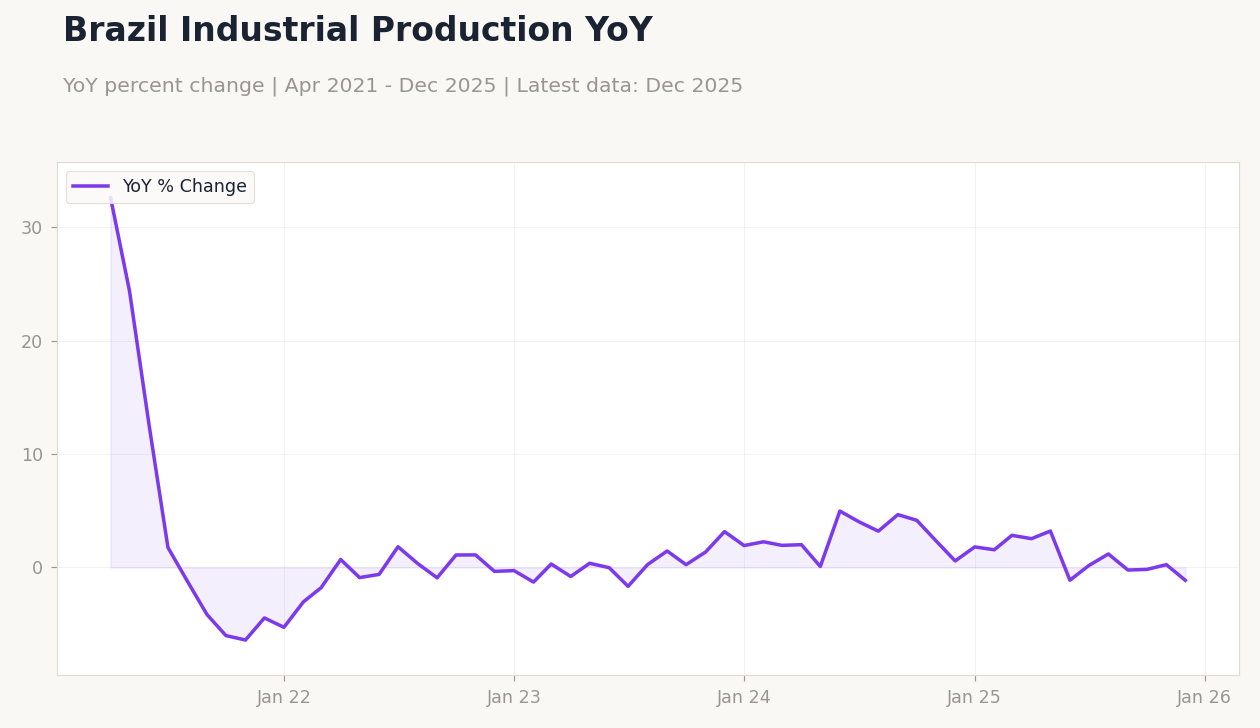
| Industrial Production Month-over-Month | 1.80 | - | 04:00 |
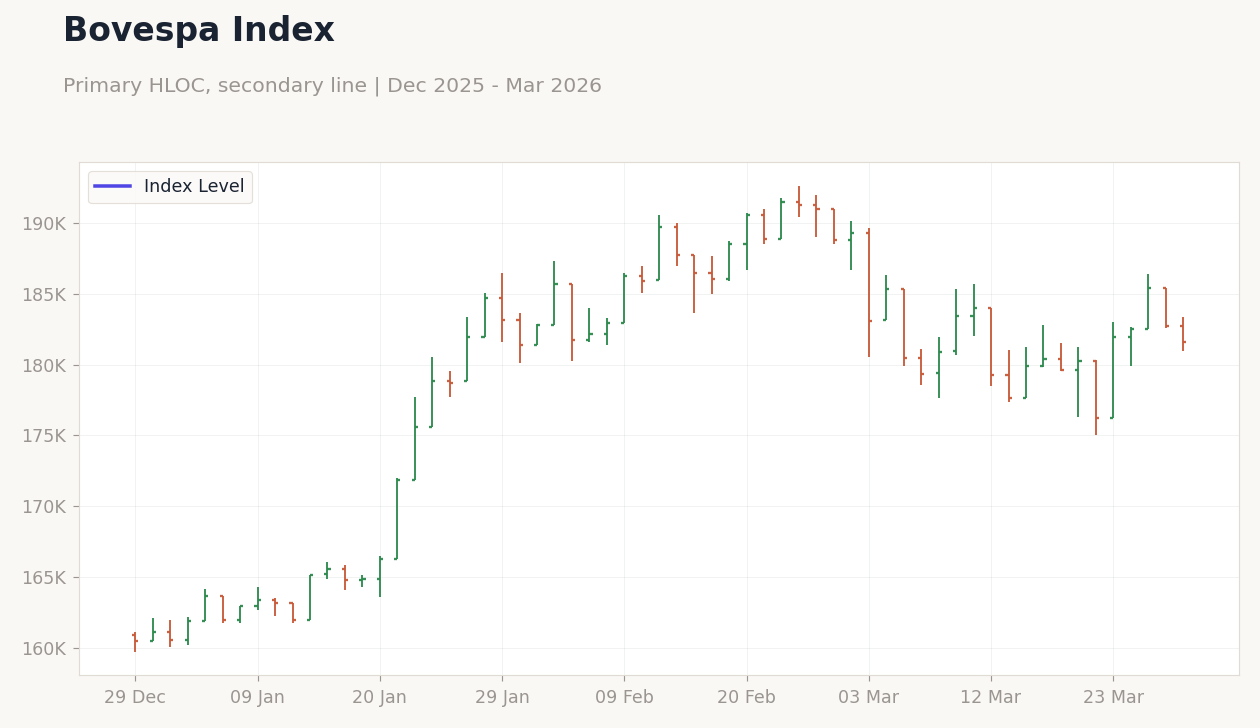
- Bovespa fell 0.64% to 181,557.00 amid commodity sector pressures.
- USD/BRL rose 0.17% to 5.24 on global dollar strength.
- Petrobras climbed 2.16% to 20.77, buoyed by WTI crude's 1.22% gain.
Yesterday's Recap
Brazilian markets closed mixed with no major data releases. The Bovespa index dropped 0.64% to 181,557.00, weighed down by mining sector profit-taking amid signals of softer Chinese iron ore demand. Petrobras shares rose 2.16% to 20.77, supported by WTI crude's 1.22% increase to 100.86, underscoring oil export strength.
Vale advanced 0.54% to 15.03, aided by gold's 1.62% rise to 4,564.60 as a safe haven. USD/BRL gained 0.17% to 5.24 and EUR/BRL edged up 0.07% to 6.04, driven by risk aversion. Bitcoin increased 2.54% to 67,630.05, with minimal impact on local assets.
The short-term rate stayed at 15.00%, and long-term rates were unavailable, reflecting stable policy.
The Day Ahead
The calendar for March 30 is quiet, with no Brazilian releases today, giving markets time to absorb global news. Focus shifts to April 2, when February industrial production month-over-month data arrives at 04:00 ET, following a prior 1.8% reading and lacking consensus. This medium-impact metric may shape views on manufacturing, especially for iron ore and soybean exporters.
Watch for any BCB comments on fiscal issues. Trading could remain calm absent surprises in oil or forex markets.
Other Economic Notes
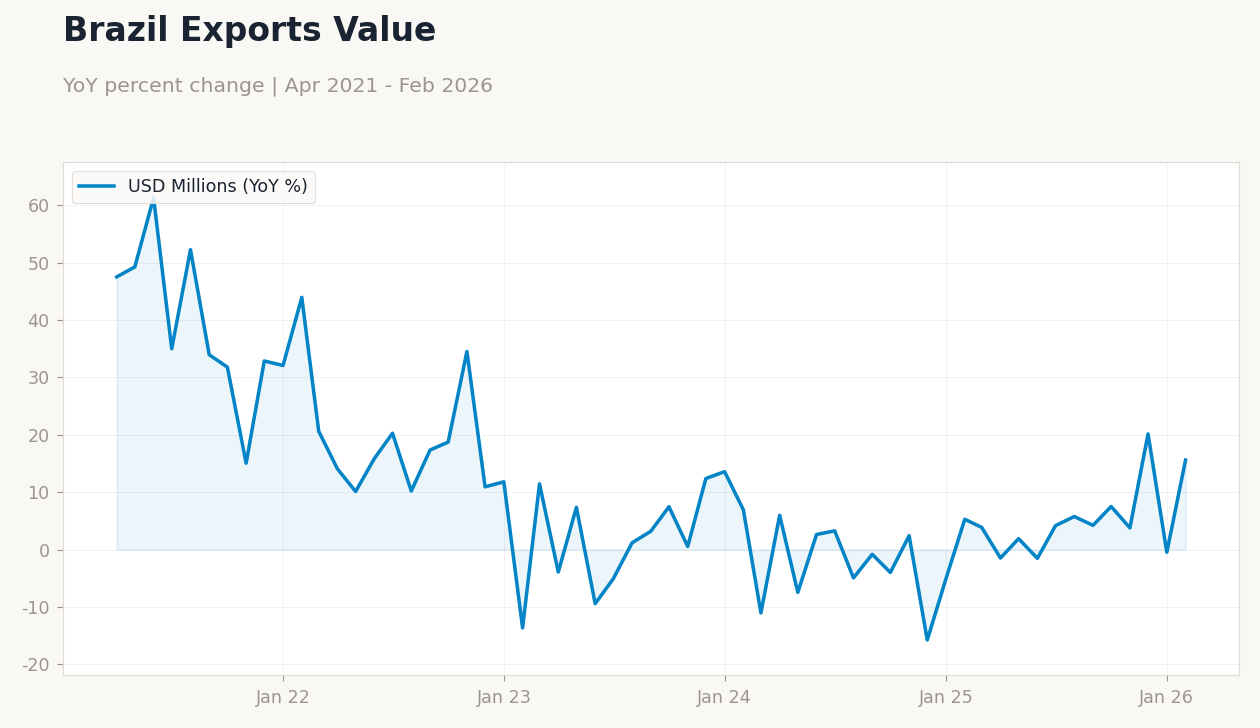
Fiscal concerns linger with potential primary deficit risks if spending reforms delay, pressuring the real and yields. Commodity exports from Vale (iron ore) and Petrobras (oil) sustain growth despite weaker Chinese demand, with soybeans adding support. Inflation risks from energy prices persist, amplified by WTI's recent climb and effects on fuel costs.
Global Macro News
Global tensions, including reports on a potential new nuclear age from the Iran conflict, may drive safe-haven gold demand, aiding Brazilian miners after yesterday's 1.62% price rise. WTI crude's 1.22% gain stems from Middle East supply worries, bolstering Petrobras and fiscal revenues. Bitcoin's 2.54% advance signals risk appetite, though EM currencies like the real face dollar pressures.
Australian meat trends highlight global food shifts that could influence Brazil's agribusiness. European items, like France's soccer preps, offer limited macro ties but note Brazil links. (cont...)