Brazil Macro Daily(Beta Mode)
Bovespa Edges Up, Real Softens
Market Snapshot
| Asset | Level | Change |
|---|---|---|
| Bovespa | 182,514.00 | +0.53% |
| USD/BRL | 5.26 | +0.40% |
| EUR/BRL | 6.03 | +0.33% |
| Vale | 15.10 | +0.47% |
| Petrobras | 20.81 | +0.19% |
| WTI Crude | 102.46 | -0.41% |
| Gold | 4,601.50 | +1.67% |
| Bitcoin | 66,748.42 | +0.09% |
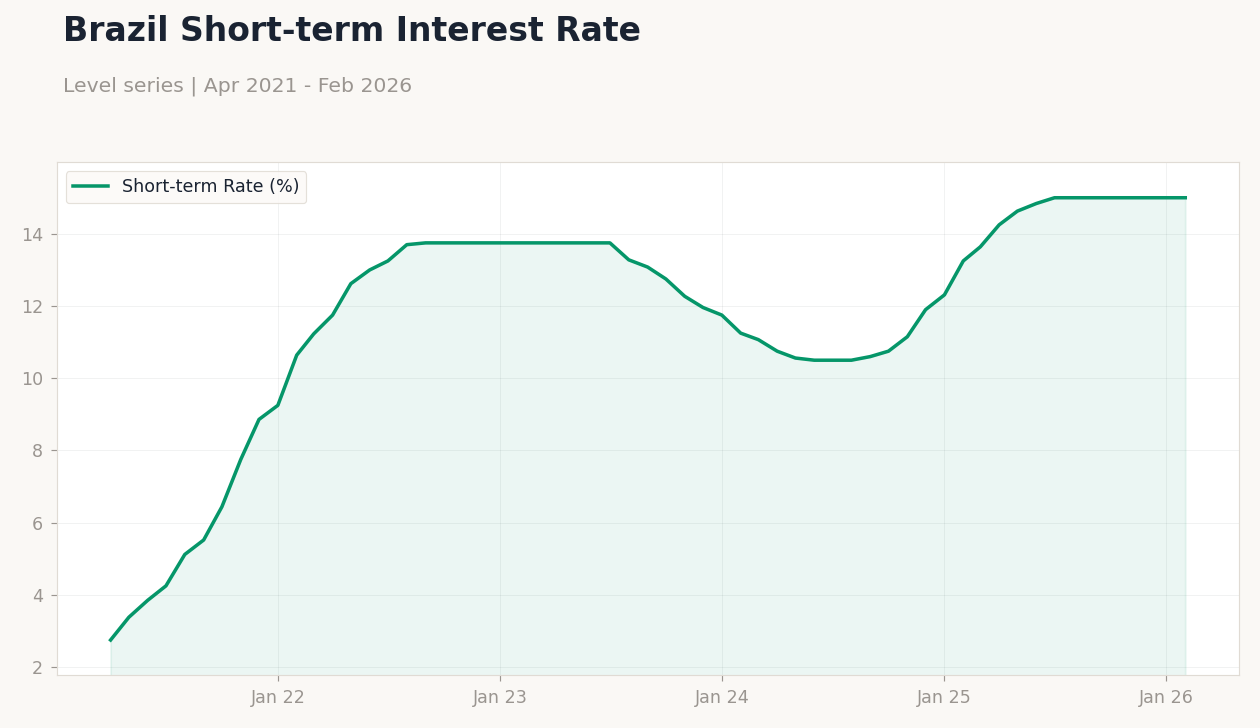
| Brazil Short-term Rate | 15.00% | +0.00% |
| Brazil Long-term Rate | - | - |
Prior Economic Events
| Data | Prior | Cons | Actual |
|---|---|---|---|
| No events available | |||
 Brazil Exports Value | Type: macro_line | Exports (USD): 15.6 (2026-02-01) | Range: -15.76–61.3 | Trend(6pt): 47.51,15.87,1.174,-3.992,20.16,15.6
Today's Economic Events
| Data | Prior | Cons | Time |
|---|---|---|---|
| Thursday (2026-04-02) | |||
| Industrial Production Month-over-Month | 1.80 | - | 04:00 |
- Bovespa rose 0.53% on commodity resilience, while USD/BRL climbed 0.40% amid global caution.
- No data releases yesterday; Selic rate held steady at 15.00%.
- Markets await Thursday's industrial production data for economic signals.
Yesterday's Recap
Brazilian markets posted modest gains yesterday, with the Bovespa index advancing 0.53% to 182,514.00, supported by commodity-tied stocks such as Vale, up 0.47% to 15.10, and Petrobras, gaining 0.19% to 20.81. The USD/BRL rate increased 0.40% to 5.26, indicating mild real weakening under emerging market strains, while EUR/BRL rose 0.33% to 6.03. No economic indicators were released, allowing focus on the unchanged short-term rate of 15.00%.
Commodities offered mixed support, with WTI crude falling 0.41% to 102.46, but gold climbing 1.67% to 4,601.50 as a haven asset. Bitcoin edged up 0.09% to 66,748.42, amid low volumes in a cautious session. The performance underscored Brazil's export-driven stocks maintaining stability despite international volatility.
The Day Ahead
The calendar for March 31 features no releases, directing attention to global sentiment and commodity movements. April 1 also lacks events, suggesting quiet trading into the weekend. Eyes are on Thursday's April 2 industrial production month-over-month figure at 04:00 ET, with a prior of 1.8% and medium impact.
No consensus is available, but a positive outcome could reinforce manufacturing strength from iron ore and soybean trade. Markets will watch for any impromptu BCB remarks on Selic trajectory. Fiscal updates could sway mood if spending debates intensify.
Other Economic Notes
Fiscal stability is a focal point for Brazil, with the Selic rate at 15.00% aiding inflation management amid export swings. Robust Chinese demand for iron ore and soybeans bolsters trade surpluses, though Petrobras faces risks from oil volatility affecting revenues. Key themes involve reforms to boost agribusiness and mining efficiency.
Urban trends in global reports suggest potential for higher domestic spending if inflation moderates.
Global Macro News
Worldwide caution prevailed, with WTI crude's 0.41% drop to 102.46 challenging Brazil's oil sector via Petrobras. Gold's 1.67% increase to 4,601.50 reflects haven buying in tense geopolitics, aiding Brazil's commodity mix. Bitcoin's 0.09% rise to 66,748.42 indicates crypto steadiness, possibly drawing fintech interest to emerging hubs like Brazil.
(cont...)