Brazil Macro Daily(Beta Mode)
Bovespa Rallies, Real Gains
Market Snapshot
| Asset | Level | Change |
|---|---|---|
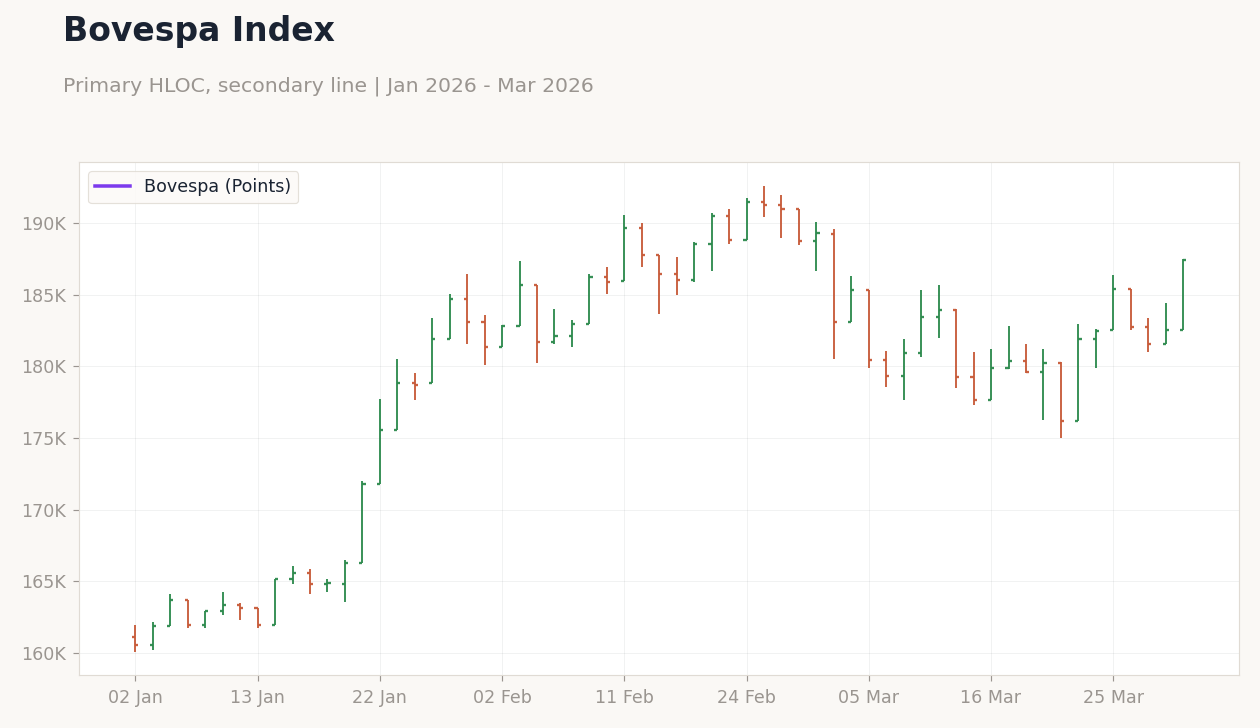
| Bovespa | 187,462.00 | +2.71% |
| USD/BRL | 5.19 | -1.35% |
| EUR/BRL | 6.01 | -0.31% |
| Vale | 15.91 | +5.36% |
| Petrobras | 20.75 | -0.29% |
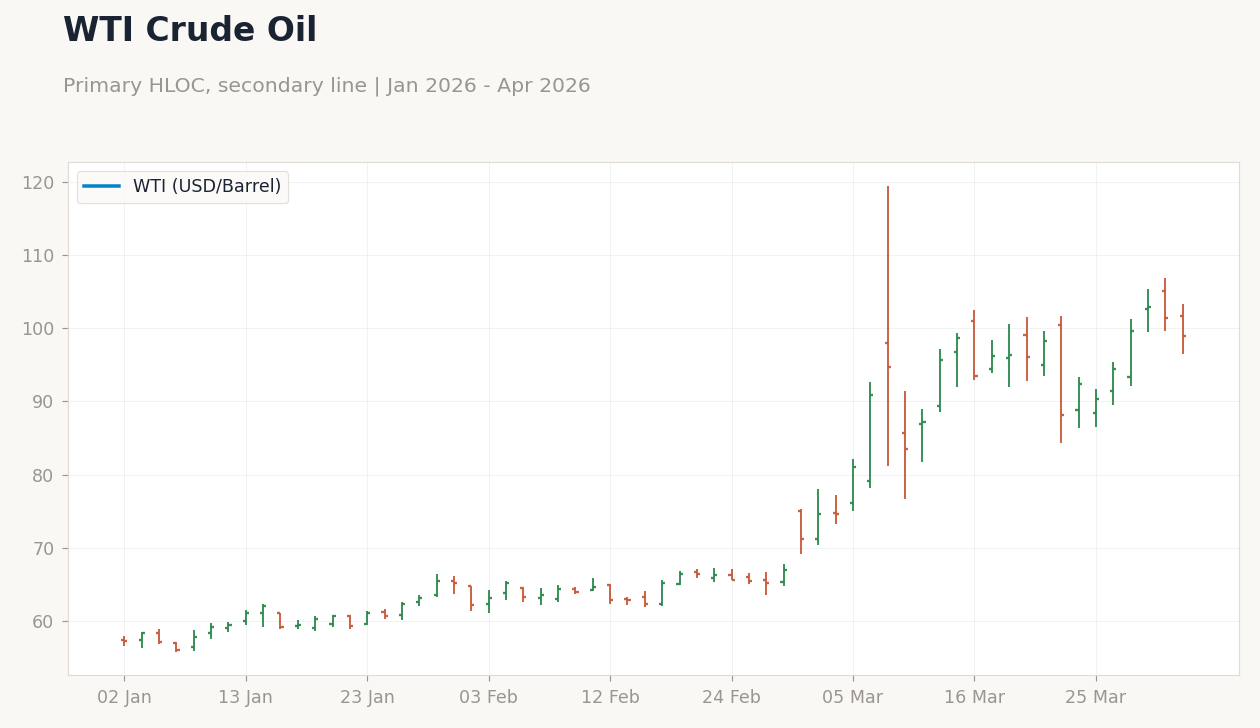
| WTI Crude | 98.99 | -2.36% |
| Gold | 4,758.90 | +2.39% |
| Bitcoin | 68,629.81 | +0.58% |
| Brazil Short-term Rate | 15.00% | +0.00% |
| Brazil Long-term Rate | - | - |
Prior Economic Events
| Data | Prior | Cons | Actual |
|---|---|---|---|
| No events available | |||
 Brazil Exports Value | Type: macro_line | Exports (USD): 3.267e+10 (2026-02-01) | Range: 2.146e+10–3.267e+10 | Trend(6pt): 2.491e+10,2.853e+10,2.84e+10,2.973e+10,2.95e+10,3.267e+10
Today's Economic Events
| Data | Prior | Cons | Time |
|---|---|---|---|
| Thursday (2026-04-02) | |||
| Industrial Production Month-over-Month | 1.80 | - | 04:00 |
- Bovespa surged 2.71% amid commodity strength, with Vale leading gains.
- USD/BRL fell 1.35% as real strengthened on positive market sentiment.
- Selic rate held steady at 15.00%, signaling cautious BCB stance.
Yesterday's Recap
Brazilian markets posted strong gains yesterday, with the Bovespa index climbing 2.71% to close at 187,462.00, driven by robust performances in commodity-linked stocks. Vale shares jumped 5.36% to 15.91, buoyed by favorable iron ore export trends despite global volatility. Petrobras edged down 0.29% to 20.75, reflecting mixed oil market signals as WTI crude declined 2.36% to 98.99.
The USD/BRL pair dropped 1.35% to 5.19, indicating real appreciation amid reduced currency pressures. EUR/BRL weakened 0.31% to 6.01, aligning with broader emerging market currency trends. Gold prices rose 2.39% to 4,758.90, providing a safe-haven boost, while Bitcoin gained 0.58% to 68,629.81.
No major data releases occurred, but fiscal sustainability concerns lingered, with Brazil's short-term rate unchanged at 15.00%.
The Day Ahead
Today features no scheduled Brazilian economic releases, allowing markets to digest recent commodity and currency moves. Attention shifts to global cues, including any updates on US-China trade dynamics that could impact Brazilian exports. Tomorrow brings the Industrial Production Month-over-Month data at 04:00 ET, with prior reading at 1.8% and no consensus yet available.
This release could influence expectations for manufacturing recovery and Selic rate path. Broader events include monitoring commodity prices, as iron ore and soybeans remain key for Brazil's trade balance. Fiscal policy announcements from Brasília may also emerge, potentially affecting bond yields.
Other Economic Notes
Brazil's inflation trajectory shows easing pressures, with February IPCA at 3.81%, the lowest since April 2024, though monthly prices rose 0.7%, highlighting persistent cost drivers. Commodity exports face mixed prospects, with new drilling at São Jorge gold project and rare earths processing deals signaling investment in mining diversification. Fiscal sustainability remains a concern, as spending bills could widen deficits, pressuring the 2026 target of 0.5% GDP.
Global Macro News
Escalating geopolitical tensions, including the Iran war, are prompting Asian nations like South Korea and the Philippines to ramp up coal usage, potentially boosting global energy demand and indirectly supporting Brazilian oil exports via Petrobras. (cont...)