Brazil Macro Daily(Beta Mode)
PMI Dips, Trade Misses Expectations
Market Snapshot
| Asset | Level | Change |
|---|---|---|
| Bovespa | 195,129.00 | +1.52% |
| USD/BRL | 5.07 | -0.64% |
| EUR/BRL | 5.92 | -0.35% |
| Vale | 16.65 | -0.54% |
| Petrobras | 20.69 | +3.55% |
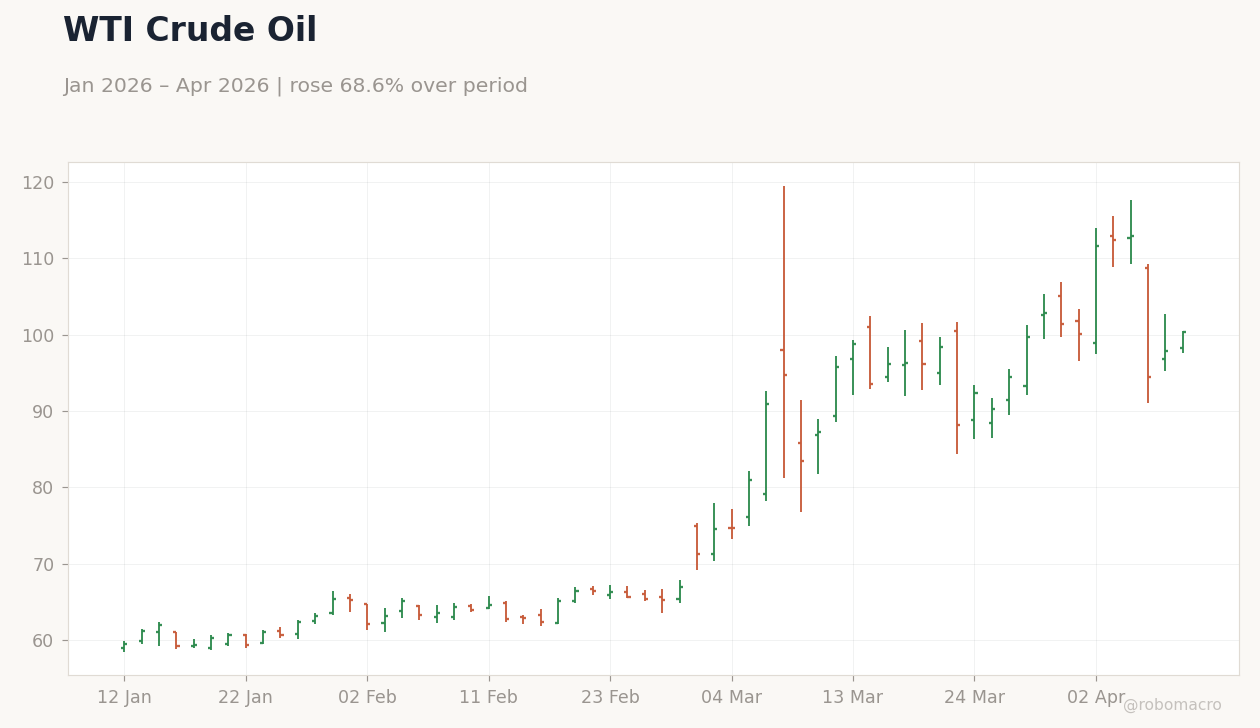
| WTI Crude | 100.15 | +2.33% |
| Gold | 4,758.40 | -0.71% |
| Bitcoin | 71,601.86 | -0.23% |
| Brazil Short-term Rate | 15.00% | +0.00% |
| Brazil Long-term Rate | - | - |
Prior Economic Events
| Data | Prior | Cons | Actual |
|---|---|---|---|
| S&P Global Services PMI | 53.10 | - | 50.10 |
| Trade Balance | 4,400m | 7,400m | 6,400m |
| Retail Sales Month-over-Month | 0.40 | - | - |
 Brazil Exports Value | Type: macro_line | Exports (BRL): 15.6 (2026-02-01) | Range: -15.76–61.3 | Trend(6pt): 49.25,20.28,3.199,2.423,-0.4707,15.6
Today's Economic Events
| Data | Prior | Cons | Time |
|---|---|---|---|
| Inflation Rate Month-over-Month | 0.70 | 0.78 | 04:00 |
| Inflation Rate Year-over-Year | 3.81 | 4.04 | 04:00 |
| Business Confidence Index | 46.60 | - | 06:00 |
- Services PMI slipped to 50.1 from 53.1, indicating potential slowdown in non-manufacturing sectors amid industrial weakness.
- Trade balance hit $6.4 billion, below $7.4 billion consensus but up from $4.4 billion prior, supported by oil and agribusiness exports.
- Bovespa climbed 1.52% to 195,129, fueled by Petrobras' 3.55% gain on rising WTI crude prices.
Yesterday's Recap
Brazilian markets displayed strength, with the Bovespa index advancing 1.52% to 195,129, propelled by Petrobras shares rising 3.55% to 20.69 as WTI crude increased 2.33% to 100.15. The USD/BRL weakened 0.64% to 5.07, signaling real appreciation driven by commodity export gains, while EUR/BRL fell 0.35% to 5.92. Vale shares declined 0.54% to 16.65 despite steady iron ore conditions.
Economic data showed the S&P Global Services PMI dropping to 50.1 from 53.1, highlighting risks of services sector contraction. The trade balance reached $6.4 billion, missing the $7.4 billion consensus but improving from $4.4 billion previous, aided by robust oil and agricultural shipments. Retail sales month-over-month actual was not available in latest reports, suggesting possible delays or incomplete data.
Equities gained from the global oil uptick, while the short-term rate remained steady at 15.00%.
The Day Ahead
Focus turns to Brazil's inflation rate month-over-month at 04:00 ET, with consensus at 0.78% against prior 0.7%, which could shape Selic rate outlooks. The year-over-year inflation rate releases simultaneously, expected at 4.04% from 3.81%, amid worries over export-driven food price increases and dollar movements. The Business Confidence Index follows at 06:00 ET, after a prior 46.6, providing clues on business sentiment.
These indicators may influence Bovespa performance and real valuation, particularly if inflation exceeds forecasts. No significant events are scheduled for tomorrow, keeping attention on today's data for directional cues. Markets will monitor global commodity trends for potential impacts.
Other Economic Notes
Agribusiness is transforming Brazil's economy amid industrial decline, with surging soy and oil exports fueled by Chinese demand, as reported by Valor International. Food price rises in Brazil tie to dollar strength and export growth, intensifying inflation, per AGÊNCIA CENARIUM. The World Bank notes Latin America's stagnation, with Brazil contributing to the issue, while highlighting Argentina's fiscal reforms under Milei as a positive outlier.
(cont...)