Brazil Macro Daily(Beta Mode)
Brazil's Inflation Surges on Oil Shock
Market Snapshot
| Asset | Level | Change |
|---|---|---|
| Bovespa | 198,011.95 | +0.35% |
| USD/BRL | 5.00 | -1.91% |
| EUR/BRL | 5.88 | -1.28% |
| Vale | 16.96 | +1.86% |
| Petrobras | 21.51 | +3.96% |
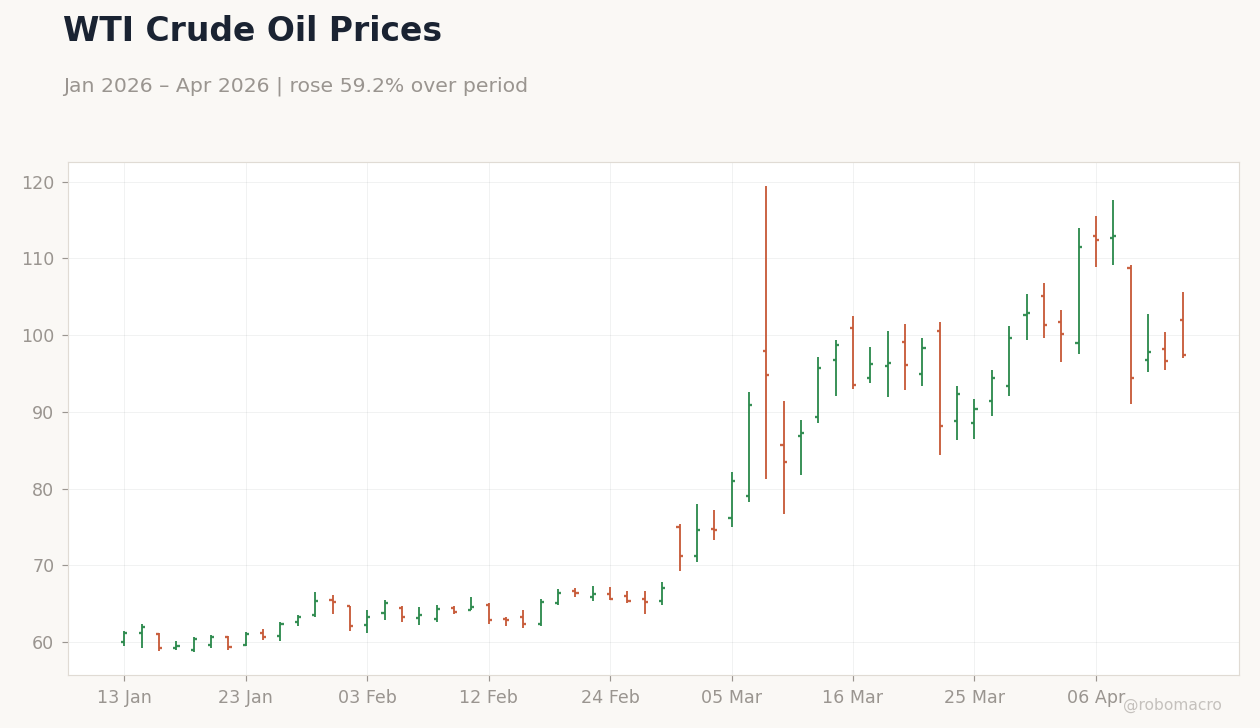
| WTI Crude | 97.17 | +0.62% |
| Gold | 4,761.90 | +0.00% |
| Bitcoin | 72,381.30 | +2.30% |
| Brazil Short-term Rate | 15.00% | +0.00% |
| Brazil Long-term Rate | - | - |
Prior Economic Events
| Data | Prior | Cons | Actual |
|---|---|---|---|
| No events available | |||
 WTI Oil Price Trend | Type: macro_line | WTI USD/Barrel: 114 (2026-04-06) | Range: 55.44–123.6 | Trend(6pt): 63.15,106.8,88.81,72.44,101.9,114
Today's Economic Events
| Data | Prior | Cons | Time |
|---|---|---|---|
| No events available | |||
- March inflation rose to 0.88%, beating forecasts amid Iran war energy impacts.
- Bovespa gained 0.35% on Petrobras and Vale strength; BRL appreciated sharply.
- Fiscal moves include debt relief via severance funds and court debt tweaks.
Yesterday's Recap
Brazilian markets displayed strength yesterday, with the Bovespa index advancing 0.35% to 198,011.95, led by commodity heavyweights Petrobras, which surged 3.96% to 21.51, and Vale, up 1.86% to 16.96. The USD/BRL rate dropped 1.91% to 5.00, bolstered by emerging market currency gains in a risk-on environment. Similarly, EUR/BRL fell 1.28% to 5.88, aided by steady oil prices as WTI crude increased 0.62% to 97.17.
IBGE data showed March inflation accelerating to 0.88%, far exceeding expectations due to the Iran war's oil shock, which is straining family budgets and prompting calls for strategic financial adjustments. No significant economic events were scheduled, but fiscal headlines dominated, including proposals to incorporate court-ordered debts into fiscal targets and allow workers to use severance funds for debt relief. Bitcoin climbed 2.30% to 72,381.30, providing some diversification, while gold remained unchanged at 4,761.90, limiting its role as an inflation hedge.
The Day Ahead
With no economic data releases slated for today, markets will likely focus on digesting the recent inflation surge and fiscal developments. Investors may monitor for updates from the Finance Ministry on using severance funds for debt relief, which could influence perceptions of fiscal health. Attention also shifts to commodity export trends, particularly soybeans and iron ore, amid fluctuating global demand.
No unscheduled BCB statements are anticipated, but any commentary on oil-driven inflation could move rates. Tomorrow similarly has no events, suggesting a subdued opening to the week. External factors, such as Fed policy signals on inflation, may sway BRL dynamics and equity sentiment.
Other Economic Notes
Brazil's fiscal framework is under review as authorities consider expanding the inclusion of court-ordered debts in fiscal targets, potentially alleviating deficit pressures but sparking concerns over long-term sustainability. The Ibovespa has outperformed the S&P 500 recently, with analysts from Itaú BBA and Bank of America projecting continued upside driven by record highs in commodity sectors. The initiative to permit debt settlements using severance funds seeks to ease household financial strains from rising costs, though it may widen fiscal gaps without compensatory actions.
(cont...)